
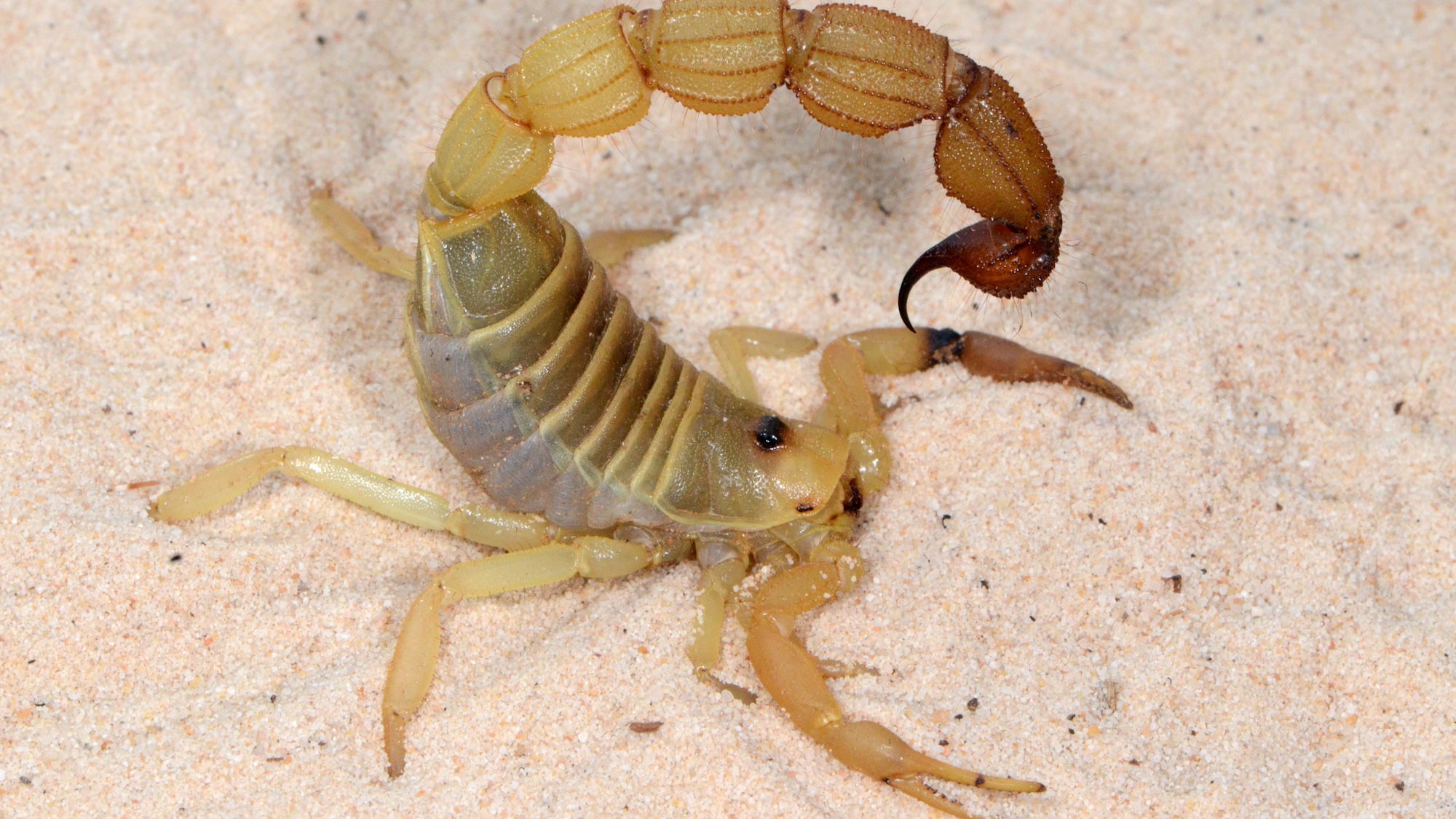
Scorpions are optimized hunters, whose skills have been honed through millions of years of evolution. An armored exoskeleton, strong pincers, a poisonous stinger—almost everything about their anatomy aids in either hunting insects, small mammals, and reptiles, or defending themselves from snakes and birds. But for years, entomologists were aware of a potential secret weapon in the arthropods’ biology: metallic reinforcements.
Researchers previously detected trace metals in the exoskeletons of at least some of the estimated 3,000 known scorpion species. At the same time, experts were unsure about the distribution and concentration of these metals.
“We knew that metals strengthen the weapons in some species’ arsenals, [but] we don’t know if all scorpions’ weapons contain metal,” Sam Campbell, an environmental scientist at Australia’s University of Queensland, explained in a statement.
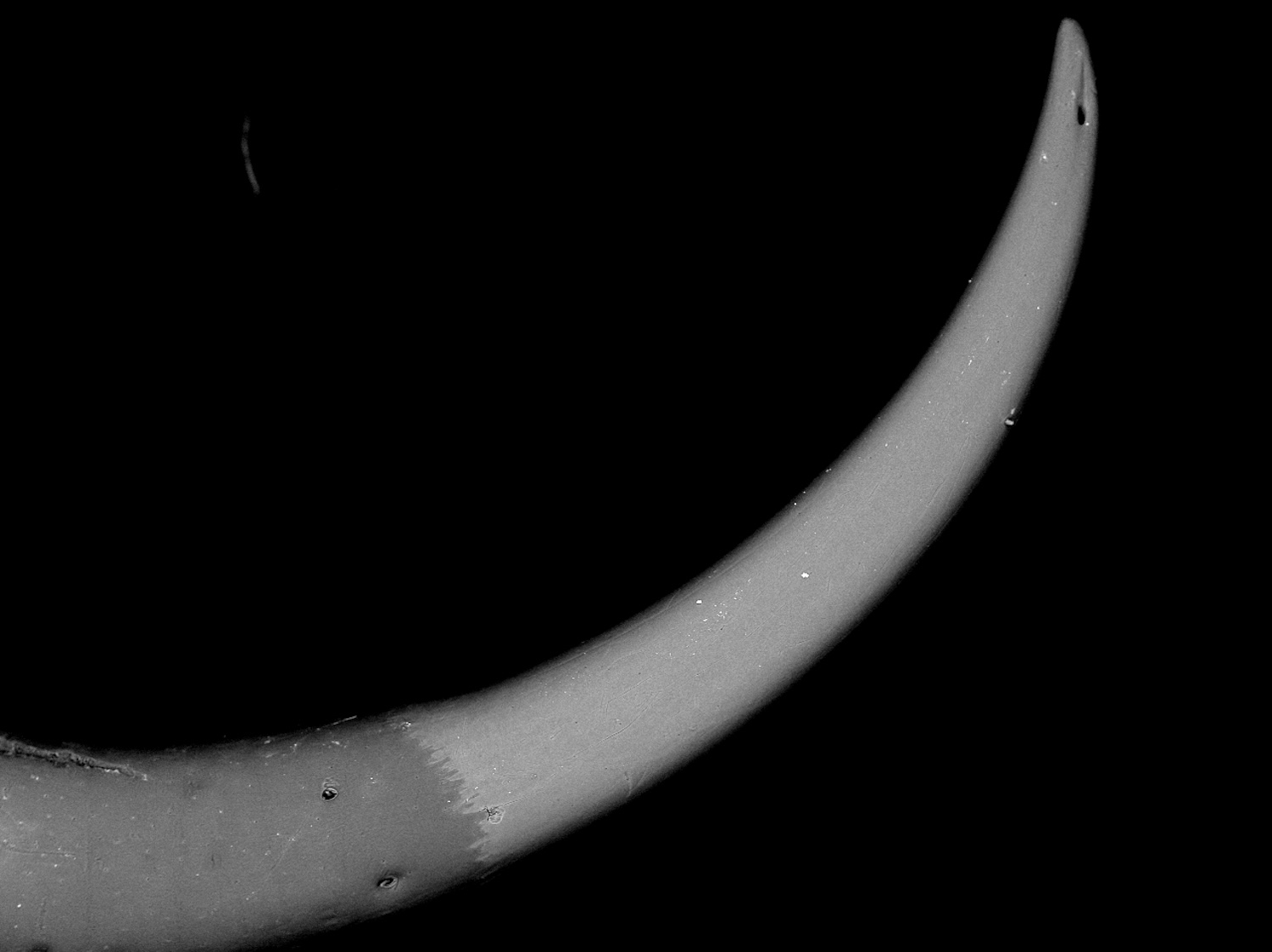
The answer might come in how they rely on their stingers and pincers. Some scorpion species wield their poisonous barbs more than their claws, while others deploy the opposite strategy. Campbell and colleagues theorized that the trace metal distributions might correspond to whether or not a species prefers its stingers or pincers..
While pursuing a Smithsonian fellowship at the National Museum of Natural History in Washington D.C., the team used microanalytical methods like high-resolution electron microscopy and X-ray analysis to examine specimens from 18 separate scorpion species. Their results published in the Journal of The Royal Society Interface found pincers and stingers do contain concentrations of metal.
“The National Museum of Natural History’s large scorpion collection allowed us to analyze metal enrichment in a wide range of scorpion species, more than have ever been studied before using these techniques,” said Museum Conservation Institute research scientist and study co-author Edward Vincenzi.
The results revealed a pair of distinct metal layers in scorpions. Stingers reliably featured high amounts of zinc in their needle-like tips, followed by a layer of manganese. The distribution is similar in pincers, as well. In the movable portion known as the tarsus, Campbell’s team pinpointed either zinc or a combination of zinc and iron along the claw’s cutting edge.
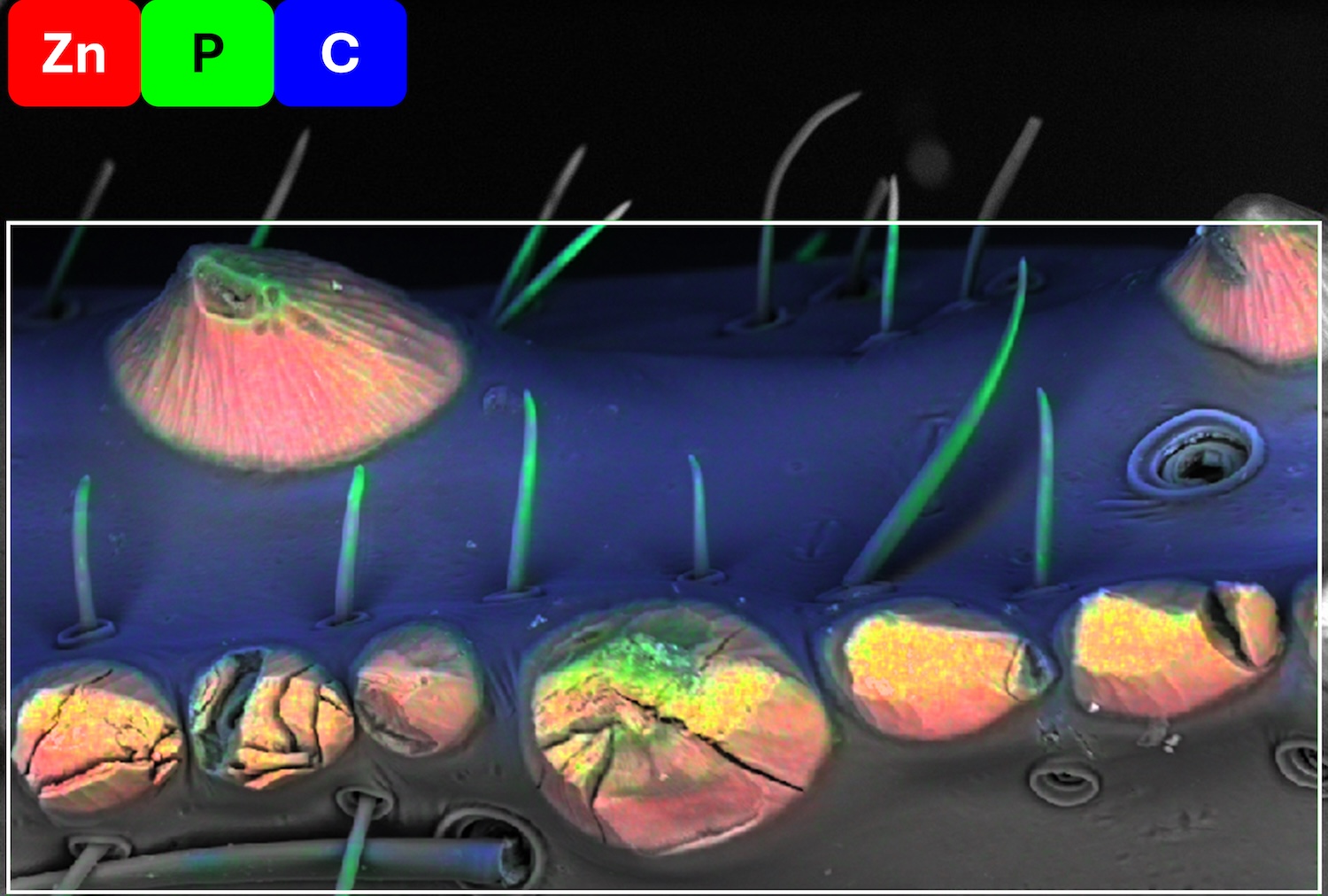
However, each metal’s purpose isn’t quite what researchers hypothesized. Although they predicted stronger, crushing pincers to feature more zinc, they saw higher zinc levels in thinner, longer claws typically used in conjunction with stingers.
“This points to a role for zinc beyond hardness, perhaps playing a bigger role in durability,” said Campbell. “After all, long claws need to grasp prey and prevent it from escaping before being injected by venom. This is an interesting finding because it suggests an evolutionary relationship between how a weapon is used and the specific properties of the metal that reinforces it.”
The team’s findings have major ramifications for understanding the wider world of arthropods and insects. Scorpions are far from the only creatures to incorporate trace metals into their anatomy. By laying a clear foundation for future analysis, researchers can study how these evolutionary adaptations may appear across bees, wasps, spiders, and other animals.
“The microscopic-scale methods we used allowed us to identify individual transition metals in extremely high detail, showing us how nature skillfully engineered these metals in the scorpion’s weapons,” added Vincenzi.
