
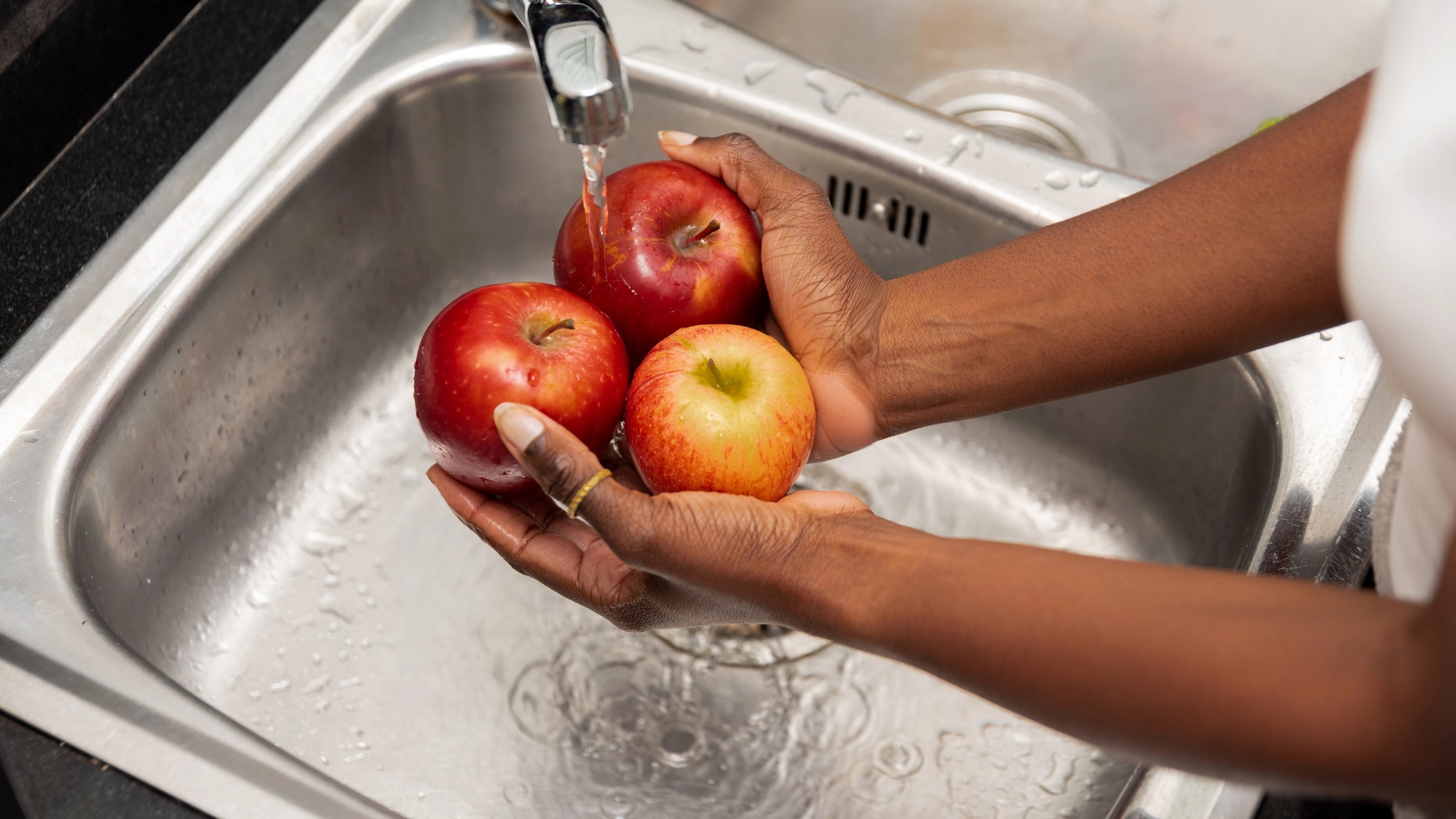
While rinsing really does help clean fruits and vegetables of harmful pesticides and bacteria, washing produce with water alone doesn’t ensure a longer shelf life or guard against decay. With millions of pounds of fresh food wasted annually in the United States alone, agricultural researchers at the University of British Columbia (UBC) in Canada are investigating new ways to extend freshness and rid produce of unwanted pesticides.
“Our goal was to create a simple, safe and affordable wash that improves both food safety and food quality,” UBC land and foods system scientist Tianxi Yang explained in a university profile.

New all-natural wash removes up to 96% of surface pesticides and reduces food waste
Yang and colleagues believe they may now have an answer. According to their new paper published in the journal ACS Nano, the team has designed a biodegradable, naturally sourced rinse that removes over 86–94 percent of surface chemicals while also boosting fruit’slifespan.
Their kitchen concoction is strikingly simple and primarily relies on starch. After extracting particles from the same carbohydrate found in potatoes and grains, Yang’s team combined the extracts with iron and tannic acid—a common component of dry wines and teas. Iron and tannic acid create adhesive masses when mixed together, allowing them to latch onto pesticide molecules.
To test their starch-based solution, the team applied three standard pesticides to apples at an industry standard concentration of around 10 milligrams per liter. They then compared their lab-created wash against a simple water rinse. The team found that their biodegradable solution removed 86 to 94 percent of pesticides, while water removed less than half of the chemicals.
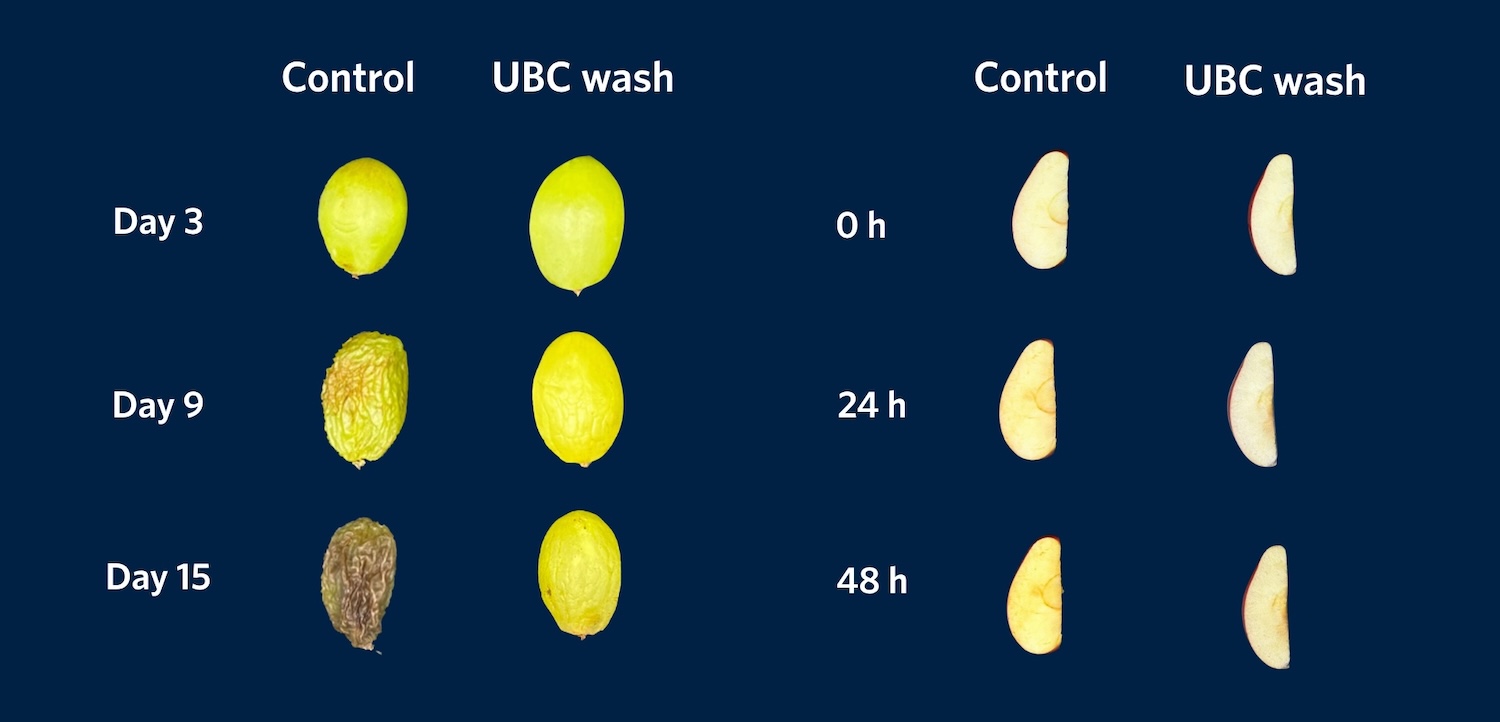
There may be even more uses for the rinse. The team dipped both cut apples and whole grapes into their solution, coating them in a layer of the mixture. The apples browned far slower when stored in a refrigerator than without the treatment, but the grapes were even more surprising. The bunches of fruit remained plump and lost far less water compared to untreated grapes for up to 15 days. At the same time, the coatings appear to exhibit antimicrobial effects.
“The coating acts like a breathable second skin. Measures of food quality like acidity and soluble sugars also remained higher in coated fruit,” said Yang, adding that the extra iron could provide additional health benefits.
As far as scaling up, the researchers don’t believe that introducing the solution into the agricultural industry would be cost-prohibitive, given its relatively cheap ingredients. For example, their early estimates find it adds only around three cents per apple—comparable to current coatings. There may even be direct applications in homes, such as manufacturing a spray or tablet version to help rinse produce.
“People shouldn’t have to choose between eating fresh produce and worrying about what’s on it,” added Yang.
