Artificial hearts have been designed and redesigned for decades, but a new one, designed by Drs. Billy Cohn and Bud Frazier at the Texas Heart Institute, goes in a totally new direction. Instead of trying to replicate the human heart's pumping, this new heart simply whirs. Someone outfitted with this new artificial heart would have no pulse, no heartbeat, at all.
The design is based on two attached ventricular assist devices, a sort of bladed rotor that pushes blood continuously rather than in pumps. It's been used before, but only to replace a single ventricle--nobody had ever tried to replace the entire heart with these devices. That's because it was assumed that the beating of a heart, which we think of as so fundamental to being alive, was necessary for the well-being of other organs as well. Turns out, not so much: the beating is only required for the heart itself. Says Cohn, to NPR: "The pulsatility of the flow is essential for the heart, because it can only get nourishment in between heartbeats. If you remove that from the system, none of the other organs seem to care much."
Cohn compares this to the development of the airplane: at first, we saw birds and bats, and figured flying must require a flapping motion. But a more detailed understanding of aerodynamics led to the airplane, a distinctly un-organic design.
Current status: The pulseless heart has been installed in calves with success, but only one human: a 55-year-old named Craig Lewis who suffered from amyloidosis. The heart actually worked perfectly, but Lewis died from complications of the disease (complications, for the record, unrelated to his heart: it was liver and kidney failure that ended his struggle with amyloidosis). The reason I'd pick this heart? Lewis's wife noted that in place of a heartbeat, his heart hummed. If I'm going to be a cyborg, I'm going to sound like one too, dammit.
Runner-up: This heart was installed earlier this month in an English man. It's more proven, but the idea of a pulseless heart strikes me poetically in the right way, if we're thinking in terms of cyborgs.
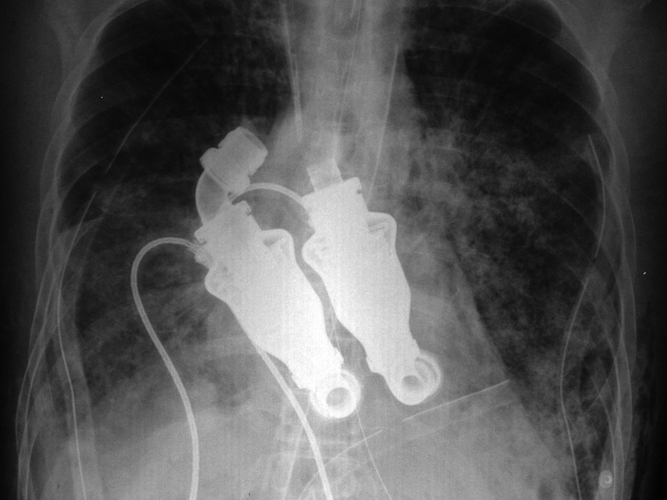
Pictured: An x-ray of the pulseless heart installed in Craig Lewis.
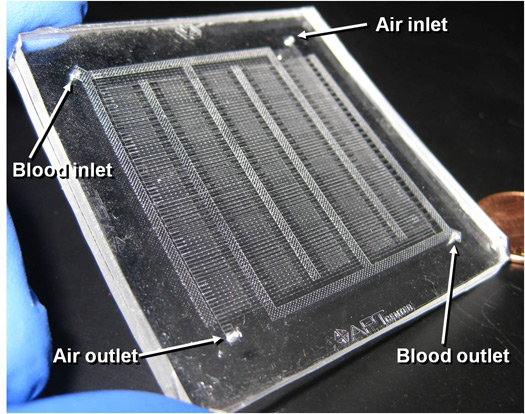
The picture in slide 13 isn't an iron lung, it appears to be either the lung-on-a-chip, or the actual bionic lung discussed in the information area.
The artificial heart that doesn't beat sounds great to me. I've been cursed with the ability to hear my own heartbeat ALL THE TIME, at least in my right ear. It's very distracting. If my heart ever starts to fail, I'd seriously consider this as an option.
That is, if Washington would ever begin to consider the welfare of the poor and unfortunate over the prosperity of the rich. Otherwise very few could afford such a thing.
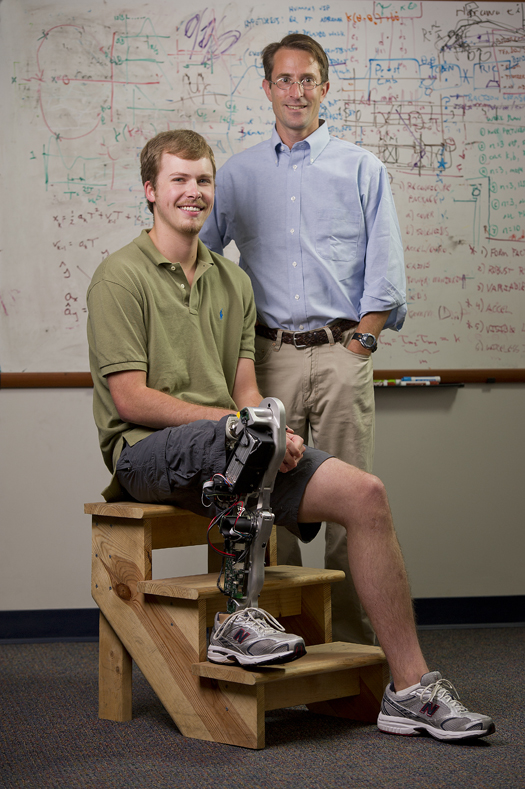
Has anyone studied to see if the other complementary limb provides information that can be used by the lost limb? For instance walking. If my left foot finds I'm walking on sand - and I know I'm walking on sand "I can say that I am" can the combined sets of information be used by the prosthetic? Obviously yes, just wondering if that's been rolled into the mix. Same goes with the height of stairs. If you wore a special sock or sensor on the other foot or maybe a special watch...maybe it could help transmit information such as distance to object, temperature, texture, give...anything. Just a thought. Fascinating advancements. Just fascinating - thank you all for your progress.
The seeker of knowledge who seeks to reach beyond the stars to go where no mans gone before to see things no man has seen and bring these experiences back for the whole world to hear and see.
I would cut my hands and heart and lungs in a heart beat lol
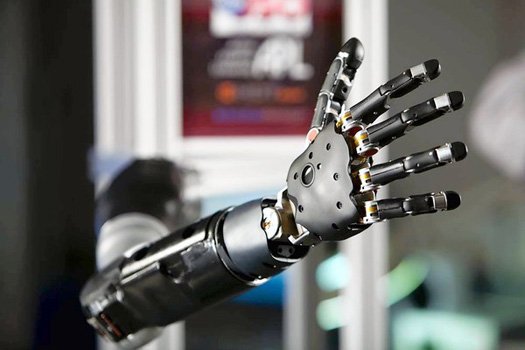
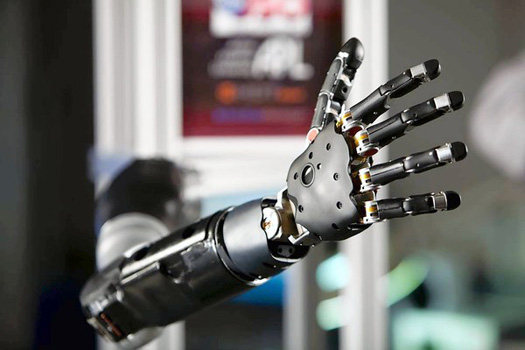
for that stuff the lack of where and tear on the body from old or not fully functioning body parts would mean my life span would increase 2 fold given no anomalies popup like cancer or aid's but yeah i would do it and the DARPA hand i love that thing it's so futuristic i want one now and the lung and heart combo would be a life saver to of the most needed organs virtually age proof
With respect to the bionic lung. This sounds somewhat dangerous. Part of the lungs' function is also fighting airborne diseases. A synthetic blood/air interface that doesnt appear to allow any interaction with the immune system seems to allow unfettered access to the blood for any airborn disease.