
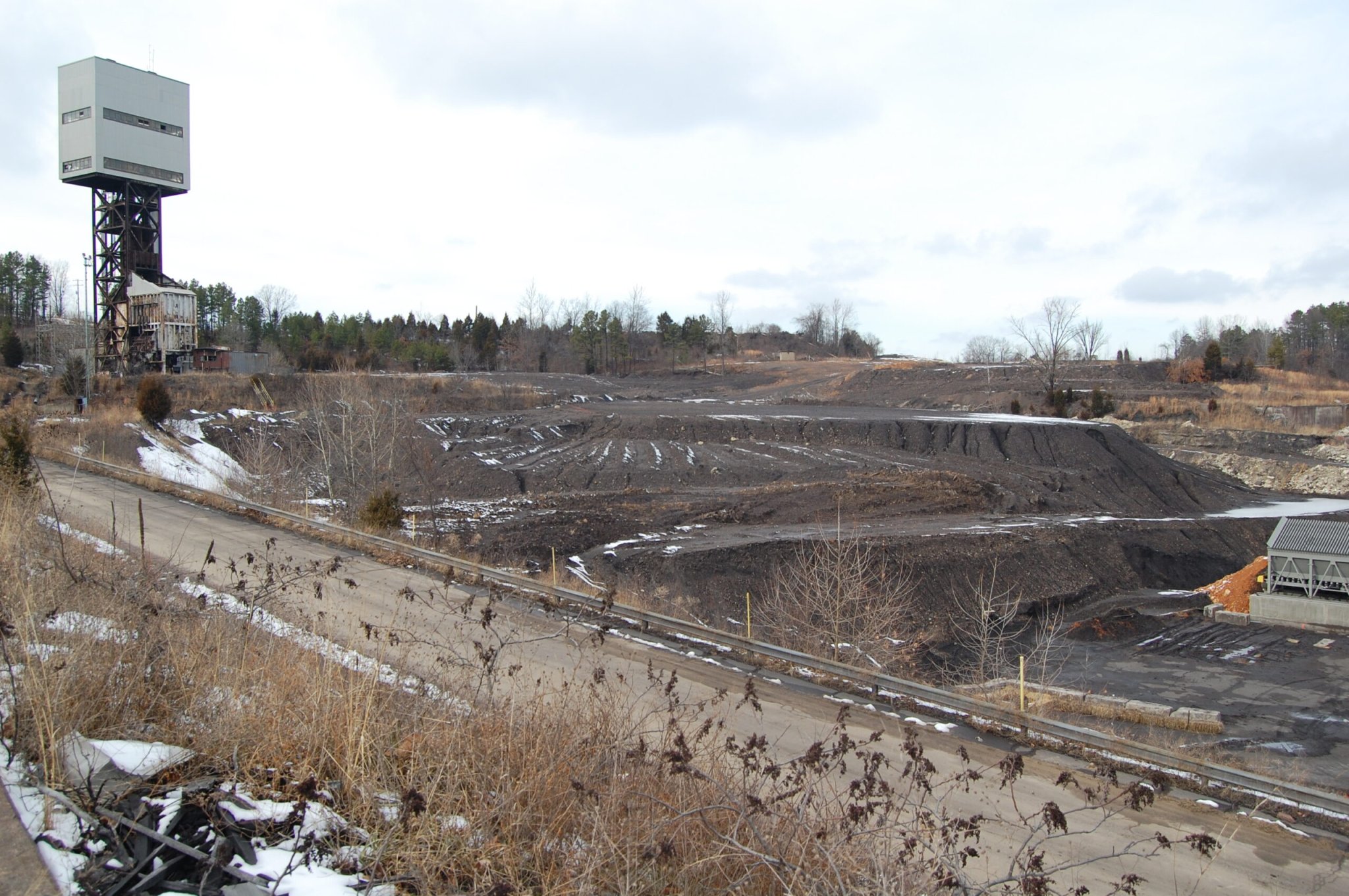
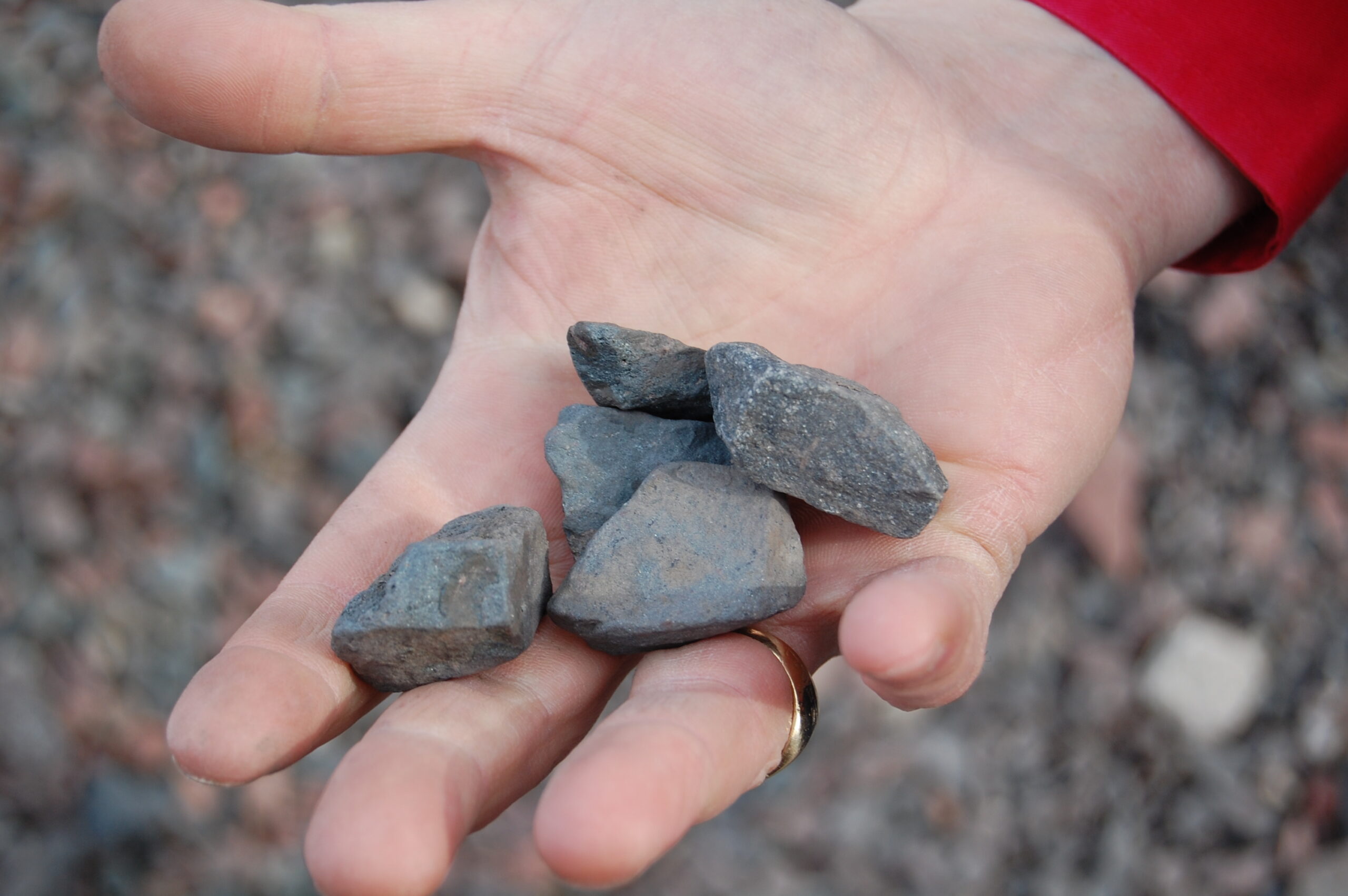
A chunk of magnetite guards the office door at the Pea Ridge iron mine near Sullivan, Mo., a mascot of the mine’s past and future. When Jim Kennedy bought the mine in 2001, he’d planned to restart production on a high-grade iron ore deposit. He didn’t realize he was sitting on a mother lode of 600,000 metric tons of high-grade rare earth elements -- elements the U.S. is desperately hungry for. Four years ago, he almost threw away reams of documents describing Pea Ridge’s deposit. “Nobody bothered to tell me about it,” he said.
At present, the U.S. is almost totally reliant on China for rare earth elements, which are used to make lasers, guided missiles, efficient batteries, and other technologies of the future. But China has recently slashed its exports of these materials, promising new regulations over their production, while raising prices — and the hackles of numerous national governments. As scientists work on possible alternatives to rare earths, some think renewed domestic production of the minerals could loosen China’s grip over 95 percent of the world’s rare earth supply.
Right now, the Pea Ridge mine is a quiet, muddy place with rusting mills, storage sheds cluttered with cracked core samples, and a marshy lake full of mine tailings. But when it’s renovated and reopened, Kennedy hopes to become only the second rare earth producer in the western hemisphere. He envisions a bustling mine producing billions of dollars of rare earths, feeding the renewable energy and defense industries. He has a few hurdles to clear before that dream becomes reality.
Rare earths are recovered just like other metals — from rocks removed from the ground that are broken up, milled and processed into purified forms. It’s a water-intensive, toxic process, but Kennedy says his mine has plenty of rare earths in the mile-long, 100-foot-deep lake of tailings, a slurry-like waste byproduct of almost 40 years of iron mining. He aims to start mining the lake’s 22 million tons of waste by the end of the year and restart underground mining in 2012.On the frigid day I visited, Kennedy took me to Pea Ridge’s core room, a metal shed stuffed with stacks of long, thin cardboard boxes. Inside each box is a section of a core sample taken when the mine was first developed. The one-inch-diameter cylindrical rocks helped Bethlehem Steel, the original owner, determine what the mine had to offer. Back in the 1960s, however, they were only interested in iron. Kennedy pulled out a broken piece and held a magnet to it, and it stuck — a chunk of magnetite, just like the front office sentinel. Another slice of rock was embedded with some glinting yellowish speckles. Those could be bits of rare earth oxides, he said.
Kennedy aims to resume the mine's production of iron, but to produce rare earths as a byproduct of iron purification. That’s possible due to the way the metals are situated in the earth.
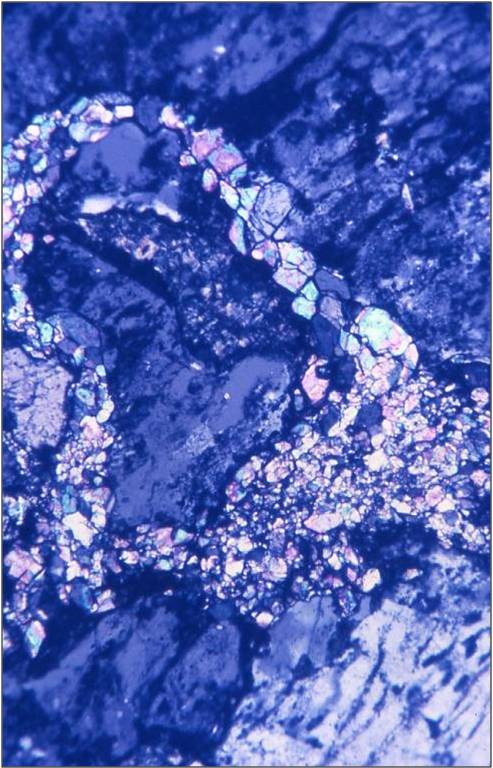
The iron ore is criss-crossed with breccia pipes, a mass consisting of broken sedimentary rock infused with intriguingly named minerals like xenotime and monazite. The rare earths are part of those minerals. "The entire system is flooded with rare earths," Kennedy said.
The phosphorus in these minerals must be removed if their iron is to be used, but it turns out that’s a good thing for rare earth production. The rock is crushed into a fine powder and added to a pine oil solution to produce a frothy liquid. The phosphorus and the rare earths float out, separating them from the high-grade iron.
When it starts production, Pea Ridge would follow California’s Mountain Pass mine, becoming only the second American producer of rare earths. Molycorp Inc. started work at Mountain Pass in December, the mine’s first activity since 2002, when it closed amid regulatory problems stemming from a wastewater spill. Mountain Pass now produces about 3 percent of the world’s rare earth supply, and Molycorp hopes to increase that to 25 percent, producing 40,000 metric tons a year by 2013.
Mountain Pass will be the country’s leading rare earth mine, but it won’t be able to produce many of the so-called heavy rare earths, like dysprosium, which is used to make computer memory and lasers. One analyst suggested this week that Molycorp should diversify by buying up companies with claims on heavy rare earth deposits. Pea Ridge has them in abundance, according to the U.S. Geological Survey.
Despite their name — a holdover from the 1800s and early 1900s — rare earths aren’t particularly rare; they’re much more common than gold, and some are nearly as common as lead. They’re found in relatively low concentrations, however, requiring the processing of lots of rock. Ten states are known to have significant rare-earth deposits, according to a 2010 study by the USGS. Most are in the western U.S., but the Pea Ridge deposit has the highest grade of any site in the country, averaging 12 percent rare earth oxide concentration. Mountain Pass has much more tonnage, but at an average of only 8 percent concentration (and the vast majority is “light” rare earths).
Given its resources and existing infrastructure, why isn't Pea Ridge already producing rare earths? There’s a catch. Along with iron, the heavy rare earths at Pea Ridge are found intermingled with thorium, a radioactive element that requires special processing and cleanup. Hoping to turn this into a positive, Kennedy is drumming up support for thorium as an alternative energy source, namely powering molten salt reactors that could be scattered throughout cities. “When you mine for rare earths, you get the thorium for free,” he said.
Kennedy, a former Army Special Forces soldier and investment banker, has become an outspoken evangelist for rare earths and thorium, speaking to members of Congress, mining groups and engineers — he just gave a presentation at Oak Ridge National Laboratory — about the problem of Chinese dominance and the potential for American resurgence. He is pressing lawmakers in Missouri and Washington to establish a public-private cooperative to come up with $1 billion to build a rare earth refinery in Missouri, and he is hoping to spur a new thorium energy industry.
For now, his plans center on iron production. He wants to build a pipeline to ship iron ore to the Mississippi River 44 miles to the east, where he already has a permit for a processing facility and barge port. Pea Ridge will be the only domestic producer of merchant pig iron, which is used to make steel. Currently, American mills import pig iron from countries like Brazil and Sweden. Just like in its past, iron will be the mine’s main motivation, Kennedy said. But the almost-forgotten rare earths could be the icing on the cake.

Five amazing, clean technologies that will set us free, in this month's energy-focused issue. Also: how to build a better bomb detector, the robotic toys that are raising your children, a human catapult, the world's smallest arcade, and much more.


Online Content Director: Suzanne LaBarre | Email
Senior Editor: Paul Adams | Email
Associate Editor: Dan Nosowitz | Email
Assistant Editor: Colin Lecher | Email
Assistant Editor: Rose Pastore | Email
Contributing Writers:
Kelsey D. Atherton | Email
Francie Diep | Email
Shaunacy Ferro | Email
Enjoyable article, this truly is an important issue for the technology and mining industries.
Can you please quantify the "toxic process"? Is there toxic emissions that the community should worry about? Would the separation process contain and recycle the reagents needed for separation? I think the label "Toxic" is always in need of quantification, because if i recall correctly,(and i'm often wrong) everything has a toxicity level.
If performed correctly, the mining and separation of rare earths is a great benefit to the community and country. I'm certain that the U.S. companies can develop the ability to compete with China on a price and volume all while maintaining a great environmental record.
I see great potential in this venture. My only hope is that DARPA and ARPA-E join in funding this project as initial investors and contract consumers. Imagine total cost cuts by producing your own materials for expensive technological efforts. And a quick look at thorium in wikipedia suggests we should give this a lot of thought!
The Thorium Energy Alliance (TEA), an educational advocacy organization, emphasizes that "there is enough thorium in the United States alone to power the country at its current energy level for over 1,000 years."
I'm all for this if, the mining can be done safely, without toxic spills.
Mining rare earth in the United States would be huge for our economy, as well as producing pig iron. All of that material is imported, so it would help the trade deficit. If you want to really help the manufacturing base, learn about the inexpensive power that could be generated from Thorium Molten Salt Reactors. It is proven science that our country developed in the 1960's and then sat on the shelf. Many other countries are in the race to build one and get the rights to the technology... including China.
Be careful what you wish for people. Remember that we used to mine a lot but then stopped because the environmental tolls are often huge. China has the advantage because they have low environmental standards so they can more easily get away with poisoning their people. However, if this can be done in an environmentally safe way that is also economical, then of course go for it.
Toxicity does not necessarily have to spread into the environment. Proper controls do cost money so, yes it will be more expensive than refining in China, but should not be a deal breaker.
Read all about LFTRs at energyfromthorium.com I am really glad to see this technology promoted. No long term radio-active waste, higher efficiencies, cheaper, what's not to like?
James Johnson, one example would be the use of cyanide in gold mining. The cyanide binds to the elemental gold, which can then be centrifuged or simply allowed to settle out in floc tanks. The cyanide is recycled with 99.5 +% efficiency and re-used.
The use of any toxic material presents risk but we're not talking about some wild-eyed high school student trying to build his own nuclear reactor out of scavenged smoke detector parts. If there was a better, more efficient, more effective process that could provide the yield of the floc process at the same cost, it would be used.
WHAT!!! rare eart metals not so rare, whats next? are they gona start growing their own diamonds now. lol.. oh for the people who can't read sarcasm, i am being sarcastic.
but of course "rare" earth metalts are comman, its just they are spread out all over the earth, i wonder how much "rare" earth metals are in the ocean?
As a Missouri resident I am in favor of the jobs this plant can provide and the potential good our country will receive by having domestic sources for these raw materials.
However, the process has to be safe and clean. We don't need a repeat of the mistakes that just resulted in 175 square miles in southeastern Washington County being declared a super fund site.
Funny, I worked with some rare earth metals as a freshman (~2 years ago) working for a research stream.
When China announced their exportation changes, I asked my professor how it will affect his research; he said, it won't causes changes immediately.
Hard to realize that many of our advance tech needs these materials controlled by a growing power...
Regarding the concerns about toxic byproducts - would one of these be the dreaded DHMO? It almost got me once or twice. You can check it out at www.dhmo.org.
Moquah-Hunter , I'm not sure how concentrated the Light Rare Earth Elements are in the oceanic crust, but they are there. There are no significant Heavy Rare Eaths that relate to this article.
In the ocean the LREEs are located in the volcanic rocks originating from the mid ocean ridges and large scale volcanic vents.
Since these rocks are not located on oceanic shelves, they only reside in the deep ocean many kilometers down and would be impossible to mine even 200years from now.
hope that satisfied your querry. Cheers, eh.
Incredible article Rebecca!
Some insight into the fundamentals of the original jump. From 2007 some of rare earth oxides have risen by over 1000%, samarium oxide was $3.60/kg in 2007, $14.40/kg in the 2nd quarter of 2010 and $36.38/kg by Q4 of 2010.
During this time period, not only did China announce they will cut back on rare earth exports, China is projected to be an importer of rare earths by 2015. This is the product of an extremely frugal nation experiencing an average 9% growth rate over more than 20 years. Some mineralized areas may contain ore bodies at these prices, new waves of discovery are flooding the market as the market tries to isolate our best chances for gains.
from
nationaleconomist.blogspot
The current "situation" is nothing short of a Critical Strategic Oversight.
To be blunt, Chinese dominance, of rare-earth supplies, represents a SIGNIFICANT Strategic Vulnerability, which should be rectified, immediately, with subsidization and federally assisted "fast tracking".
China has CLEARLY shown it's willingness and it's intent, to LEVERAGE China's dominance, at the expense of western interests and allies, in the region.
I propose a "Cost Consortium", amongst key domestic customers and beneficiaries. Any entity, with an interest, from the electronics industry consortiums, to the US DoD, DoE, DoI, etc. Banks and investrment concerns ... International trade institutions.
Let's get jiggy and fix this FAST !!
.
Bravo! now were talking lets use those materials to advance the human race by developing new methods of power generation that do not pollute the atmosphere. While we are at it lets make sure though, that we do not pollute the land or the water tables. Progress only needs to come at the price of labor.... not nature.
Good detailed article! Wish all popsci writers wrote like this :)
Hello can some one tell me more about where these rare earth metals? We live in Wyoming theres a company exploring here with big ideas which will be a huge boom for our town but what they tell us might be what they think we want to here. just like some non bias talk about the mining process will meen for us near it? Is the permit process possible? Thanks new here as you can tell hope i doing this right. J O
I am just wondering when will the mine reopen, or has it already oped?