
This article is adapted from David Quammen’s new book, Spillover. You can purchase it here.
In June 2008, a Dutch woman named Astrid Joosten left the Netherlands with her husband for an adventure vacation in Uganda. It wasn’t their first trip to Africa, but it would be more consequential than the others.
At home in Noord-Brabant, Joosten, 41, worked as a business analyst for an electrical company. Both she and her spouse, a financial manager, enjoyed escaping Europe on annual getaways. In 2002, they had flown to Johannesburg and, stepping off the airplane, felt love for Africa at first sight. On later trips they visited Mozambique, Zambia, and Mali. The journey to Uganda in 2008, booked through an adventure-travel outfitter, would allow them to see mountain gorillas in the southwestern highlands of the country as well as some other wildlife and cultures. They worked their way south toward Bwindi Impenetrable Forest, where the gorillas reside. On one day, the operators offered a side trip, an option, to a place called the Maramagambo Forest, where the chief attraction was a site known as Python Cave. African rock pythons lived there, languid and content, grown large on a diet of bats.
Joosten’s husband, later her widower, is a fair-skinned man named Jaap Taal, a calm fellow with a shaved head and dark, roundish glasses. Most of the other travelers didn’t fancy this Python Cave offering, he told me later. “But Astrid and I always said, ‘Maybe you come here only once in your life, and you have to do everything you can.’ ” They rode to Maramagambo Forest and then walked a mile or so, gradually ascending, to a small pond. Nearby, half-concealed by moss and other greenery, like a crocodile’s eye barely surfaced, was a low, dark opening. Joosten and Taal, with their guide and one other client, climbed down into the cave.
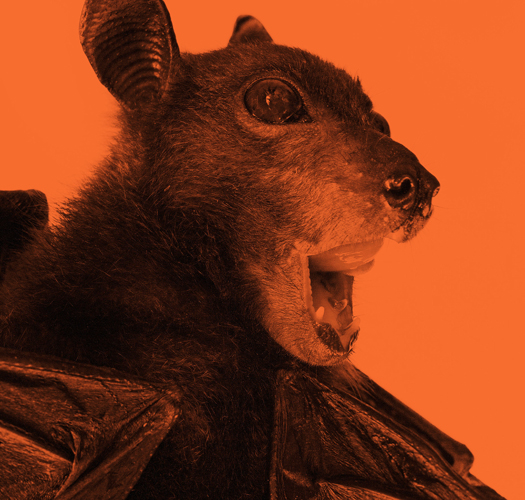
The footing was bad: rocky, uneven, and slick. The smell was bad too: fruity and sour. Think of a dreary barroom, closed and empty, with beer on the floor at three a.m. The cave seemed to have been carved by a creek, or at least to have channeled its waters, and part of the overhead rock had collapsed, leaving a floor of boulders and coarse rubble, a moonscape, coated with guano like a heavy layer of vanilla icing. It served as a major roosting site for the Egyptian fruit bat (Rousettus aegyptiacus), a crow-size chiropteran that’s widespread and relatively abundant in Africa and the Middle East. The cave’s ceiling was thick with them—many thousands, agitated and chittering at the presence of human intruders, shifting position, some dropping free to fly and then settling again. Joosten and Taal kept their heads low and watched their step, trying not to slip, ready to put a hand down if needed. “I think that’s how Astrid got infected,” Taal told me. “I think she put her hand on a piece of rock, which contained droppings of a bat, which are infected. And so she had it on her hand.” Maybe she touched her face an hour later, or put a piece of candy in her mouth, “and that’s how I think the infection got in her.”
No one had warned Joosten and Taal about the potential hazards of an African bat cave. They knew nothing of a virus called Marburg (though they had heard of Ebola). They only stayed in the cave about 10 minutes. They saw a python, large and torpid. Then they left, continued their Uganda vacation, visited the mountain gorillas, took a boat trip, and flew back to Amsterdam. Thirteen days after the cave visit, home in Noord-Brabant, Joosten fell sick.
No one had warned Joosten and Taal about the potential hazards of an African bat cave.At first it seemed no worse than the flu. Then her temperature climbed higher and higher. After a few days, she began suffering organ failure. Her doctors, knowing of her recent time in Africa, suspected Lassa virus or maybe Marburg. “Marburg,” said Taal, “what’s that?” Joosten’s brother looked it up on Wikipedia and told him: “Marburg virus: It kills, could be big trouble.” In fact, it’s a filovirus, the closest relative to the ebolaviruses (of which there are five species, including the most infamous, Ebola). Marburg was first discovered in 1967, when a group of African monkeys, imported to Marburg an der Lahn, in western Germany, for medical research uses, passed a nasty new virus to laboratory workers. Five people died. In the decades since, it has also struck hundreds of Africans, with a case fatality rate of up to 90 percent.
The doctors moved Joosten to a hospital in Leiden, where she could get better care and be isolated from other patients. There, she developed a rash and conjunctivitis; she hemorrhaged. She was put into an induced coma, a move dictated by the need to dose her more aggressively with antiviral medicine. Before she lost consciousness, though not long before, Taal went back into the isolation room, kissed his wife, and said to her, “Well, we’ll see you in a few days.” Blood samples, sent to a lab in Hamburg, confirmed the diagnosis: Marburg. She worsened. As her organs shut down, she lacked for oxygen to the brain, she suffered cerebral edema, and before long Joosten was declared brain-dead. “They kept her alive for a few more hours, until the family arrived,” Taal told me. “Then they pulled the plug out, and she died within a few minutes.”
A horse dies mysteriously in Australia, and people around it fall sick. A chimpanzee carcass in Central Africa passes Ebola to the villagers who scavenge and eat it. A palm civet, served at a Wild Flavors restaurant in southern China, infects one diner with a new ailment, which spreads to Hong Kong, Toronto, Hanoi, and Singapore, eventually to be known as SARS. These cases and others, equally spooky, represent not isolated events but a pattern, a trend: the emergence of new human diseases from wildlife.
The experts call such diseases zoonoses, meaning animal infections that spill into people. About 60 percent of human infectious diseases are zoonoses. For the most part, they result from infection by one of six types of pathogen: viruses, bacteria, fungi, protists, prions, and worms. The most troublesome are viruses. They are abundant, adaptable, not subject to antibiotics, and only sometimes deterred by antiviral drugs. Within the viral category is one particularly worrisome subgroup, RNA viruses. AIDS is caused by a zoonotic RNA virus. So was the 1918 influenza, which killed 50 million people. Ebola is an RNA virus, which emerged in Uganda this summer after four years of relative quiescence. Marburg, Lassa, West Nile, Nipah, dengue, rabies, yellow fever virus, and the SARS bug are too.
Over the last half dozen years, I have asked eminent disease scientists and public-health officials, including some of the world’s experts on Ebola, on SARS, on bat-borne viruses, on HIV-1 and HIV-2, and on viral evolution, the same two-part question: 1) Will a new disease emerge, in the near future, sufficiently virulent and transmissible to cause a pandemic capable of killing tens of millions of people? and 2) If so, what does it look like and from where does it come? Their answers to the first part have ranged from maybe to probably. Their answers to the second have focused on zoonoses, particularly RNA viruses. The prospect of a new viral pandemic, for these sober professionals, looms large. They talk about it; they think about it; they make contingency plans against it: the Next Big One. They say it might happen anytime.
To understand what killed Astrid Joosten, and to see her case within the context of the Next Big One, you need to understand how viruses evolve. Edward C. Holmes is one of the world’s leading experts in viral evolution. He sits in a bare office at the Center for Infectious Disease Dynamics, which is part of Pennsylvania State University, and discerns patterns of viral change by scrutinizing sequences of genetic code. That is, he looks at long runs of the five letters (A, C, T, G, and U) that represent nucleotide bases in a DNA or RNA molecule, strung out in unpronounceable streaks as though typed by a manic chimpanzee. Holmes’s office is tidy and comfortable, furnished with a desk, a table, and several chairs. There are few bookshelves, few books, few files or papers. A thinker’s room. On the desk is a computer with a large monitor. That’s how it all looked when I visited, anyway.
Above the computer was a poster celebrating “the Virosphere,” meaning the totality of viral diversity on Earth. Beside that was another poster, showing Homer Simpson as a character in Edward Hopper’s famous painting “Nighthawks.” Homer is seated at the diner counter with a plate of doughnuts before him.
Holmes is an Englishman, transplanted to central Pennsylvania from London and Cambridge. His eyes bug out slightly when he discusses a crucial fact or an edgy idea, because good facts and ideas impassion him. His head is round and, where not already bald, shaved austerely. He wears wiry glasses with a thick metal brow, and while he looks a bit severe, Holmes is anything but. He’s lively and humorous, a generous soul who loves conversation about what matters: viruses. Everyone calls him Eddie.
“Most emerging pathogens are RNA viruses,” he told me, as we sat beneath the two posters. RNA as opposed to DNA viruses, he meant, or to bacteria or to any other type of pathogen. To say that Eddie Holmes wrote the book on this subject wouldn’t be metaphorical. It’s titled The Evolution and Emergence of RNA Viruses, published by Oxford in 2009, and that’s what had brought me to his door. Now he was summarizing some of the highlights.
There are an awful lot of RNA viruses, he said, which might seem to raise the odds that many would come after humans. RNA viruses in the oceans, in the soil, in the forests, and in the cities; RNA viruses infecting bacteria, fungi, plants, and animals. It’s possible that every cellular species of life on the planet supports at least one RNA virus, though we don’t know for sure because we’ve just begun looking. A glance at his virosphere poster, which portrayed the universe of known viruses as a brightly colored pizza, was enough to support that point. It showed RNA viruses accounting for at least half the slices. But they’re not merely common, Eddie said. They’re also highly evolvable. They’re protean. They adapt quickly.

Two reasons for that, he explained. It’s not just the high mutation rates but also the fact that their population sizes are huge. “Those two things put together mean you’ll produce more adaptive change,” he said.
RNA viruses replicate quickly, generating big populations of viral particles within each host. Stated another way, they tend to produce acute infections, severe for a short time and then gone. Either they soon disappear or they kill you. Eddie called it “this kind of boom-bust thing.” Acute infection also means lots of viral shedding—by way of sneezing or coughing or vomiting or bleeding or diarrhea—which facilitates transmission to other victims. Such viruses try to outrace the immune system of each host, taking what they need and moving onward quickly, before a body’s defenses can defeat them. (The HIVs are an exception, using a slower strategy.) Their fast replication and high rates of mutation supply them with lots of genetic variation. Once an RNA virus has landed in another host—sometimes even another species of host—that abundant variation serves it well, giving it many chances to adapt to the new circumstances, whatever those circumstances might be.
Most DNA viruses embody the opposite extremes. Their mutation rates are low and their population sizes can be small. Their strategies of self-perpetuation “tend to go for this persistence route,” Eddie said. Persistence and stealth. They lurk; they wait. They hide from the immune system rather than try to outrun it. They go dormant and linger within certain cells, replicating little or not at all, sometimes for many years. I knew he was talking about things like varicella zoster, a classic DNA virus that begins its infection of humans as chickenpox and can recrudesce, decades later, as shingles. The downside for DNA viruses, he said, is that they can’t adapt so readily to a new species of host. They’re just too stable. Hidebound. Faithful to what has worked in the past.
The stability of DNA viruses derives from the structure of the genetic molecule and how it replicates: It uses the enzyme DNA polymerase to assemble and proofread each new strand. The enzyme employed by RNA viruses, on the other hand, is “error-prone,” according to Eddie. “It’s just a really crappy polymerase,” which doesn’t proofread, backtrack, or correct erroneous placement of those RNA nucleotide bases, A, C, G, and U. Why not? Because the genomes of RNA viruses are tiny, ranging from about 3,000 nucleotides to about 30,000, which is much less than what most DNA viruses carry. “It takes more nucleotides,” Eddie said—a larger genome, more information—”to make a new enzyme that works.” One that works as neatly as DNA polymerase does, he meant.
These cases represent a pattern: the emergence of new human diseases from wildlife.And why are RNA genomes so small? Because their self-replication is so fraught with inaccuracies that, given more information to replicate, they would accumulate more errors and cease to function at all. It’s sort of a chicken-and-egg problem. RNA viruses are limited to small genomes because their mutation rates are so high, and their mutation rates are so high because they’re limited to small genomes. In fact, there’s a fancy name for that bind: Eigen’s paradox. Manfred Eigen is a German chemist, a Nobel laureate, who has studied the evolution of large, self-replicating molecules. His paradox describes a size limit for such molecules, beyond which their mutation rate gives them too many errors and they cease to replicate. They die out. RNA viruses, thus constrained, compensate for their error-prone replication by producing huge populations and achieving transmission early and often. They can’t break through Eigen’s paradox, it seems, but they can scoot around it, making a virtue of their instability. Their copying errors deliver lots of variation, and variation allows them to evolve fast.
“DNA viruses can make much bigger genomes,” Eddie said. Unlike the RNAs, they’re not limited by Eigen’s paradox. They can even capture and incorporate genes from the host, which helps them to confuse a host’s immune response. They can reside in a body for longer stretches of time, content to get themselves passed along by slower modes of transmission, such as sexual and mother-to-child. “RNA viruses can’t do that.” They face a different set of limits and options. Their mutation rates can’t be lowered. Their genomes can’t be enlarged. “They’re kind of stuck.”
What do you do if you’re a virus that’s stuck, with no long-term security, no time to waste, nothing to lose, and a high capacity for adapting to new circumstances? By now we had worked our way around to the point that interested me most. “They jump species a lot,” Eddie said.
Whence do they jump? From one species of primate to another, from one rodent to another, from a prey animal into a predator, and so on. Such leaps probably occur often in the quiet isolation of forests and other wild habitats, and usually they go undetected by science. But sometimes the leap is from a nonhuman critter into a human. Then we notice.
The kind of animal that harbors a given virus is known as its reservoir host. Could be a monkey, a bat, maybe a rat. Within its reservoir host the virus lives quietly, in a sort of long-term truce, causing no obvious symptoms. Passage from one kind of host to another is called spillover. In the new host, the old truce doesn’t apply. The virus may turn aggressive and virulent. If the new host is human, you’ve got a newly emerged zoonotic disease.
Spillover to humans, as Eddie Holmes noted, occurs more often among RNA viruses than other bugs. It brings creatures such as Lassa (first recorded in 1969), Ebola (1976), HIV-1 (inferred in 1981, isolated in 1983), HIV-2 (1986), Sin Nombre (the infamous American hantavirus, 1993), Hendra (1994), avian flu (1997), Nipah (1998), West Nile (1999), SARS (2003), and swine flu (2009) into people’s lives. Marburg is just another of the leaping threats, rare but dramatic in its impact on humans. Why are these spillovers happening, ever more frequently, in what seems a drumbeat of bad news?
To put the matter in its starkest form: Human-caused ecological pressures and disruptions are bringing animal pathogens ever more into contact with human populations, while human technology and behavior are spreading those pathogens ever more widely and quickly. In other words, outbreaks of new zoonotic diseases, as well as the recurrence and spread of old ones, reflect things that we’re doing, rather than just being things that are happening to us.
We have increased our human population to the level of seven billion and beyond. We are well on our way toward nine billion before our growth trend is likely to flatten. We live at high densities in many cities. We have penetrated, and we continue to penetrate, the last great forests and other wild ecosystems of the planet, disrupting the physical structures and the ecological communities of such places. We cut our way through the Congo. We cut our way through the Amazon. We cut our way through Borneo. We cut our way through Madagascar. We cut our way through New Guinea and northeastern Australia. We shake the trees, figuratively and literally, and things fall out. We kill and butcher and eat many of the wild animals found there. We settle in those places, creating villages, work camps, towns, extractive industries, new cities. We bring in our domesticated animals, replacing the wild herbivores with livestock. We multiply our livestock as we’ve multiplied ourselves, establishing huge factory-scale operations that contain thousands of cattle, pigs, chickens, ducks, sheep, and goats. We export and import livestock, fed and fattened with prophylactic doses of antibiotics and other drugs, across great distances and at high speeds. We export and import wild animals as exotic pets. We export and import animal skins, contraband bushmeat, and plants, some of which carry hidden microbial passengers. We travel, moving between cities and continents even more quickly than our transported livestock. We visit monkey temples in Asia, live markets in India, picturesque villages in South America, dusty archaeological sites in New Mexico, dairy towns in the Netherlands, bat caves in East Africa, racetracks in Australia—breathing the air, feeding the animals, touching things, shaking hands with the locals—and then we jump on our planes and fly home. We provide an irresistible opportunity for enterprising microbes by the ubiquity and sheer volume and mass of our human bodies.
Everything just mentioned falls under this rubric: the ecology and evolutionary biology of zoonotic diseases. Ecological circumstance provides opportunity for spillover. Evolution seizes opportunity, explores possibilities, and helps convert spillovers to pandemics. But “ecology” and “evolutionary biology” sound like science, not medicine or public health. If zoonoses from wildlife represent such a significant threat to global security, then what’s to be done? Learn more. RNA viruses are everywhere, as Eddie Holmes has warned, and science has identified only a fraction of them. Fewer still have been traced to their reservoir hosts, isolated from the wild, grown in the lab, and systematically studied. Until those steps have been achieved, the viruses in question can’t be battled with vaccines and treatments. This is where the field and laboratory scientists—veterinary ecologists, epidemiologists, molecular phylogeneticists, lab virologists—come in. If we’re going to understand how zoonoses operate, we need to find these bugs in the world, grow them in cell cultures the old-fashioned way, look at them in the flesh, sequence their genomes, and place them within their family trees. It’s happening, in laboratories and at field sites all over the world; but it’s no simple task.
Astrid Joosten wasn’t the only person in recent years to die of Marburg. In 2007, a year before her visit to Uganda, a small outbreak occurred among miners in roughly the same area. Just four men were affected, of whom one died. All of them worked at a site called Kitaka Cave, in the southwestern corner of Uganda.
Why are these spillovers happening, ever more frequently, in what seems a drumbeat of bad news?Soon after the news of the affliction got out, in August 2007, an international response team converged on Uganda to assist and collaborate with the Ugandan Ministry of Health. The group included scientists from the Centers for Disease Control and Prevention (CDC) in Atlanta, the National Institute for Communicable Diseases (NICD) in South Africa, and the World Health Organization (WHO) in Geneva. From the CDC there was Pierre Rollin, an expert on the filoviruses and their clinical impacts. Along with him from Atlanta had come Jonathan Towner, Brian Amman, and Serena Carroll. Pierre Formenty had arrived from WHO; Bob Swanepoel and Alan Kemp of the NICD had flown up from Johannesburg. All of them possessed extensive experience with Ebola and Marburg, gained variously through outbreak responses, lab research, and field studies.

The cave served as the roosting site for about 100,000 individuals of the Egyptian fruit bat, then a prime suspect as reservoir for Marburg. The team members, wearing Tyvek suits, rubber boots, goggles, respirators, gloves, and helmets, had been shown to the shaft by miners, who as usual were clad only in shorts, T-shirts, and sandals. Guano covered the ground. The miners clapped their hands to scatter low-hanging bats as they went. The bats, panicked, came streaming out. These were sizable animals, each with a two-foot wingspan, not quite so large and hefty as some fruit bats but still daunting, especially with thousands swooshing at you in a narrow tunnel. Before he knew it, Amman had been conked in the face by a bat and taken a cut over one eyebrow. Towner got hit too. Fruit bats have long, sharp thumbnails. Later, because of the cut, Amman would get a postexposure shot against rabies, though Marburg was a more immediate concern. “Yeah,” he thought, “this could be a really good place for transmission.”
The cave had several shafts. The main shaft was about eight feet high. Because of all the mining activity, many of the bats had shifted their roosting preference “and went over to what we called the cobra shaft,” Amman later told me. The shaft was called so because, he said, “there was a black forest cobra in there.”
Or maybe a couple. It was a good dark habitat for a snake, with water and plenty of bats to eat. The miners showed Amman and Towner into the cave and led them to a chamber containing a body of brown, tepid water. Then the local fellows cleared out, leaving the scientists to explore on their own. They dropped down beside the brown lake and found that the chamber branched into three shafts, each of which seemed blocked by standing water. Peering into those shafts, they could see many more bats. The humidity was high and the temperature maybe 10 or 15 degrees hotter than outside. Their goggles fogged up. Their respirators became soggy and wouldn’t pass much oxygen. They were panting and sweating, zipped into their Tyvek suits, which felt like wearing a trash bag, and by now they were becoming “a little loopy,” Amman recalled. “We had to get out and cool off.” It was only their first underground excursion at Kitaka. They would make several.
On a later day, the team investigated a grim, remote chamber they dubbed the Cage. It was where one of the four infected miners had been working just before he got sick. This time, Amman, Formenty, and Alan Kemp of the NICD went to the far recesses of the cave. The Cage itself could only be entered by crawling through a low gap at the base of a wall—like sliding under a garage door that hadn’t quite closed. Amman is a large man, six-foot-three and 220 pounds, and for him the gap was a tight squeeze; his helmet got stuck, and he had to pull it through separately. “You come out into this sort of blind room,” he said, “and the first thing you see is just hundreds of these dead bats.”
They were Egyptian fruit bats, the creature of interest, left in various stages of mummification and rot. Piles of dead and liquescent bats seemed a bad sign, potentially invalidating the hypothesis that Rousettus aegyptiacus might be a reservoir host of Marburg. If these bats had died of Marburg, suspicion would shift elsewhere—to another bat or maybe a rodent or a tick or a spider? Those other suspects might have to be investigated. Ticks, for instance: There were plenty of them in crevices near the bat roosts, waiting for a chance to drink some blood.
The men went to work, collecting. They stuffed dead bats into bags. They caught a few live bats and bagged them too. Then, back down on their bellies, they squeezed out through the low gap. “It was really unnerving,” Amman told me. “I’d probably never do it again. One little accident, a big rock rolls in the way, and that’s it. You’re trapped. Uganda is not famous for its mine rescue teams.”
By the end of this field trip, the scientists had collected about 800 bats. They dissected them and took samples of blood and tissue. Those samples went back to Atlanta, where Towner participated in the laboratory efforts to find traces of Marburg virus. One year later came a paper, authored by Towner, Amman, Rollin, and their WHO and NICD colleagues, announcing some important results. Not only did the team detect antibodies against Marburg and fragments of Marburg RNA, but they also did something more difficult and compelling. They found live virus.
Working in one of the CDC’s Biosafety Level 4 units (the highest level of containment security for pathogens), Towner and his coworkers had isolated viable, replicating Marburg virus from five different bats. Furthermore, the five strains of virus were genetically diverse, suggesting an extended history of viral presence and evolution within Egyptian fruit bats. That data, plus the fragmentary RNA, constituted strong evidence that the bat is a reservoir—if not the reservoir—of Marburg virus. The virus is definitely there, infecting about 5 percent of the bat population at a given time. Of the estimated 100,000 bats at Kitaka, therefore, the team could say that about 5,000 Marburg-infected bats flew out of the cave every night.
An interesting thought: 5,000 infected bats passing overhead. Where were they going? How far to the fruiting trees? Whose livestock or little gardens got shat upon as they went? The breadth of possible transmission is incalculable. And the Kitaka aggregation, Towner and his co-authors added, “is only one of many such cave populations throughout Africa.”
The dangers presented by zoonoses are real and severe, but the degree of uncertainties is also high. There’s not a hope in hell, for instance, as a great flu expert told me, of predicting the nature and timing of the next influenza pandemic. Too many factors vary randomly, or almost randomly, in that system. Prediction, in general, so far as all these diseases are concerned, is a tenuous proposition, more likely to yield false confidence than actionable intelligence.
But the difficulty of predicting precisely doesn’t oblige us to remain blind, unprepared, and fatalistic about emerging and reemerging zoonotic diseases. The practical alternative to soothsaying, as one expert put it, is “improving the scientific basis to improve readiness.” By “the scientific basis” he meant the understanding of which virus groups to watch, the field capabilities to detect spillovers in remote places before they become regional outbreaks, the organizational capacities to control outbreaks before they become pandemics, plus the laboratory tools and skills to recognize known viruses speedily, to characterize new viruses almost as fast, and to create vaccines and therapies without much delay. If we can’t predict a forthcoming influenza pandemic or any other newly emergent virus, we can at least be vigilant; we can be well prepared and quick to respond; we can be ingenious and scientifically sophisticated in the forms of our response.
To a considerable degree, such things are already being done. Ambitious networks and programs have been created, by the WHO, the CDC, and other national and international agencies, to address the danger of emerging zoonotic diseases. Because of concern over the potential of “bioterrorism,” even the U.S. Department of Homeland Security and the Defense Advanced Research Projects Agency (DARPA, whose motto is “Creating & Preventing Strategic Surprise”) of the U.S. Department of Defense have their hands in the mix. These efforts carry names and acronyms such as the Global Outbreak Alert and Response Network (GOARN, of WHO), Prophecy (of DARPA), the Emerging Pandemic Threats program (EPT, of USAID), and the Special Pathogens Branch (SPB, of the CDC), all of which sound like programmatic boilerplate but which harbor some dedicated people working in field sites where spillovers happen and secure labs where new pathogens can be quickly studied. Private organizations such as EcoHealth Alliance (led by a former parasitologist named Peter Daszak) have also tackled the problem. “You come to this blind room and the first thing you see is just hundreds of these dead bats.”There is an intriguing organization called Global Viral (GV), created by a scientist named Nathan Wolfe [who won a Popular Science Brilliant Ten award in 2005], and financed in part by Google. GV gathers blood samples on small patches of filter paper from bush-meat hunters and other people across tropical Africa and Asia and screens those samples for new viruses, in a systematic effort to detect spillovers and stop the next pandemic before it begins to spread. At the Mailman School of Public Health, part of Columbia University, researchers in Ian Lipkin’s laboratory are developing new molecular diagnostic tools. Lipkin, trained as a physician as well as a molecular biologist, calls his métier “pathogen discovery” and uses techniques such as high-throughput sequencing (which can sequence thousands of DNA samples quickly and cheaply), MassTag-PCR (identifying amplified genome segments by mass spectrometry), and the GreeneChip diagnostic system, which can simultaneously screen for thousands of different pathogens. When a field biologist takes serum from flying foxes in Bangladesh or bleeds little bats in southern China, some of those samples go straight to Lipkin.
These scientists are on alert. They are our sentries. They watch the boundaries across which pathogens spill. When the next novel virus makes its way from a chimpanzee, a bat, a mouse, a duck, or a macaque into a human, and maybe from that human into another human, and thereupon begins causing a small cluster of lethal illnesses, they will see it—we hope they will, anyway—and raise the alarm.
During the early 20th century, disease scientists from the Rockefeller Foundation and other institutions conceived the ambitious goal of eradicating some infectious diseases entirely. They tried hard with yellow fever, spending millions of dollars and many years of effort, and failed. They tried with malaria and failed. They tried later with smallpox and succeeded. Why? The differences among those three diseases are many and complex, but probably the most crucial one is that smallpox resided neither in a reservoir host nor in a vector, such as a mosquito or tick. Its ecology was simple. It existed in humans—in humans only—and was therefore much easier to eradicate. The campaign to eradicate polio, begun in 1998 by WHO and other institutions, is a realistic effort for the same reason: Polio isn’t zoonotic. Eradicating a zoonotic disease, whether a directly transmitted one like Ebola or an insect-vectored one such as yellow fever, is much more complicated. Do you exterminate the pathogen by exterminating the species of bat or primate or mosquito in which it resides? Not easily, you don’t, and not without raising an outcry. The notion of eradicating chimpanzees as a step toward preventing the future spillover of another HIV would provoke a deep and bitter discussion, to put it mildly.
That’s the salubrious thing about zoonotic diseases: They remind us, as St. Francis did, that we humans are inseparable from the natural world. In fact, there is no “natural world,” it’s a bad and artificial phrase. There is only the world. Humankind is part of that world, as are the ebolaviruses, as are the influenzas and the HIVs, as are Marburg and Nipah and SARS, as are chimpanzees and palm civets and Egyptian fruit bats, as is the next murderous virus—the one we haven’t yet detected. And while humans don’t evolve nearly as fast and as variously as an RNA virus does, we may—let me repeat that word, may—be able to keep such threats at bay, fighting them off, forestalling the more cataclysmic of the dire scenarios they present, for one reason: At our best, we’re smarter than they are.
