Engineers recently discovered a way to power tiny drones and robots with something we encounter every day—sound waves.
The technology, described in a study published in the journal Science Advances, is based on a phenomenon in physics called Helmholtz resonance, also known as wind throb. Helmholtz resonance occurs when air trapped in a cavity oscillates back and forth in response to airflow. Think of what happens when you blow air across the opening of a glass bottle—that low hum is these oscillations becoming amplified at certain frequencies.
The team looked at how they could use Helmholtz resonance as a way to move objects. Essentially, when sound waves enter these cavities, the moving air is forced out as a concentrated jet. At the same time, the incoming airflow is more spread out. This imbalance creates a net force in one direction, allowing the researchers to design objects that could be propelled by sound.
“Instead of pushing devices around with sound waves, we have created acoustic resonators that are tuned to harness sound at specific frequencies to generate directional thrust and controlled motion,” study co-author Selman Sakar, a mechanical engineer at France’s École polytechnique fédérale de Lausanne (EPFL), said in a statement. “Our work shows the feasibility of transforming a simple, cleverly designed mechanical piece into robotic matter.”
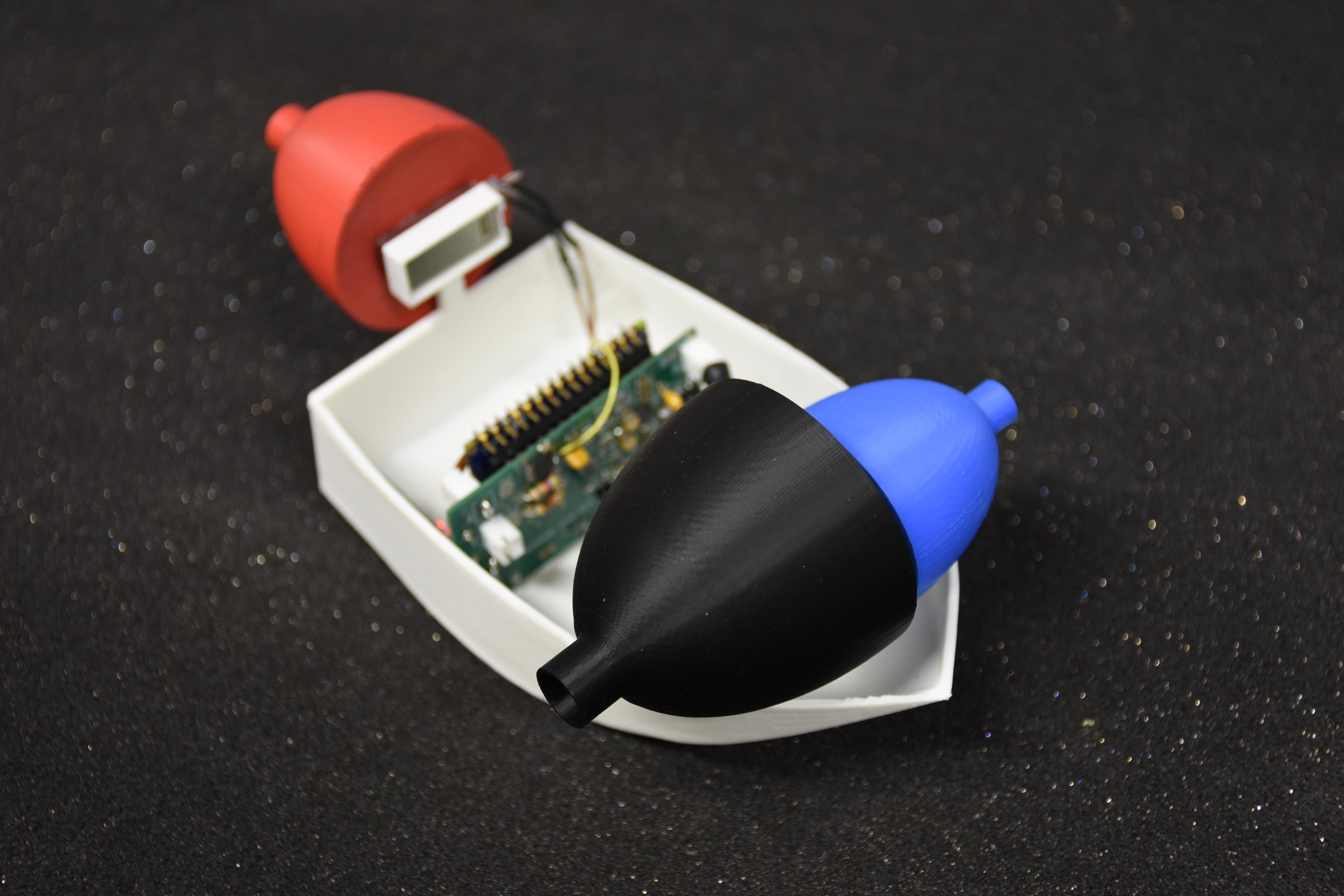
First, the team 3D printed a series of cavities in different shapes, sizes, and materials to see which ones generated the greatest thrust, or push forward. They then printed miniature boats equipped with up to three resonators tuned to different frequencies and aimed in a specific direction. By changing the frequency coming from a speaker, the researchers could steer the boat around obstacles in a small pool. They even developed a fully integrated remotely controlled boat and programmed it to trace the letters EPFL, their university’s acronym.
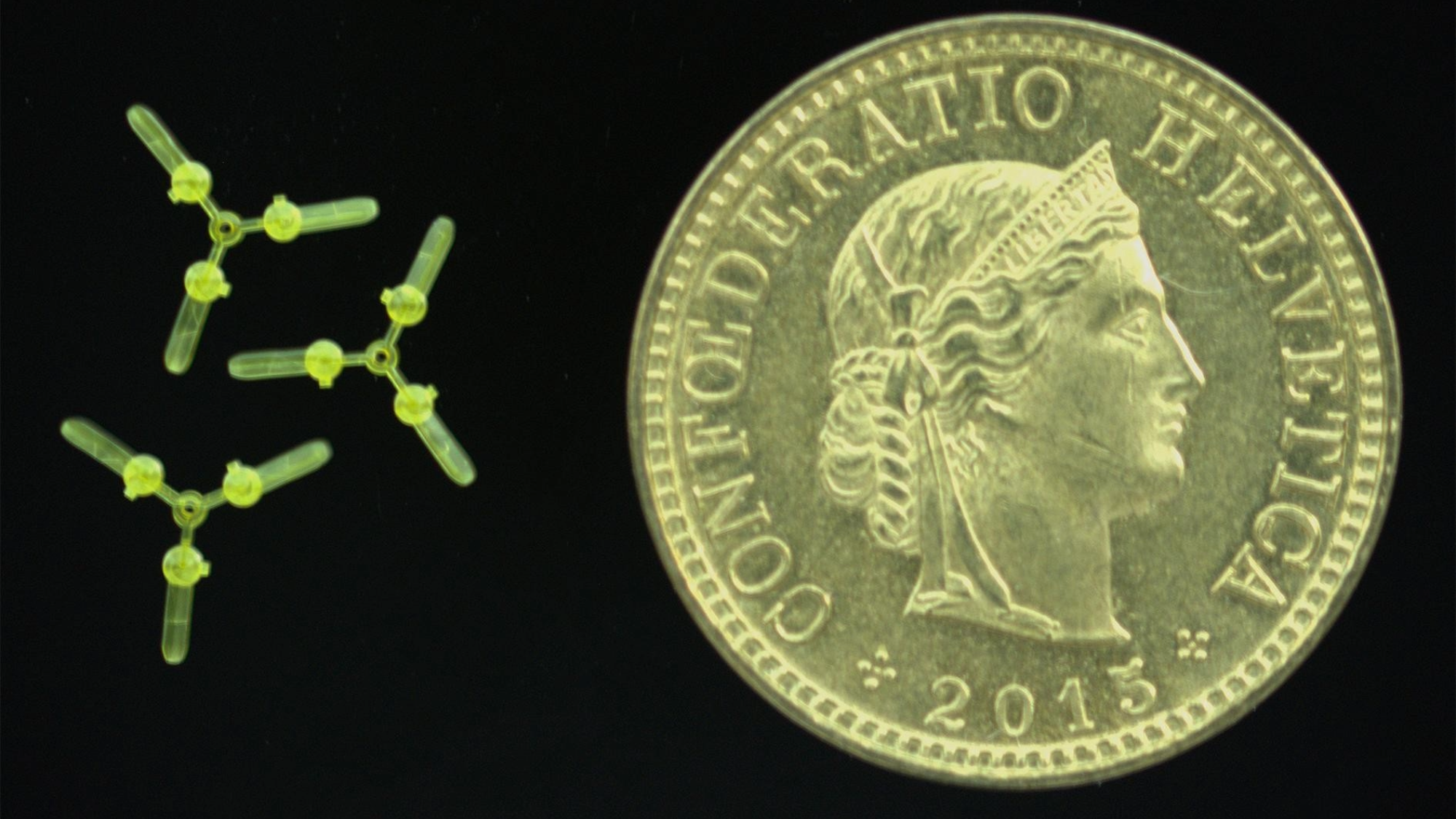
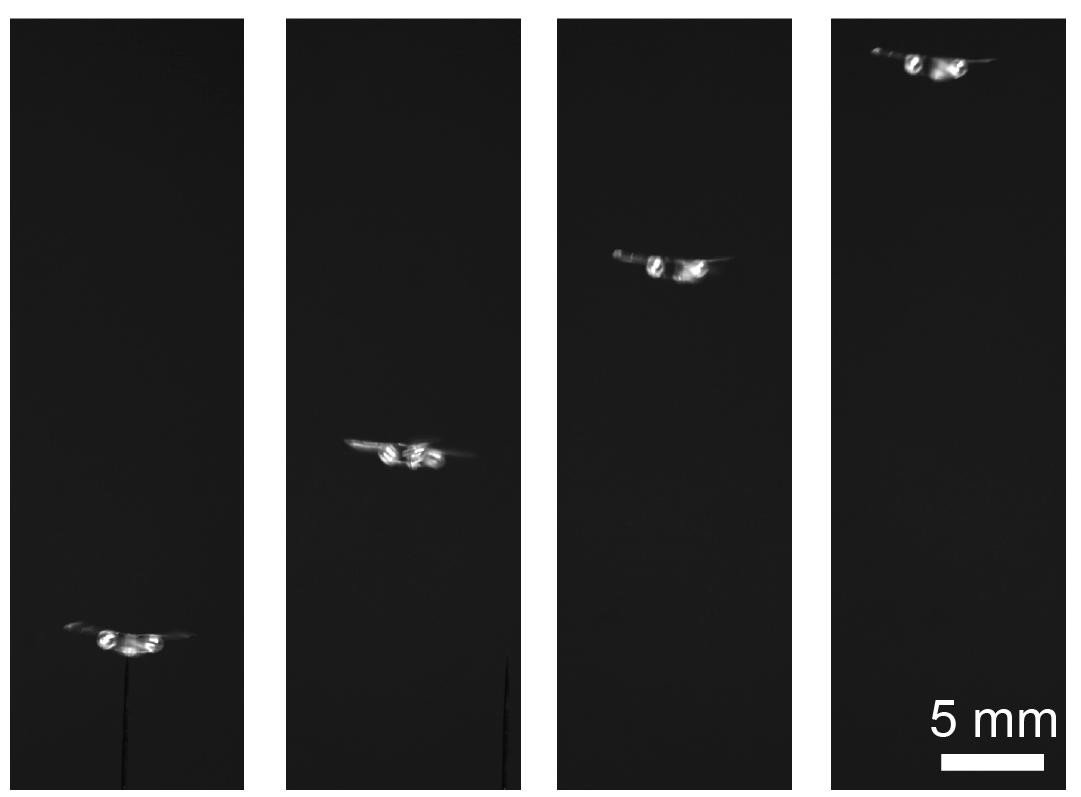
Next, the team built “microfliers”—tiny drones about the size of a coin, with three microscopic cavities built directly into their structures. The devices were powered by ultrasonic frequencies that can’t be heard by humans. One microflier used the cavities to generate an upward thrust, while another used the sound-generated force to spin tiny blades at up to 13,000 revolutions per minute, lifting like a miniature helicopter.
And if you thought these robots were already tiny, you’re in for a surprise: they could get even smaller.
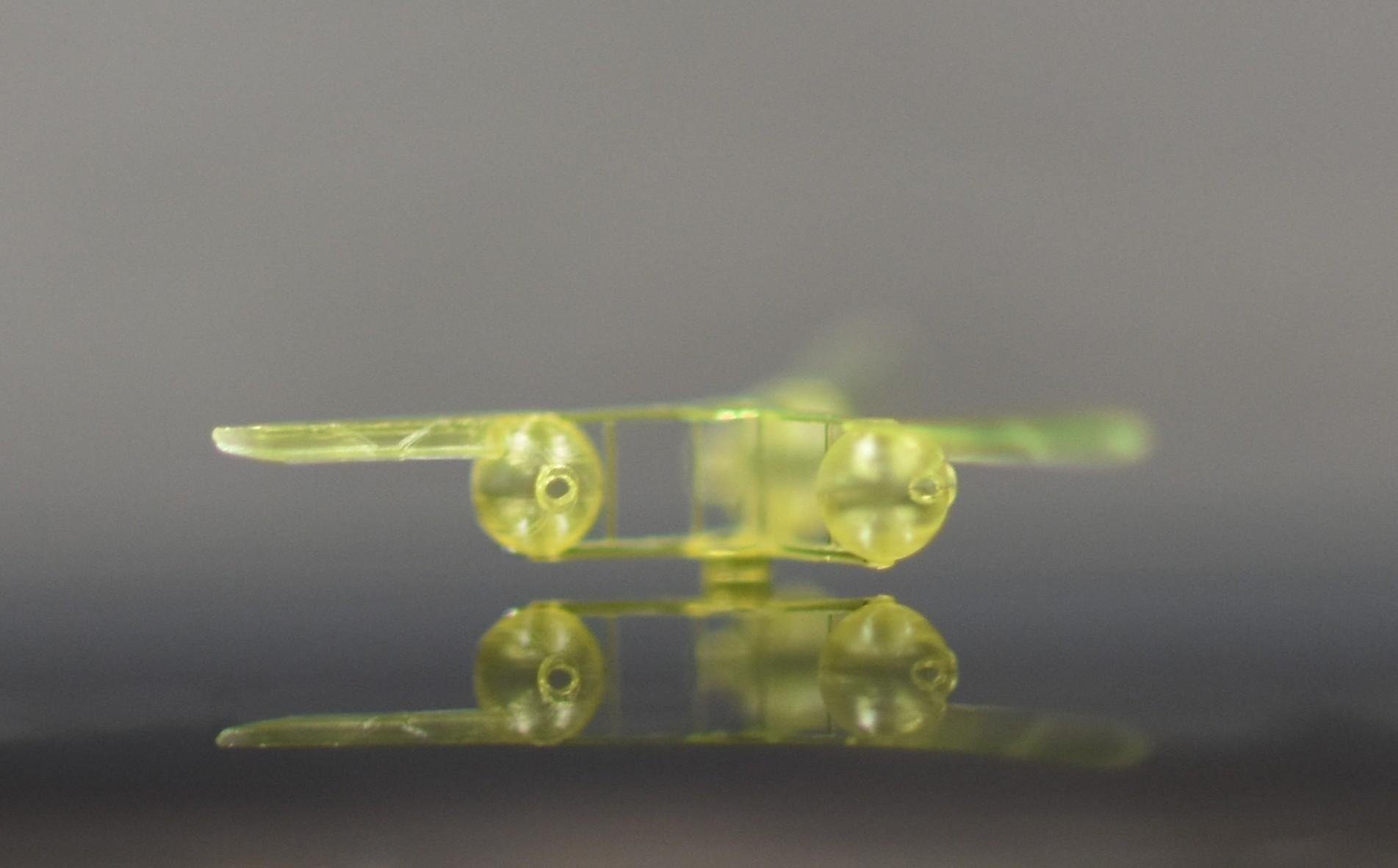
“Our concept is compatible with even further miniaturization, enabling advanced designs that push the boundaries of robotics and aeronautics,” study co-author and EPFL mechanical engineer Junsun Hwang said in a statement.
The team believes future designs could build multiple sound-responsive structures into one flexible device.
“This would allow specific parts of the device to move, bend or vibrate, potentially leading to aerodynamic robotic devices that can change shape in response to sound,” Sakar added.