
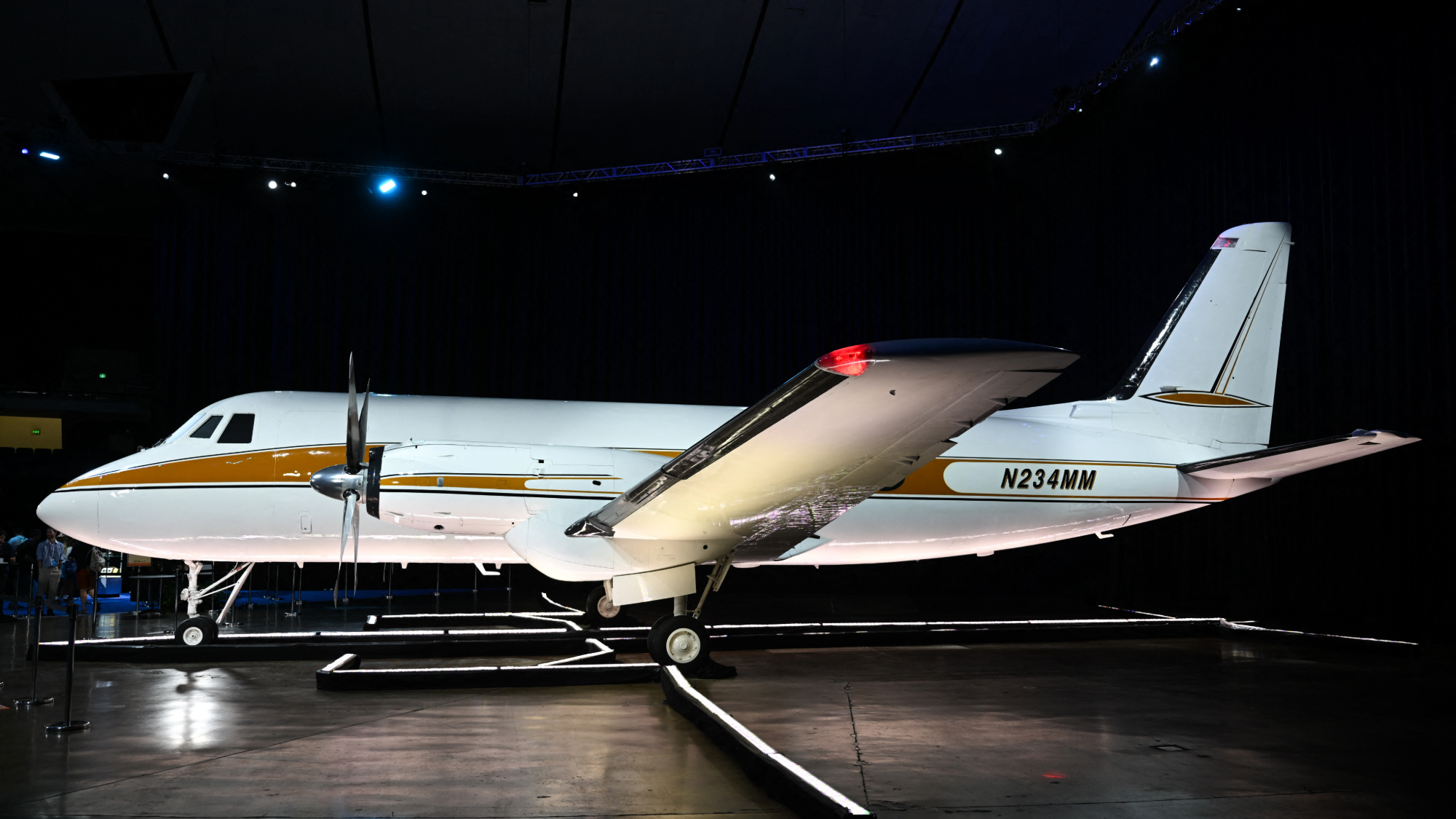
The Air Force One of cartoons is getting a second shot at life after spending nearly 15 years baking in the Florida heat.
A multi-year effort to restore the interior and exterior of Walt Disney’s private plane to its 1960s glory is officially complete. The living time capsul features iconic beige-and-cream midcentury modern furniture and an assortment of Mickey Mouse-themed accessories scattered throughout. Unlike Peter Pan or Dumbo, it can’t fly, but the Grumman Gulfstream I is now on full display to the public at the Palm Springs Air Museum.
Bringing it back to its former state wasn’t simple. The private business jet was officially decommissioned in 1992 and had been sitting derelict in a Disney World field since 2014. Heat and humidity had rotted much of the interior and left the paint peeling.
News of the completed restoration was first reported by The Orange Country Register.
The Mouse set the standard for business air travel
Disney purchased the Grumman Gulfstream I in 1963. It had the FAA registration number N234MM (MM for Mickey Mouse) and was often referred to simply as The Mouse. Over the course of nearly 30 years, The Mouse clocked over 20,000 flight hours and transported an estimated 83,000 passengers, largely between California and Florida. Its guests included Walt Disney and his family, business and media titans, movie stars, and even United States presidents Jimmy Carter and Ronald Reagan.
For better or worse, it also helped pave the way for what would become the template for modern business air travel. Disney purchased the plane during a period when the company was expanding its footprint (or paw print) rapidly. He reportedly used the plane to conduct an aerial survey of the Florida site that would become Disney World, and used it frequently to crisscross his budding transcontinental media empire.
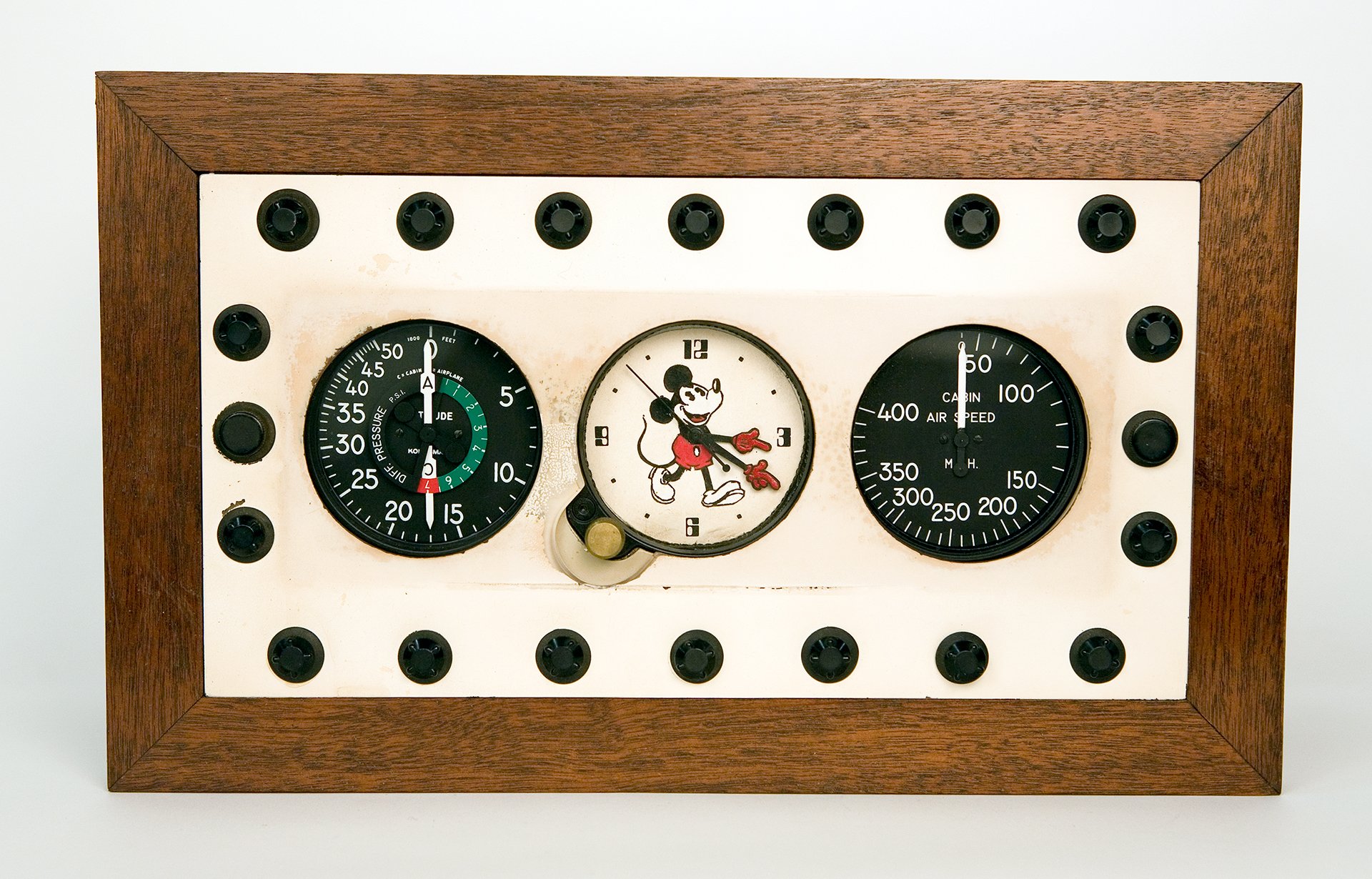
In addition to his well-documented love of trains, Disney was also an aviation enthusiast. He reportedly asked to have an instrument panel with an altimeter, speed gauge, and clock fitted to the bulkhead behind his seat so he could keep tabs on flight conditions.
But there was another, possibly more important reason for his relatively early investment in private aviation: business secrets.
“Walt’s plane allowed him to do something he couldn’t do while flying on commercial airlines: continue to conduct day-to-day business without the worry of another passenger overhearing his conversations regarding studio matters,” Walt Disney Company archivist manager Edward Ovalle said in a 2024 Smithsonian Air and Space Museum blog. “Walt’s plane allowed him to do something he couldn’t do while flying on commercial airlines: continue to conduct day-to-day business without the worry of another passenger overhearing his conversations regarding studio matters.”
Passengers couldn’t avoid an iconic rodent
The aircraft itself is relatively tame by today’s performance standards, but was more than capable of getting the job done. Measuring 64 feet long with a 78-foot wingspan, the Gulfstream I was powered by two 2,220-horsepower Rolls-Royce Dart turboprop engines. That power gave it a cruising speed of around 350 miles per hour at a top altitude of 30,000 feet. For comparison, a Boeing 747 commercial airliner has a cruising speed of around 560 mph.
Inside, The Mouse sat 15 passengers and a three-person crew. It had two bathrooms (one for the boss and one for everyone else), a galley kitchen, lounge-style seating, a couch, and a large wooden desk. Like many private planes today, the space was designed as much around conducting business as leisure. Walt Disney reportedly often read movie scripts during his frequent flights from California to Florida.
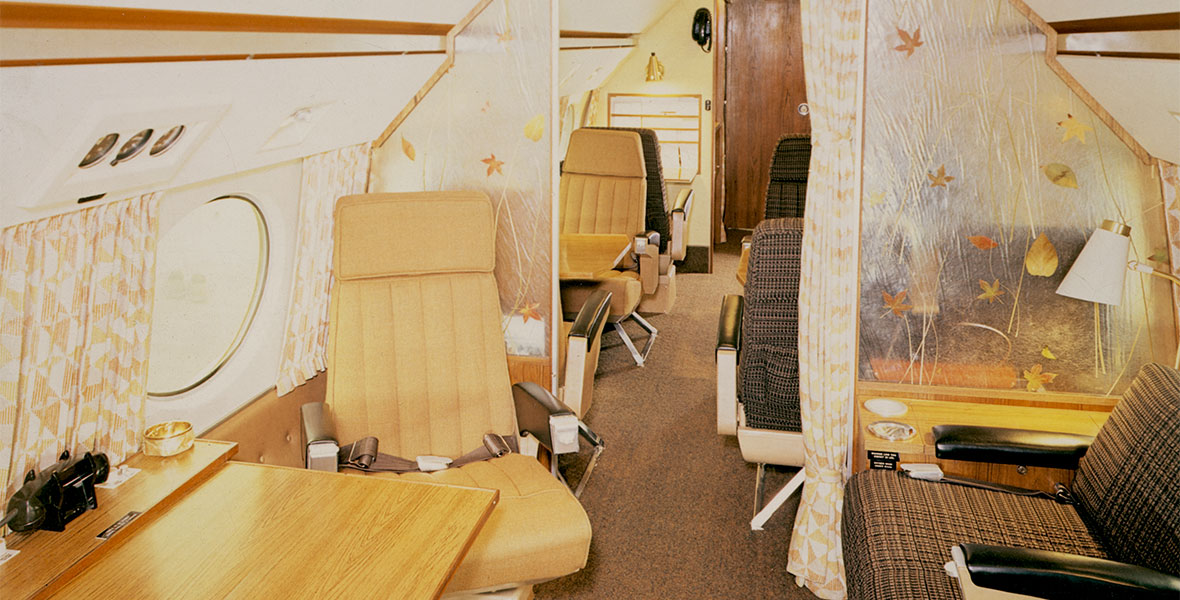
The interior furniture and paint followed the midcentury modern aesthetic of the time, favoring cream, rust, and beige tones and brown plush furniture. A visitor riding on the plane also couldn’t avoid the hefty Disney-cartoon-influenced paraphernalia. Mickey Mouse’s face adorned with cocktail napkins, ashtrays, and matchbooks scattered throughout. Smoking cigarettes on planes was still legal and common at the time, and Walt Disney himself was a smoker like many in his day. There was even a Mickey Mouse-stylized clock in the cockpit. Perhaps the most iconic part of the interior, though, was a clear floor-to-ceiling plastic divider separating Walt’s area from the rest of the cabin. It was filled with leaves collected from the Disney family’s backyard.
Bringing The Mouse back to life
All of those details were painstakingly reimagined as part of the restoration project, a joint effort by members of the Walt Disney Archives, Walt Disney Imagineering, Phoenix Air Group, and the Palm Springs Air Museum. After being decommissioned in 1992, the plane went on public display at Walt Disney World in Florida for years. That ended in 2014, however, when the plane was moved to a field for storage. Its core mechanical components, including the two Rolls-Royce engines, were sold off long ago, and the sealing around the windows had decayed, allowing leaks and humidity to damage the interior. To bring it back to its former glory, most of the inside had to be stripped and reimagined from the ground up.
Using specs provided by The Walt Disney Company, the restoration team recreated the kitchen, passenger area, and cabin, along with all the mouse-themed accoutrements. They also stripped and repainted the plane’s exterior to match its original orange-and-black color scheme from the ‘60s. Palm Springs was chosen as The Mouse’s new nesting area partially because Disney had several properties in the area, where he and his family would decamp after trips.
Today, visitors can see the relic and walk through the plane at the Palm Springs Air Museum.. A ticket will cost adults $25 apiece. No word yet if any line-skipping, Disney World style Lightning Lane Passes are in order.
