
Griffith Observatory is one of Los Angeles’s most iconic landmarks. Part of the city’s sprawling “urban wilderness,” Griffith Park, the free public science center boasts dozens of exhibits and displays, including one of the first planetariums in the United States and the most-viewed telescope in the world.
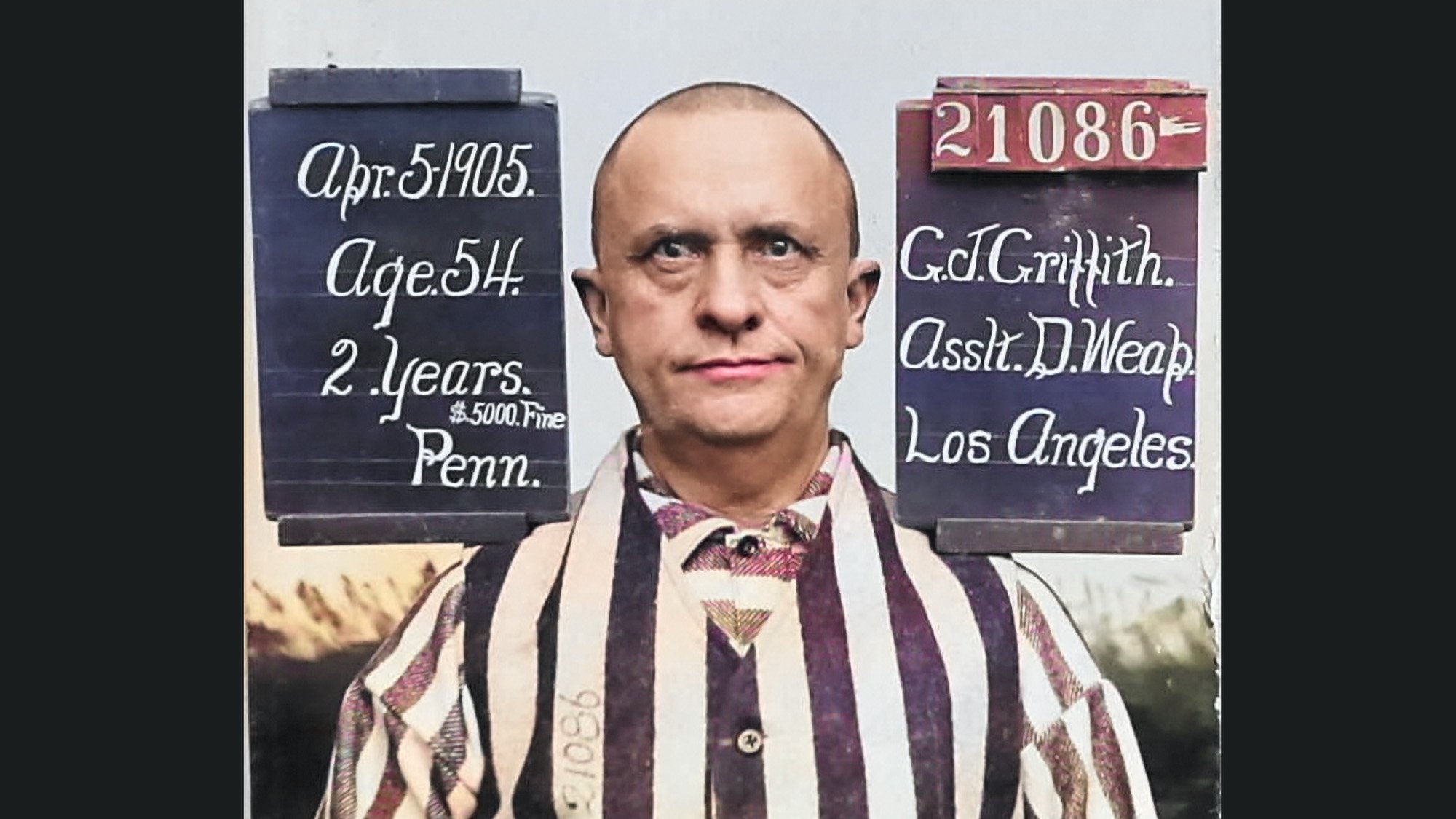
But there’s a dark secret behind Griffith Observatory’s founding. It might never have been built if it weren’t for the desperation of its namesake, Griffith J. Griffith, a wealthy real estate magnate who had once been a pillar of his community. In 1906, when Griffith first proposed the observatory as a gift to the city, he was hoping to salvage his reputation after the shocking crime he had committed three years earlier: the attempted murder of his wife.
Who was Griffith J. Griffith?
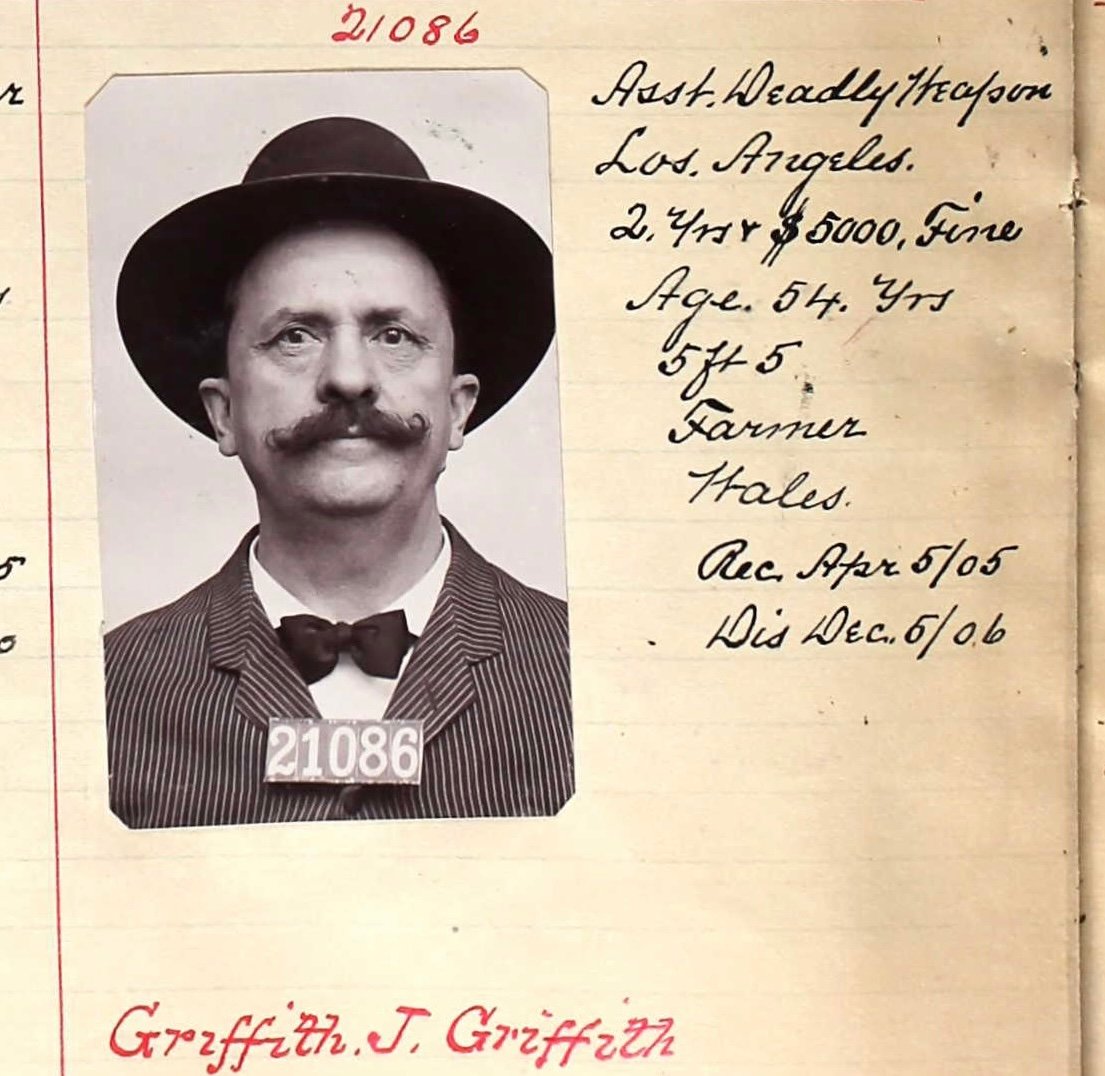
Born in Wales, Griffith immigrated to the United States as a teenager in 1865, initially settling in Pennsylvania. A few years later he moved to San Francisco, where he worked as a business journalist covering the West Coast mining industry. Griffith then used his expert knowledge of mining to work as a consultant for mining companies, earning himself a fortune.
In 1882, Griffith moved to the rapidly growing city of Los Angeles and purchased 4,000 acres of the Rancho Los Feliz land grant with an eye toward development. He rented out parcels of this land for various businesses, from homes and hotels to an ostrich farm. (Although the farm eventually failed, it proved a popular tourist attraction: Some of California’s first passenger railways were built to bring sightseers to the ostriches.)
Acquaintances described Griffith as “a roly-poly pompous little fellow” and “an egomaniac.” Known for his brash personality and humor, he dressed flamboyantly, favoring a gold-handled cane and a top hat. Griffith also called himself “Colonel,” despite having never served in the military. His grandiosity led to the mocking nickname, “the Prince of Wales.”
Griffith’s doomed marriage
By the mid-1880s, Griffith was a member of Los Angeles high society. He rubbed shoulders with fellow wealthy developers whose names are still visible on city maps, such as the Bixbys, the Sepúlvedas, and the Mesmers.
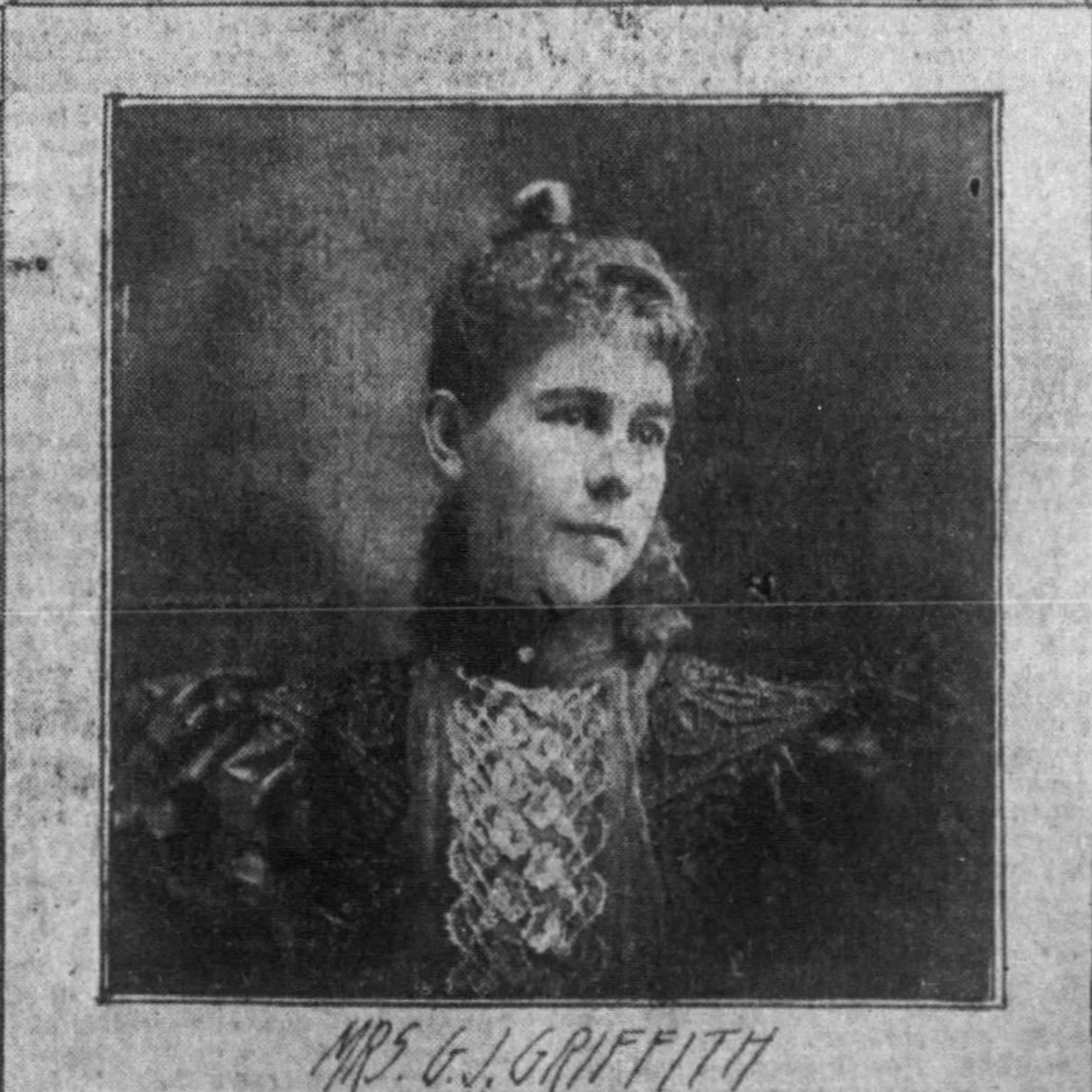
While some of these families traced their lineages back to the colonial aristocrats of Mexico or New England, the Mesmers, like Griffith, were recent European immigrants, having come to the United States from Alsace, France. Griffith soon began courting 22-year-old Christina Mesmer, nicknamed Tina, who was considered one of the city’s most eligible young ladies.
Not only did Tina have prominent parents, she had personally inherited a major property from a childless family friend in 1885. Known as “the Briswalter tract” after the previous owner, Andre Briswalter, it was 240 acres in a prime development area just south of downtown L.A. Worth at least 35 million dollars today, the land was used by Briswalter himself for fruit orchards, but now encompasses the neighborhood of Historic South-Central.
Griffith knew that the Briswalter land would be his if he married Tina Mesmer, and made no secret of his motives. Three weeks before they were to be married, Tina informed Griffith that she had transferred partial ownership of the property to her father. It is unknown if Tina performed this transfer willingly, but Griffith wrote to her of his fear that she had become her father’s “pawn.” In the same letter, Griffith threatened to call off the wedding unless he was made sole owner.
Wishing to avoid scandal, the Mesmers relented and the wedding proceeded in 1887. However, the rocky start to the marriage was an ill omen of things to come. In public, the two presented a harmonious image of a high society couple. In private, tensions plagued their marriage, including over religion (the Mesmers were Catholic, while Griffith was Protestant).
At home, Griffith was paranoid and menacing. Despite publicly supporting the Temperance movement, he was secretly an alcoholic, and his drinking worsened his behavior. Griffith’s paranoia reached a fever pitch after a narrow brush with death in 1891.
While the Griffiths were in a carriage on their way to the grave of Tina’s recently-deceased mother, someone fired a gun at them from another carriage, grazing Griffith’s head. The attacker, who fatally shot himself before he could be apprehended, turned out to be an investor from the failed ostrich farm, who had been ruined and owed Griffith back rent.
How the idea of Griffith Park first emerged
In 1896, despite his private troubles, Griffith was at the height of his power. Ever-ambitious, he sought a way to immortalize himself. He was also flush with cash, having sold off most of the Briswalter tract acquired from Tina, but still owed a tax debt that he hoped the city would forgive. That Christmas, the Griffiths donated more than 3,000 acres of Rancho Los Feliz to the city of Los Angeles for the formation of a public park, to be called, of course, Griffith Park.
While Griffith spoke of wanting to give back to the community and create “a place of rest and relaxation for the masses,” generosity may not have been his only motive. Critics called the huge donation a tax scheme, and pointed out that Griffith could afford to part with the land. Not only did he have Tina’s fortune, he had already rented out the most profitable parts of the Rancho Los Feliz, and what remained was no good for purposes like farming.
Griffith shoots his wife Mrs. Tina Griffith
The more his influence grew, the more unstable Griffith became. According to Tina’s later testimony at Griffith’s trial, he pulled a gun on her for the first time in May 1903, when she threatened to leave him during an argument. “He is very proud and did not want the public to know” of their marital disputes, she said.
A few months later, the Griffiths stayed at the Hotel Arcadia in Santa Monica with their only child, 15 year-old Vandell. Tina hoped that a family vacation would calm Griffith’s nerves, but Griffith was on edge. He repeatedly asked servers in the hotel restaurant to change his food and drink, believing it had been poisoned.
On the last night of the trip, Vandell Griffith went to the beach with the hotel owner’s son, leaving his parents alone in the hotel room. While Tina was packing, Griffith approached her with a gun in his hand. He forced her to kneel and started asking her about the death of Andre Briswalter years earlier.
Apparently, Griffith now suspected that the Mesmers had poisoned Briswalter, and planned to poison him next. Griffith then asked Tina if she had ever been unfaithful. She assured him that she had not, and that Briswalter’s death had been natural, but he fired off a bullet at point-blank range.
Tina Mesmer Griffith survives
Tina leapt from the window and rolled to safety, breaking her shoulder in the fall. Hotel staff soon found her and took her to a doctor. A surgeon who attended her injuries later reported that “if the bullet had struck Mrs. Griffith one-sixteenth of an inch below where it did, it would have gone through the eye socket and into the brain.”
Tina lost her right eye, and due to the risks of infection and blood loss, doctors were not sure whether she would survive. Miraculously, she did.
Police began searching for Griffith immediately, but it was three days before they found him at a nearby bar in the midst of an alcoholic bender. The subsequent trial became a massive media scandal. Tina took the witness stand wearing a veil and black glasses to hide her injuries.
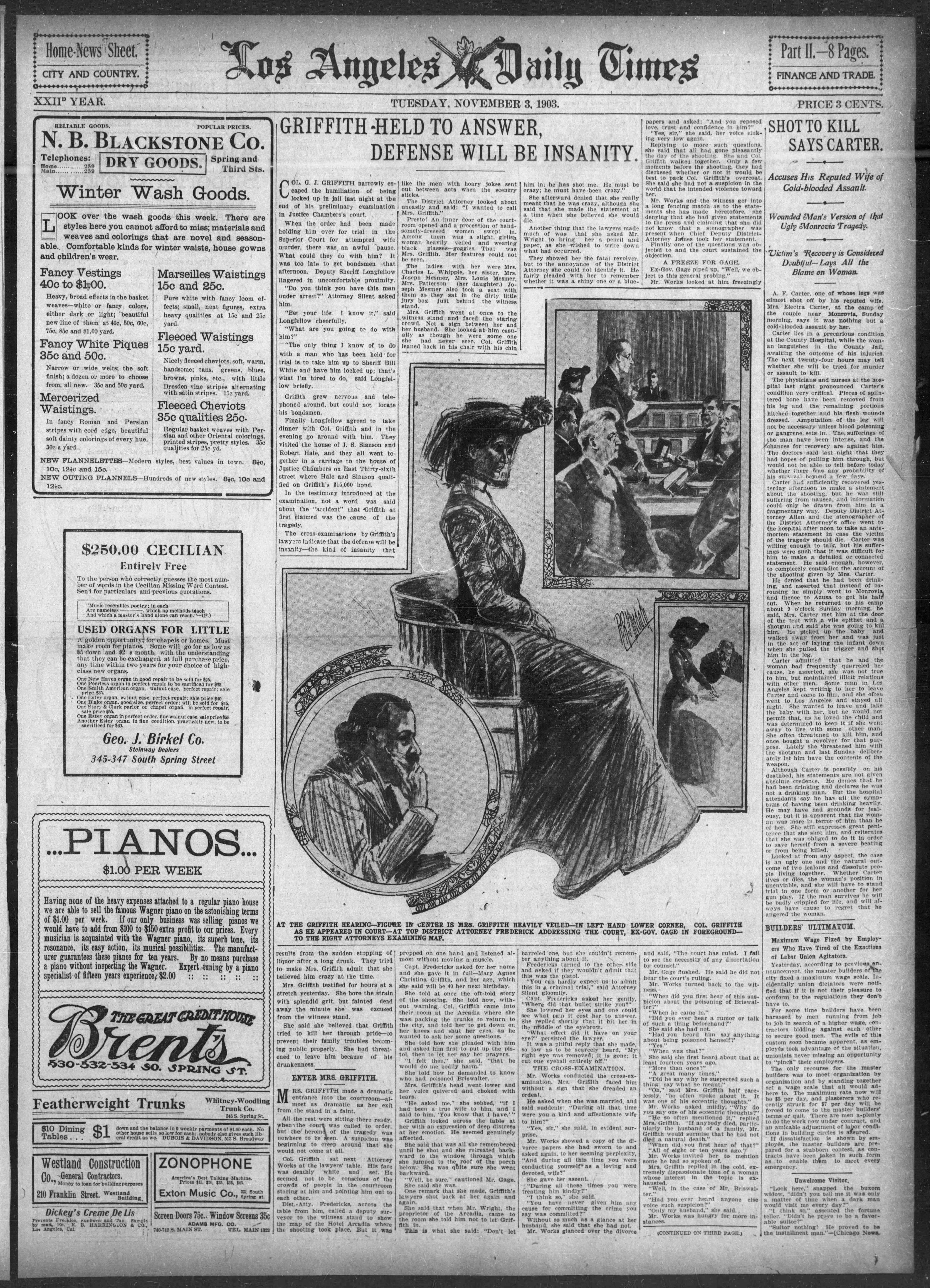
When she entered the courtroom, “she looked at [Griffith] casually as though he were someone she had never seen,” the Los Angeles Times reported, while Griffith remained motionless, listening intently. Tina testified for an hour before fainting from exhaustion, returning later that day for a second round of questioning. Only then did the extent of the Griffiths’ private problems become public knowledge.
The outcome of the trial
Griffith’s attorneys argued that he was not in his right mind; instead, his drinking had made him delusional, a case of “alcoholic insanity.” Griffith was fined and sentenced to just two years in prison.
Tina was granted a divorce on grounds of cruelty, one of the few legal justifications for divorce in 1903. She also received a cash settlement and full custody of Vandell, but she was unable to receive half of the estate, as she had asked for.
The couple’s properties had long been under Griffith’s name only, including what remained of Tina’s inheritance. As one of her lawyers told the Los Angeles Times, the law prevented her from obtaining “any approximation of what really should be hers.” However, Tina was left with enough to live on, and Griffith agreed to pay for Vandell’s future education as long as he didn’t attend a Catholic university.
The aftermath
After the trial, Tina moved in with her sister. Though she stepped away from city development, she devoted herself to Catholic charities and social events. She was apparently a big fan of whist, a four-player card game. She never remarried and continued to be known as “Mrs. Griffith” until her death in 1948 at the age of 86.
When Griffith emerged from San Quentin in December 1906, he appeared to be a changed man. He gave up drinking and devoted himself to the cause of prison reform, as well as improving facilities for visitors in the park that bore his name. He also came up with an idea for a second “Christmas gift” to rehabilitate himself in the eyes of the Los Angeles public: a free science center and an outdoor theater.
However, the city was now reluctant to associate with him. As one newspaper op-ed stated, Los Angeles was “neither so poor nor so lost to [a] sense of public decency that it can afford to accept this money.”
Griffith died of liver disease in 1919 without seeing this dream become reality, but he bequeathed the funds for the Observatory and the nearby Greek Theatre to the city in his will. The project would finally move forward more than ten years after his death.
It was Griffith and Tina’s son, Vandell Griffith, who oversaw the construction of the Observatory as president of the Los Angeles Park Board. (Vandell would later become a city police commissioner, and was described in a 1951 newspaper as “a dead honest man.”)
When the Griffith Observatory opened in 1935, it was an instant success, part of a new wave of interactive museums that made astronomy and other sciences accessible to the public. And it all goes back to a man who destroyed his own reputation. It’s a strange chapter in the history of Los Angeles, and a reminder that the legacies people leave can be complicated.
In That Time When, Popular Science tells the weirdest, most surprising, and little-known stories that shaped science, engineering, and innovation.