Many of the world’s greatest scientific minds remain in startling disagreement with one another about the nature of reality itself. After conducting what is likely the largest survey of its kind, researchers reported that a vast majority of physicists suspect the big bang doesn’t necessarily mark the beginning of time. And as their additional responses indicate, scientists diverge even more when it comes to other hot-button cosmological topics.
In 2025, researchers put out an international open call for their Big Mysteries in Physics survey. Anyone could partake in the questionnaire, but responses from self-identifying physicists were later separated and reviewed to identify any particularly striking areas of agreement or disagreement. After reviewing answers from over 1,600 physicists, the questionnaire’s authors published their key takeaways earlier this year in Physics Magazine.
The results? Physicists are very divided on explanations for some of the universe’s fundamental operations.

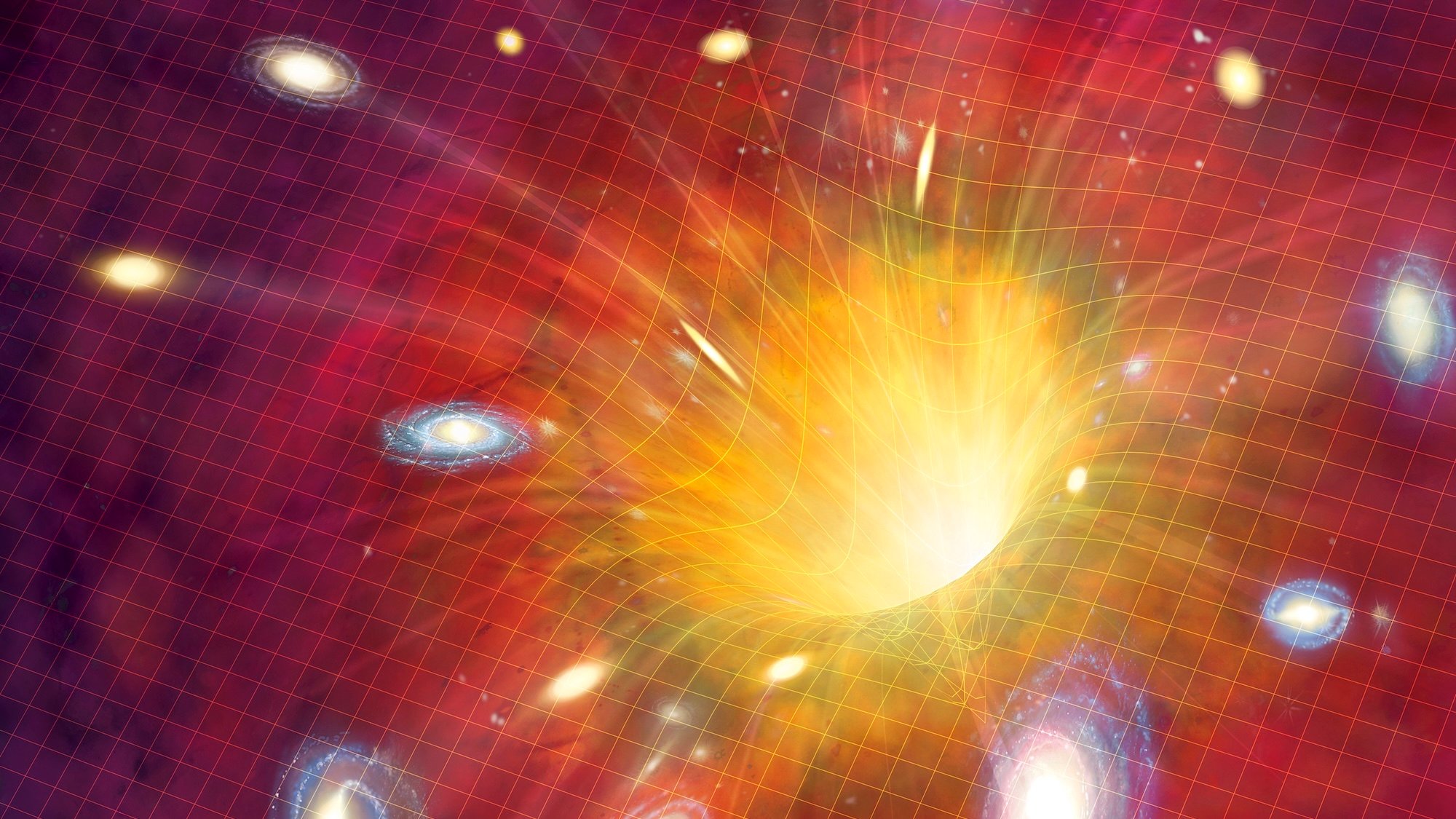
The most dramatic relates to the big-bang theory (technically known as the Lambda Cold Dark Matter theory). About 68 percent of respondents said they don’t think the famous moment necessarily marks the beginning of time. Some of this has to do with how the big bang is presented in popular culture—contrary to many depictions, the theory specifically explains how the universe expanded from a single extremely hot, dense prior state of existence. This means it technically may have very little to do with the beginning of time.
The only other majority opinion pertains to the immediate moments following the big bang. Only 51 percent of physicists agreed that the immediate moments following the big bang involved an incomprehensibly fast period of expansion commonly known as inflation.
Subjects got far more contentious from there, although some of it was understandable. Given how much remains to still learn about dark matter, 17 percent of survey takers think the mysterious material is composed of an undiscovered particle or particles. Around 12 percent argued it could be explained by tweaking the theory of gravity. At best, barely 21 percent of physicists hypothesized it may be some combination of these and other answers.
Quantum physics continues the chaos. Nearly 19 percent of scientists think string theory is likely the best way to integrate gravity into quantum physics, while only 12 percent offered loop quantum gravity as an alternative. Meanwhile, 18 percent lean towards the suspicion that gravity can’t be integrated in any way.
If the survey presents one clear takeaway, it’s that these diverse theories are in no way an indictment of the present-day state of physics. These aren’t amateurs—they’re researchers who base their arguments on volumes’ worth of data, calculations, and scientific testing.
“Consensus, or its absence, tells us where the evidence feels settled and where researchers still see room for radically different ideas,” Niayesh Afshordi, a University of Waterloo physicist and study co-author, explained in a statement. “In this sense, lack of consensus can be a clue. It marks places where better data, sharper theory, or new connections between subfields may be needed”
Afshordi noted that unlike other polls, scientific reality isn’t settled by a majority vote. It’s supported by clear, demonstrable evidence.
“The interesting point is not that physicists are confused. It is that the frontier is genuinely alive,” he added.