
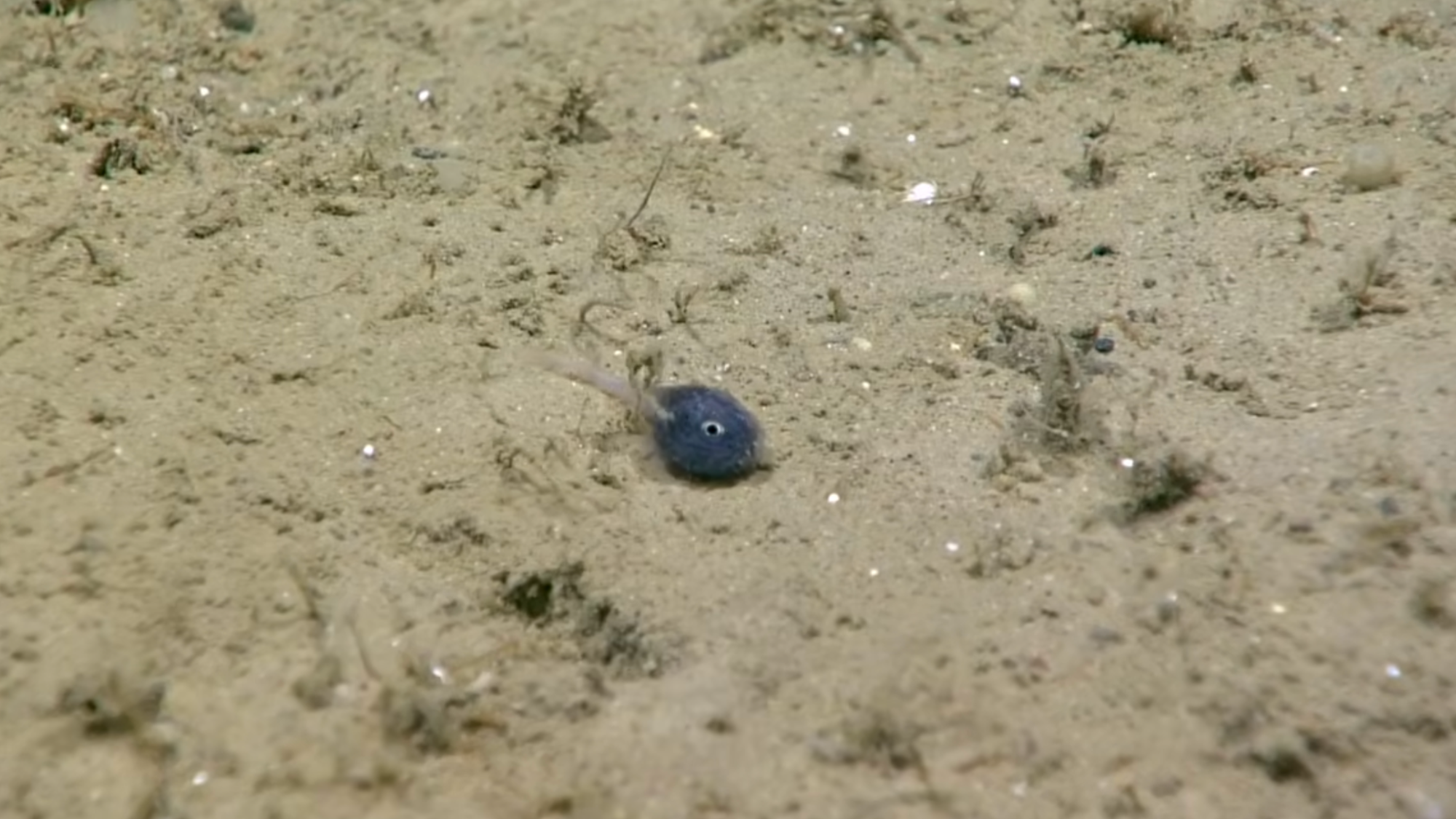
The deepest parts of our ocean are more like the fare reaches of space than planet Earth. We never really know what we’ll find down there. A team from the National Oceanographic and Atmospheric Administration’s (NOAA) Ocean Exploration team experienced that first hand when they spotted a very tiny fish in the Northeast Canyons and Seamounts Marine National Monument in the Atlantic Ocean off the coast of New England.

Outrageously Tiny Fish
The team estimated that it measured only five millimeters (0.19 inches) to one centimeter (0.4 inches). It is still unclear what species this fish is, but scientists speculated that it could be a juvenile toadfish (family Batrachoidida) aka the sea toad. They have a sad-looking “Monday Face” and dwell on the sea floor to hunt whatever comes within their reach.
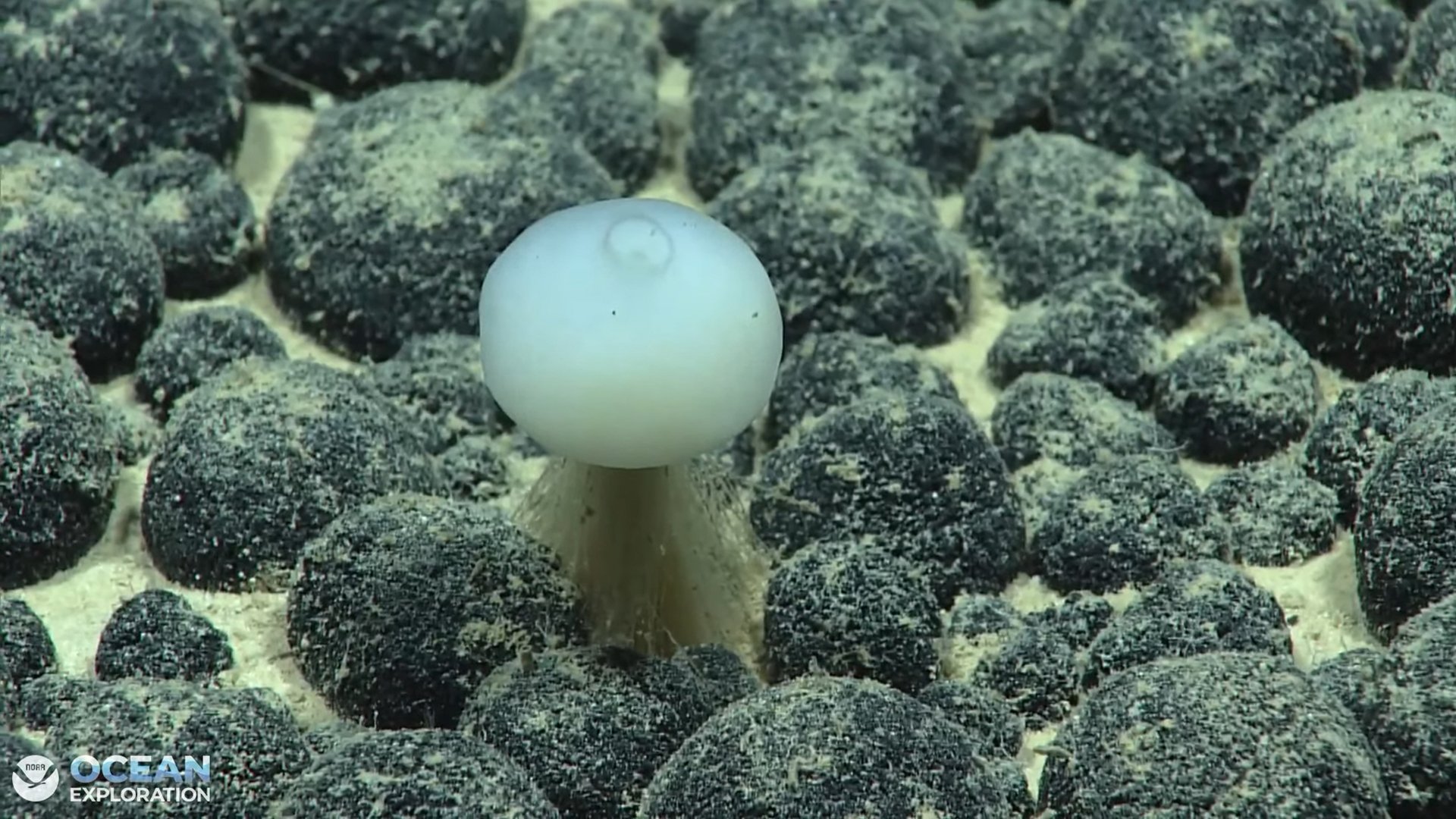
This particular little fish was spotted during Deep Connections 2019: Exploring Atlantic Canyons and Seamounts of the United States and Canada. However, these kinds of deep-sea discoveries are not over. NOAA just completed their 2026 Cook Islands ROV Exploration in the Pacific Ocean, where they recovered a whale beak, observed an ethereal type of sea sponge called glass sponge (class Hexactinellida), and more.
Currently, NOAA is partnering with Nautilus Live to explore the deep sea near Wake Island. The island is about halfway between the Hawaiian and Mariana Islands, and is one of the most isolated land masses on Earth. The 30-day expedition will utilize remotely operated vehicles (ROV), mapping technology, and the E/V Nautilus to collect baseline data about the 157,236 square-mile area and the marine life that lives there.
The expedition could find potential maritime heritage sites associated with the Battle of Wake Island. From December 8 to 23, 1941, a small force of United States Marines and civilian defenders fought off parts of the Imperial Japanese Navy. The Japanese Navy ultimately took Wake Island, but at great cost. According to the National World War II Museum, the Japanese Navy ultimately sacrificed two destroyers, one submarine, 21 aircraft, and 900 to 1,000 lives just to conquer Wake Island. Despite the loss, fewer than 100 Americans died during the 16-day siege, including 46 Marines and three sailors.
The Wake Island expedition is scheduled to end on September 18.
