
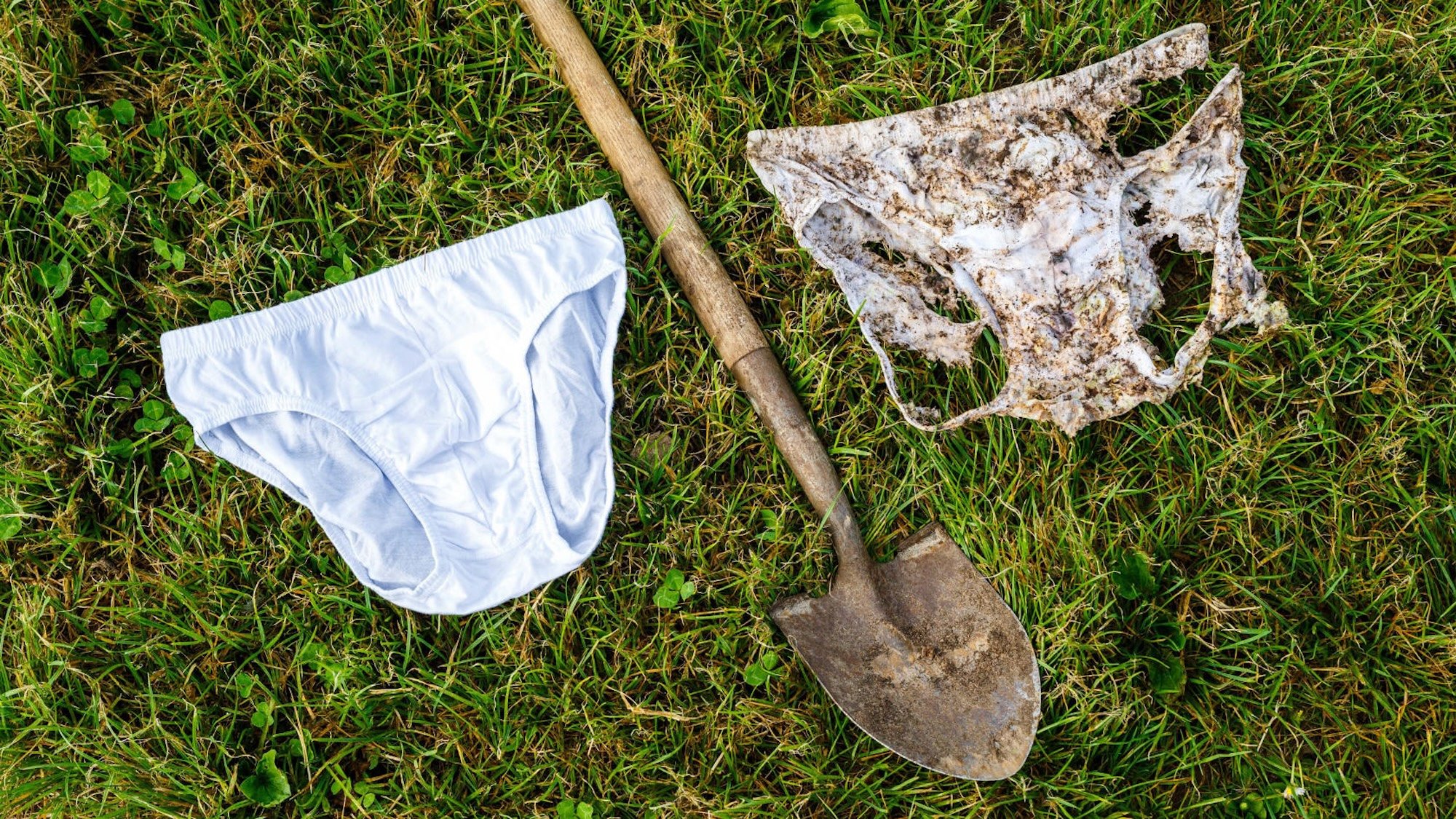
You don’t necessarily need advanced sensor technology or fancy tools to assess the health of the soil just beneath your feet. As ecologists and around 1,000 citizen scientists in Switzerland recently demonstrated, sometimes all that’s required is a pair of undies and a shovel.
In 2021, a team at the University of Zurich (UZH) partnered with the country’s federal agricultural research center, Agroscope, to launch Beweisstück Unterhose, aka Proof By Underpants. The mission was simple—gather as many volunteers as possible and direct them to bury a combination of cotton underwear and clean tea bags at roughly 1,000 strategically selected locations around Switzerland. Participants then retrieved the items two months later, photographed their decomposition progress, and mailed them to a lab along with a soil sample.
This wasn’t some type of meta-performance art project. Instead, researchers hoped to highlight the ecological importance of soil health, while also gaining a better sense of current ground conditions around the country. The findings and an underwear map, recently published in the journal Plants, People, Planet, showcase a range of soil health and a path towards better land management.
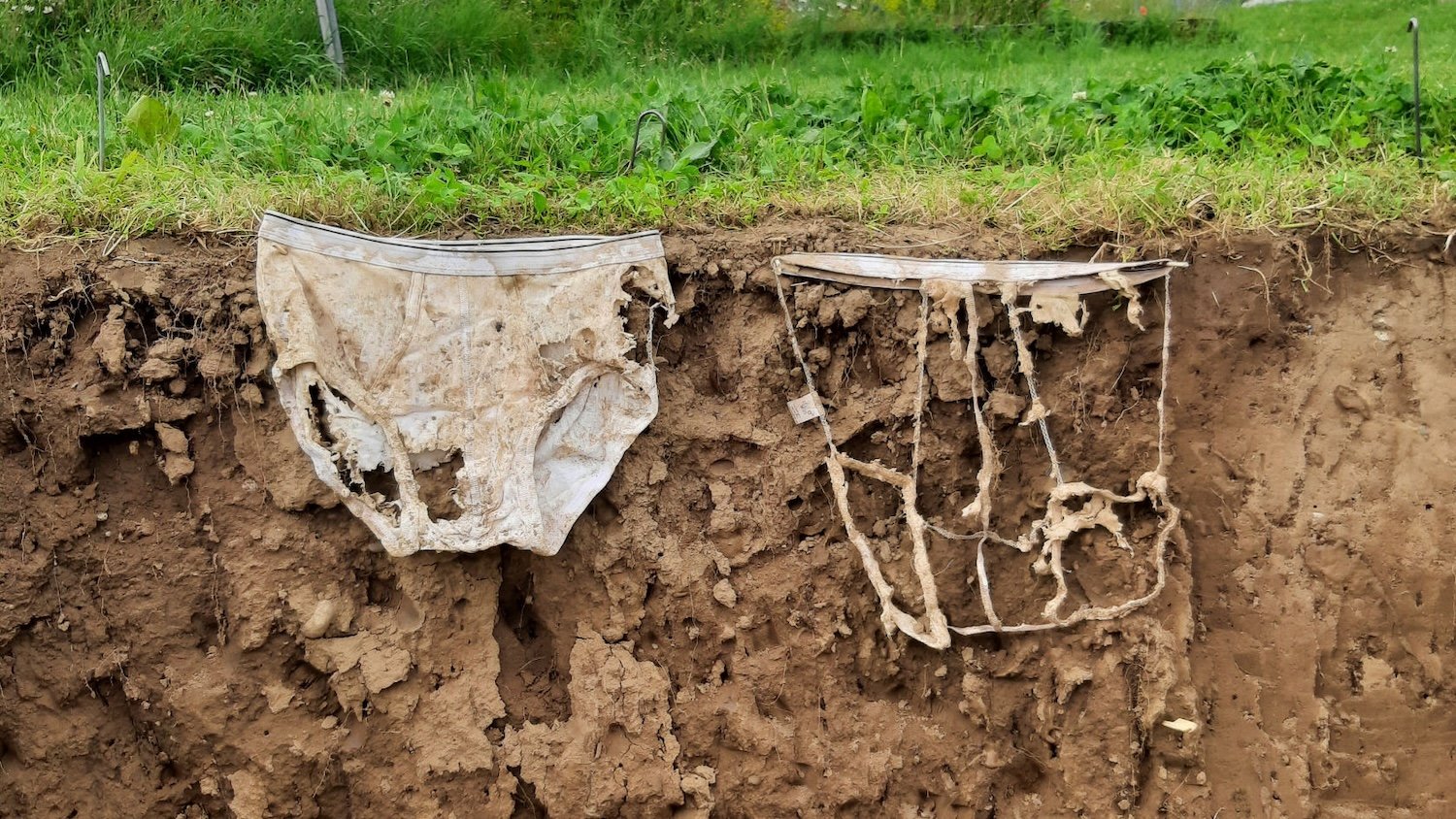
“Our results show that how soil is managed can significantly affect both soil life and soil quality,” UZH agroecologist Marcel van der Heijden said in a statement. “Healthy, biologically active soil is crucial for fertility, nutrient cycling and many other ecosystem services.”
Van der Heijden’s team reported that the fastest decomposing underwear was buried in residential gardens. These spots also had the highest levels of organic matter needed for vital bacteria, fungi, earthworms, and other underground organisms. Farmlands and meadows ranked slightly less organically active, while manicured lawns easily took last place.
This doesn’t mean that a region’s optimal underground environment is always one that facilitates rapid decomposition. Although desirable for agricultural land, other locations don’t necessarily benefit from so much organic activity in soil.
“In near-natural habitats such as forests, very high nutrient levels can indicate disruptions to the natural balance of nutrients,” added Agroscope agroecologist and study co-author Franz Bender.
This is also often the case for gardens, which can suffer from an overabundance of nutrients.
Researchers aren’t suggesting that the easiest method to assess your garden’s wellbeing is by burying a pair of underwear. But it remains a cheeky reminder that the benefits from healthy soil make themselves known quicker than you might expect.
