
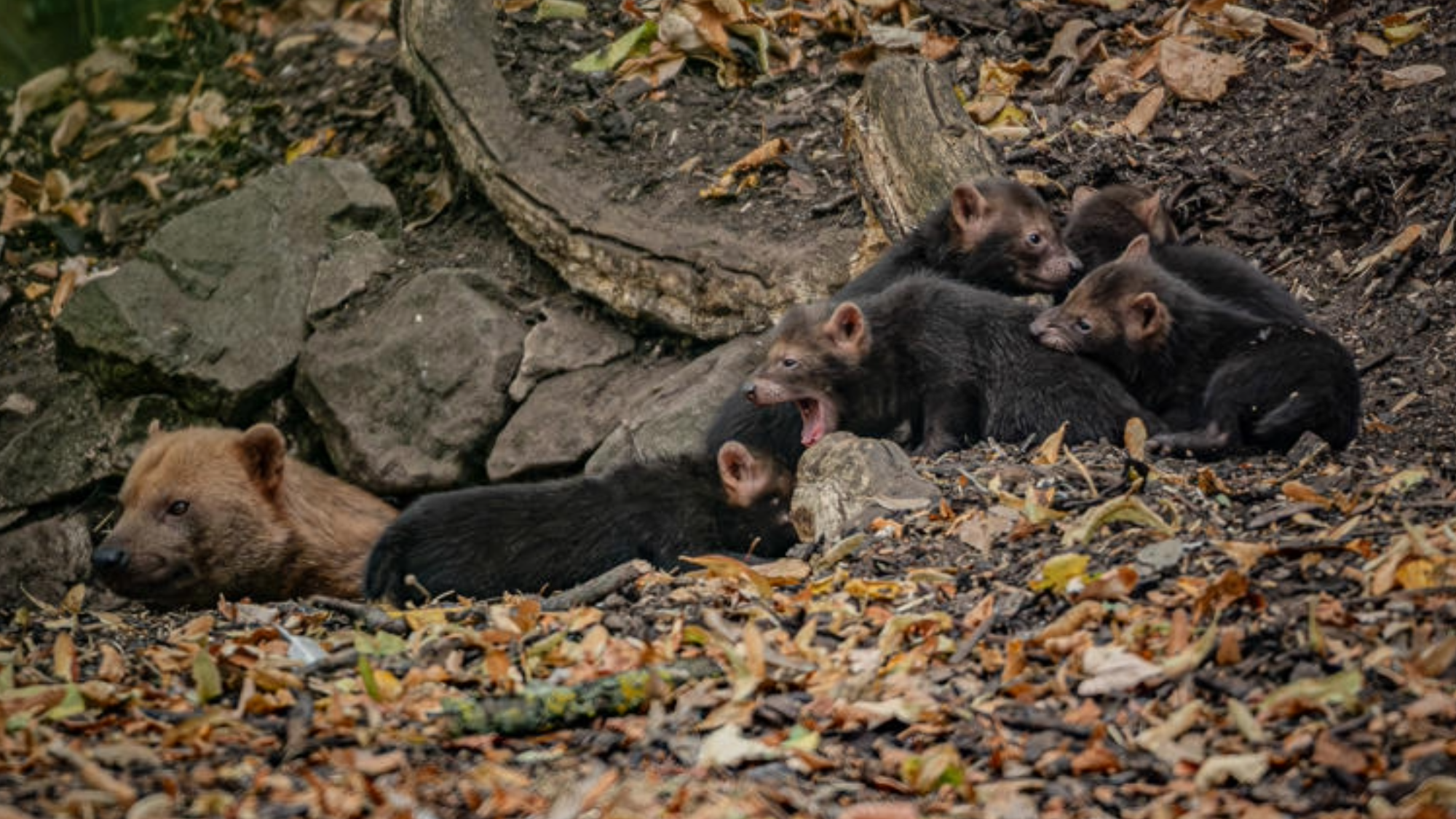
Five pups were recently born at England’s Chester Zoo, far from their homeland. But these bush dogs (Speothos venaticus) are on a mission—they’re part of a conservation breeding program protecting the future of their species.
Bush dogs are medium-sized carnivores from Central and South America, known for their chirpy sounds. The IUCN Red List classifies them as Near Threatened. While that might indicate that they don’t need major conservation efforts as much the way that other wild animals, their last evaluation was only in 2011.
Mark Brayshaw, head of mammals at Chester Zoo, tells Popular Science that a lot has changed in the past 15 years, “with the impacts of climate change, habitat loss and inter-species disease transfer growing more evident,” he explains. “It’s a sad truth that by the time a species is listed as Endangered or Critically Endangered, they will be facing a genetic bottleneck, which heightens the risk of extinction by making the survivors more susceptible to disease and other threats.”
European zoos are now working to make sure that doesn’t happen by caring for a bush dog “insurance population,” which includes the ones at Chester Zoo. Their numbers in the wild are declining, and the breeding program is basically a backup in case the species’ population might need a genetic health boost one day.
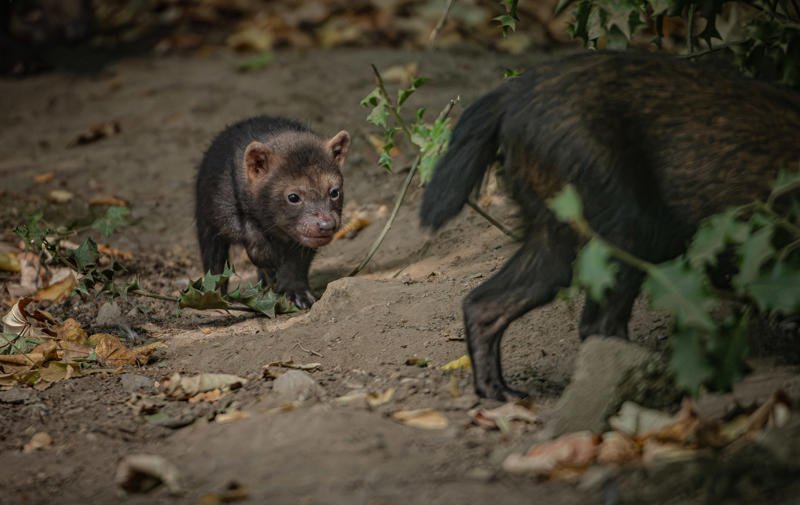
The zoo’s new born litter only recently emerged from their den, and have started investigating their habitat with their parents and older siblings. “At this stage, they’re just little furry potatoes,” Chester Zoo carnivore keeper Richard Tyson said in a statement. “They toddle around a bit, but mostly they huddle together in a pile.” They will also start eating solid food soon.
Steve Rawlins
When they were first born, the keepers left the bush dog parents Molly and Charlie alone with their new offspring, so they didn’t immediately know exactly how many pups had popped out. An early clue that all was good in the den was the pups’ vocalizations. Bush dog pups emit high-pitched chirping noises that sound a lot like birds.
Bush dogs are “a wonderfully active, engaging species to watch,” says Brayshaw. “Every individual has a different personality. They are loved by the keeper team and by the public, and the new pups are already proving popular with visitors.”
Little do the young chirpers know that they have a higher calling than simply entertainment for less-hairy visitors.
