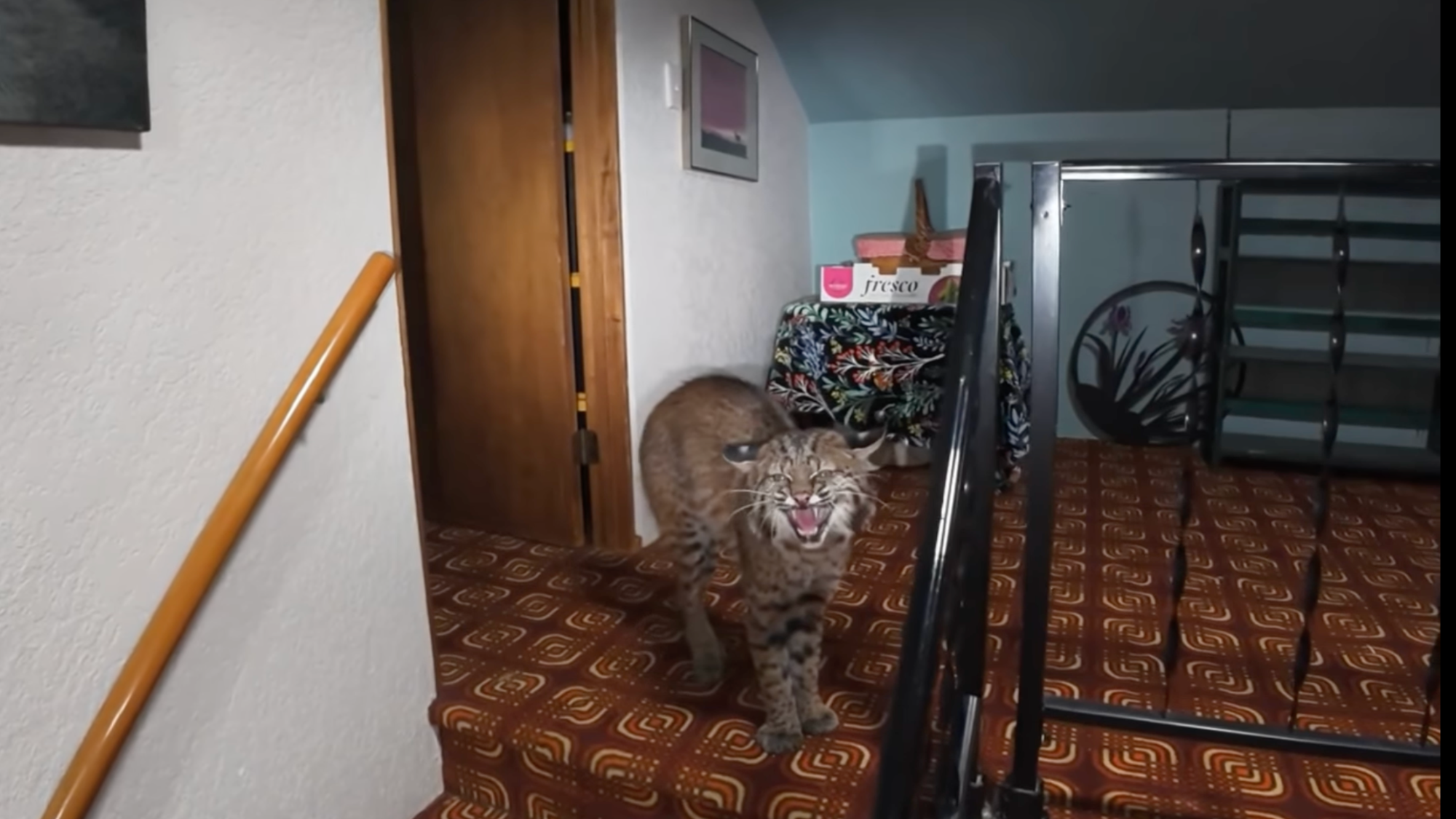
What began as a routine police response to a reported break-in turned into a brief standoff between nature and technology. Last week, law enforcement in the city of Kirkland, Washington (just northeast of Seattle) responded to a 911 call from a resident reporting loud banging inside their home. Officers arrived expecting a human intruder, but were instead greeted by a more literal cat burglar: a trapped and confused bobcat.
Not wanting to risk a claw to the face, the officers backed out and reassessed the situation. They ultimately decided to deploy a remote-controlled drone into the house, to monitor the feline intruder from a safe distance. Video captured from the drone’s perspective and released on Facebook, shows the frustrated bobcat standing by a staircase, growling and arching its back at the hovering machine. After a brief standoff with the buzzing, metal alien, the bobcat carefully retreated, sidestepping into an adjacent empty room.
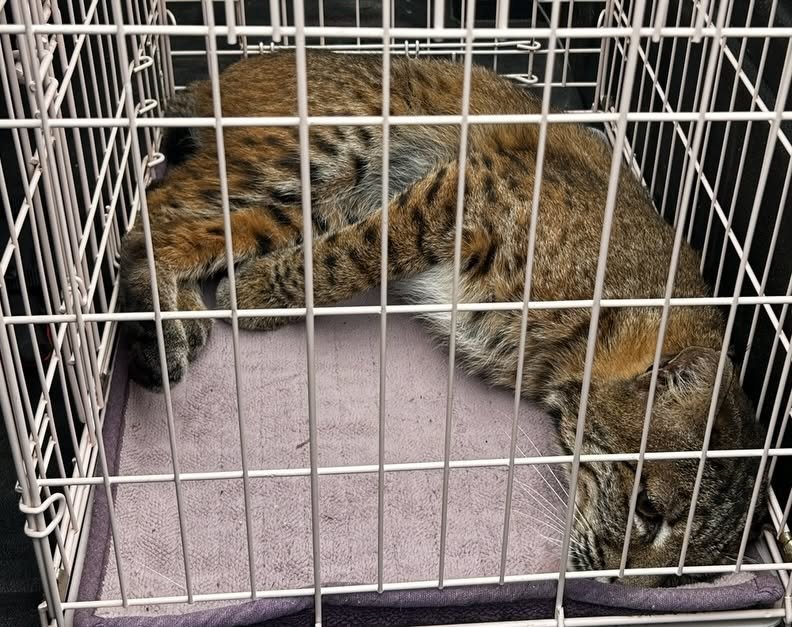
Police were then able to close their door and keep the bobcat isolated until a team from the Washington Department of Fish and Wildlife arrived. Wildlife officials then sedated the cat, loaded it into a crate, and transported it to nearby Forbes Creek. The feline was then released back into the wild, startled but safe. As for how a bobcat ended up in the house in the first place, Kirkland Police believe the adventurous intruder climbed a tree and jumped through an open window, possibly lured in by the resident’s indoor cat. Both the owner and its likely shocked cat were unharmed, according to the police. Thankfully, curiosity didn’t kill this cat.
The Kirkland Police Department did not immediately respond to Popular Science’s request for comment.
The aerial deployment was made possible by a public safety drone program the Kirkland Police began in 2022. Today, they reportedly maintain five drones and have 17 FAA-licensed pilots ready to operate them. The typical use cases for those drones include search and rescue, tactical search, scene documentation, and, apparently, bobcat removal.
Drones are changing the way police surveil wildlife…and people
Drones and robotic dog-like quadrupeds are reshaping how local communities approach wildlife management. In Japan, authorities deploy a combination of camera-equipped drones and robotic Monster Wolves to locate and deter bears following a record spike in human-bear encounters driven by urban sprawl and declining farmland. In the United States, police in Santa Fe, New Mexico, recently used an aerial drone to track an errant bear wandering near a school. Expanded drone programs are also playing a greater role in locating lost or missing pets. Just last month, firefighters in t Florida used a remotely controlled drone to find an overly adventurous dog trapped in a storm drain.
But this increased prevalence of drones comes with other, more controversial concerns as well. Police forces around the country are ramping up “drones as first responder” programs, which civil liberty critics say could introduce unreasonable surveillance. Law enforcement around the country has already used these drones to monitor political protesters. Meanwhile, Immigration and Customs Enforcement (ICE), is reportedly interested in using Boston Dynamics’ quadruped robot “Spot” to aid in immigration operations. Private security companies like Flock and Axon are also investing heavily in aerial surveillance drones.