
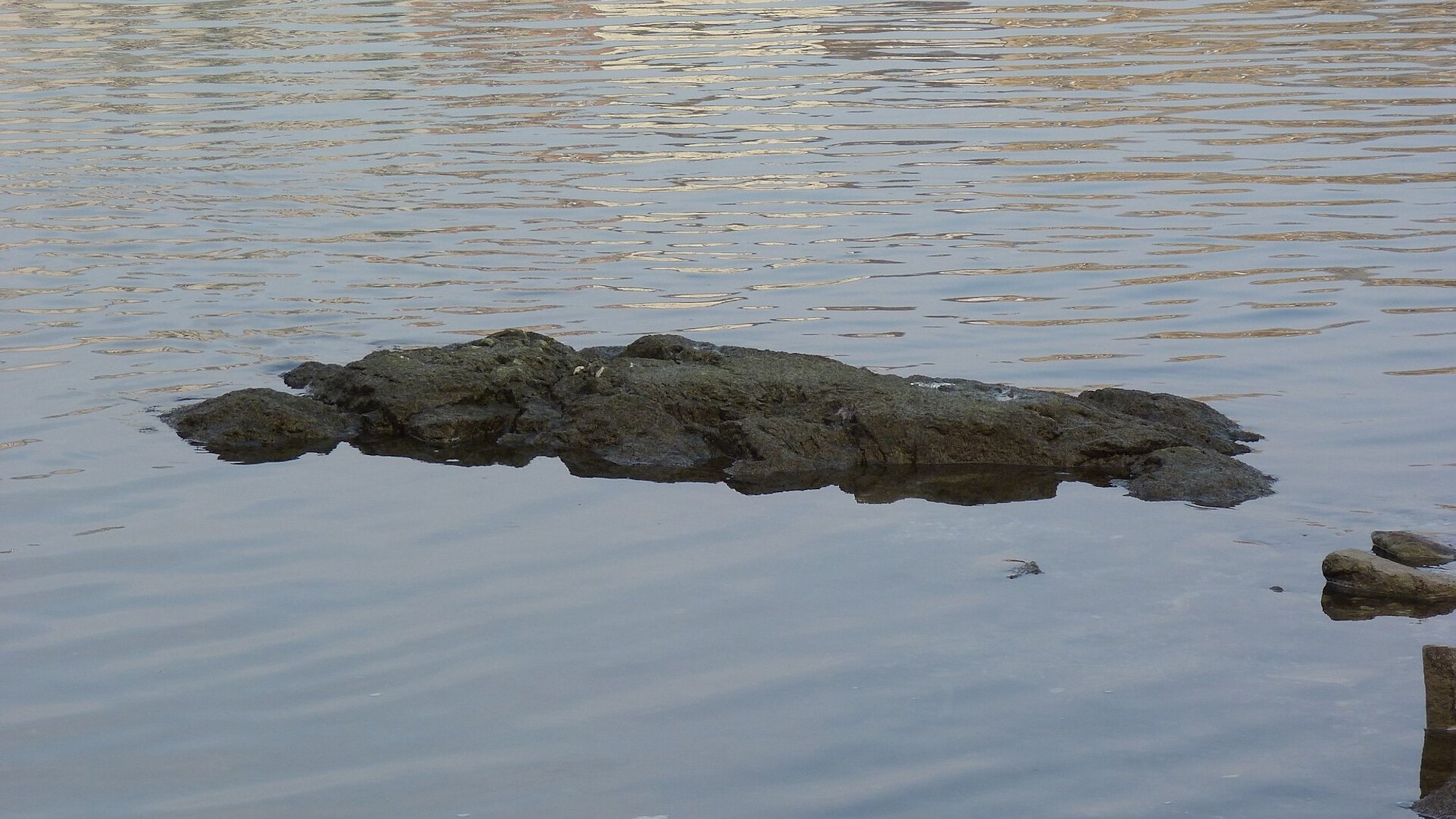
A stone outcrop near the edge of the Danube River is unassuming at first glance. Most people would have a hard time picking it out from the countless other examples peaking above this portion of the river running through Budapest, Hungary. But the stone is so historically infamous that locals know it as Ínség-szikla—the Rock of Starvation. Although rarely seen, its reemergence earlier this summer is a signal of how bad the region’s ongoing drought has gotten, as well as a warning for the difficult months ahead.
Ínség-szikla is just one example of Central Europe’s many hunger stones. These geologic formations are situated in lakes or rivers, but only become visible if water levels drop too low. Budapest’s Rock of Starvation only appears when the Danube shrinks to a depth of about 37.5 inches. Once a rare occurrence, the ominous signal is becoming a more regular event thanks to the worsening climate crisis. The Rock of Starvation has reappeared in at least seven of the past 23 years, while it has shown itself at least three times this year alone.
The drought marker isn’t the result of a sudden shift in weather conditions, but one that takes months to arrive. Researchers at the International Institute for Applied Systems Analysis (IIASA) in Austria recently analyzed the Danube’s current health while also comparing it to over 30 years of data. The results showcase the effects of an unprecedented drought and multiple brutal heat waves on the river.
The current emergency began taking shape in the spring. Between April and July, rainfall throughout most of the Danube basin was far less than the 1990–2025 average. Dry years aren’t necessarily unexpected, but the 2026 drought started much earlier than usual. Beginning in June, extreme heat pushed more days above 86 degrees Fahrenheit than expected. The combination started drying out soil moisture, which put even more pressure on agricultural farmlands and native plants. In many places throughout Central Europe, July’s soil was the driest it’s ever been since at least 1990. Taken altogether, it was only a matter of time before the Danube began to reflect the conditions on land.
Over 80 million people live in the Danube basin, but the river’s low water levels will reverberate even further. Agricultural yields will almost certainly suffer, while energy infrastructure strains under the added stress. Transport routes along the Danube are also disrupted, which will slow commerce and trade.
The stone isn’t the only object to resurface as the Danube’s waters recede. Recent months have also yielded Nazi vehicles, British WWII mines, and multiple historic shipwrecks.
Budapest first began referencing the Rock of Starvation centuries ago, during an era when it originally symbolized much more localized environmental issues. But despite living in a far more interconnected world that better mitigates these emergencies, the stone still serves as a poignant—if troubling—sign of our most pressing problems.
