It’s already been a brutal summer by pretty much any metric, with record-breaking temperatures affecting millions of people across the United States and parts of Europe. Although predicting the forecast for any given week is becoming increasingly difficult due to climate change, historical data can still point us in the right direction. Barring all the chaos, when can someone expect to endure the season’s most sweltering conditions?
The Old Farmer’s Almanac recently delved into nearly 30 years of meteorological data to determine the country’s hottest day of the year—and the answers may vary more than you might expect. July predictably contains peak temperatures for most of the U.S., but certainly not all of it.
“Many regions in the United States—from the Rockies to the East Coast—follow this pattern,” they explained. “However, this isn’t true for all regions.”
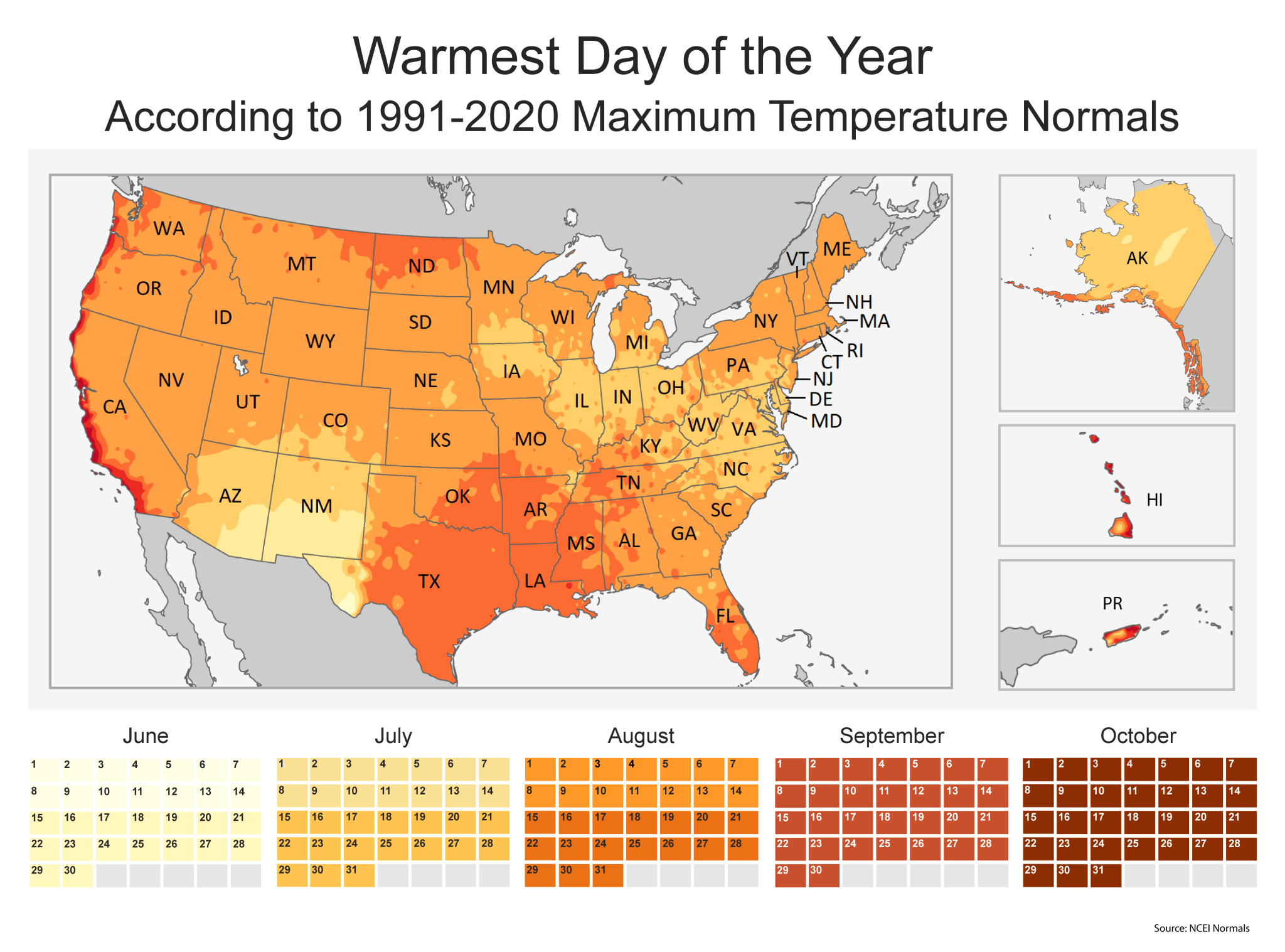
Northern areas of the country typically hit their top temperatures between mid-July and mid-August. Much of the western states experience their hottest days during early August. Most of Texas, Louisiana, Mississippi, Arkansas, and Oklahoma are likely staring down even more intense heat in the weeks to come, possibly towards the end of August.
There are some notable exceptions to these temperature trends. While most of the U.S. begins feeling some relief from the summer heat come August, ocean waters typically continue warming well into September. The majority of the West Coast and southern Alaska also see cooler Pacific air roll over the warmer land, creating a thick fog that can lower summer month temperatures. Anyone living there shouldn’t expect peak heat until September or even October. The same is true for most of Hawaii and Puerto Rico, as well.
The bottomline? Keep hanging in there, and keep hydrated.