
Europe’s brutal heatwaves have left the Danube River at historically low water levels. Over the last few weeks alone, residents in Serbia and Hungary discovered World War II artifacts like Nazi motorcycles and sunken ships that resurfaced after remaining submerged for decades.
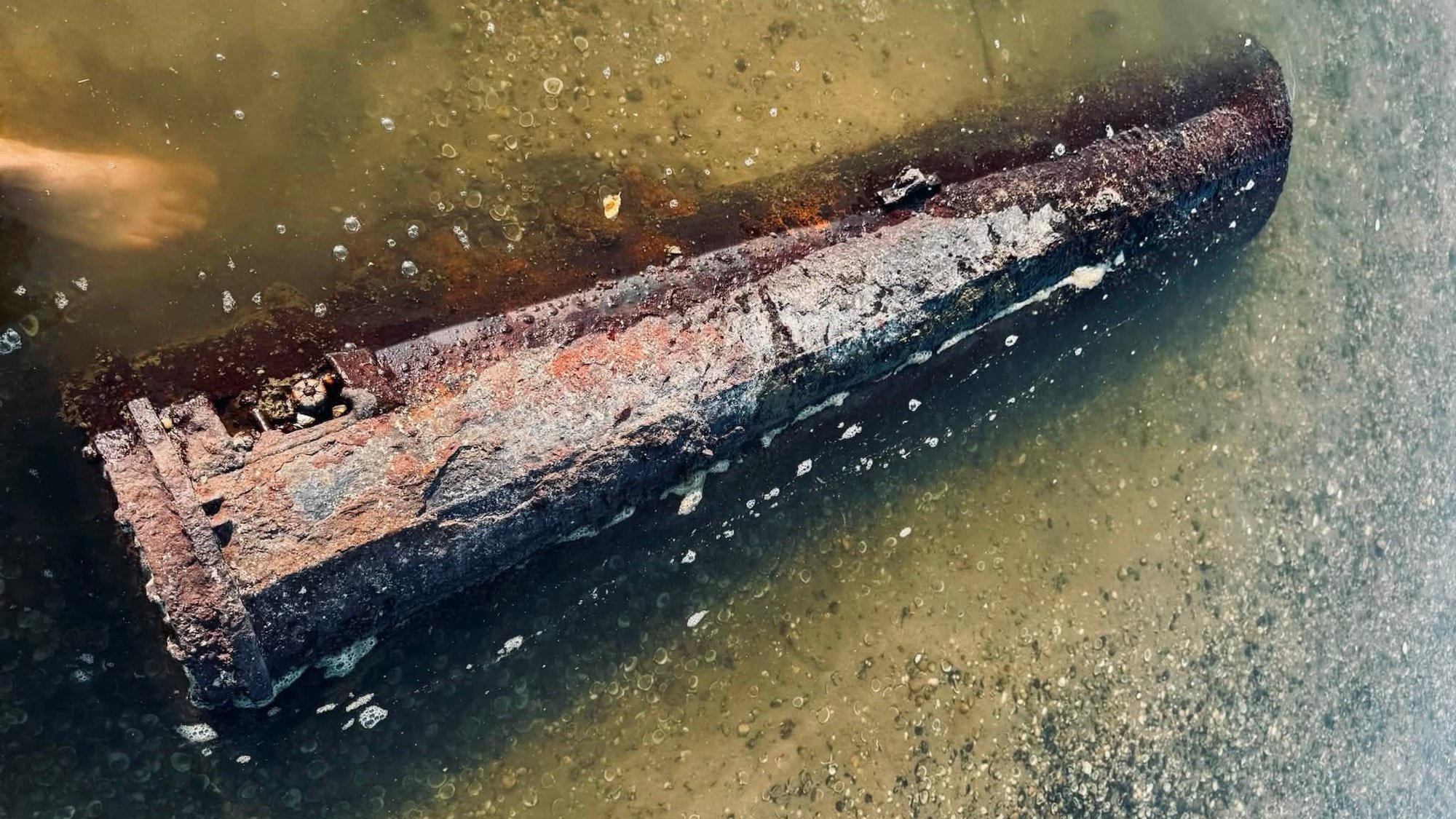
Yet another historic relic has recently been uncovered—this time in Slovakia. But unlike the summer’s previous finds, this one required a bit more finesse to tackle. Near the town of Virt along the southern border with Hungary, a magnet fisherman snagged an unexploded British anti-ship mine weighing over 1,500 pounds—the largest of its kind ever defused in Slovakia.
According to the finder’s social media post, archaeologists traced the device to a British Royal Air Force (RAF) operation that took place between April and October 1944. Darkly known as a “gardening” mission, these ventures involved RAF pilots depositing a total of 1,382 mines over 18 attacks along waterways in an attempt to stymie Nazi naval transport. Maritime traffic on the Danube subsequently fell 60–70 percent and sank dozens of ships. As Nazi forces redirected their supplies, the opening created an opportunity for Soviet troops to continue their march westward.
Much of the unexploded weaponry was never recovered in the years following WWII, allowing the Danube’s currents to slowly inter them under layers of sediment. While not a constant problem, any chance to remove one of these leftover mines is an opportunity to improve travel safety along the river. The process isn’t as simple as hauling the artifact out of the Danube muck. Local police detailed their efforts earlier this month, which involved coordination between the Fire and Rescue Corps as well as pyrotechnicians from Bratislava’s Institute of Criminology and Expertise.
After carefully removing the mine from the Danube, handlers then lowered it into a fire truck modified to include a sand bed in the rear to act as cushioning. Drivers next transported the weapon to a secure, unpopulated location where workers dug a 16-foot-deep pit. Officials placed the mine inside the ditch, buried it, and subsequently detonated the bomb through a controlled remote explosion.
Although the recent discoveries are dramatic, authorities advised locals against searching out similar finds. If they needed any proof, officials pointed to the mine’s detonation clip, which underscores just how dangerous these munitions have remained even after more than 80 years.
