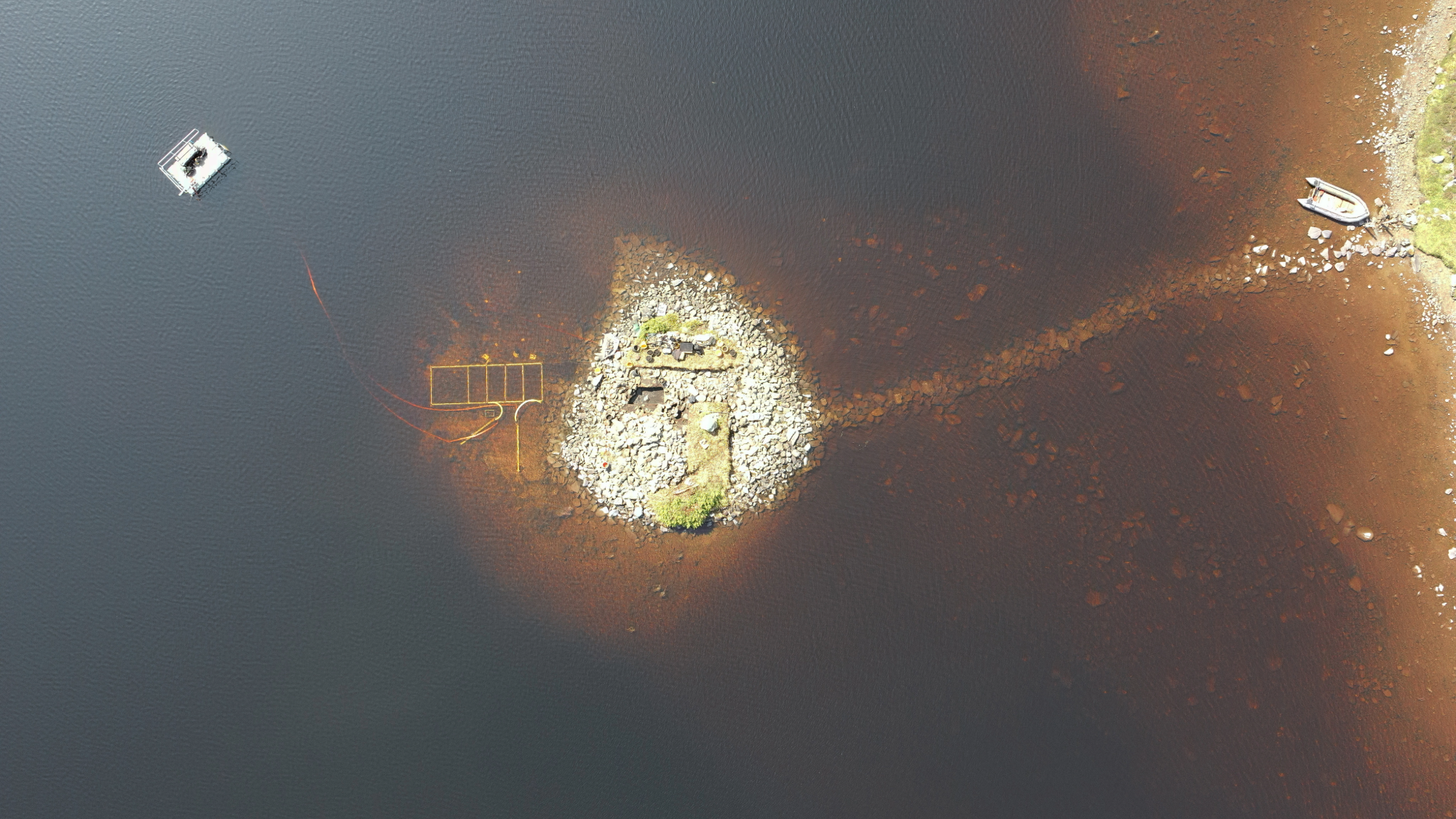
Mysterious and ancient human-made islands of timber and stone have endured amidst Scotland’s more well-known standing stones, Roman forts, and 18th century battlefields. Called crannogs, archeologists were initially not so sure what purpose these islands served, but were relatively confident that most of them date back to between the Iron Age (800 BCE to 400 CE) and the post medieval period (1550 to 1800). That is, until local diver Chris Murray found pottery fragments that were much older than they should have been.
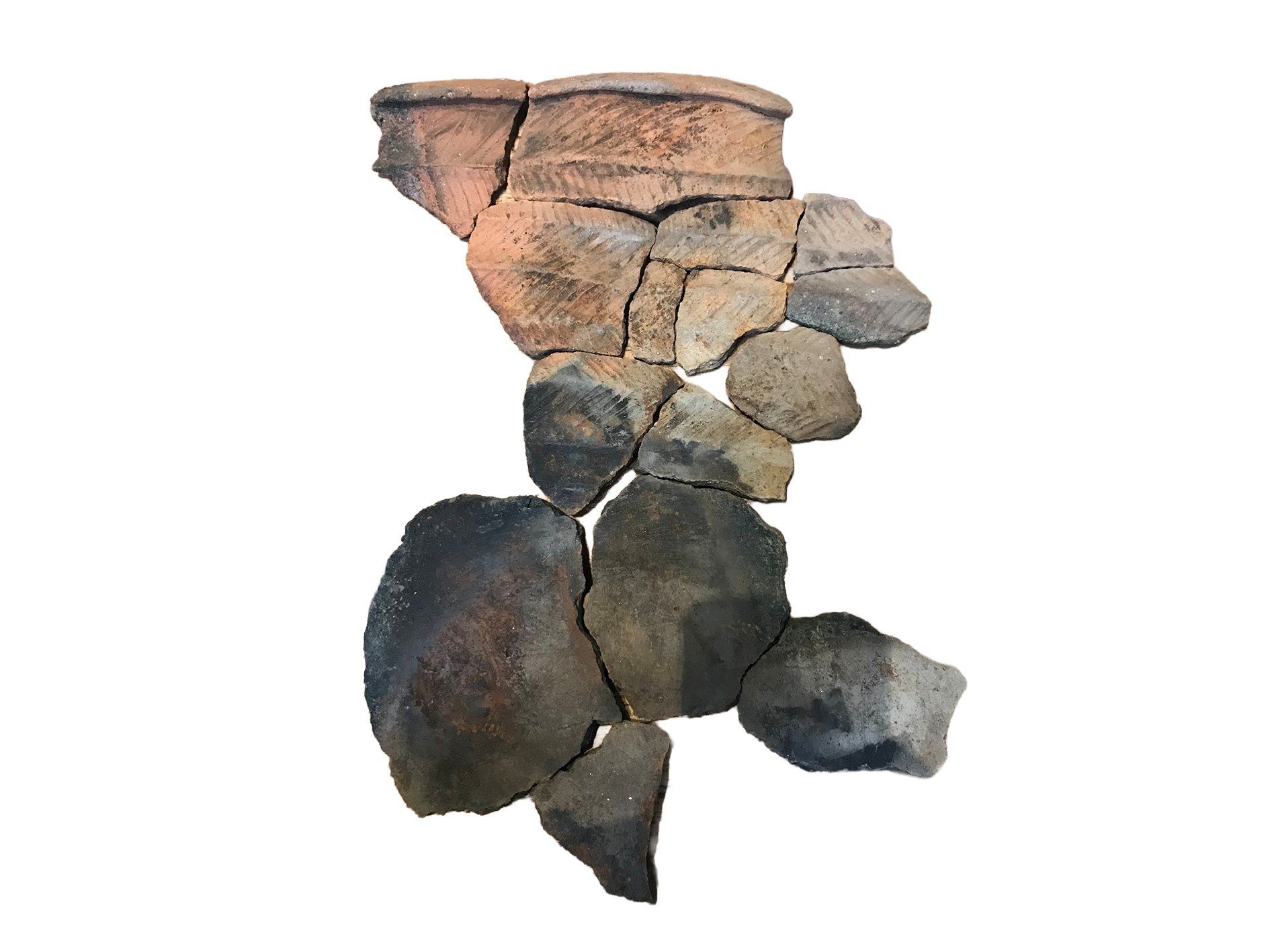
Murray discovered the pottery remains from a crannog in the Isle of Lewis, part of the Outer Hebrides island chain on the country’s northwestern coast. Experts at the National Museum at Edinburgh were bewildered to discover that they were Neolithic (4000 to 2500 BCE), and thousands of years older than they would have guessed for remains associated with crannogs. Since then, archaeologists have been taking a closer look at these artificial islands and their true origin.
“[They are] these strange little circular islands that exist in all the different watery environments in Scotland and Ireland, typically in lakes or lochs, as they call them in Scotland. You would look at one and say it doesn’t look quite natural, because it looks very uniform, a very cohesive structure with lots of small portable stones on top,” Stephanie Blankshein, a maritime archaeologist at the University of Southampton, tells Popular Science. “They’re clearly something different.”
The island builders
Archaeologists have known about crannogs for more than a century, but it is quite difficult to really investigate the structures because their timelines can be complex. People occupied them for multiple time periods, either continuously or with stretches of abandonment followed by reoccupation. What’s more, it’s difficult to excavate down to the artificial island’s oldest layers.
Murray’s discovery of pottery fragments in 2012 shouldn’t have come as a huge surprise. In the 1980s, one very confused archaeologist discovered Neolithic material at his presumed Iron Age site. However, the wider archaeological community simply deemed it as a strange, hyper-local anomaly, and moved on. The belief that the vast majority of crannogs date back no more than about 2,000 years endured for decades—including for most of Blankshein’s lifetime, she points out.
The waterlogged Neolithic pottery changed all of that, and Blankshein and colleagues started investigating the matter. They gathered and dated organic material and more pottery remains from six sights—five identified during Murray’s dive and the one from the 1980s. They confirm that both the pottery and the crannog were Neolithic, and ultimately found that 11 crannogs in the Outer Hebrides were from that period, with potentially many more around the same age in that region and beyond.
“I’m sure there are many, many more just waiting to be discovered,” Blankshein explains.
So, who were these Neolithic island-builders? It’s important to note that “Neolithic” doesn’t just refer to a time period, but also a lifestyle. Neolithic people were early farmers and pastoralists, and ancient DNA studies have revealed that Neolithic communities in Britain and Ireland were genetically distinct from the Mesolithic (about 9600 to 4000 BCE) hunter-gatherers who lived in the area before them.
Advanced research techniques such as ancient DNA and isotopic analyses are also revealing where they came from. Neolithic people originated from the present-day Middle East and eventually spread across Europe. Some people migrated along the Mediterranean coast as far as west as Gibraltar, before moving north along the Atlantic coast to Britain and Ireland, where they ultimately replaced the Mesolithic communities.
In fact, researchers have traced the strongest genetic connections of Neolithic people in Scotland not to nearby France but to the Iberian Peninsula, Blankshein says. Britain’s early farmers may have been or descended from Neolithic seafarers. Notably, they would have made landfall a few centuries before the Neolithic crannogs in the Outer Hebrides started popping up.
The oldest crannog in the Outer Hebrides dates back to 3800 BCE, while the earliest Neolithic site in the United Kingdom in southern England is from around 4100 BCE.
“So it’s entirely possible that there was a very early arrival in Scotland as well, and essentially straight away they started building these islands,” says Blankshein. “So it seems like this may have been a tradition that they actually brought with them, or that they established very quickly after their arrival.”
A big Neolithic platform
One of the crannogs that Blankshein’s team has studied in significant detail is the structure on the Isle of Lewis’ Loch Bhorgastail. It has already yielded hundreds of pottery shards, and they have also spotted pieces of timber embedded in the structure underwater. Importantly, the team could date that wood using standard carbon-14 dating. And unlike other crannogs, the Loch Bhorgastail crannog didn’t have any structures built on top of it (like a medieval castle) that could complicate excavations.
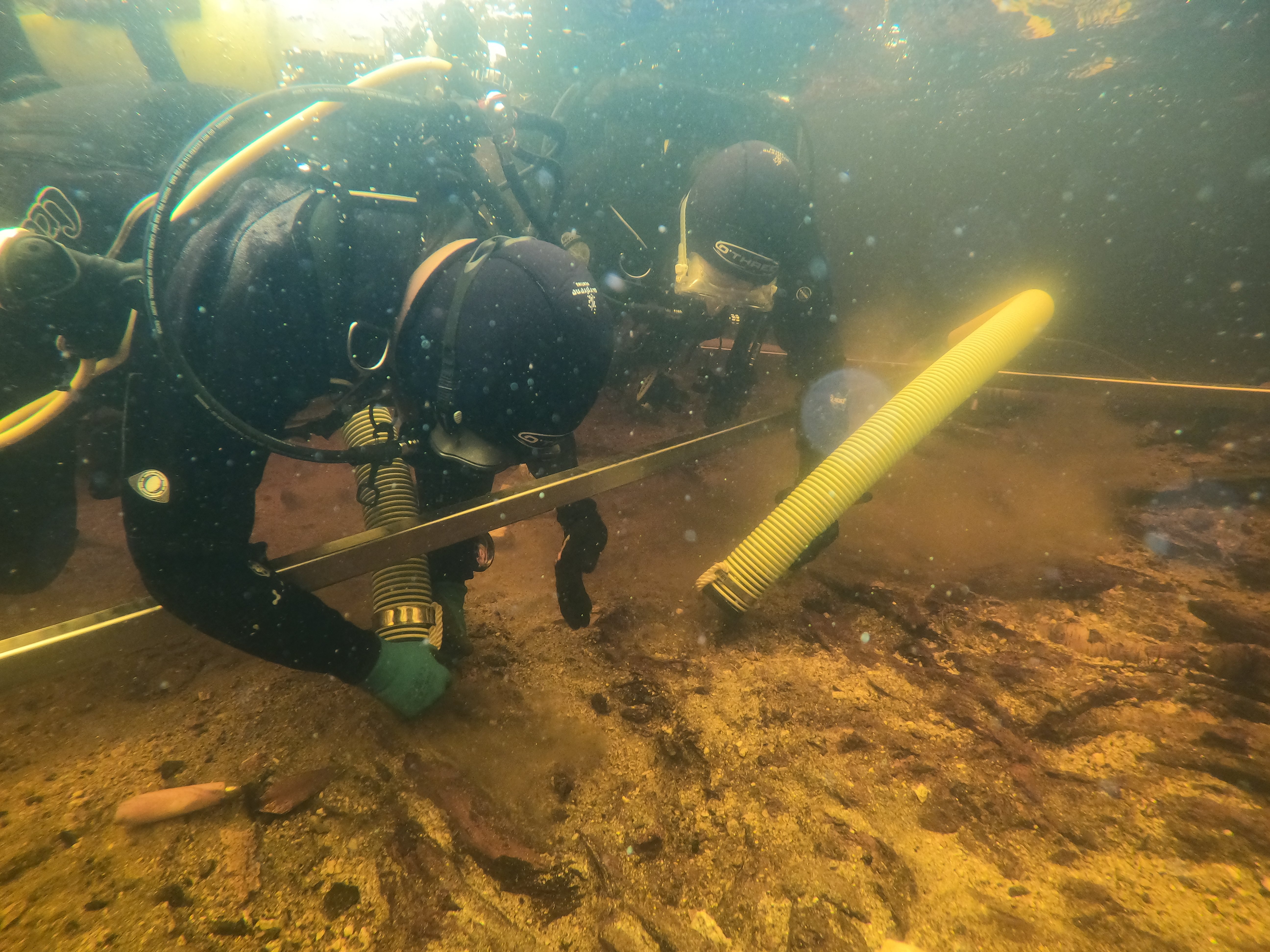
The team conducted their first serious excavation in 2021, expecting to reveal an island made of stone and reinforced with some timber. While they did not find full pieces of timber, bits of wood were scattered about, leading the maritime archaeologists to an entire underwater timber structure.
“We were just absolutely blown away because we started following this structure further and further back from the island. And by the end of the month of excavation, we hadn’t reached the end of it,” Blankshein says. “And that was about six meters [19.6 feet] that we had extended out. So we knew there was something quite interesting there.”
The wood dates to between 3500 and 3300 BCE, which is consistent with most of the other early Neolithic sites in the Outer Hebrides. When the team returned in 2023, they discovered that the timber platform wasn’t just extending from the stone base underwater, it was under the entire crannog itself.
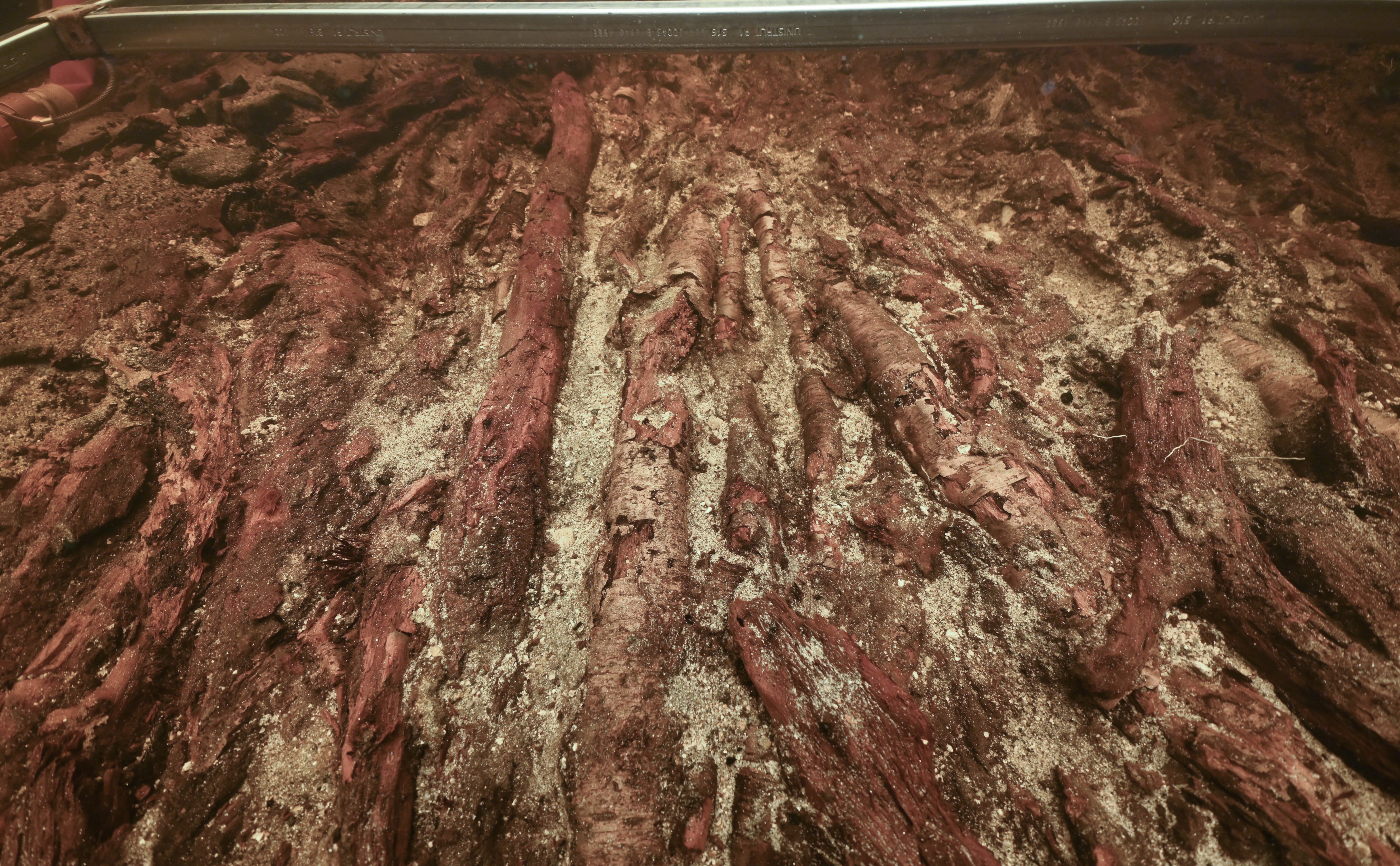
directly on the lochbed, potentially circular, and potentially featured stone reinforcements around the edges and/or stakes securing it. Core samples taken from the lake’s dirt and rock indicate that the loch’s water levels would have been lower at the time of its construction, so the platform could have sat under just a foot of water, or even been dry. Another possibility is that it was dry during the summer and underwater in the winter, and so was used seasonally.
The platform is also quite large, at around 75.5 feet (23 meters) in diameter. Now that the researchers have a good understanding of how big the platform was, the next natural question is what it was used for. This is a significantly harder inquiry to answer, and researchers have a number of different theories, according to Blankshein.
Broadly, it probably served several important purposes. The presence of food residue in the many pottery fragments indicate that people were consuming food on the island, thus it could have been a gathering place for a ritual feast or ceremony. As such, one of the theories is that it was used to host coming of age ceremonies. Since the wooden platform would have been on water, another hypothesis is that it could have represented a neutral and egalitarian meeting point.
Materials last touched over 5,000 years ago
In addition to phenomenal archaeological results, the Loch Bhorgastail crannog also prompted the team to develop a new technique for photogrammetry (stitching 2D pictures together to form a 3D model of a site) in shallow water. At these depths, photogrammetry is more difficult to execute than in the deep sea. They describe their method, which involves attaching two GoPro cameras to a rig, in a study recently published in the journal Advances in Archaeological Practice.
The team is finishing the final analysis of the Loch Bhorgastail site and are detailing the excavation results for a future paper.
“Working on such an ancient site is genuinely surreal,” Blankshein admits, speaking of the work in general. “Despite the huge lapse in time, there are moments underwater when the distance between past and present suddenly feels incredibly small—lifting pottery from the loch bed that was last touched by a Neolithic person over 5,000 years ago, or seeing bark still preserved on timbers beneath the sediments as if it had been placed there yesterday. Moments like that provide connections to the past I couldn’t have imagined before working on the site.”