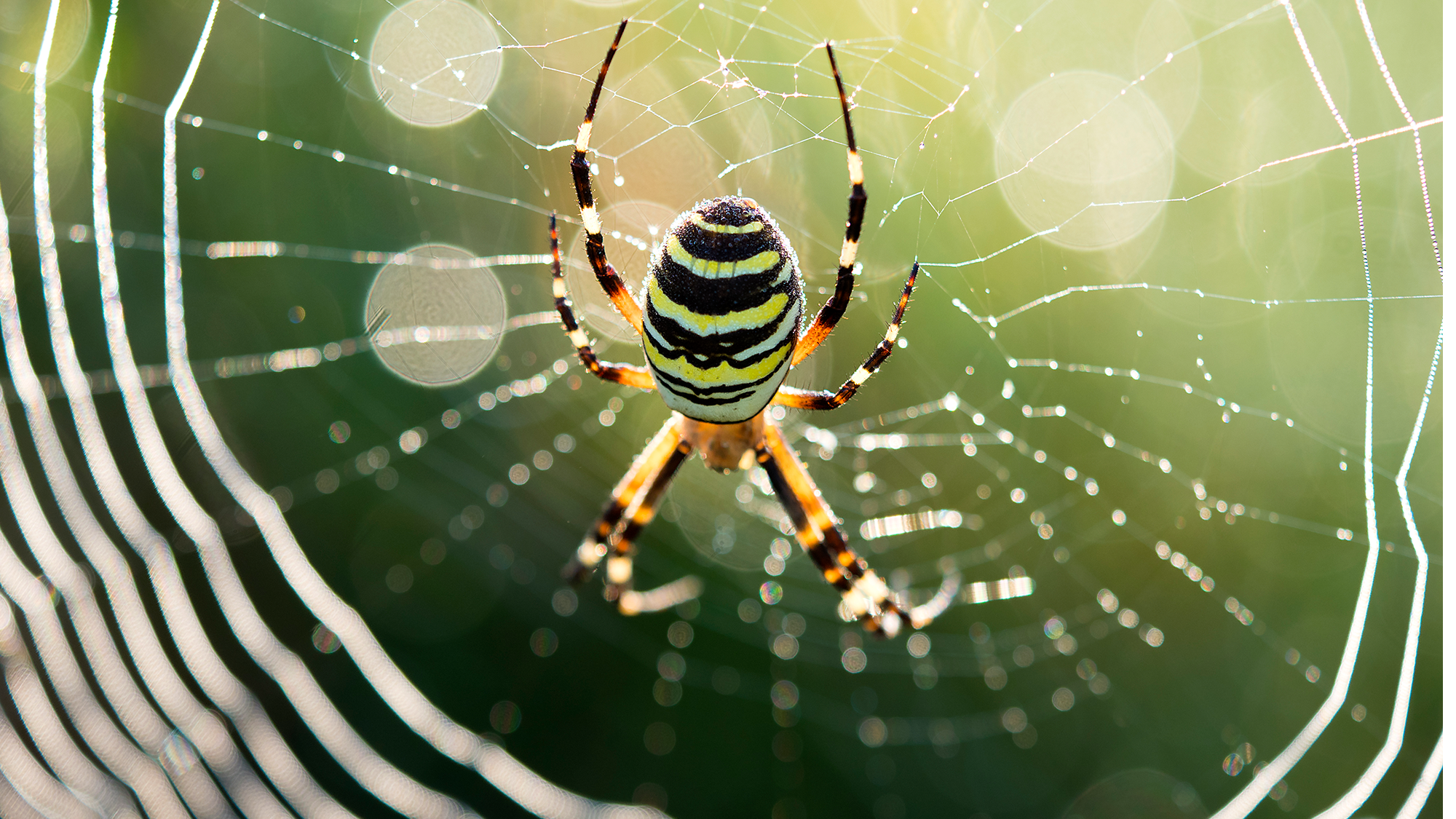
One of nature’s most beautiful natural wonders, spider webs sometimes feature little extra bits of flair called stabilimenta. Stabilimenta are highly-reflective UV structures. Basically, think of them like spidey bike reflectors scattered throughout a web. While stabilimenta are still shrouded in mystery, some new research is opening up a new window into this silky world. The stabilimenta may help move vibrations throughout the web, helping the arachnids find their captured prey. The findings are detailed in a study published today in the journal PLOS One.
Several spider species build orb webs. These spiral wheel-shaped webs that often dot plants in the forest and the corners of our homes capture flying prey. They’re the iconic spider web shape you see Spider Man rock and Halloween decorations embrace.
Some spider species incorporate stabilimenta throughout their web’s structure. The stabilimenta in these enhanced, extra-reflective webs often appear like zig-zagging threads that span the spaces between two adjacent “spokes,” or like threads arranged in a circle around the center of the web.
The purpose of stabilimenta within the web is unclear. They could help collect water, regulate a spider’s body temperature, or even deter predatory wasps or birds to help the arachnids collect more insects. They also may help the spiders pinpoint where their prey is located by helping vibrations move throughout the web.
In this new study, the team looked at the different stabilimenta patterns that wasp spiders (which really do look like wasps) build into their webs. The team then ran numerical simulations to explore how these stabilimenta-enchanced webs are affected when prey, say a mosquito, gets trapped.
The team saw that the vibrations in a web without stabilimenta differently affected the web, depending on the angle of the vibrations generated by the prey’s impact. For example, in vibrations generated at angles that were perpendicular to the web surface or perpendicular to the threads coming out from the web’s center (like the spokes on a wheel), the stabilimenta did not create noticeable changes on how the vibrations moved.
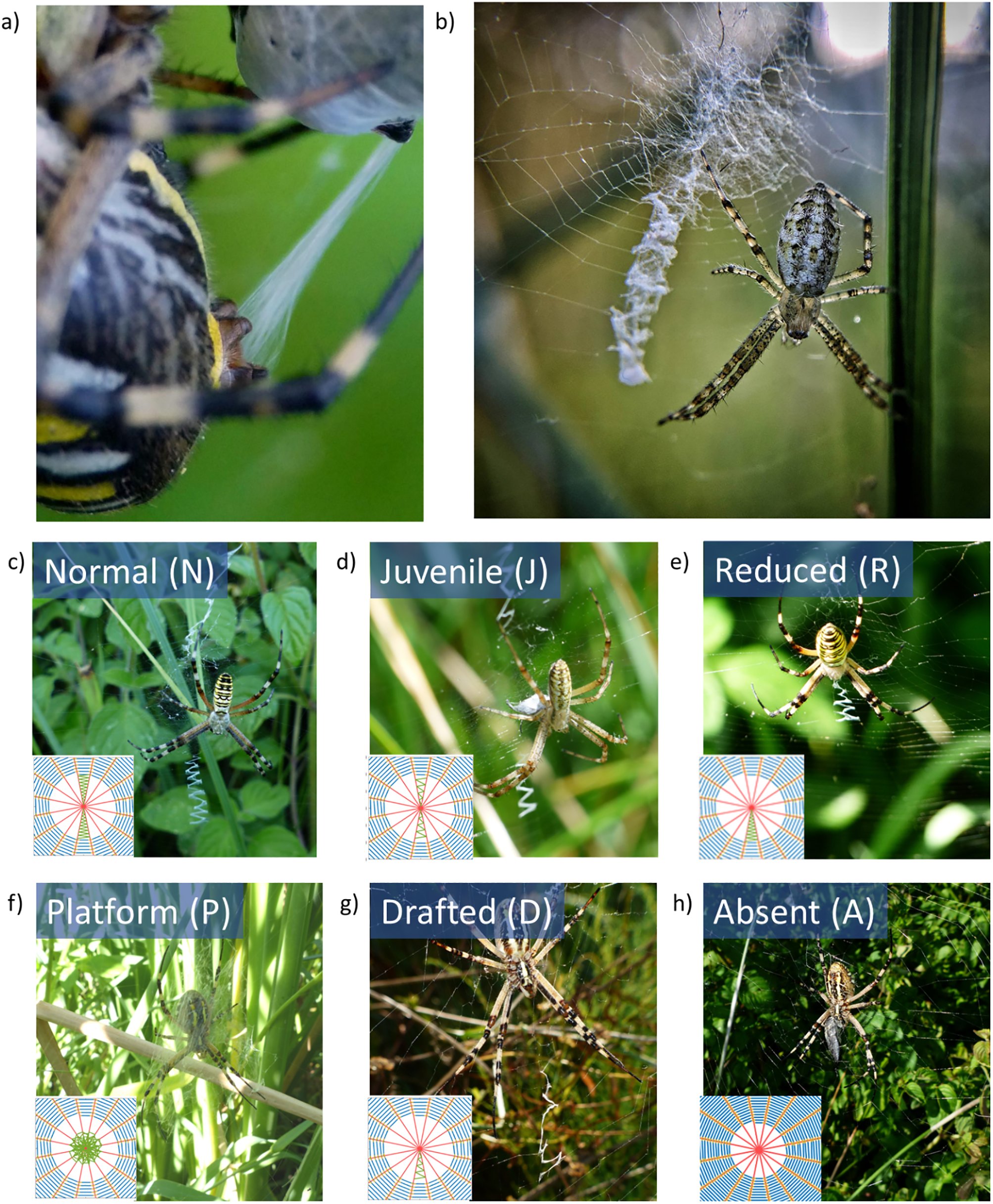
However, if the waves were generated in the same direction as the spiral threads, vibrations in webs with stabilimenta moved further across the web, where a spider might be able to sense them from anywhere within the web. According to the team, this suggests that stabilimenta may boost a spider’s ability to zero in on the location of prey caught in its web.
Importantly, the real-world impact of prey localization may be more limited and other elements such as where the web is located may have greater effects. However, the team believes that this research could help engineers build better web-inspired synthetic materials.