
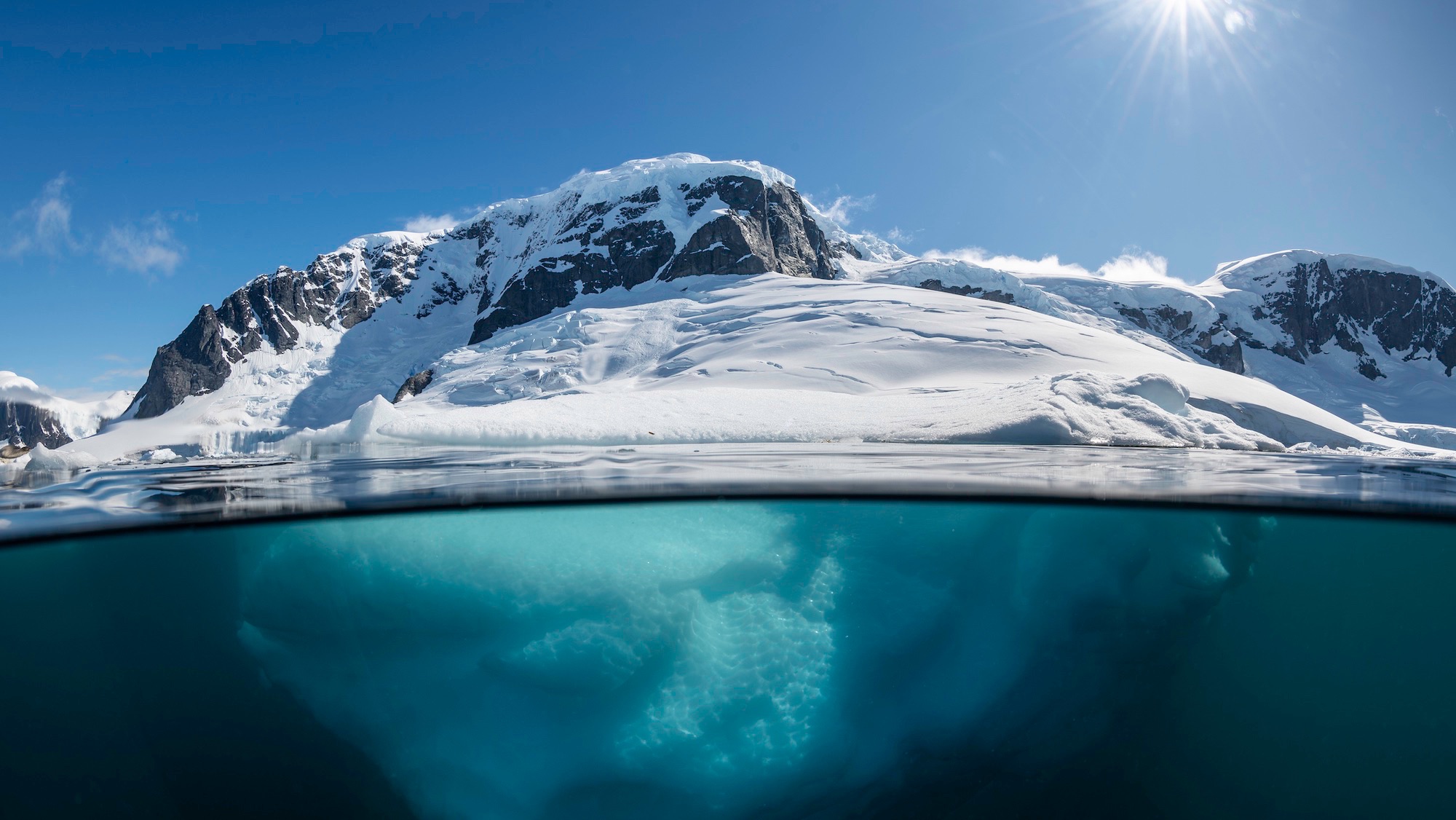
The Antarctic sea, where glaciers drift across the surface. What kind of world lies 1,300 meters below the surface? Scientists have now succeeded in directly observing a realm that had previously been inferred rather than seen. There, hot fluid surged upward from the seafloor, and a unique marine ecosystem unlike any previously documented was thriving.
The Korea Polar Research Institute (KOPRI) announced that a team led by Principal Researcher Park Sung-hyun had successfully completed an expedition aboard the icebreaking research vessel Araon in the Antarctic mid-ocean ridge region, roughly 1,200 kilometers from Jangbogo Station.
The expedition used an unmanned submersible to directly investigate hydrothermal vents along the Antarctic mid-ocean ridge. The Korea Polar Research Institute described the achievement as a world first.
Until now, the extreme conditions of the Antarctic deep sea had made access itself a formidable challenge. Unable to observe the seafloor directly, researchers had to depend entirely on indirect methods — lowering sampling equipment to collect and retrieve specimens. The locations, distribution, and ecological structure of hydrothermal vents likewise remained largely a matter of estimation. With this expedition enabling researchers to observe the deep-sea environment firsthand and collect data directly, Antarctic hydrothermal vent research is expected to gain significant momentum.
Hot fluid erupts deep beneath Antarctica’s seas
The surface waters of the Antarctic are a cold, still world of ice, hovering around minus one degree Celsius. Thousands of meters below, however, hydrothermal vents pierce fractures in the Earth’s crust, sending fluids heated to over 300 degrees Celsius surging upward. It is a world utterly unlike anything on the surface.
Hydrothermal vents form independently of the cold climate at the surface. Seawater seeps into fissures in the ocean crust, is heated by magma below, and erupts back into the ocean laden with metals such as iron, copper, and zinc, along with hydrogen sulfide and methane. A critical factor in this process is the immense water pressure at depth. Because pressure increases by one atmosphere for every ten meters of depth, the rising fluid can remain liquid without boiling even at temperatures exceeding 300 degrees Celsius.
That said, it would be difficult to argue that hydrothermal vents can meaningfully raise the temperature of the Antarctic ocean. The ejected fluid mixes rapidly with the frigid surrounding seawater and cools sharply within a few tens of meters. The heat does not spread across the wider ocean. Water temperatures in the Antarctic are still governed by large-scale natural forces such as sunlight and the circulation of Antarctic ocean currents. Hydrothermal vents are better understood as localized, exceptional heat sources confined to the deep ocean floor.
That is not to say hydrothermal vents produce no change at all. In extreme environments, even a modest source of energy can become a critical resource for life. Hydrothermal vents give rise to ecosystems on the Antarctic seafloor that bear no resemblance to those on the surface. In the deep sea, where no sunlight penetrates and photosynthesis is impossible, life sustains itself through chemosynthesis. Microorganisms break down hydrogen sulfide and methane released from the vents to produce organic matter, and on that foundation, diverse communities of organisms take hold. Some organisms survive by harboring symbiotic microbes within or on their bodies, drawing energy directly from them.
These extreme conditions have given rise to deep-sea ecosystems. Instead of the tubeworms and mussels commonly found at hydrothermal vents in the Pacific and Atlantic, the Antarctic hosts its own distinct lineages of crustaceans, mollusks, and echinoderms. Because these organisms are confined to areas spanning just tens to hundreds of meters around each vent and are isolated from one another, each site develops its own distinct biological community.
Why exploring Antarctica’s deep-sea vents is so hard
Hydrothermal vents themselves are not an entirely new discovery. Since the 1970s, numerous vents have been found along mid-ocean ridges in the Pacific and Atlantic. Their underlying mechanisms are also relatively well understood in the scientific community. In Antarctic waters, however, the situation is different. Although the mid-ocean ridge encircling Antarctica has all the conditions necessary for hydrothermal vents, thorough on-site exploration has been exceedingly rare. This is due to the harsh environmental barriers that have stood in the way of exploration.
Antarctic waters lie vast distances from any inhabited region. Reaching the target area with research personnel, deep-sea exploration equipment, and large-scale supplies requires a voyage lasting weeks to months. The logistics of the journey alone consume enormous resources. Simply arriving safely at the site, given the distance, serves as a major hurdle of the expedition itself.
The difficulty of operating equipment poses another challenge. A deep-sea unmanned submersible is a system that depends on the coordination of specialized personnel, tethered cables, and support vessels. Because of this complexity, expedition costs extend well beyond the time spent underwater. When leasing submersible equipment, the expense multiplies because teams must cover rental fees for the entire voyage as well as the lodging costs of the dispatched engineers.

A typical Antarctic expedition requires one to two months of sailing, yet the submersible may operate for only a matter of days. It is a ratio that makes the financial burden particularly steep.
Because of these constraints, research on Antarctic hydrothermal vents had long been limited to indirect methods.
The turning point for Antarctic hydrothermal vent research came with the exploration of the East Scotia Ridge. The expedition directly observed high-temperature hydrothermal fluid erupting from the deep seafloor at roughly 2,500 meters. The findings were published in 2012.
The discovery of biological communities never before observed raised the serious possibility that Antarctic hydrothermal vents harbor distinct ecosystems of their own.
Since then, signs of hydrothermal activity have been detected in several additional Antarctic waters. Even so, direct observations of deep-sea ecosystems there remain exceedingly rare. Vents have been confirmed in only a handful of locations, falling far short of a comprehensive understanding of the Antarctic deep-sea ecosystem.
Meet Ariari, the sub that dove into Antarctica’s volcanic vents
A Korean research team launched a full-scale expedition to an unexplored section of the Antarctic mid-ocean ridge. The Korea Polar Research Institute team set its sights on an area of open ocean roughly 1,200 kilometers from Jangbogo Station, located in Victoria Land, Antarctica. Its inaccessibility had made it one of the most notable unexplored zones, where no direct observation had ever taken place.
“The mid-ocean ridge surrounding Antarctica had been almost entirely unexplored, but with infrastructure like the icebreaking research vessel Araon now in place, access became feasible,” said Principal Researcher Park Sung-hyun. He added that the team had conducted expeditions continuously since 2011, and after years of accumulating data to pinpoint the locations of hydrothermal vents along the ridge, they deployed the submersible to those precise sites.
Until now, the team had been unable to observe the area directly and had relied on indirect methods to collect samples. Without the ability to see the seafloor, they had to depend on dredge equipment that scraped material from the bottom at random. Despite these limitations, the team confirmed the presence of deep-sea organisms through underwater cameras in 2017 and collected roughly 350 kilograms of mineral samples using dredge equipment last year.
Indirect methods, however, had clear limitations. Because samples had to be collected without seeing the site firsthand, it was difficult to secure precisely the specimens needed, and the risk of damage during retrieval was high. The team made a fundamental shift in its approach to exploration. They decided to deploy an unmanned submersible from the icebreaking research vessel to directly observe the Antarctic deep sea.
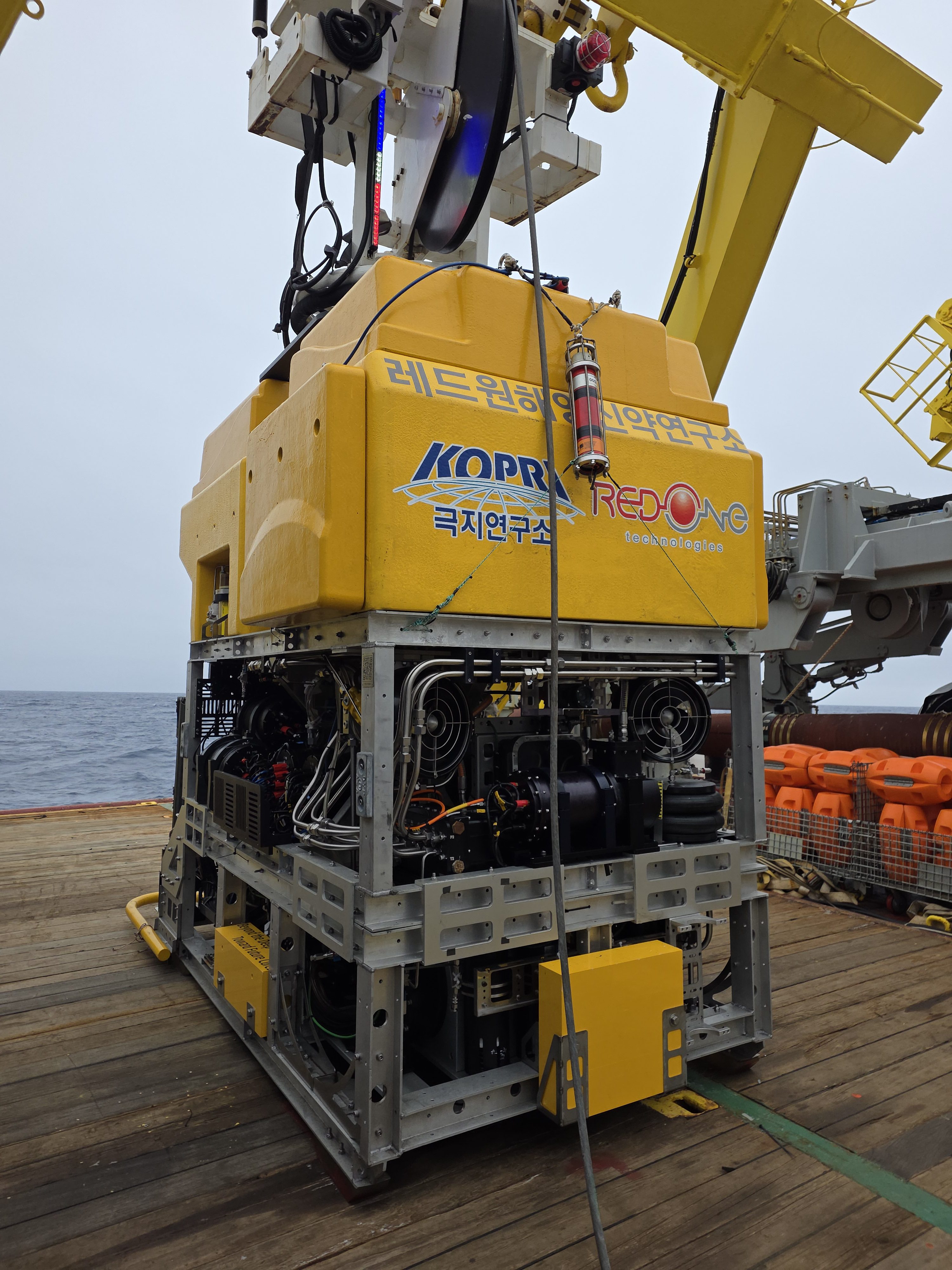
To that end, the team partnered with a robotics company to begin developing an unmanned submersible designed for deep-sea exploration. The goal was to reduce costs and build up the necessary expertise in-house.
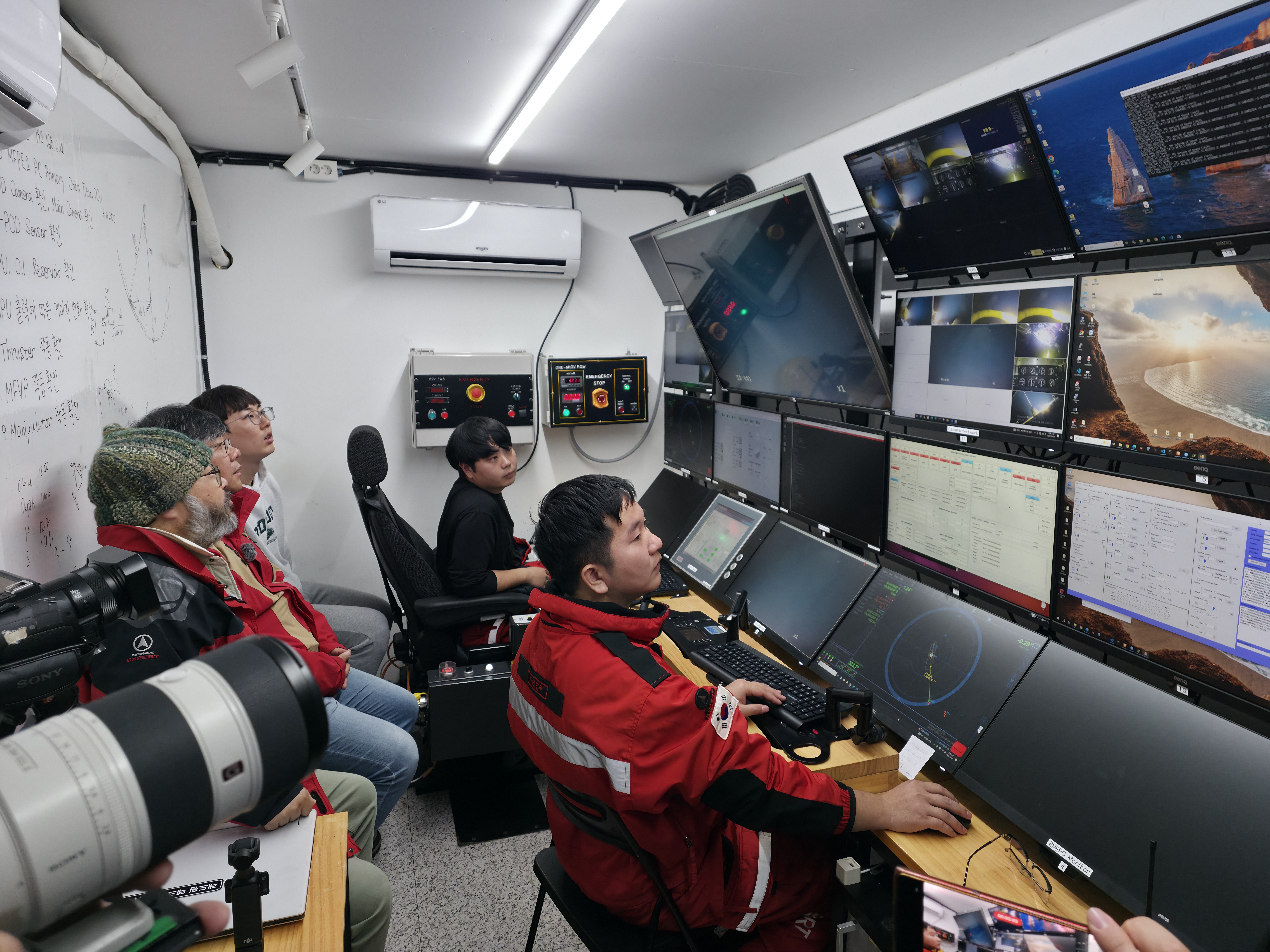
The resulting deep-sea unmanned submersible, named Ariari, is capable of diving to depths of up to 6,000 meters. Ariari proved its worth in the field. Descending 1,300 meters below the surface, it tracked changes in temperature and chemical composition and captured an active hydrothermal vent in operation. It recorded real-time video of chimney structures spewing superheated fluid, the surrounding biological communities, and the distribution of minerals, while selectively collecting intact samples tailored to the team’s research objectives.
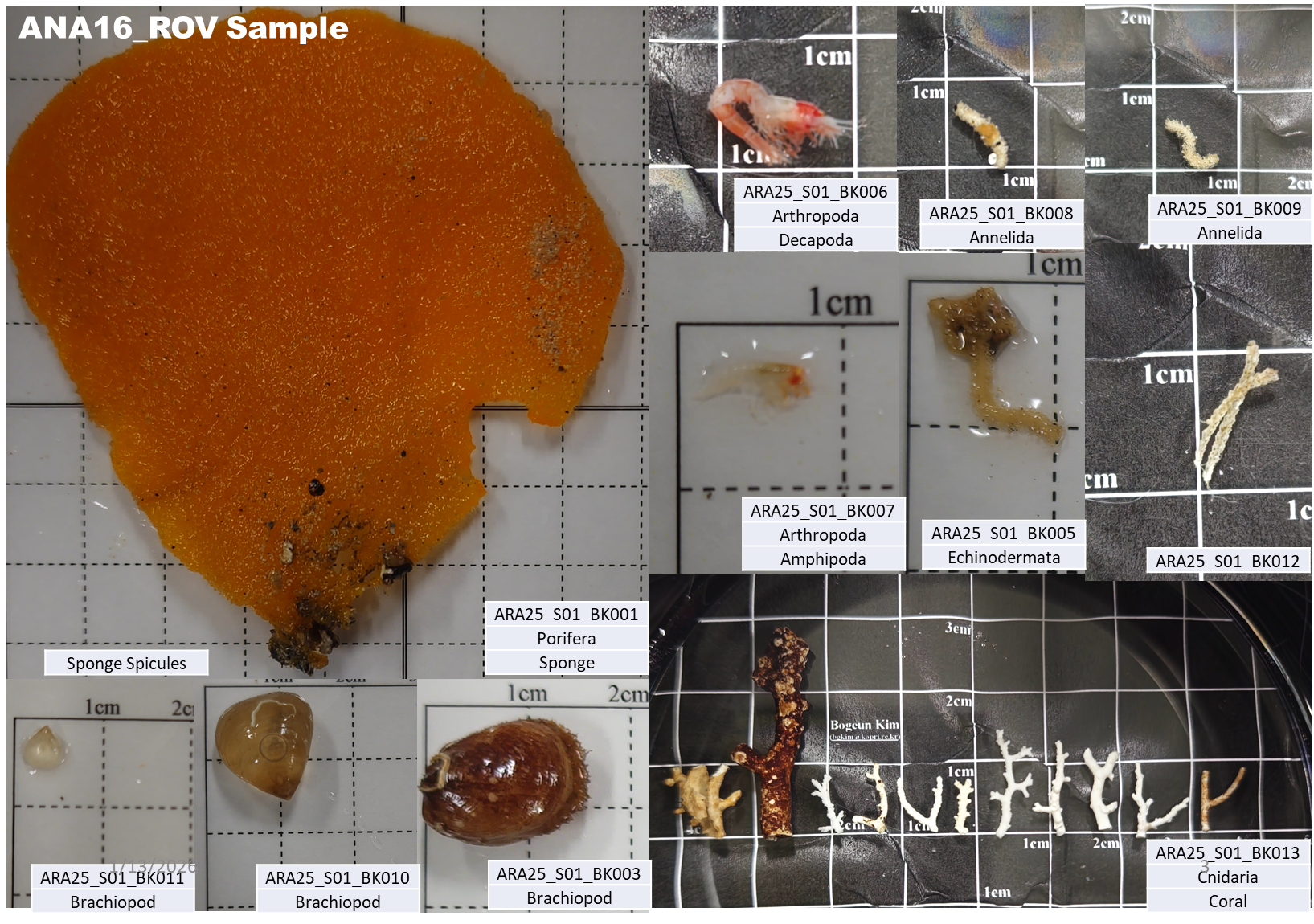
The Korea Polar Research Institute team reported securing a diverse array of biological specimens at the site. Using robotic arms and suction devices mounted on the submersible, the team collected a total of 12 deep-sea organisms including cnidarians, sponges, and echinoderms. Some of the specimens are believed likely to be previously unknown species. The team believes that because these organisms have lived in such an extreme environment, they are likely to reveal new forms of ecological adaptation. Through follow-up analysis, the team plans to uncover the biological principles governing Antarctic hydrothermal ecosystems.
The expedition also yielded valuable data on the geological front. The team directly observed the extensive spatial distribution of sulfide ores rich in copper and zinc spread across the area surrounding the hydrothermal vents.
“Directly observing the deep-sea hydrothermal environment on the Antarctic mid-ocean ridge with an unmanned submersible is rare even on a global scale,” said Park, adding that advanced robotics made it possible to obtain far more precise data and samples than conventional shipboard surveys could provide.
The story was produced in partnership with our colleagues at Popular Science Korea.
