
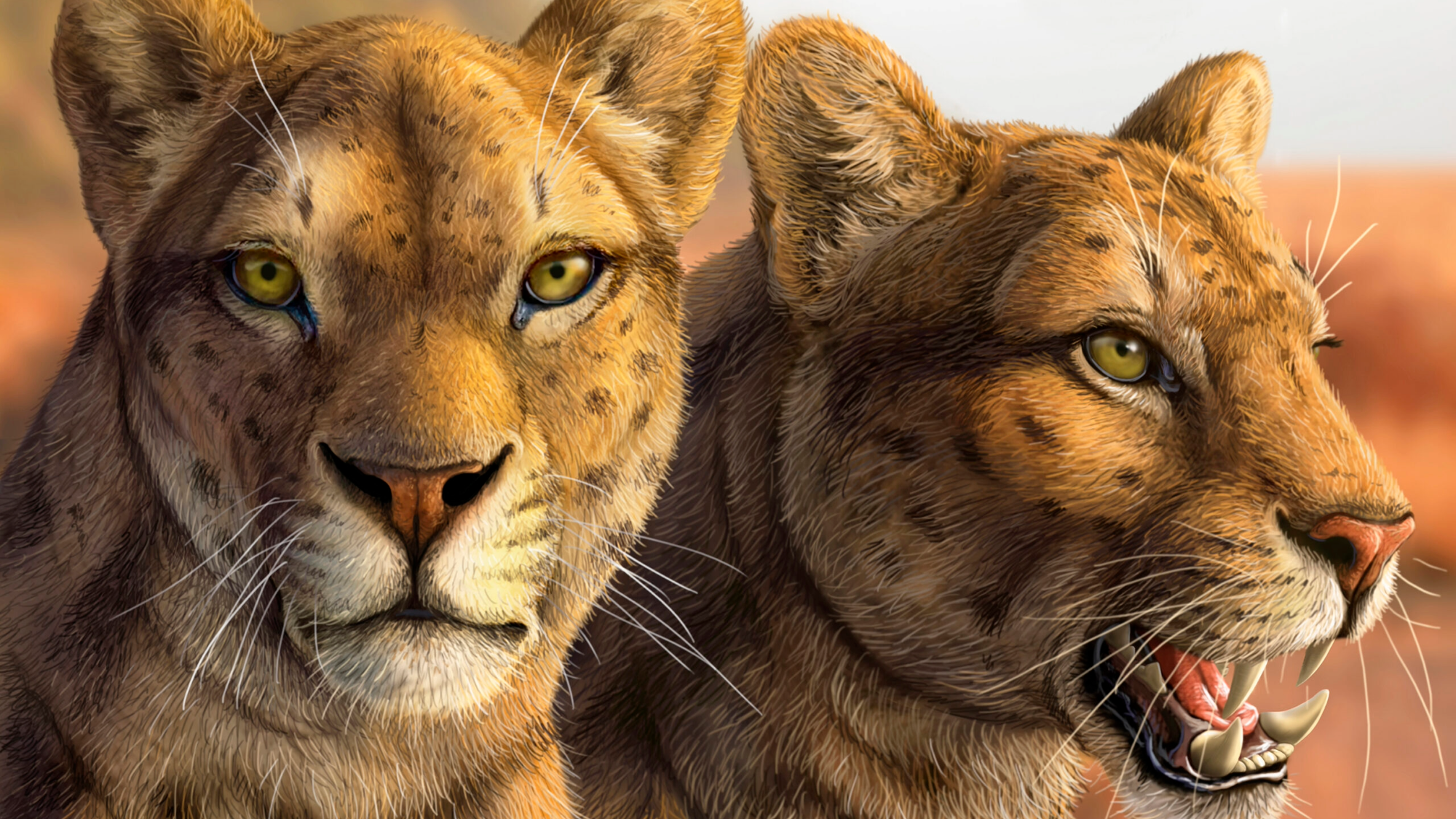
A mislabelled fossil, forgotten and sitting in a museum drawer for decades is actually more special than previously thought. The skull fossil belongs to an ancient species of saber-toothed cat that roamed across western North America about five million years ago.
In 2022, Narimane Chatar was a graduate student in paleontology, visiting the collections of museums around the world with her surface scanner for her research on saber-toothed cats. She was combing through the drawers of the American Museum of Natural History in New York when she stumbled upon something unusual.
“I saw this cranium that was labelled Pseudaelurus,” she tells Popular Science.
This genus name (Pseudaelurus) has typically been used to describe anything that looks like a cat, but whose lineage cannot be assessed. This surprised her, because the cranium was complete. “I thought it could be assigned to a more particular species,” she says.
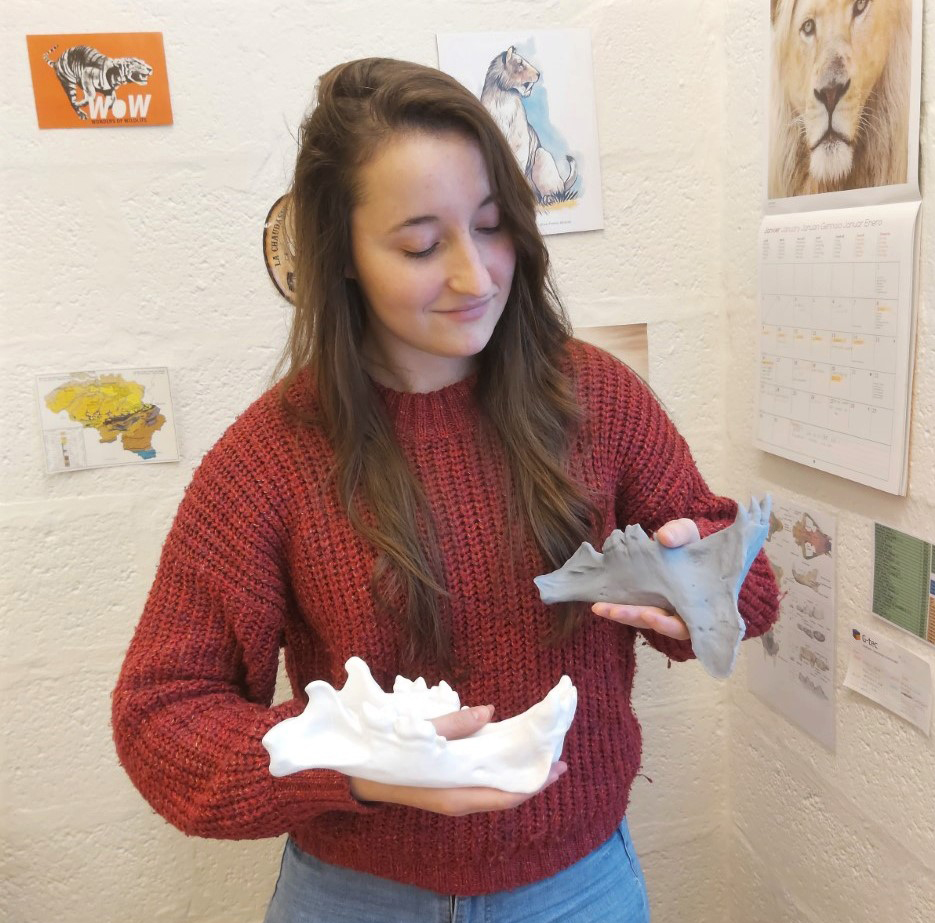
Chatar, now a postdoctoral fellow at the University of California, Berkeley, was busy completing her PhD at the time, so she didn’t have the bandwidth to investigate further. Once she finally had some spare time on her hands last summer, she decided to take another look at the specimen.
Using the scans she had taken during her visit to New York, Chatar made a 3D model of the fossil to compare against other fossil scans she had taken at various museums.
“I basically took the 3D model of the specimen, opened it on one screen, and then would open other 3D models on my other screen and compare them,” she explains.
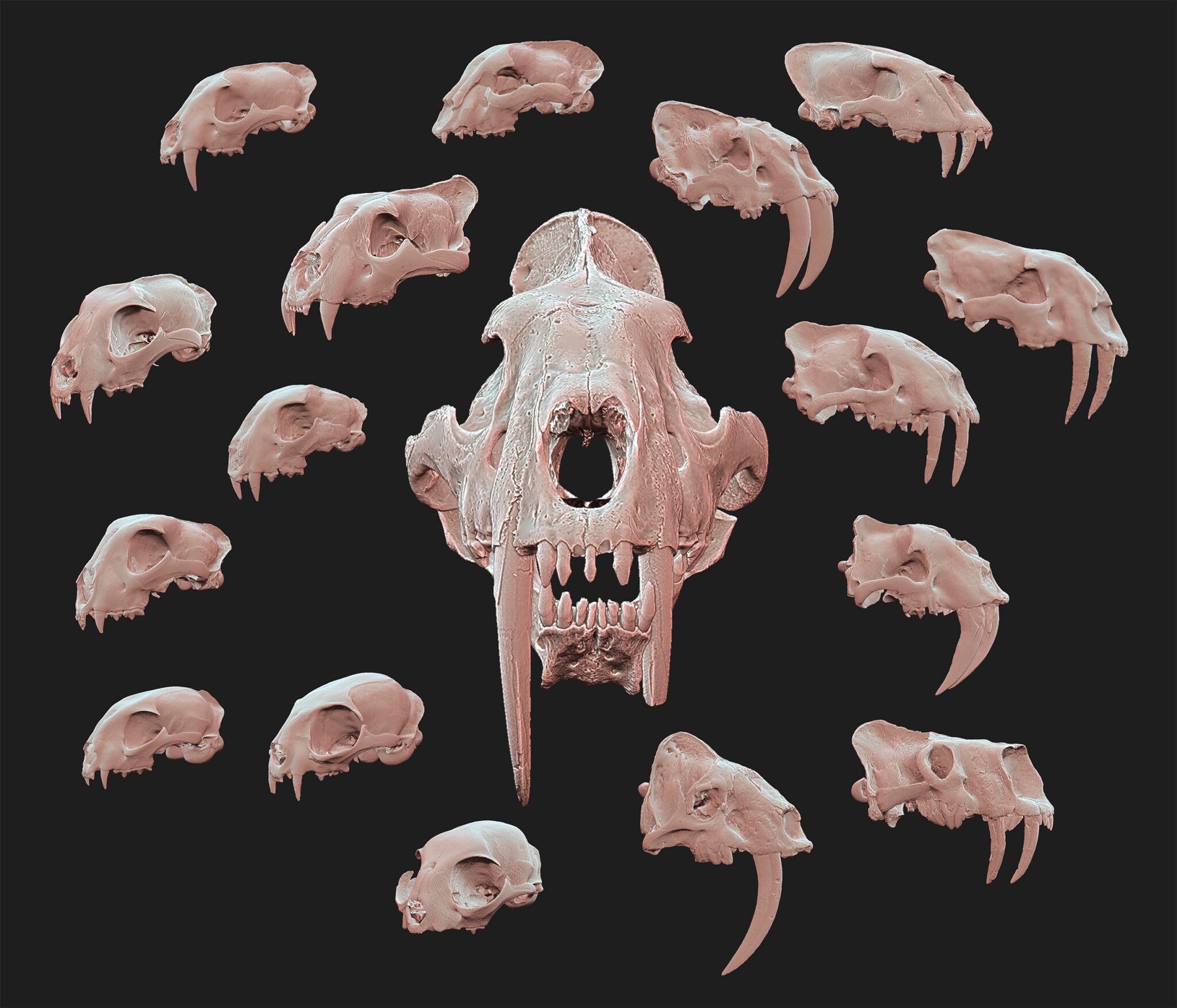
This process confirmed her years-long hunch. The skull belonged to the Adelphailurus kansensis, a puma-sized species that until now was only known from jaw fragments and teeth. The findings, recently published in the Journal of Vertebrate Paleontology, clarify A. kansensis’ place within the saber-toothed cat family tree. They also allow researchers to finally have an understanding of its cranial anatomy. In fact, an artist was able to reconstruct the appearance of the animal for the first time.
When most people think of a saber-toothed cat, they probably think of species with extremely long upper teeth, like Smilodon, which had canines that could grow up to eight inches. A. kansensis is a more primitive species, and still has short upper canines. Learning more about it can help researchers understand how Smilodon’s extreme morphology later evolved.
The study also underscores the importance of revisiting historical collections, according to Chatar. “The specimen had been there for 50, 60 years, lost in the drawers, labelled something else,” she says. “It reminds us that it’s really important to go back to those collections and open every single drawer.”
In fact, Chatar says some of the best fossils in museums are actually not on view. “We have little treasures hidden from the public everywhere in museums.”
Scientists still have a lot to learn about A. kansensis. It is unclear what the prehistoric cat looked like beneath its skull, and that data could help researchers understand how the species ran and caught its prey.
“Who knows, maybe some material is waiting to be discovered in another museum,” Chatar concludes.
