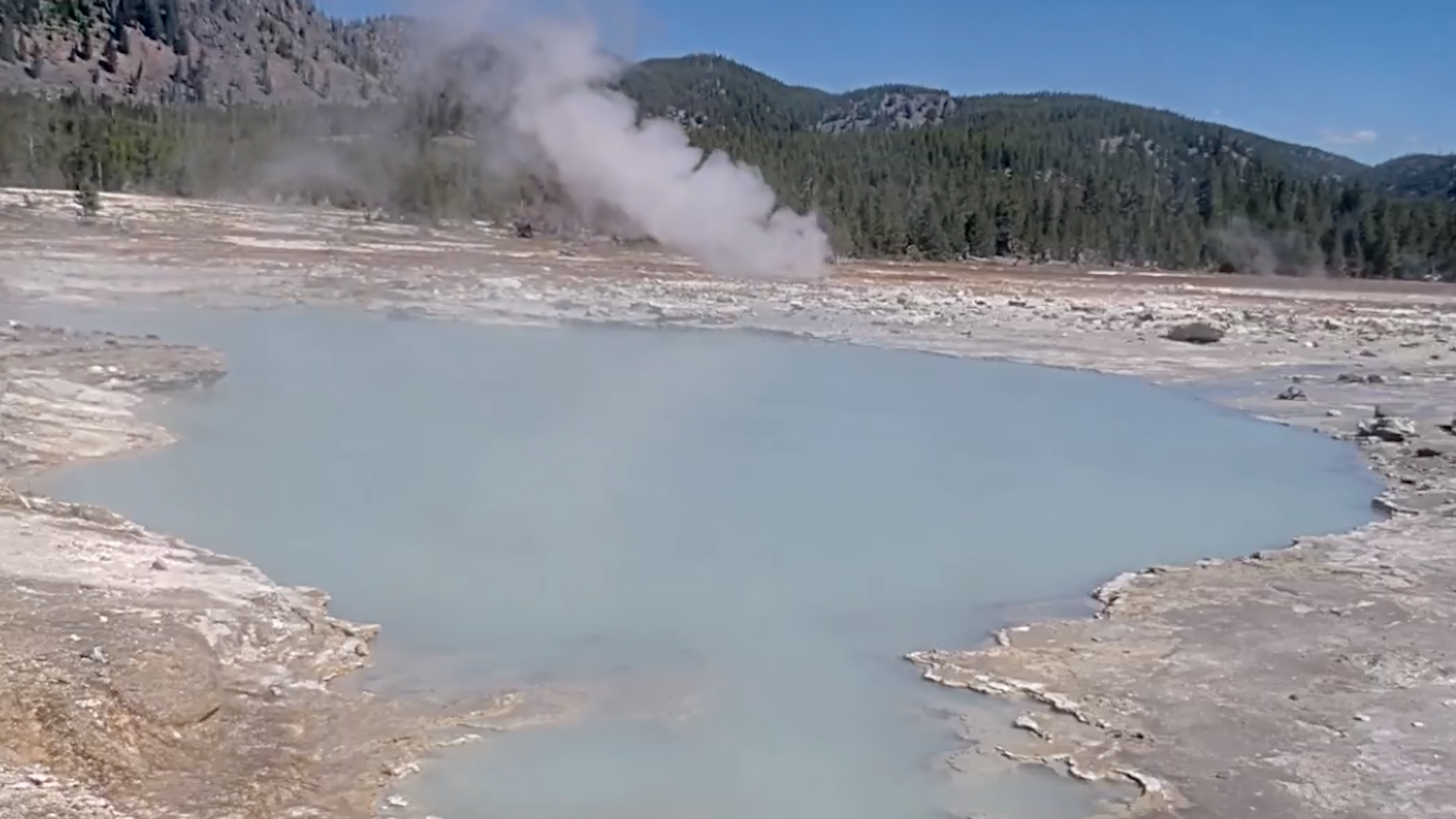
Around 465 active geysers are roiling across Yellowstone National Park at any given time, with new ones regularly bubbling to the surface every year. But as impressive as they are, they’re best appreciated at a distance. And there’s a new pool of boiling water to avoid, thanks to an event that began almost two years ago.
On July 23, 2024, a hydrothermal explosion burst from Biscuit Basin’s Black Diamond Pool, sending a 400 to 600 foot plume of mud, rock, and scalding water into the air. No one was injured, but park geologists have kept the area closed to visitors ever since.
After months of relative calm, monitoring tools began picking up a low-frequency acoustic signal known as infrasound along with anomalous seismic reading in the basin on June 13, 2026A visit to the site later that day revealed an unexpected sight—a roughly 3.7-mile waterway called Firehole River wasn’t its typically clear color. Instead, the currents were tinted with opaque, light-gray sediment. On top of that, two additional runoff channels had appeared.

Biscuit Basin hydrothermal eruption caught on camera
A review of sensor data indicated only a small rise in heat before slowly returning to ambient air temperature, which differed from quick drops seen in previous eruptions at Black Diamond Pool. This eliminated Black Diamond as a likely suspect—so what caused the odd readings?
Thankfully, a nearby livestream camera previously installed by the Yellowstone Volcano Observatory revealed the culprit. At 5:09 a.m. local time, a dark jet of water shot from the ground north of Black Diamond Pool that matched the seismic and infrasound upticks. Geologists returned to the site the following day and confirmed a large amount of hydrothermal water had flowed into Firehole River via three new sets of vents. These vents offered a route for underground water that reached boiling temperature and flashed into steam, causing the explosion that rose tens of feet into the air.
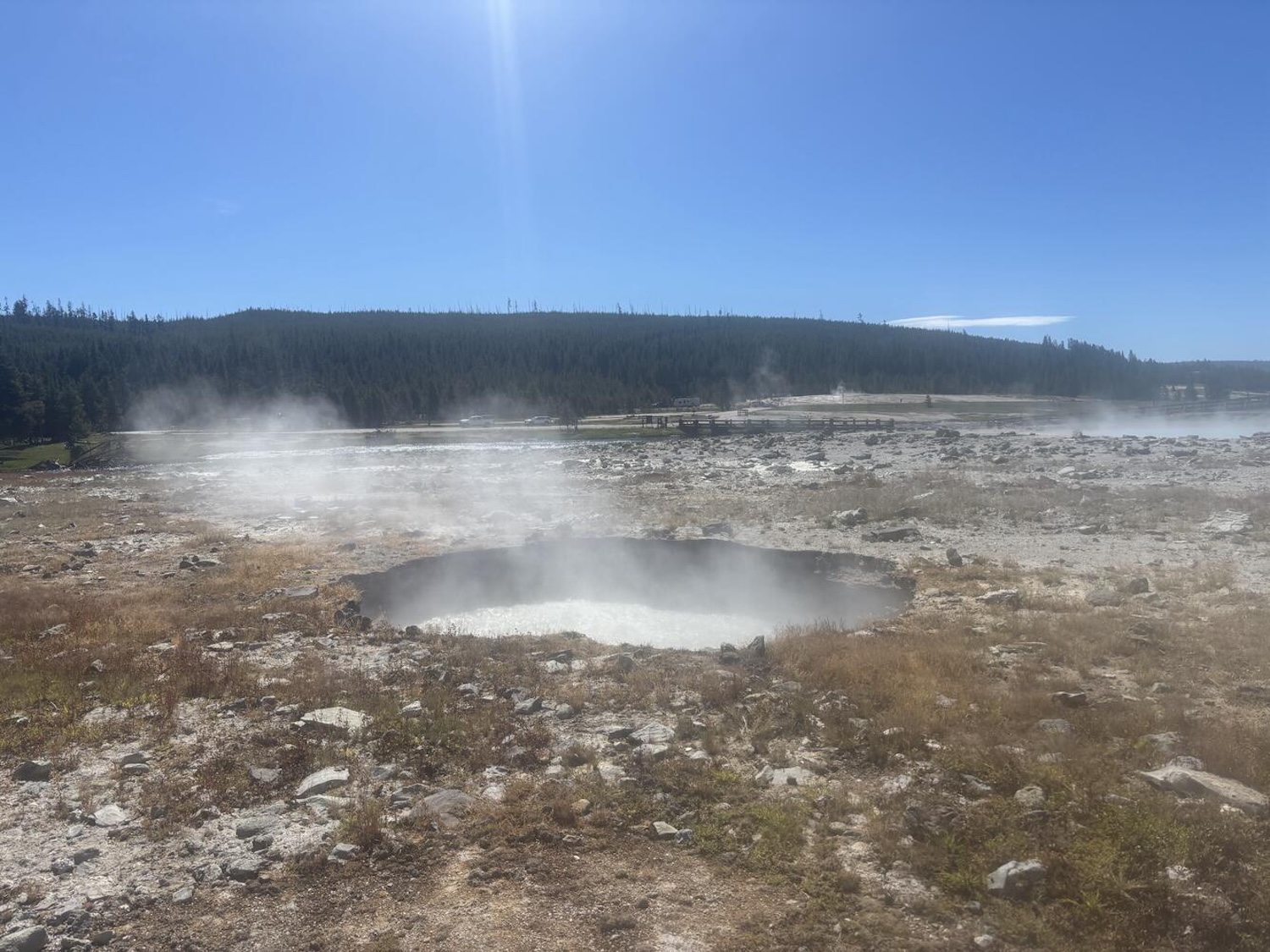
Researchers noted only one vent was still funneling water into the river, but it was a sizable opening at 61-feet-long and upwards of five-feet-wide. The water was also around 194 degrees Fahrenheit—near the 200-degree boiling temperature at that elevation. A subsequent return visit two days later showcased an even more incredible find. In a matter of hours, the eruption vents had formed a pool of boiling, silty water measuring 21-by-17 feet. A lack of surrounding debris confirmed the natural bath formed from an underground collapse instead of a separate explosion. Further camera footage captured multiple geysers measuring 20 to30 feet high.
Given all that activity, Biscuit Basin will remain closed to visitors for the foreseeable future. Thankfully, the geologic events can still be appreciated thanks to the impressive video feeds.