
Your next fancy face cream or bubbly bottle of imported wine may have made its trip across the Atlantic Ocean on a massive sailboat.
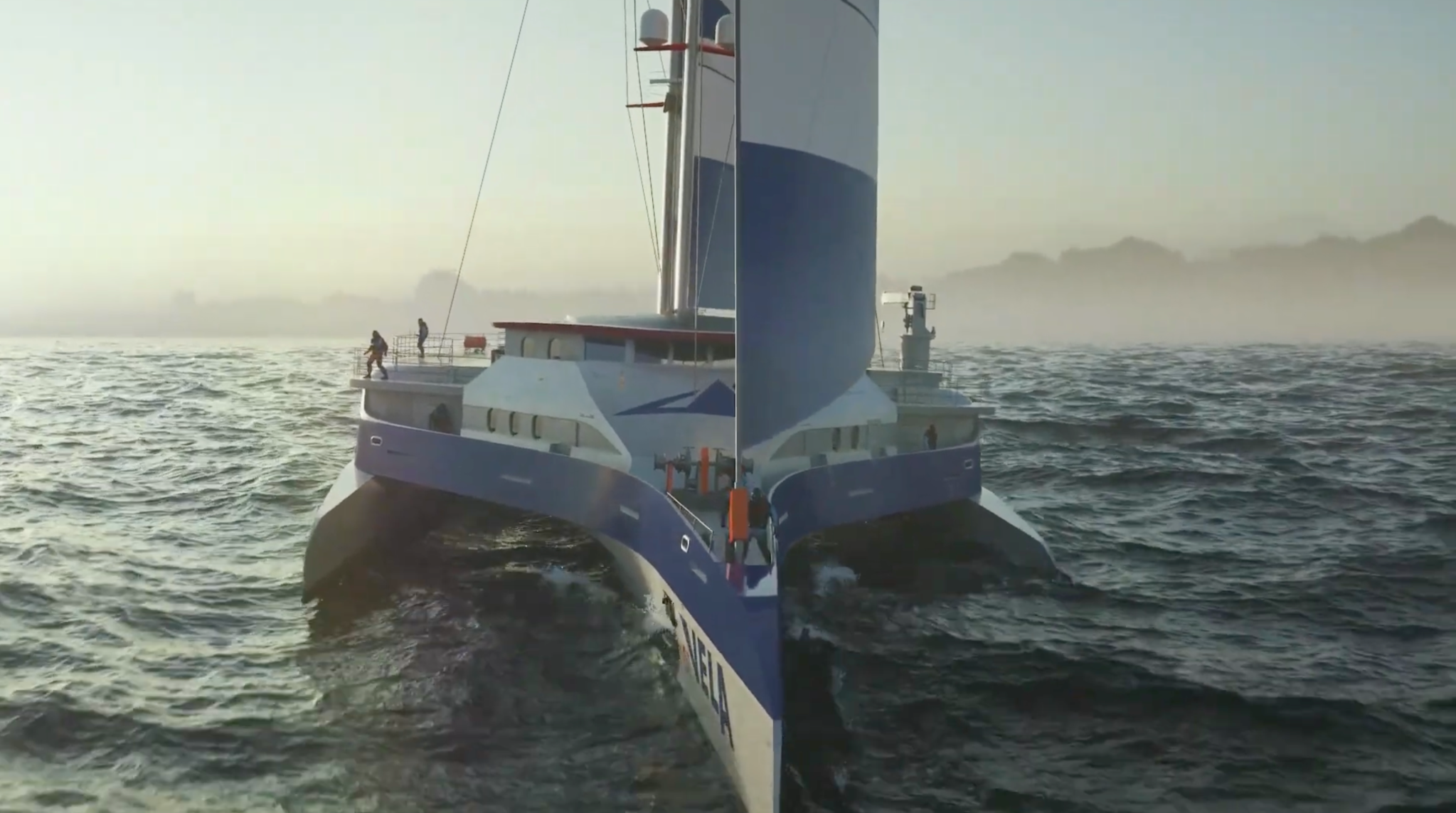
Starting next year, international shipping giant DHL plans to transport certain products from Europe to the United States using a new wind-powered vessel designed by French startup VELA. But the 220-foot-long sailboat is a marked step up from Viking longships or the Mayflower in 1620. Inspired by yacht racing, the modernized craft is made primarily of aluminum and carbon fiber and travels at around 14 knots, or roughly 16 miles per hour. Its trimaran (three-hulled design) increases stability and helps it cut through open ocean swells.
Though an improvement from sailboats of previous generations, VELA’s massive ship isn’t exactly what most would call lightning fast. At 16 miles per hour, it’s no match for air freight, which crosses the Atlantic in a matter of hours. Traditional container ships, while slower than planes, typically follow fixed routes and can make the crossing in about nine days. VELA, a sleek vessel that’s guided by wind, will travel alternative routes and may take up to 15 days. DHL is hoping that the lack of blazing speed won’t be an issue for certain customers selling higher-end products that don’t necessarily need to reach their destination in an Amazon Prime-level hurry. The goods most likely to make the sailboat journey include wine, pharmaceuticals, and cosmetics.

VELA Trimaran voilier-cargo
“The potential of wind-powered cargo vessels lies in their application on selected trade corridors where demand for lower-emission transport solutions is increasing,” DHL Global Forwarding tells Popular Science.
“The primary objective is to expand the range of transport options available to our customers, enabling them to choose solutions that best fit their priorities,” DHL adds.
News of the partnership was first reported by The Wall Street Journal.
Turning to past tech to solve modern climate problems
DHL’s interest in VELA’s sailboat stems from a push to find new ways to reduce carbon emissions. International shipping is a significant source of greenhouse gases, accounting for around 3 percent of all global carbon dioxide emissions. And while electrification and sustainable fuels have started to address emissions in cars and planes, shipping has remained stubbornly tied to heavy fuel oil. It is cheaper than more refined alternatives, but far more environmentally harmful because it produces high levels of black carbon and sulfur dioxide, both of which are linked to increased risk of heart and lung disease.. DHL, for its part, has pledged to achieve net-zero emissions by 2050. Most of that transition will likely come through cleaner shipping fuels, but wind-powered options like VELA boat could help fill in some gaps.
Founded in 2023, VELA claims that it has created the first sailing cargo ship with three hulls specially designed for freight transport. Most recreational sailboats have a single hull or double hull, but the company’s trimaran design brings added stability. This extra stability is crucial for the long transatlantic journey and also allows for a wider base, so the boat can support particularly large sails. When extended, the sail area comes out to 6,705 square feet. The mast is made of carbon fiber and the sails use high-performance fabric, both choices borrowed from racing yacht design.
The boat’s propulsion system runs almost entirely on wind, save for a small engine it uses to navigate within ports. Solar panels on the deck power electricity for the crew and help keep certain cargo like pharmaceuticals climate controlled. The ship’s reliance on wind means, by necessity, it won’t follow the same standard routes cargo ships typically travel. Instead, like early transatlantic sailors, its path will be dictated by natural guiding winds.
The ship is massive compared to other sailboats, but puny when stacked up against a cargo ship. When fully stocked, it can reportedly carry 415 metric tons of material, or around 600 European pallets. That’s reportedly about five times more than a typical cargo plane, but roughly one-fifth the capacity of a standard cargo ship. Those limitations will help dictate the particular kind of cargo the sailboat will transport. Since it’s focused on lighter pallets, the sail boat lends itself more toward moving smaller luxury items. All told, VELA estimates its wind-powered boat will cut emissions by 99 percent compared to air freight and 90 percent compared to container ships.
VELA did not immediately respond to Popular Science’s request for comment.
Gondola’s, solar boats, and snowshoes: alternative delivery methods
Though DHL is specifically seeking out VELA to provide more environmentally sustainable shipping options, the sailboat design offers some other potential upsides. For starters, its smaller and lighter design means the sailboat can access smaller ports. That’s important because the handful of major ports large enough to support full-scale cargo ships are bottlenecked and experience a constant backlog. By accessing smaller ports more off the beaten path, VELA’s sailboat can load and unload cargo much faster.
Relying on wind for propulsion means the boat will also generate far less noise pollution than cargo ships, which is good news for whales and other marine life. Its mostly aluminum body means it’s also easier to recycle once it reaches the end of its life cycle.
DHL tells Popular Science its use of VELA’s sailboat isn’t intended to replace conventional sea freight or air transport. Instead, they hope it will serve as an alternative option for specific routes and shipment types. When the ship makes its maiden voyage in 2027, a certain allotment of cargo space will be reserved for DHL. The shipping company, meanwhile, will handle the logistics network necessary for the crossing, as well as customs and warehousing.
And while it might seem odd for a major shipping company like DHS to embrace sailboats, it wouldn’t be their first experimentation with unusual-looking vehicles. They already use gondolas to navigate Venice’s canals and a solar powered boat in Berlin. In rural parts of Normal, delivery drivers even use snowshoes to take the final steps necessary to leave packages at customers doors.
