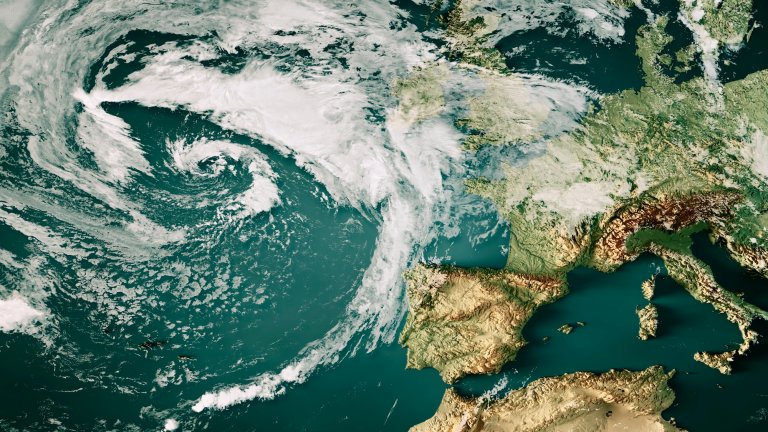
The goal would require gathering unprecedented amounts of information about the planet and its societies

Living Earth Simulator Could the Google Earth models of today herald tomorrow's socioeconomic forecasting machine? Google Earth Blog

A world rife with burst economic bubbles and the threat of global pandemics might look more manageable through the prism of a giant SimEarth-style model that puts even Google Earth's overviews to shame. The proposed "Living Earth Simulator" would aim to model both Earth and the details of its societies in detail by 2022, at the cost of about $1.3 billion, Technology Review reports.

Such "reality mining" would track everything from financial transactions to individual travel itineraries, from medical records to carbon dioxide emissions. If computer modelers can pull off the feat of simulating not only the planet's systems but also every one of its inhabitants, it could potentially lead to simulating the future in a way similar to how weather forecasters predict the weather.

That astounding vision is the brainchild of Dirk Helbing at the Swiss Federal Institute of Technology in Zurich. Helding's desire for such real-time knowledge of the Earth stems from his leadership in the emerging field of techno-socio-economic studies, and perhaps reading a bit much of Isaac Asimov's Foundation series and dreaming of psychohistory's predictive powers.

Plenty of supercomputers already run complex simulations focused on financial markets or climate change. NASA has also joined forces with Cisco to launch a $100 million "Planetary Skin" network that integrates all sorts of ground, sea, air and space sensors -- perhaps a bit of a precursor to what Helding has in mind.

That's not to say that the project might not need a heck of a lot more money than $1.3 billion, assuming that the European Commission approves it. But Technology Review suggests that the alternate to a publicly funded effort is a darker vision of such predictive power in the hands of a single corporation, or perhaps one nation's military. In that spirit, we'd suggest that there's no time like now to start -- hopefully any such model incorporates the zoom and swoop options available in Google's Liquid Galaxy engine.

[via Technology Review]

10 Comments

Could prove interesting but if history has taught us anything, it's that Mother Nature is unpredictable. Sure we can calculate things like seasonal rains and temperatures, but natural disasters like earth quakes and volcanic eruptions are still wildly unpredictable. One thing is for sure, if this pans out you know insurance providers will be canceling policies ten years in advance.

I usually read both popsci and softpedia so I can't remember if the anti google European stuff was just on softpedia or both, so I'll explain it. In Europe, especially Germany, the authorities are against google doing, well, much of anything on the grounds that it infringes upon privacy whereas the Govt.s of the countries in question usually engage in much greater surveillance efforts. I'm personally appalled that they thought taking pictures of the roads was infringement upon privacy, but this steps it up quite a bit. European hypocrites aside, I agree with RobWiki, some things are unpredictable, e.g. some new memresistor breakthrough, or the atomic graphics card thing. Waste of money really, Heisenberg uncertainty principle prevents knowing the future anyway, you can't know position and momentum can't both be known; the more precise one of them, the less precise the other. Just dump the money into something useful, like the fission VASIMIR engine powering the mars terraformer ship. Or the mars terraformer ship, take your pick.

Let me revise that, you can't RELIABLY know the future. Few general predictions like moore's law will probably hold true, but the more specific you get, the less accurate. And the uncertainty principle thing was about you being able to predict the future if you knew the exact velocity and position of every particle in the universe which is impossible...

Not too long ago we had very little (if any) warning of an impending hurricane.

Have you seen the new content fill program on photoshop? Computers are getting pretty good at recognizing patterns and making predictions from it. We have long estimated the progression of technology. This is kind of feeding off of the idea of determinism. Every decision a person makes could be predicted if you could know the exact state of their neurons and synapses and how they will be influenced by incoming data. If a god could know the exact state of all matter he could know the futute. I believe in determinism. Thoughts and reactions and decisions are no more random than billiard balls on a pool table.

Sounds like the aliens on riverworld. Calculating probabilties of everything. While a lot can be predicted in general. Doesn't always work, there will always be mother nature to give you a smack down for the hubris.

What shocks me is how some people think that government's motives are more pure than a corporation or military. I would choose the motives of either over government. Corporate greed is an understandable motive. Military supremacy is an understandable motive. Both fall under the human need for self-preservation.

Government motives are more complex. And with some more and more blindly idealogical along with the same greed blamed solely on corporations. Idealogy can trump self preservation, and can be easily fooled. There is a power in idealogy that is based in our powerful social instincts. This is a base level instinct like scent, it goes straight in, bypassing the higher level language abstraction that allows people to examine things rationally. See how people can let go of their own personal self-preservation in war for the larger cause of the group.

This is being used now as a political marketing tool for the promotion of worn political thought in a new idealogical dressing. This way of thinking is as dangerous as it is powerful, if misused like it almost always is when artificially created rather than an organic derivation of actual circumstance. This worries me, the social engineers don't understand they are playing with a fire that can burn any direction, them as well, if they misplay control of the fodder for their revolution. Or very likely they didn't understand the full situation with the accompanying unforeseen results. Blinded by their own idealogy they don't understand they aren't smart enough to understand the complexity of the system (large groups of people) they try to control.

Very true Mycellium!

You may be able to predict extremely general trends, but you will never be able to get down to the details that they want.
As others have said, Nature in itself is upredictable and even people can be chaotic at times.
Just because you have all the factors of the "Cause" does not mean you will always see the expected "Result".

At best, you might be able to get weather-like reports:
"There is a chance that we will get rain/snow/hail/heat/sun/clouds/etc today"

You will not be able to say "An earthquake in New York Tuesday, death toll 4590." You can however say that there will be aprox X earthquakes in the next ten years, with Y of them in inhabitable areas, with a death toll of Z.

No actual predictions of particular events, just an understanding of trends, percentages, and the like.

This would be very useful for land development, crop production, imerging markets, and polical trenders.

Hari Seldon would be proud.

I think some of the commenters might be misunderstanding what the FuturIcT Knowledge Accelerator is supposed to accomplish.
cordis.europa.eu/fp7/ict/fet-proactive/docs/flagship-ie-jan10-05_en.pdf

You can't "predict the future" in the sense of determining individual actions and events, but you can put probabilities on large-scale patterns. Not only can you follow linear or logarithmic trends, but even chaotic systems can have attractors.

For example, you can't say where a particular air molecule will go in the next second, but you can reliably say whether a thunderstorm will appear somewhere over your state sometime next week. California officials might not know exactly when or where the next big earthquake will hit, but they can be virtually certain that the state will be hit with a massive one at least once this century and can know the maximum amount of shaking to expect in any given location.

Well, clearly this is a wonderful idea! As has been demonstrated repeatedly, predictive models of complex systems have been so amazingly accurate and useful. Their perfectly oracular properties can hardly be denied when applied to things like weather forecasting, commodity and equity markets, and global warming! They're utterly infallibility and -- particularly in the last case -- security against any kind of tampering from their developers and engineers make them objective standards for how everyone ought to act to achieve and avoid that which is sure to come.

Why, I used my own model to predict nothing but success for this endeavor. The results strongly encourage the EU to commit not a mere one-billion, but 3.141.592.653,58 euros. As well as give me sole dominion over the computer. Along with a office in the new building which should be erected for the project. Yes, my model predicts that these actions will result in monumental success and Good Things. And Bad Things will occur if it is ignored.


June 2013: American Energy Independence

Five amazing, clean technologies that will set us free, in this month's energy-focused issue. Also: how to build a better bomb detector, the robotic toys that are raising your children, a human catapult, the world's smallest arcade, and much more.


Online Content Director: Suzanne LaBarre | Email
Senior Editor: Paul Adams | Email
Associate Editor: Dan Nosowitz | Email
Assistant Editor: Colin Lecher | Email
Assistant Editor: Rose Pastore | Email

Contributing Writers:
Rebecca Boyle | Email
Kelsey D. Atherton | Email
Francie Diep | Email
Shaunacy Ferro | Email

circ-top-header.gif
circ-cover.gif
bmxmag-ps