
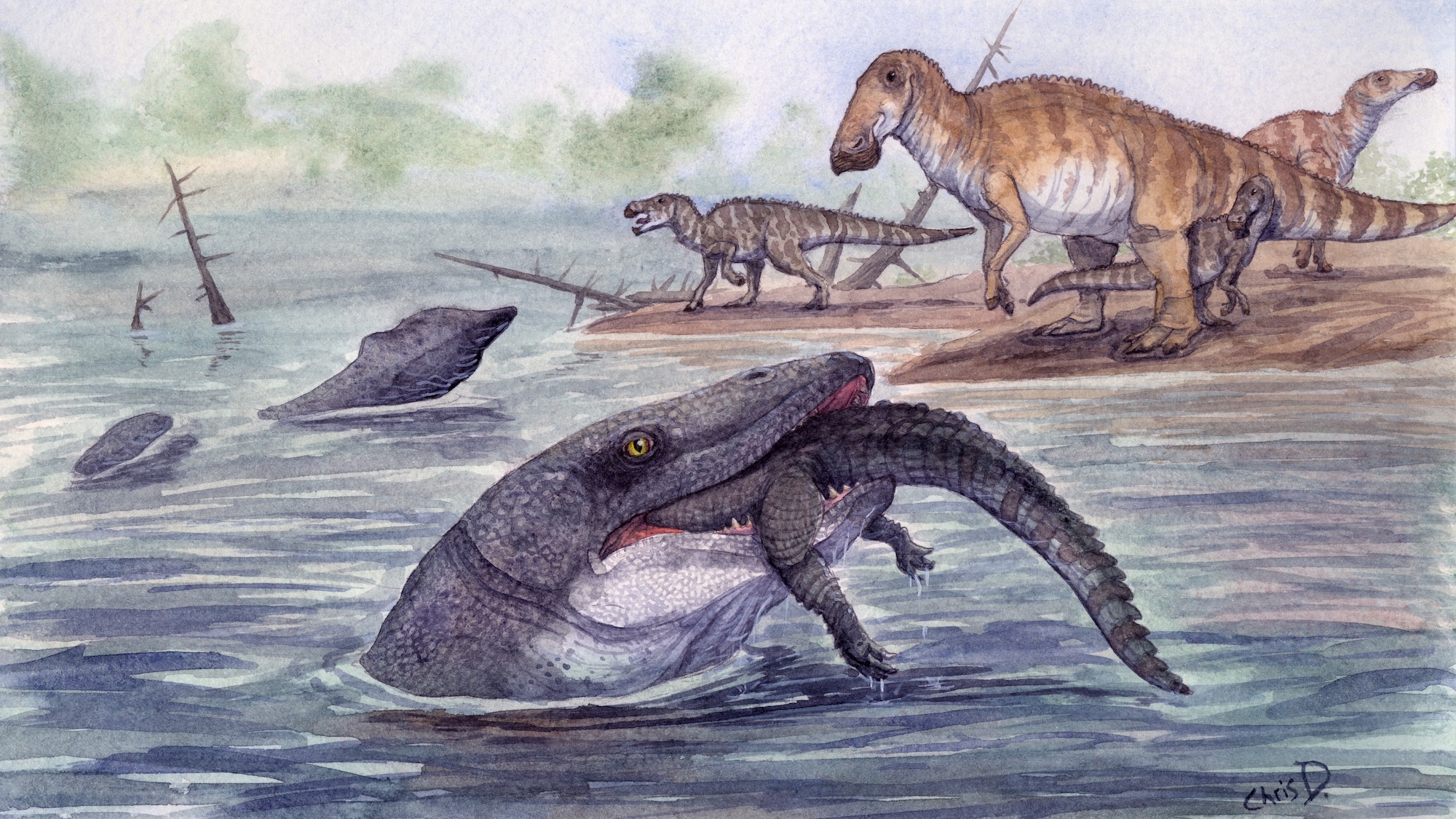
Nearly 70 million years ago, mosasaurs were the stuff of nightmares. Multiple species of the apex marine reptiles lived during the Late Cretaceous, often growing anywhere from 30 to 40 feet-long. But as dangerous as the ancient, great white shark-sized were for their prehistoric ocean prey, paleontologists have long assumed mosasaurs stuck to saltwater.
A tooth recently found in the famous Hell Creek formation in Montana suggests otherwise. According to findings published on December 11 in the journal BMC Zoology, at least one mosasaur species may have pursued their meals upstream into freshwater rivers.
Hell Creek includes some of the world’s most diverse troves of Upper Cretaceous and lower Paleocene fossils. In addition to land dinosaurs like Tyrannosaurs and Triceratops, the region was also home to aquatic species like mosasaurs. While nowhere near an ocean today, the area included rivers connecting into a long-gone body of water called the Western Interior Seaway around 66 million years ago.
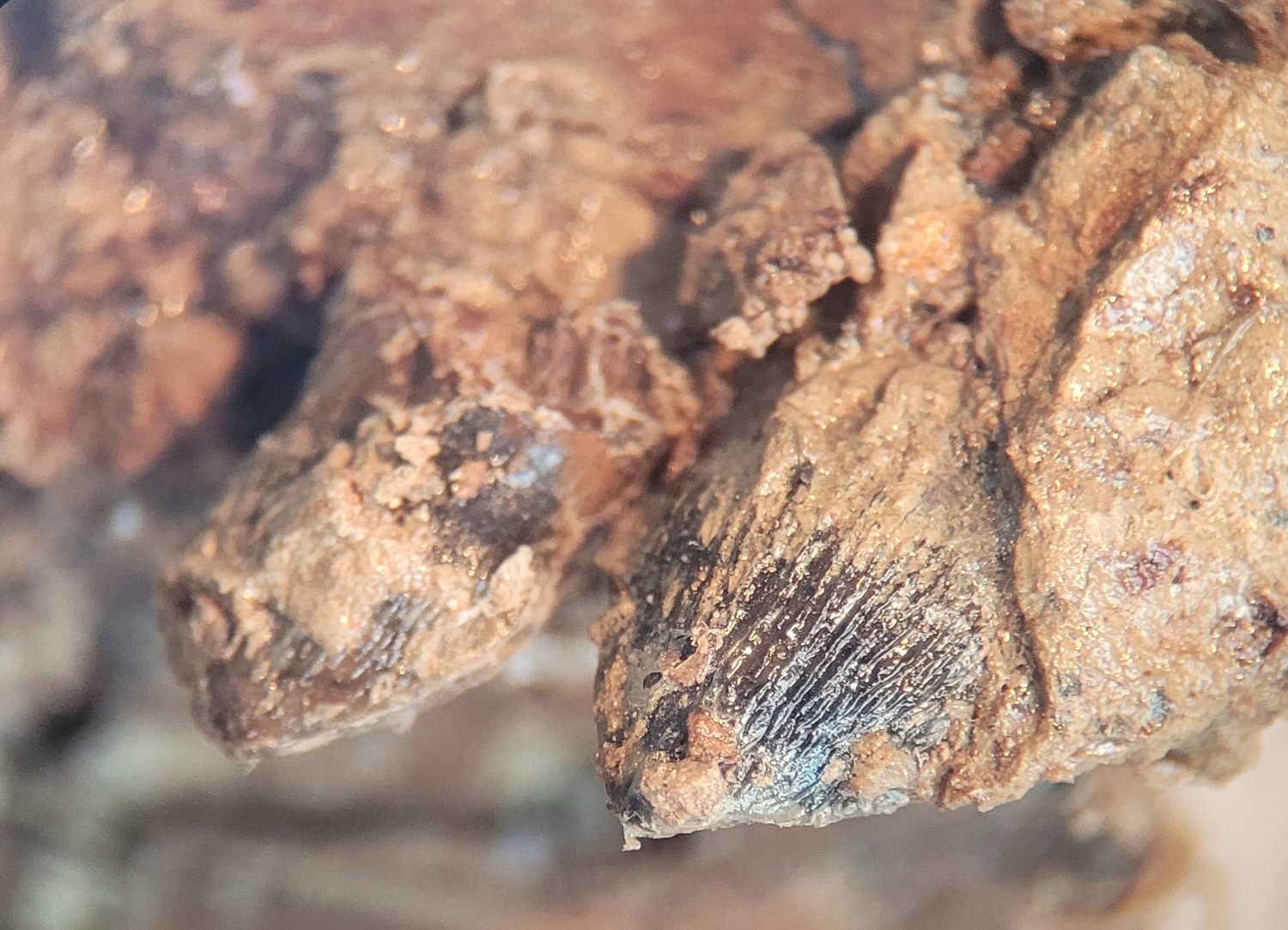
In 2022, paleontologists uncovered a tooth within the sediment of one such ancient river. After comparing the fossil’s textured ridges to existing specimens, researchers noticed similarities to the mosasaur genus Prognathodon. With their massive skulls and strong jaws, prognathodontids hunted in oceans, but isotopic analysis of the tooth’s enamel revealed oxygen and strontium signatures that corroborate with freshwater habitats.
With no signs of the tooth having moved after its owner’s death, the study’s authors believe that their aquatic mosasaur likely lived and died in present-day, land-locked North Dakota. Although no other mosasaur teeth have been found there from the same time period, older examples excavated from other parts of the Western Interior Seaway also featured isotopic traits consistent with freshwater. Because of this, the paleontologists now believe the aquatic ecosystem’s salt levels slowly lowered over time.
If true, the team likens their mosasaur to today’s saltwater crocodiles (Crocodylus porosus), which are known to venture into freshwater for prey. It’s possible that the ancient apex predators gradually adapted to swimming into river channels as the water’s salt content decreased and the seaway diminished. In any case, the recent discovery suggests the only way to avoid some mosasaurs was to stay out of the water altogether.
