
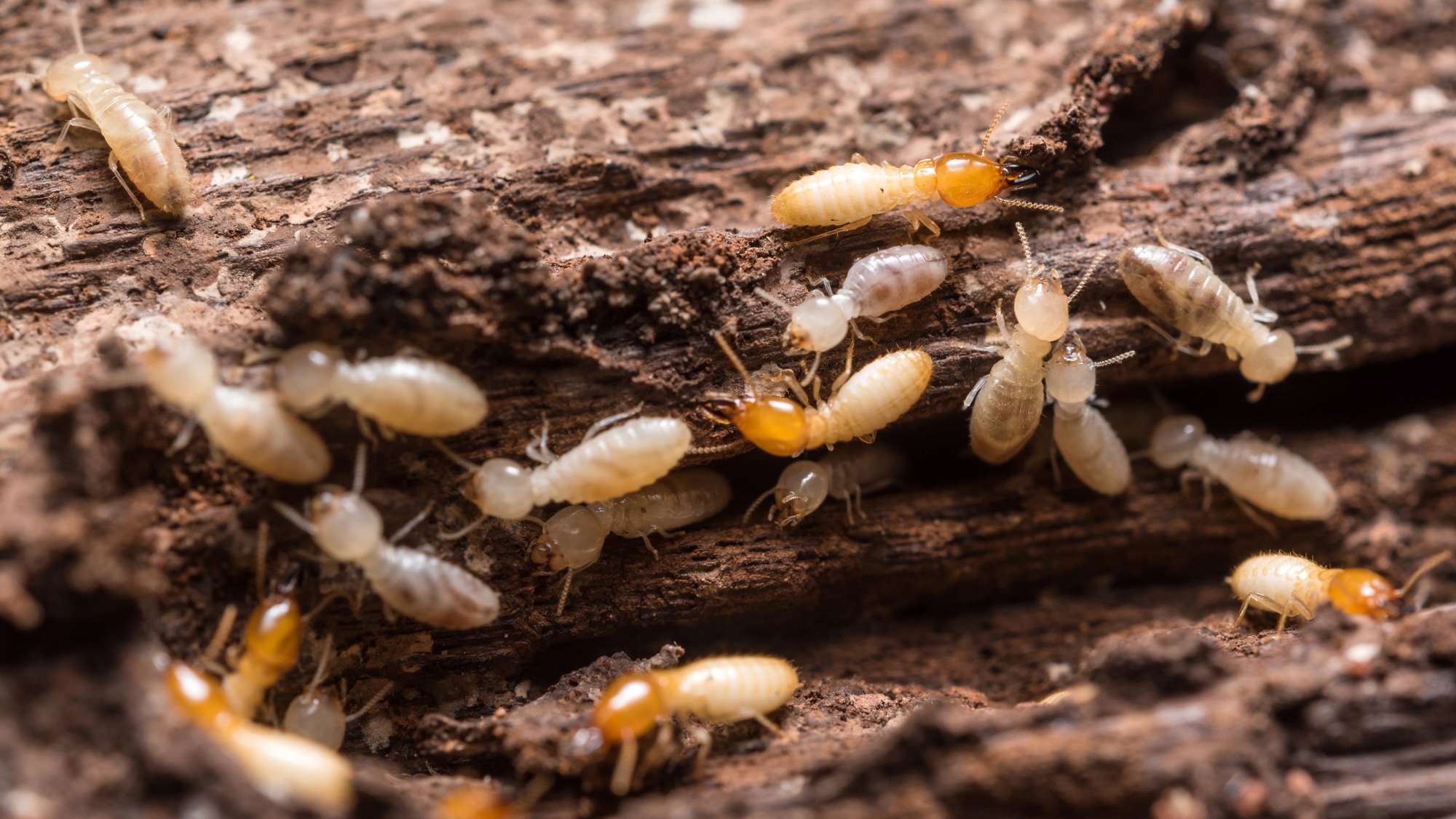
Termites have plagued southern states like Florida for decades, but a new study indicates that the problem is even worse than researchers previously believed. After reviewing over 30 years of monitoring data, entomologists at the University of Florida (UF) now say both the Formosan and Asian subterranean termites (Coptotermes formosanus and Coptotermes gestroi) are expanding their range of destruction. And it gets worse. They’ve already traveled farther north than scientists initially predicted.
Formosan and Asian termites are almost entirely restricted to tropical climates, but the invasive insects have consistently arrived to newly habitable regions due to warming temperatures caused by climate change. Since its accidental introduction into the United States around the mid-20th century, Formosan termites have spread to at least 11 states. While biologists only identified the presence of its Asian subterranean relative in Florida in 1996, the species is making up for lost time. Today, termites in the U.S. annually cause an estimated $1–7 billion in structural damages.
Tracking them is also a difficult job. The insects spend the majority of their lives hidden away inside their colonies, and generally only emerge to mate and migrate during swarming seasons in the spring and early summer. This means it requires a concerted effort to keep an eye on their spread across communities. Often, they’re only confirmed after significant damage is done to homes and other buildings.
“Subterranean termites have a cryptic lifestyle, where early detection of their activity is challenging,” Thomas Chouvenc, a UF urban entomologist, explained in a university profile. “Not only are they hard to detect without regular professional inspections, but they are also rarely reported, making the tracking of their spread much more difficult.”
Chouvenc and his colleagues recently analyzed all available data amassed between 1990 and 2025 by the University of Florida Termite Collection to more clearly understand their continued spread.
“Because the spread of these invasive termite species was underestimated for decades due to inconsistent reporting across the state, it has been unclear which communities are currently experiencing damage from these species and which communities are about to experience them,” said Chouvenc.
The news isn’t great, judging by the conclusions of their study recently published in the Journal of Economic Entomology. They can confirm that Formosan termites are no longer only living in a few locations in Florida. By now, the insects are well established throughout most of the state’s coast and most of its largest urban centers. Trends also indicate that Formosan termites will be found everywhere in Florida by 2050.
As for the Asian termites—they’re doing even better than entomologists feared. Researchers have long assumed the bugs were mostly relegated to South Florida due to their need for particularly warm climates. Instead, the study’s data shows the termites are now found well into central Florida, including Brevard County along the Atlantic Ocean coast and Hillsborough County, which includes the Tampa metropolitan area. By the year 2040, Asian termites will likely reside in all of the state’s 24 southernmost counties.
If there’s any silver lining, it’s that some past projections remain accurate. For example, a 2016 analysis estimated half of all structures in the South Florida metropolitan area will be at risk from at least one or both species by 2040. This still seems to be the case, which at least makes it easier for urban planners to anticipate. The study’s co-authors hope increasing use of Florida’s open-source termite distribution map will generate stronger, more accurate datasets that both researchers and conservationists can utilize. Their work is also being integrated into a recently created North American Termite Survey, which helps with detection and identification projects far beyond the state.
“With increasing participation of [pest control] companies, we have improved our understanding of where and when these invasive species are establishing in new localities,” said Chouvenc.
In the meantime, the North American Termite Survey offers plenty of tips for identifying, managing, and documenting the invasive insects. The Environmental Protection Agency also has an entire website dedicated to the issue, as well as information on safely handling the bugs.
