
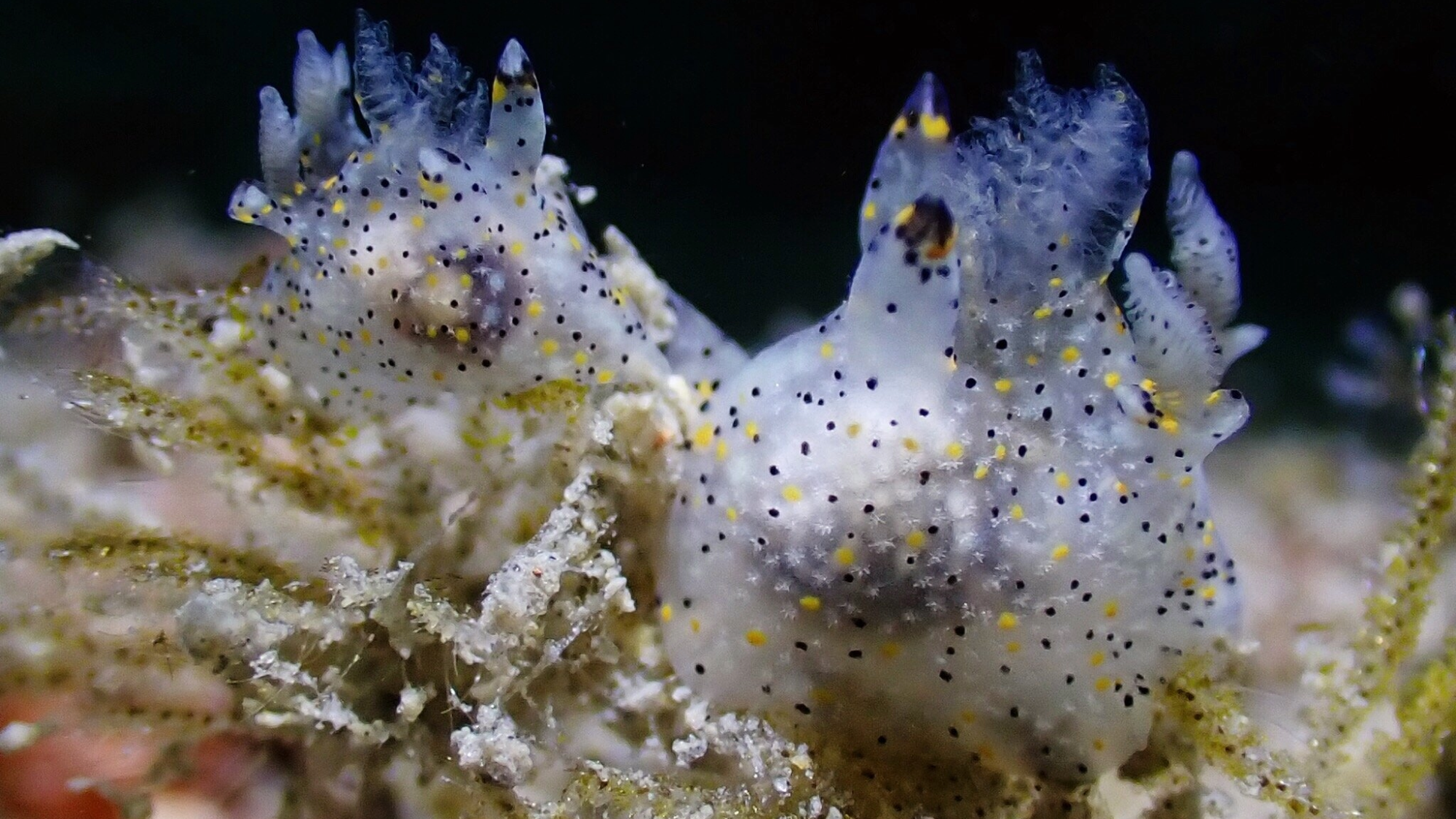
Small as a grain of rice, polka-dotted, and everything nice. These are some of the ingredients that come together to make Thecacera sesama, a newly identified species of sea slug, or nudibranch, found swimming in Taiwan.
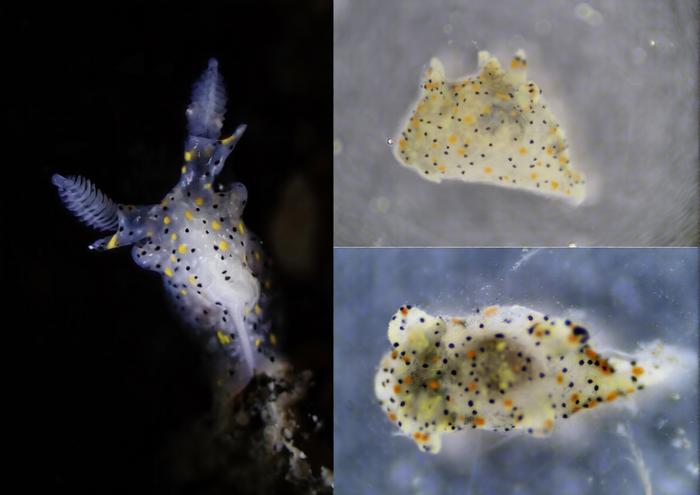
“Taiwanese divers call it ‘sesame’ in Chinese and it is also small like a sesame seed, hence the name,” researchers explain in a statement. Indeed, T. sesama is less than 0.12 inches long. The tiny bugger is also translucent and speckled black and yellow, and Ho-Yeung Chan “accidentally discovered” it while diving in 2019.
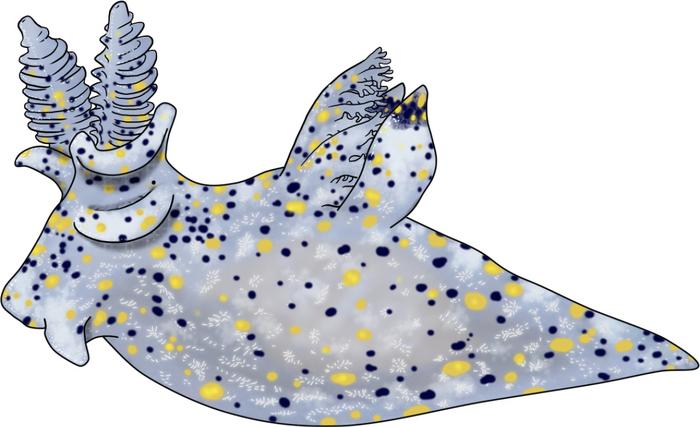
Chan is a researcher at the National Taiwan Ocean University’s Institute of Marine Biology and Center of Excellence for the Oceans, but was an undergraduate student when he made the discovery. Chan didn’t realize he’d found a previously unknown species until after he’d spoken with sea slug identification expert Hsini Lin via Facebook. Chan is now lead author of a recently published ZooKeys study officially introducing T. sesama to the world.
The new sea slug seems to enjoy a simple life. It displays just four main actions: feeding, searching, mating, and laying eggs on bryozoans. Also known as moss animals, bryozoans are a group of small aquatic invertebrates. The bryozoan that hosts T. sesama might also be a previously unknown species.
While you might assume that the most difficult aspect of researching T. sesama is its miniscule size, the hardest part of the study for the team was the explosive weather of Taiwan’s Keelung coast. The island as a whole often has summer typhoons and large waves in the winter monsoon season, during which the sea is frequently colder than 60.8 degrees Fahrenheit.
With these challenging conditions, researchers can only dive to investigate sea slugs for around a third of the year. The narrow window means that spotting the sesame-sized slugs is completely a toss-up.
“Nudibranchs are one of the key players in the marine food web,” the team explained. “They are extremely colourful and can be spotted on coral reef ecosystems. However, many nudibranchs are very small in size and are extremely difficult to spot underwater with the naked eye.”
Chan and colleagues believe that Taiwan’s marine environment is probably home to many other unknown tiny species. It remains to be seen what new strange creature will emerge from the island’s turbulent waters.
