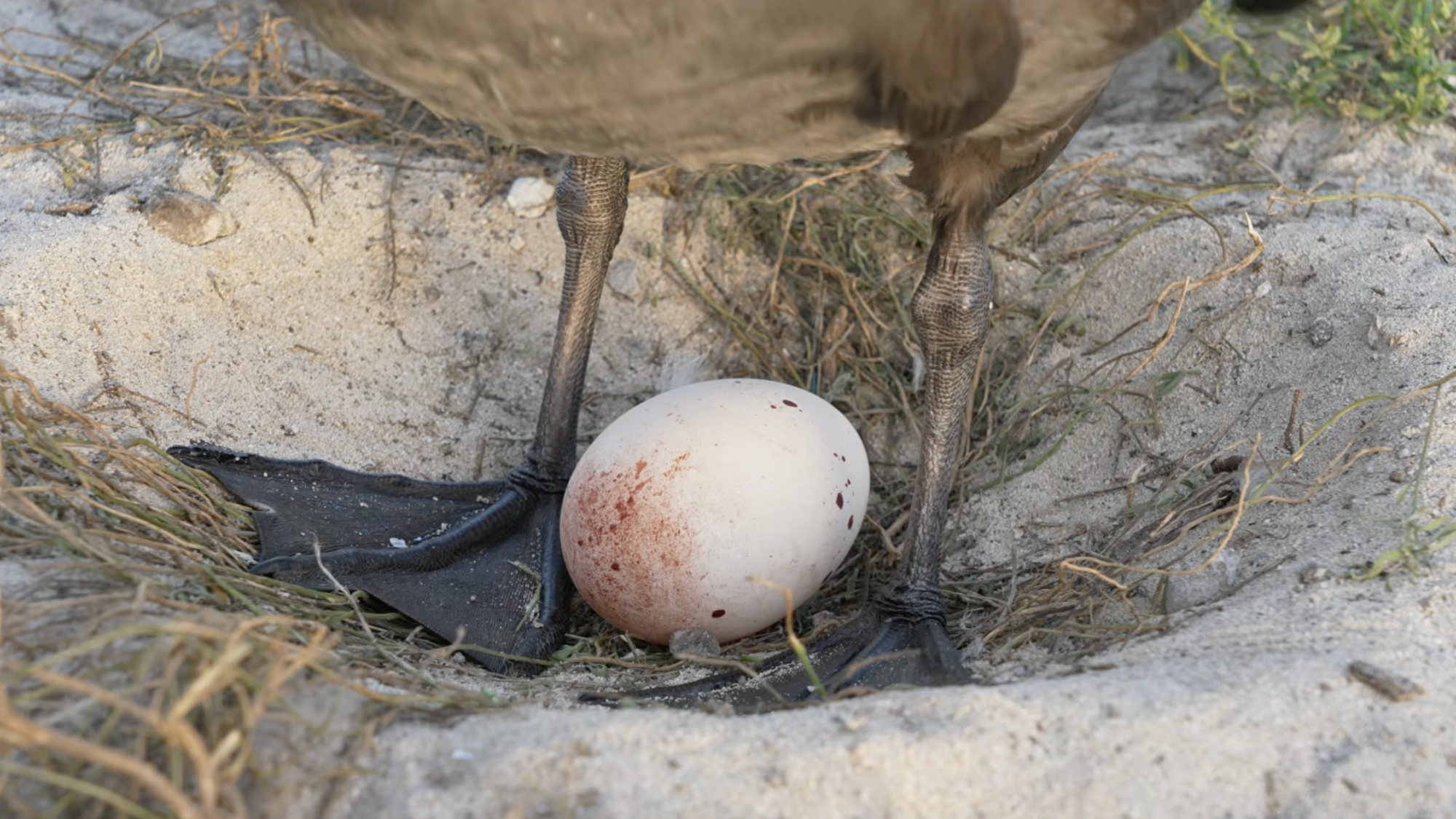
Nesting season has officially begun for the seabirds visiting Midway Atoll National Wildlife Refuge near Hawaii. The first egg of the season was laid by a black-footed albatross (Phoebastria nigripes) or kaʻupu in Hawaiian. Field biologist and photographer Dan Rapp captured video of this exciting first, which Friends of Midway Atoll National Wildlife Refuge shared on social media.

The First Egg of the Season has Arrived at Kuaihelani!
Black-footed albatrosses are typically the first to lay eggs beginning in November. The Laysan albatross (Phoebastria immutabilis) or mōlī in Hawaiian, will lay their eggs in late November through December. Every fall, this remote group of islands about 1,250 miles from Honolulu temporarily becomes the world’s largest albatross colony. Albatrosses are a group of large migratory seabird species, and includes the wandering albatross (Diomedea exulans), which has the largest wingspan of any living bird species.
One special albatross couple has already been spotted—George and Geraldine. The duo is together for the 10th straight year. George was first spotted exactly one month ago on October 18, and the couple was reunited by October 22. The pair are short-tailed albatrosses (Phoebastria albatrus) or makalena in Hawaiian. Short-tailed albatrosses can live up to 50 years and are monogamous—clearly.
Wisdom, a particularly famous bird in these parts, has not been spotted just yet. The over 70-year-old Laysan albatross is the oldest known banded wild bird in the world. She was first identified and banded in 1956 by wildlife biologist Chandler Robbins after she laid a single egg. Biologists estimate that she has produced 50 to 60 eggs and as many as 30 of her chicks have fledged in her lifetime. In 2024, Wisdom became the world’s oldest known wild bird to successfully lay an egg at the estimated age of 74. In March, she became a grandmother again.
Viewers can take in the sights and sounds of the albatross colony via live cameras and follow Friends of Midway Atoll National Wildlife Refuge for updates.

Midway Atoll NWR Wildlife Live Camera
Viewers can expect to see the birds return to the islands, perform various courtship dances, begin to nest, lay their eggs, and eventually watch albatross chicks in all their fluffy glory.