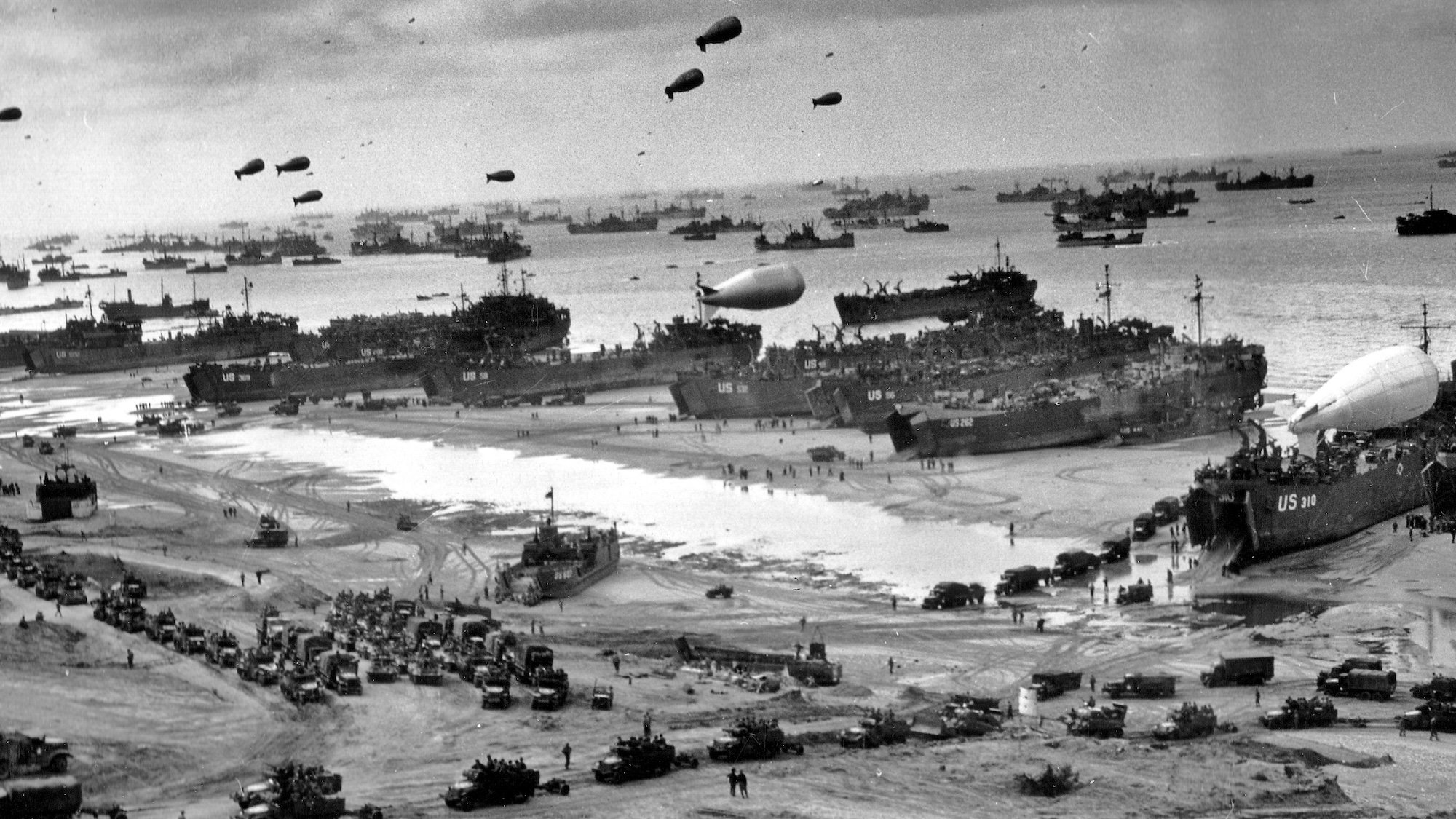
The weather forecast did not inspire confidence for Allied forces ahead of June 6, 1944. The thick clouds blanketing much of France and the English Channel made aerial reconnaissance even more dangerous than anticipated, while stormy conditions complicated the naval advance towards Normandy Beach. But despite the challenges, calling off D-Day remained unthinkable.
“Troops set off into a sky that was still breaking up after days of storms into a narrow window of better weather,” University of Reading meteorologist Ed Hawkins explained in a statement. “A day earlier, or a few hours either way, and the weather could have stopped the invasion in its tracks, and changed the outcome of the war.”
Hawkins recently collaborated with researchers at the European Center for Medium-Range Weather Forecasting to visually illustrate the precarity of one of history’s most consequential military invasions. To do this, the team amassed archival weather readings and then entered the data into a synthesis modeling method known as reanalysis. This approach is particularly useful for historical studies, because it is designed to account for observational biases in meteorological instruments used in the past, while also addressing any informational gaps.
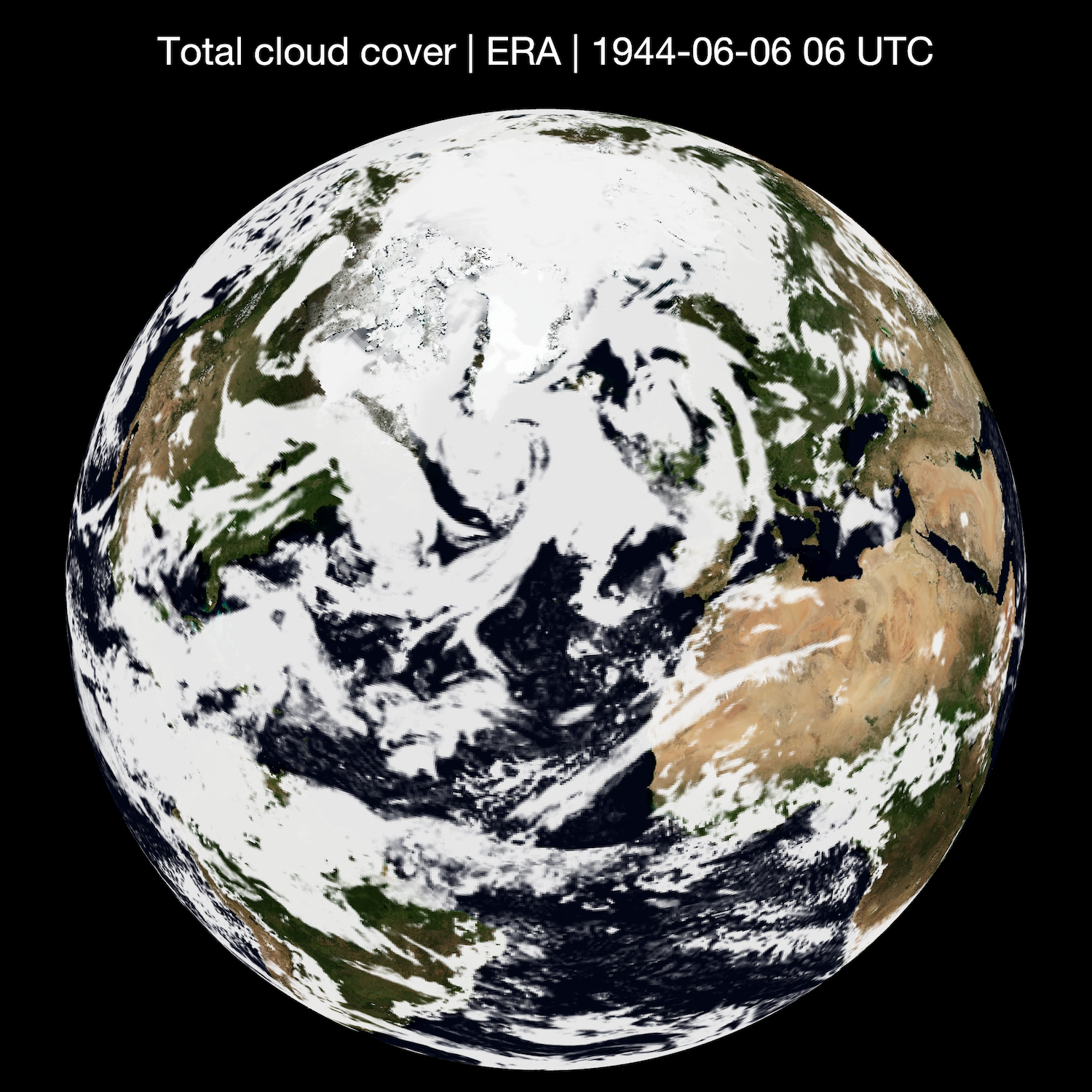
The resultant satellite images reveal that June 6, 1944, was a particularly gray day across Great Britain and most of the English Channel. At the same time, small patches over northern France and southern England indicate skies were at least beginning to clear earlier in the day. This aligns with archival weather reports from Normandy on the morning of the invasion, which reference a mostly sunny sky and north-westerly winds. Although not ideal, it was a major improvement over the previous day’s stormy conditions.
Slightly more favorable weather made all the difference. Without meteorologist Captain James Stagg convincing General Eisenhower to postpone the invasion by one day, troops would have experienced a far more dangerous crossing that put them at even more of a disadvantage against entrenched Nazi forces.
“Images like this help us understand what troops, sailors and pilots actually faced that day, in a way written reports alone cannot,” said Hawkins. “They show just how narrow the margin was between success and failure, and how much was riding on a small break in the cloud.”