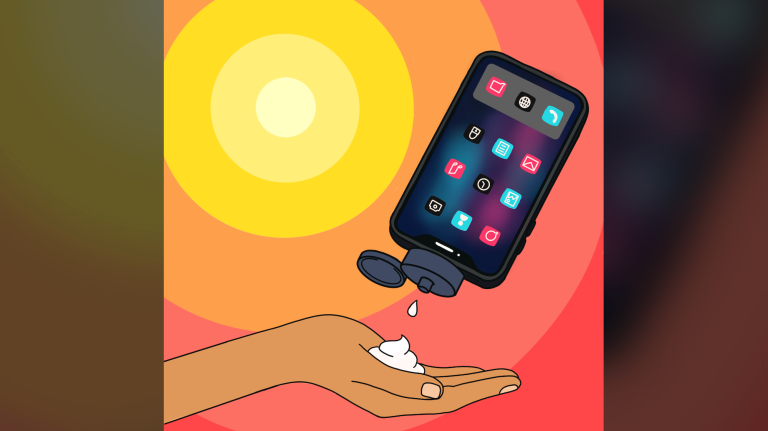
An ounce of prevention is worth a pound of cure, the saying goes, and a new algorithm will test that formula by predicting what will be wrong with a patient in the future, based on his or her past — and that of everyone else.
Netflix or Amazon make suggestions based on your view and purchase history, as well as the histories of others who share your characteristics — age, location and such. This new algorithm works in a similar way, predicting your future health based on your past health, as well as the medical records and conditions of others like you.
“This provides physicians with insights on what might be coming next for a patient, based on experiences of other patients,” said Tyler McCormick, an assistant professor of statistics and sociology at the University of Washington who co-authored a new paper on the algorithm.
McCormick and co-authors from MIT and Columbia University used medical records from a multi-year drug trial, which comprised tens of thousands of patients older than age 40. The trial gathered information about those patients’ gender, ethnicity, medical histories and prescriptions, so it provided a wealth of cross-referenceable data.
The problem is that each medical condition only happened a few times, so conditions are sparsely scattered among the patient population. It's more difficult to make predictions when a few people have a few things wrong with them. To improve matters, McCormick and colleagues used a statistical modeling technique called the Hierarchical Association Rule Model, or HARM. It selects the most likely rules from a larger set of possible rules.
It’s unique because unlike other patient-specific prediction programs — or even a doctor’s common-sense best guess — it combines data from other people, similar to crowd-tapping algorithms like Netflix’s. This larger pool of people strengthens some of the assumptions about various health conditions and their related symptoms.
“Both patients and caregivers can use the rules to guide medical decisions,” the authors write. The new algorithm appears in the journal Annals of Applied Statistics.
The incredible innovations, like drone swarms and perpetual flight, bringing aviation into the world of tomorrow. Plus: today's greatest sci-fi writers predict the future, the science behind the summer's biggest blockbusters, a Doctor Who-themed DIY 'bot, the organs you can do without, and much more.


Online Content Director: Suzanne LaBarre | Email
Senior Editor: Paul Adams | Email
Associate Editor: Dan Nosowitz | Email
Assistant Editor: Colin Lecher | Email
Assistant Editor: Rose Pastore | Email
Contributing Writers:
Kelsey D. Atherton | Email
Francie Diep | Email
Shaunacy Ferro | Email
Once the Matrix traps the humans in the pods and exploits their life energies, inturn the Matrix will take care of us forever, securing our future.
Yeah, Netflix never gets those right anyways. Maybe not such a good parallel.
I see doctors slowly becoming obsolete... you could eventually automate this process since the vast amount of knowledge is easier for a machine to compute. If it helps bring down medical cost, I'm all for it.
The "wonderful" people at Google said "Soon we will know more about you than you do."
While this could be a useful tool for the medical profession, it is likely to be abused by insurance companies (or a government-imposed socialist system), and is also likely to be abused by the Michelle Obama/Bloomberg-lifestyle "nazis".
We may need legislation to control these technologies - for the protection of privacy and the prevention of heavy-handed manipulation - misusing the gathered and speculative interpretation thereof.
Rather than prevent parents from seeing what books their minor children are viewing at the library why don't laws and regulations deal with meaningful privacy-invasions?