The following Q&A is originally from the University of California, Riverside and has been re-published with permission. It has not been altered.
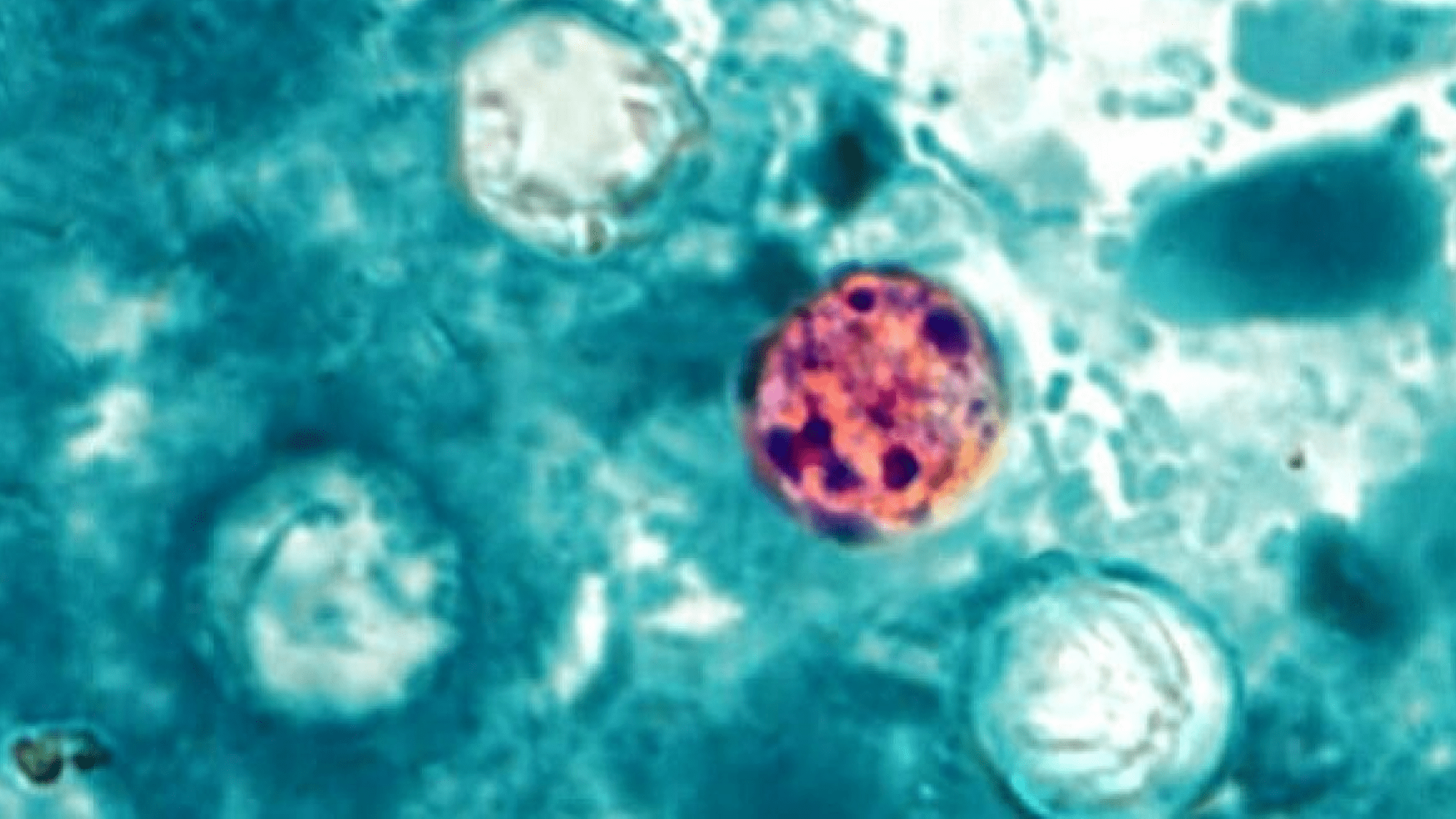
Cyclosporiasis is a gastrointestinal illness caused by the microscopic parasite Cyclospora. People contract cyclosporiasis by consuming food or water contaminated with the feces of an infected person that contains Cyclospora parasites. Health officials have reported a notable increase in cases across multiple U.S. states this year compared with the same period in 2025. Since May 1, the U.S. Centers for Disease Control and Prevention (CDC) has received reports of nearly 850 confirmed domestically acquired cases.
Brandon Brown, a public health epidemiologist and professor of medicine in the UC Riverside School of Medicine, contracted cyclosporiasis in 2018. In the Q&A below, he reflects on that experience.
Q: How do people typically get infected with Cyclospora?
Brandon Brown: Cyclospora is transferred fecal-orally. So, you get it through contaminated food or contaminated water. I believe I got it from a salad I ate on a trip, since my partner and I were the only two people who got sick on that trip, but also the only ones who had the salad. It’s really a process of elimination if you want to find out where you got it. But once you have it, trust me you just want it to go away.
Q: What surprised you most about having cyclosporiasis, and how did that experience change the way you think about this illness?
BB: What surprised me most about this, is how sick I felt. I think most people have had upset stomach and diarrhea, but this was much more severe. The biggest impact this experience had was on my own handwashing prior to eating. I got it during a trip abroad. I only ate at restaurants so did not have much control over my exposure, apart from washing my hands. I could have been more selective at the places where I ate food, but I wanted to eat everything everywhere.
Q: Looking back, is there anything you wish you had known before you got sick — either about recognizing the symptoms, getting diagnosed, or recovering?
BB: I got sick in July 2018 and got diagnosed about a month later. After being in urgent care a few times, at first the healthcare team thought I just had bad food poisoning. But the illness persisted and in total I lost 20 pounds, so when I kept coming back, they finally decided to do a diagnostic fecal test and discovered it was indeed cyclosporiasis. I had picked up a parasite. I wish that I had known there was a simple test for this, and that a treatment was available so that I could have recovered more quickly.
Q: When people see headlines saying thousands have been infected, it is easy to imagine the worst. How concerned should the average person be, and what are the biggest misconceptions you are hearing about this outbreak?
BB: Anyone can get this, and it’s transferred by the fecal-oral route. So, we should all be concerned about getting it, similarly to any other infection. But the good thing is there are ways to mitigate risk, there is a test to diagnose it, and there is a good treatment. Some people will have no symptoms, and most people will have some symptoms.
Q: What does the illness feel like day to day, and how can people tell the difference between a routine stomach bug and something that warrants a call to their doctor?
BB: Thinking back to 2018, the worst part was the lethargy and not being able to keep food inside me. As someone who exercises every day, I also noticed that I did not have the energy to do that, and I would have to make frequent restroom visits. It also impacted my sleep. I remember feeling bloated with painful gas and fatigue with body aches, and with some nausea. It was not a pleasant experience. Over the month when I was ill, there were better days and worse days. It also impacted my work, because it was a bit hard to concentrate and I had to forego some rewarding annual travel, which was for mentoring underrepresented scholars. A stomach bug usually goes away in a day or two, but this one persisted for a month. I visited a doctor a week into being sick, but at that time I did not know what cyclosporiasis was, and I had never had a fecal test, so I didn’t know how to advocate for myself properly for this illness.
Q: If you could leave readers with three things to remember about cyclosporiasis what would they be?
BB: 1) Symptoms can start many days after exposure, and they are very similar to diarrhea, but it can be explosive. So not your normal diarrhea, and you must stay hydrated because you will lose water. This brings me back to what we talked about before with people confusing early symptoms of COVID-19 with that of a common cold. But here, Cyclospora infection can be diagnosed with a simple stool test, and it can be treated with an antibiotic.
2) Wash or make sure the salad greens and other produce that you eat are well washed. But don’t stop eating your greens because they help keep us alive.
3) As always, practice proper handwashing.