Silicon semiconductors have taken us a dazzling distance along the computing road. But even if they continue unabated to get faster and more powerful (and it’s growing more difficult to make that happen) there’s a limit to what classical computing can do.
The next real game-change in computing is quantum–tapping the quantum mechanical properties of materials to process information in ways that will make today’s biggest and baddest super computers look like pocket calculators. And for the first time scientists, at places like IBM, are moving beyond just theorizing about them to actually envisioning how a finished quantum computer would work. In labs across the globe, the first building blocks of the first quantum computers are slowly becoming real.
That’s huge considering a working quantum computer would be the kind of thing that truly moves the ground beneath our feet. With a relatively modest quantum computer, scientists could slice through sophisticated encryption schemes, model quantum systems with unprecedented accuracy, and filter through complex, unstructured databases with unparalleled efficiency.
But first they have to build one.
The idea of quantum computing was introduced in the early 1980s by physicist Richard Feynman, and the field is still very much in its infancy. But as a discipline it’s turning a critical corner as the theoretical meshes with the practical. There’s more than one way to build a quantum computer, and it’s still far too early in the game to know which–if any–of these approaches will produce a working system. But between all of these varied approaches to tapping the quantum world, there’s one common thread: it’s all about the qubit.
Like their classical cousins, quantum computers rely on units of information. In the classical world, that’s a bit (a byte most commonly consists of eight bits), each of which can exist in one of two states: 0 or 1. All of your data–your MP3s, your texts, your documents, your Tumblr–are nothing more than lines of bits.
The quantum analog for the bit is called a qubit. Unlike a bit, a qubit can exist as a 0, a 1, or in a state of superposition, which in quantum lingo basically means it is both a 0 and a 1 at the same time. This is where we enter the strange realm of quantum properties, where things are anything but intuitive. “You start with a sea of all possible answers in your quantum states, and you design your algorithm to peel away the wrong answers so that the right answer emerges,” says Matthias Steffen, manager of the experimental quantum computing research team at IBM Research. Rather than considering one solution to a problem at a time, you can consider multiple possible solutions simultaneously.
There are huge challenges standing between us and this mind-numbing computational payoff. Working at the quantum scale usually means working at extremely low temperatures, often bordering on absolute zero. Particles themselves are fickle. Coherence time–the amount of time the carefully cultivated quantum system is available to be read by the computer before the quantum state collapses–is measured in mere microseconds. And because there is an intrinsic margin of error in quantum computation in general, quantum computers must constantly correct themselves for errors.
Then there’s the problem of measuring quantum states, which tends to cause them to collapse. This requires a mastery of quantum correlation or entanglement–a strange quantum phenomenon that links the states of two particles together even across distances such that affecting one affects the other–so that researchers can actually measure their quantum systems without destroying them. Needless to say, absolutely none of this is easy.
That’s why researchers are starting small, pouring their brainpower and research dollars into developing a single, stable qubit–and eventually strings of tens, then hundreds, and then thousands and tens of thousands of qubits. So what might the quantum computer of the future look like? We’re not exactly sure yet, but there are a few different approaches showing a lot of promise.

Artificial Atoms
There’s more than one way to make a qubit. All you really need is something that can provide two different and defined quantum energy levels to serve as analogs for the 0 and 1 in a classical scheme. Many potential qubits are natural phenomena, manipulating the quantum characteristics of atomic nuclei, ions, or electrons to encode information into a quantum system. But what if you could manufacture qubits artificially with whatever properties you want them to have?
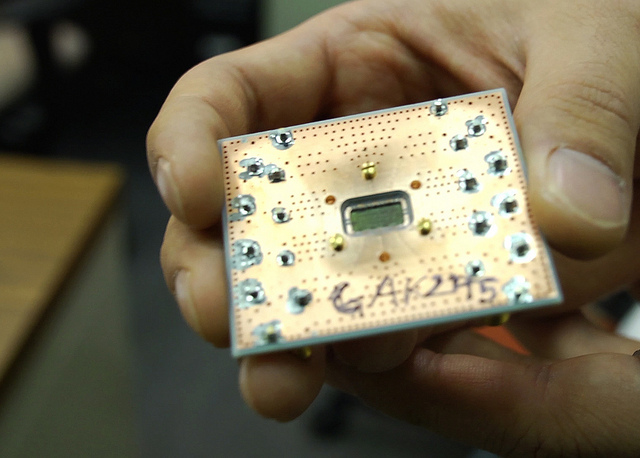
This approach has spawned an entire branch of quantum computing research that is trying to perfect the superconducting qubit. Perhaps unsurprisingly, IBM Research has emerged as one leader in this space, as the approach meshes nicely with the company’s expertise in superconductivity, microfabrication, and–perhaps most importantly–the scaling of technologies into finished products.
Stripped of a lot of complex physics, it’s easy to think of a superconducting qubit as an artificial atom. Technologically speaking, a superconducting qubit involves two superconducting materials running an oscillating current across a device called a Josephson junction, which through the magic of quantum physics allows the qubit to carve out just two oscillation frequencies of the many that the current might have and use those frequencies as the classical 0 and 1 (there’s a lot of quantum mechanics involved that we won’t get into here, but suffice it to say that controlling these oscillations satisfies the fundamental requirements for a qubit).
The main advantage of superconducting qubits is that they are manufacturable, and therefore lend themselves to customization and eventual scalability to a larger quantum computer possessing hundreds or thousands of qubits. But even the team at IBM–which recently demonstrated record-setting coherence times of up to 10-100 microseconds and gate operations with 95 percent success rates–knows that it’s far too early in the race to declare their method a winner.
“The superconducting approach has great potential and we think its the front-runner and that’s why we’re working on it,” says Mark Ketchen, a physicist helming IBM Research’s Physics of Information initiative. “But it’s early in the game and things could change. Five years from now the system could look very different.”
IBM Research Announces New Advances in Quantum Computing
Tapping Electron Spin
That’s because superconducting qubits are far from the only game in town. At Harvard University, Dr. Amir Yacoby is exploring the possibility of encoding information via the spins of the electrons inside quantum dots–tiny semiconductor crystals with unique electronic characteristics. Broadly speaking, electrons have two possible spin states–call them left and right–that can represent the 0 or 1 state of a classical bit. Trapped in a quantum dot, electron spin can be measured and manipulated. But this introduces a problem that is common across quantum computing.
This is the same problem introduced by Schrodinger’s Cat, a common paradoxical problem when dealing with quantum systems (for a deeper understanding of all this, read up on the infamous cat and quantum entanglement). To create a usable qubit, researchers want something that is good at decoupling itself from its environment, something that won’t be influenced by external factors. At the same time, it’s necessary to have something that can be manipulated by external forces so the computation can be controlled.
Finding something that satisfies these contradictory needs of a viable quantum computing system isn’t particularly easy, but electron spin goes a long way toward serving both sides of the paradox. Spin lives for a long time, atomically speaking, so you can encode information in the spin and it will exist in the system for a relatively long time, contributing to better coherence. Electrons trapped in quantum dots can be coaxed into decoupling from their environments while still responding to weak magnetic fields–fields that are weak and predictable enough that even when they introduce error-producing noise into the quantum system, it’s relatively easier to correct the errors.
Still, spin isn’t immune to the problems dogging many in the quantum computing community who are trying to do very big things with very small particles. As with superconducting qubits, quantum dot computing would have to happen at very cold temperatures–something like a tenth of a degree above absolute zero. And all quantum complexity aside, the engineering challenges inherent in fabricating such a system with more than a few qubits are daunting. But Yacoby is unfazed.
“I think we’re going to encounter a lot of discovery before we have to face the engineering challenges in cooling down one thousand or ten thousand qubits,” Yacoby says. “I’m optimistic–very confident–that that level will be met within my lifetime.”
Trapping Ions
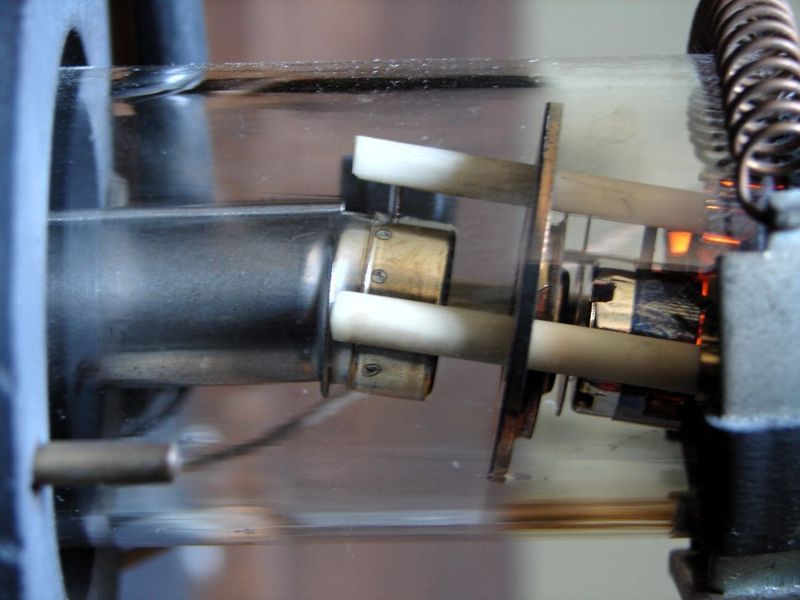
But you don’t have to go all the way down to the subatomic to find good candidates for qubits. Ions–atoms whose electrons and protons are out of balance, giving them a net charge–can be fantastic qubits, wherein the spin of the nucleus represents the 0/1 classical states. Trapped by an electric field and laser-cooled inside of a vacuum chamber, ions are very well isolated from external factors that could mess with their fragile quantum states, giving them very long coherence times. The fact that they are charged also makes them far more manipulable–via electric fields–than neutral atoms.
But while it’s easy enough, relatively speaking, to trap one ion (or even a few ions) in a vacuum chamber, a system dependent on highly-tuned electric fields and cooling lasers that need to be switched on and off with very precise timing becomes vastly more complex with each additional ion. When you start to think of dozens or hundreds of qubits, the idea of scaling this kind of system becomes the primary challenge.
“You can’t just build a hundred or a thousand or a million of them on a chip like we do with transistors,” says Boris Blinov, an associate professor of physics and principal investigator at the University of Washington’s Trapped Ion Quantum Computing Group. “That’s how we scale regular computers today. With ions, you have to figure out a way of arranging them in one location in such a way that they will interact in the ways necessary for quantum computing. In this way, ions are at a disadvantage.”
Blinov and his team are working to circumvent this problem via a modular approach that employs many microfabricated ion traps. Each chip-like trap would hold several ions–but not too many–and interaction between chips would be accomplished by beaming photons around the system via a network of fiber optic cables. By entangling these single photons with the trapped ions and beaming them around the system, ions on different chips in a system could interact at the quantum level.
Sound mind-bendy? It is. But working with barium ions Blinov and his group are making slow but steady progress. If they or another research group can solve the scalability problem–and right now, “ifs” are abundant in this field–ions could turn out to be viable qubits in a future quantum computer.
The Supercomputer of the Future
Of course, the same could be said for any of the aforementioned potential qubits, and for any number of other approaches to quantum computing inching forward within the global physics community. The method that finally produces a working quantum computer–maybe sometime in the next decade, maybe beyond that–could be one of the ones mentioned above, another avenue that is just beginning to be researched, or one not even conceived of yet.
“It’s very important to remember that this is still a scientific endeavor,” Harvard’s Yacoby says. “Our trajectory is constantly interrupted by things we discover. Sometimes we think one thing and it turns out to be something else. This can be an obstacle, but some of those discoveries turn out to be quantum leaps forward. We’re finding things we didn’t know as we go along, and our trajectories are corrected.”
But while the road ahead is shrouded in a mysterious quantum fog, there is some consensus about what a finished quantum computer will look like. For one, it will have a classical component to it that will actually run the quantum algorithms within the quantum computer. It will be large, comprised of both a classical supercomputer and the quantum computer, which–depending on the qubits–could be a series of vacuum chambers and optical tables, or row after row of super-cooled chambers for cooling particles down to nearly absolute zero (or something else entirely).
This construction, whatever it will be, presents a challenge in itself. Classical electronics perform more and more poorly the lower the temperature goes, so interfacing classical and quantum computers that require low-Kelvin temperatures will require feats of engineering that current technology cannot adequately solve. But by and large, those working in the quantum computing community believe that in the time it takes them to build their perfect qubits, the practical engineering issues will also sort themselves out. And when they do, researchers believe we’ll unlock a kind of computing power that will drastically impact the entire spectrum of human knowledge–even in ways we haven’t thought of yet.
“It’s not so straightforward to predict where computing goes,” says IBM’s Steffen. “If you were to ask the folks that invented the transistor where it was going, they couldn’t have imagined what it would one day lead to. The same is true for quantum computing.”