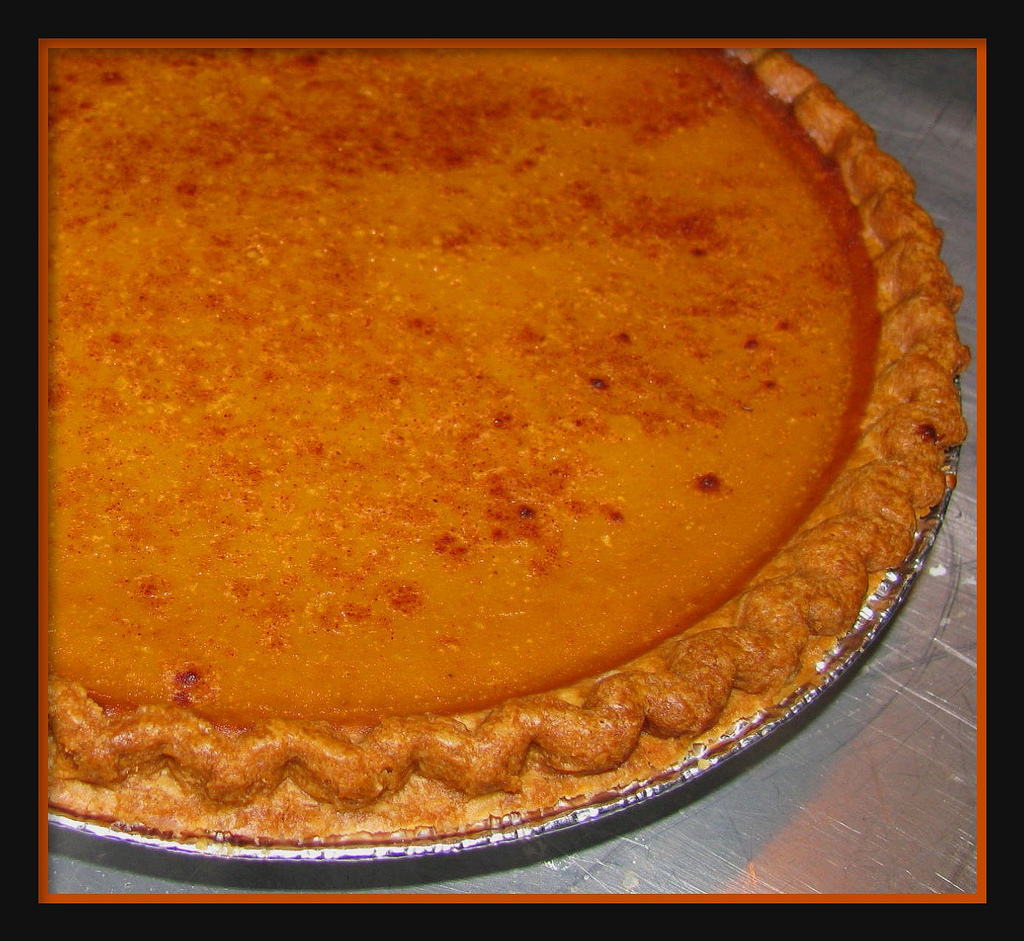
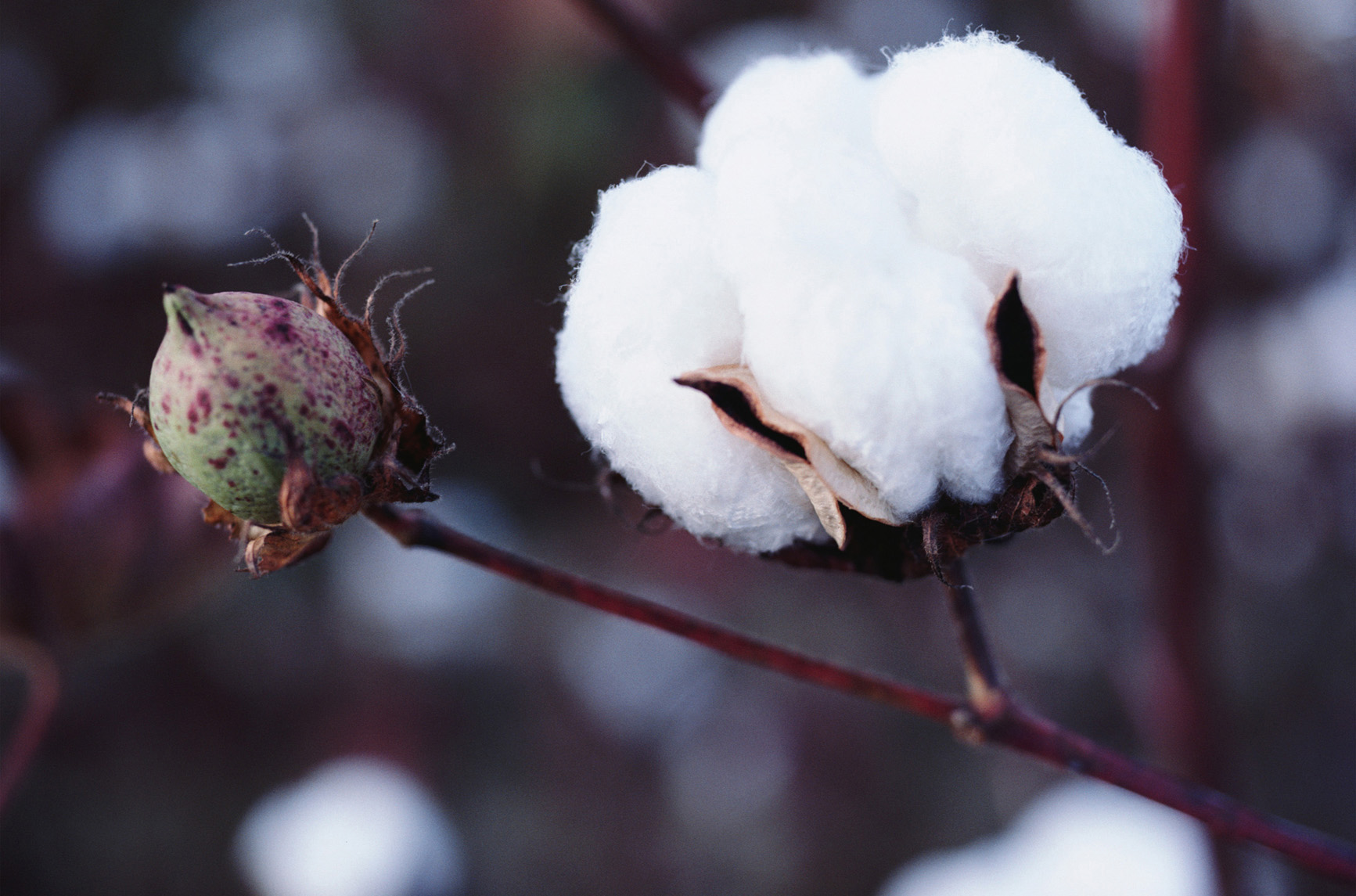
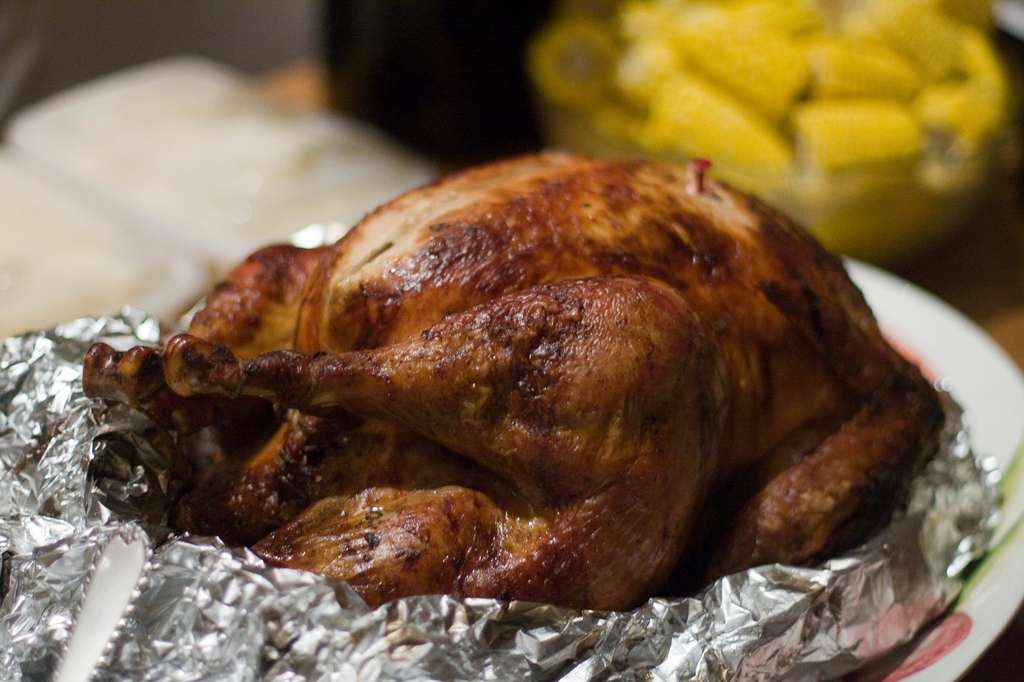
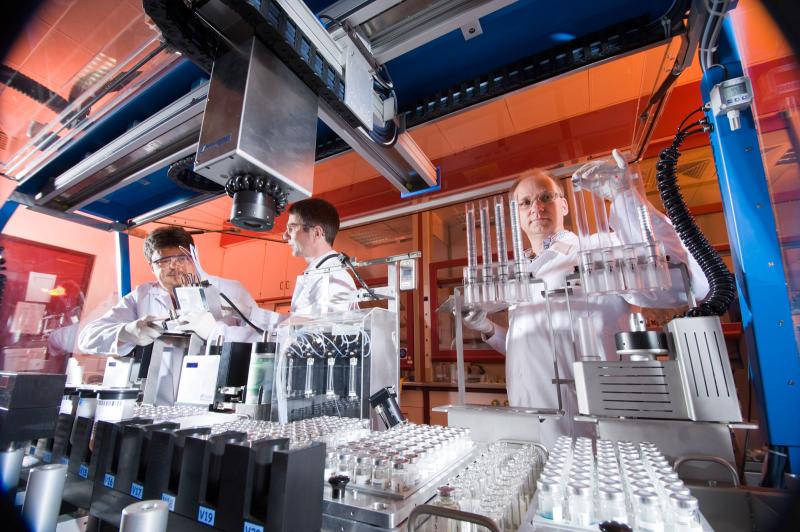
Since they were introduced 15 years ago, genetically modified foods have taken astonishing hold in North America. This time of year, the result is a Thanksgiving menu that may, on the surface, look much the same as the one your grandma cooked 20 years ago. But at the genetic level, it is very different, and it's a far cry from the fabled feast shared by the pilgrims and American Indians in the 17th century. In celebration of Thanksgiving, the most food-focused day of the year, here's a look at how biotechnology is changing the way we eat.
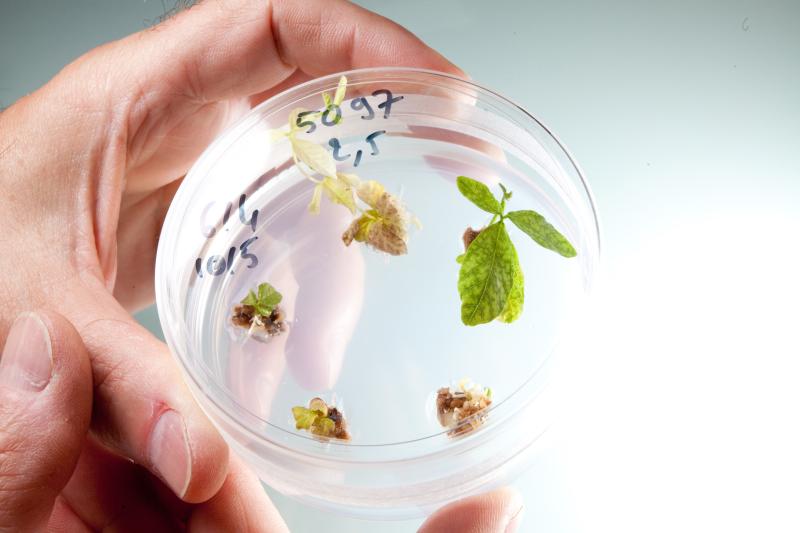
Before it reached the grocery store — even before it reached the farm — your turkey, turducken or tofurkey likely started out in a lab, with scientists in white coats peering at PCR data and tinkering with plant genomes to produce traits that nature never intended.
Let's start with your morning coffee. Unless you buy organic, your milk and half-and-half most likely comes from cows that have been administered synthetic hormones. The hormones rBST and rBGH let cows grow bigger faster, and allow them to produce more milk. Do you use soy milk instead? It's probably from GMO soybeans. How about sweetener? Fully 95 percent of the U.S. sugar beet crop is genetically modified, and half the nation’s sugar supply comes from beets. What about high fructose corn syrup? Of course. About 85 percent of American corn is genetically modified. Even sugarcane is genetically altered.
Starting with breakfast and ending with dessert, if you live in North America, you most likely eat transgenic foods every day.
Genetically modified crops usually contain genes from other plants to produce unique traits. In most cases, splices of bacterial genes are used to insert the new traits, like pest or disease resistance. Companies such as Monsanto and Bayer alter plants to resist their proprietary blends of weed killer, while other crops are modified to resist pests, fungi or bacteria; produce higher yields; or survive environmental conditions like drought or salty soil. GM food advocates say it’s essentially no different than selective breeding to obtain desirable qualities.
Consumer groups and natural-food advocates, on the other hand, say bacteria-enabled “Frankenfood” has no place in a healthy diet. They say genetically altered crops have not been sufficiently studied, and they worry that their effects on the environment and human health are unknown. Several court cases are progressing that seek to prevent future plantings of genetically modified crops, or at least subject them to stricter federal review.
Some groups maintain lists of non-GMO food sources; the Institute for Responsible Technology even has a non-GMO shopping guide iPhone app, or you can download the printable shopping list.
The easiest way to avoid genetically modified food is to buy organic — foods labeled organic cannot intentionally have biotech ingredients. But note the word intentionally. Seeds blow in the wind, so even fields used for organic farming may contain genetically altered crops. In a study this summer, GM canola was found growing in the wild throughout South Dakota.
Despite opposition, the vast majority of North American row crops are now grown from genetically modified seeds.
The incredible innovations, like drone swarms and perpetual flight, bringing aviation into the world of tomorrow. Plus: today's greatest sci-fi writers predict the future, the science behind the summer's biggest blockbusters, a Doctor Who-themed DIY 'bot, the organs you can do without, and much more.


Online Content Director: Suzanne LaBarre | Email
Senior Editor: Paul Adams | Email
Associate Editor: Dan Nosowitz | Email
Assistant Editor: Colin Lecher | Email
Assistant Editor: Rose Pastore | Email
Contributing Writers:
Kelsey D. Atherton | Email
Francie Diep | Email
Shaunacy Ferro | Email
There's a monsanto facility nearby and you can be sure they're one of the most loathed "big employers" in the state.
Watch Food, INC. and see if you can go on stomaching the lies.
(Never been a better time to get out of the supermarket and start farming your own yard).
Wild enough to cross-dress plants with other plant material--but splicing starfish genes onto strawberries--how insane does it have to get before we gag on it?
At least, it all still seems to taste the same.
"At least, it all still seems to taste the same."
Idiot
Buy local and organic. Easiest way to nail it.
I hate cowards writing articles! It has been imposed by montsantos & polititians corrupt, it kills all citizens with endless deseases and environment problems while true science could do much better than big pharma without gentech from seed to your brain!!!!!!!!!!!!!!!
Well we got to clean up this mess, this cheating and lying everywhere starting at the FDA, Code Alimentaire and WHO.
""Companies such as Monsanto and Bayer alter plants to resist their proprietary blends of weed killer, while other crops are modified to resist pests, fungi or bacteria; produce higher yields; or survive environmental conditions like drought or salty soil.""
So is THIS what is killing the bees?
As for the comment by "pioneer10".
He must be a young'n, grew-up on Fast Food and never had the chance to taste 'real' food.
As for the others, I'll be 60 next year, and for the last 5 or 10 years, food just doesn't taste that great. Is it my age and diminished sense of taste, or is it the junk they call food and try to feed us now?
I don't know which?
I'm sure drinking and smoking hasn't helped!
poineer10 - idiot. Taste like cardboard and taste isn't the way to evaluate health and safety of food in any case.
Monsanto is an ugly, ugly evil company. They made the terminator genes in seeds to try to monopolize food production around the world and force foreign small farmer into perpetual debt slavery.
America has sold it's soul for money. Genetic modified plants use naturally occurring defenses that organic farmer use and them ramp them up in enormous doses - for example naturally occurring pesticide defense of a plant. When they do this the bugs adapt and then the methods organic farmers use are rendered useless - forever.
FDA is controlled by big business - as is the govt.
Outlaw all genetically produce and sue into extinction all the evil companies that started this ugly unhealthy mess.
------------
Nature is in the intensive care ward, and we are ripping out the IVs.
I think the FDA needs to tighten the law on GMO foods. I think it should be on the label. Let the people be aware of what thier buying, we as consumers should make that choice.
As for Monsanto, if you did your homework you would know that they have the FDA in their pocket. If they need the FDA to pass something for human consumption....well....there is no testing first it gets passed $$$$$
And yes that is probably what has happened to the bees. But no testing will ever prove that, the Monsanto company has too much $$$$ to lose.
As for there not being any taste difference, yes there is but we have been fed GMO foods for too long and dont realize the taste has changed. If you purchase your chicken or turkey from the ommish or hutterite colony's you would see and taste and size difference.
Please Grow Up. It´s 2010, cars should fly so there´s no traffic. The Woes that are being posted,s are unreal. As you say: There is no evidence of the ffect of GM foods. But, as we evolve and population grows exponentially these have been the solutions that Science has brought to to world, to decrease hunger and animal desease. Increse productivity of our food supply to meet the population explotion of past decades. It is destiny that made DNA and geneically modified crops and animals, so that we can survive. In any case, if the regresion is ever acheived by banning "scientific modification and solutions" the death toll due to hunger and famish will be their "cross to bear".
Live long and Prosper.
Baldo S. from Lima , Peru
Please Grow Up. It´s 2010, cars should fly so there´s no traffic. The Woes that are being posted, are paranoid and unreal. As you say: There is no evidence of the effect of GM foods. But, as we evolve and population grows exponentially, these have been the solutions that Science has brought to to world, to decrease hunger and animal desease. Increse productivity of our food supply to meet the population explotion of past decades. It is destiny that made DNA and genetically modified crops and animals, so that we can survive. In any case, if the regresion is ever acheived by banning "scientific modification and solutions" the death toll due to hunger and famish will be their "cross to bere".
Live long and Prosper.
Baldo S. from Lima , Peru
@civokres: we'll ignore your off-the-wall comments and spelling errors, but your message? If it is/was our "destiny" to develop gmo foods, then it may also be our destiny to learn from it and return to simpler, healthier living, such as buying organic, local food...
http://www.tendances-de-mode.com/en/
You might also find it interesting to learn what science is doing to our wine and beer, too...
http://www.bieres-et-vin.com
@Wireless.Phil
Actually, they already discovered what is killing off bees. A virus & mold combination, that when they hit bees individually, are easy to survive, but when they hit at the same time, are very lethal to almost all bees.
I have to admit, I am not one of those who panic of the idea of transgenetic food, but I am leery of putting it out with out even more testing (and I do buy organic milk. Horizon is a good company)
My basic ideas of testing:
Grow a large crop inside of a large green house, then use the entire crop for testing, searching for any protein chains that are unknown, 'new'. Then test those proteins extensively.
Grow a large crop as above, and feed a few generations of lab rats this stuff every day for every meal. Do the same with pigs (though their generations are slower)
No problems, compared to a non-gm fed group that's otherwise fed the same? Then I'm willing to consider putting it out on the market. After two years of peer-review being available for all tests done.
My blog, randomness, some science. http://amborgeson.blogspot.com
Actually, Wireless I'm nearly as old as you are. I also grew up eating:
Louisiana Cajun
Tex-Mex
Northern Cal Wine/Cheese
MidWest
New England Lobster
In your defence, I had fast food (usually KFC) about once a week.
As for Ian & Jerzeyguy, ask your parents what "not serious" means.
They need more time to study it? They've been studying these for 20 year. The GMO controversy is more political than scientific. Europe has tried to ban them so their farmers could compete. The science doesn't support their claims, so we hear vague arguments like those presented here, and arguments that people who oppose you are idiots (see comments above). Also, assuming they are frankenstein monsters out to get you, they have still saved millions of people from starving to death. Look at India before modified grain was introduced.
Moulds are not killing the bees, look it up. Moulds are killing bats.
The bees are being killed by pesticides used on crops.
An article in Natural News by David Gutierrez on September 30, 2008 has linked the bee die-off in the Baden-Wurttemburg state of Germany to direct contact with the insecticide clothianidin found on corn seeds(German Research Center for Cultivated Plants). This pesticide had been applied to rapeseed and sweet cornseeds in the Rhine River Valley. Piles of dead bees were discovered at the entrance of hives in early May 2008. Clothianidin was found in the tissues of 99% of the dead bees. This is the time when corn seeding takes place according to Walter Haefeker, president of the European Professional Beekeeping Association. The Julius Huehn Institute(federal agricultural research agency) stated “it can be unequivocally be concluded that a poisoning of the bees is due to a rub-off of the pesticide ingredient clothianidin from cornseeds.” This chemical is estimated to have killed two-thirds of the bees in this state.
There are actually five known pesticides that have been killing the bees in many countries. So its not so far fetched that Monsanto and their GMO crops may be responsible for killing bees as well.
Einstein predicted that if something eliminated bees from the planet man kind would only exist for 4 years after the bees have disappeared. We may be around to test that theory.
While I do agree that people should be made aware that they are buying genetically altered food, I see no problem with it.I know if given the choice I will be the genetically altered food, because it is much cheaper and many times better tasting. This is a country (US) that is supposed to have a relatively free market economy. If you think think that the GA food is bad, then don't buy it, but don't complain about it. If you have a valid point as to why a certain GA food is bad, then of course tell the public, but otherwise please by quiet. My opinion is that we are just speeding up the process of natural selection and using it to our benefit. Also, in many cases genetic engineering of our food has made them healthier. This is because they can alter the foods to be healthier(Have more good vitamins, which they do because they can advertise a healthier food and therefore get more customers.In addition, by increasing the food's natural pesticides, then farmers do not need to use as much unnatural pesticides, therefore making the food healthier. Lastly, I feel that GA foods are needed to help feed the people of the world.
@AdamB
"Actually, they already discovered what is killing off bees. A virus & mold combination, that when they hit bees individually, are easy to survive, but when they hit at the same time, are very lethal to almost all bees."
====================================================
Reading Popscience doesn't have to be your only source of information. Indeed, a couple of month ago they posted an article hailing this "discovery". What they forgot to mention is that "research team" has been sponsored by Bayers, who is the sole patent holder for neonicotinoid pesticide, and keeps denying any link between Colony Collapse Disorder and its product. Reed more about it here www.beecharmers.org/
Your heads-up on what's happening to our food added to my concerns about how we grow food and how we eat it.
I feel somewhat safe from the hazards of agribusiness because I live in Madison WI and can eat great local food from our Dane County Farmers' Market year round.
I linked to this article on my blog, http://digginginthedriftless.wordpress.com/2010/11/26/still-vegetarian-and-still-thankful/ today.
We are what we eat.
I think it hardly just comes down to GMOs and pesticides, it is the motive behind using those tactics. This is always money, their is no regard to environment or human life, that is why the tests are rarely done. Before it is too late, we must speak out about all of this violations caused by profit and greed.
from healthquiz.wordpress
About 68 percent of the products found in your supermarket contain genetically engineered food (which incidentally is about the same percentage as the number of obese and overweight people in North America). On the surface obesity on this scale doesn’t make sense in this day and age of health consciousness.
If you agree, please look at the Venus Project, Jacque Fresco, Peter Joseph lectures, and the Zeitgeist movement. Really look at it, and try to refut it.
Everyone is arguing but no one is presenting a picture of what goes on in nature.
I would like to point out that in nature, organism DNA is a giant bubbling pot of weird: People cells have two different sets of DNA. First, a bacterial DNA line from the cellular organelle called mitochondria. Second a human set of DNA in the cellular organelle called nucleus. Within the nucleus' DNA (called nuclear DNA) we have little bits of DNA from viruses and other species that have become integrated into us over time. So, naturally, we're a mishmash of genetics. But human beings don't mix and match as much as other species! You can draw two kinds of family trees for bacteria, and other microoganisms such as yeast. Tree one is the tree of ancestors, and tree two is the tree of DNA origin. While sounding odd, it's because many microorganisms constantly absorb and incorporate other species' genes into their own line. So if you're a rod bacteria, your mom was a rod bacteria, but you ate up some DNA from uncle spiral bacteria.
But what about plants? Plants, even natural "never met a human" plants, will arbitrarily double, triple, quadruple, or more their DNA. So, a field of seemingly identical golden rod flowers may actually be two or three or more completely incompatible genomes that all look like the same plant. For another example, if one looks at the natural family history of wheat and it's relatives, it's scary sort of "tree" drawing that belongs in an M.C. Escher print more than a keepsake book.
There is also intentional gene modification in other species. (Intentional meaning it's a survival strategy.) Some bacteria actually alter the DNA of other species in order to make a nice home for themselves, when they're not scavenging other species DNA to add to their own library. For example, there is a bacteria that genetically modifies growing plants to make a big squishy ball for the bacterias to live in.
So, before you dump nitrogen fertilizer into your local water shed in the name of a genetically "unaltered" backyard garden, consider that DNA manipulation is a very natural occurrence and everything we eat has some DNA mixing from other species and viruses. If you oppose a specific modification on rational grounds: Cool, way to be educated--go stick it up Monsato's rear. But if you have no idea what genes are and think DNA modification is scary... start doing research and be an informed decision maker.