Raul Rabadan hunts deadly viruses, but he has no need for biohazard suits. His work does not bring him to far-flung jungles. He’s neither medical doctor nor epidemiologist. He’s a theoretical physicist with expertise in string theory and black holes, and he cracks microbial mysteries in much the same way he once tried to decode the secrets of the universe: He follows the numbers.

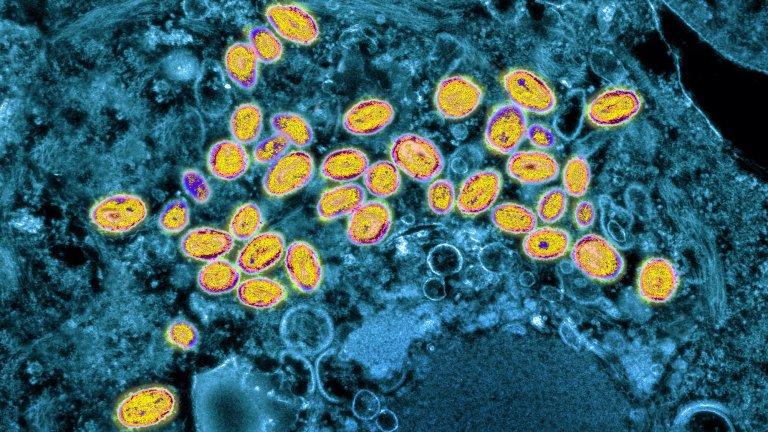
Rabadan’s computational methods are in demand. In May he was tapped by an international team of researchers to help pinpoint the source of a mysterious disease that was killing off farmed Atlantic salmon in Norway. Using a mathematical tool he pioneered called Frequency Analysis of Sequence Data, he and the other researchers looked for RNA sequences in heart and kidney samples taken from the fish, eventually finding evidence of a previously unknown virus. The research could lead to a vaccine to prevent future outbreaks and preserve an important food source. “There are so many unknown viruses out there,” Rabadan says. “It’s fascinating.”
A native of Spain and a former theoretical physicist at the European Organization for Nuclear Research in Switzerland, Rabadan has no regrets about his career change. He enjoyed physics, he says, but takes more satisfaction in the practical applications of computational biology. “I love physics, I love solving problems, but I think biology can have a bigger, more immediate impact.”
Five amazing, clean technologies that will set us free, in this month's energy-focused issue. Also: how to build a better bomb detector, the robotic toys that are raising your children, a human catapult, the world's smallest arcade, and much more.


Online Content Director: Suzanne LaBarre | Email
Senior Editor: Paul Adams | Email
Associate Editor: Dan Nosowitz | Email
Assistant Editor: Colin Lecher | Email
Assistant Editor: Rose Pastore | Email
Contributing Writers:
Rebecca Boyle | Email
Kelsey D. Atherton | Email
Francie Diep | Email
Shaunacy Ferro | Email
Maybe he can find the cause of the common idiot.