Greensulate, with its densely packed mycelium fibers, could replace plastic insulation

Out of the Woods Eben Bayer [left] and Gavin McIntyre want mushroom-based Greensulate to replace plastics and other materials John B. Carnett

Invention: Greensulate
Inventor: Eben Bayer and Gavin McIntyre
Cost: $1,500
Time: 2 years
Is It Ready Yet? 1 2 3 4 5

Eben Bayer and Gavin McIntyre want to line the walls of your home with mushrooms. The young entrepreneurs have created a strong, low-cost biomaterial that could replace the expensive, environmentally harmful Styrofoam and plastics used in wall insulation, as well as in packaging and a host of other products. Wind-turbine blades and auto-body panels aren't out of the realm of possibility, either.

"We like to call it low-tech biotech," Bayer says. In the lab, the inventors grow mycelia, the vegetative roots of mushrooms that resemble bundles of white fiber. But instead of soil, the roots grow in a bed of agricultural by-products like buckwheat husks, and those intertwining fibers give the material structural support. The mixture is placed inside a panel (or whatever shape is required) and, after 10 to 14 days, the mycelia develop a dense network — just one cubic inch of the white-and-brown-specked "Greensulate" insulation contains eight miles of interconnected mycelia strands. The panels are dried in an oven at between 100° and 150°F to stop mycelia growth, and at the end of two weeks, they're ready for your walls.

Bayer and McIntyre's work with mushrooms has come a long way since they first met as mechanical-engineering students at Rensselaer Polytechnic Institute. When the two set out to make biodegradable and renewable insulation, they started testing different varieties of mushrooms grown in Tupperware. Many prototypes later, lab tests confirmed their early hunch about the unusual properties of the mushroom-derived insulation. Mixed-in seed husks, for example, helped the mycelia withstand a blowtorch. And besides being cheaper and eco-friendlier than petroleum-derived products, Greensulate can grow at room temperature and in the dark, doesn't require expensive manufacturing equipment built to withstand industrial conditions, and can easily be tailored to different levels of strength and flexibility.

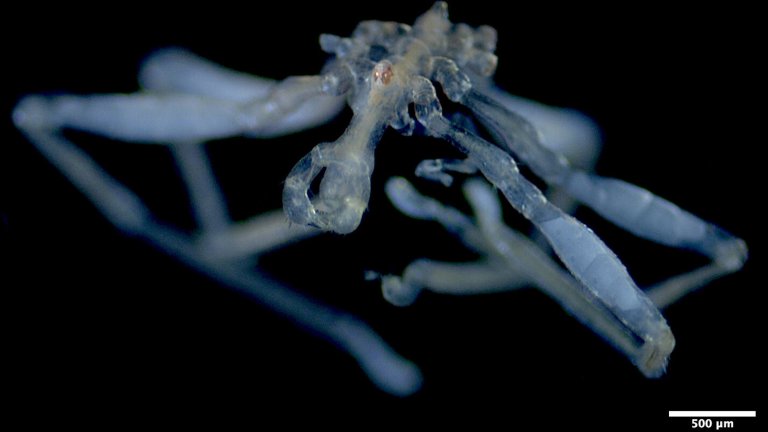
Greensulate: How It Works: Greensulate’s strength derives from billions of mycelia, or tubelike mushroom roots that intertwine with agricultural castoffs like seed husks. One cubic inch of the material contains eight miles of mycelium fibers  Bland Designs

In 2007, the inventors incorporated under the name Ecovative Design and won $16,000 in funding through the National Collegiate Inventors and Innovators Alliance. A year later, joined by now-COO Ed Browka and other team members, they took the $700,000 prize at the PICNIC Green Challenge in Amsterdam.

Ecovative has begun a trial run of Greensulate panels as replacements for insulation in a Vermont school gym. The partners expect to complete all industrial certification and testing by the end of the year and have enlisted Jeff Brooks of the Timberline Panel Company to advise them on meeting American Society for Testing and Materials standards for building insulation. "If they get to the point where I think they'll get," he says, "there's a chance there would be no reason to use conventional foam products."

Check out the rest of PopSci's 2009 Invention Award winners!

Want to learn more about the environment, solar energy, sustainability, and more? Subscribe to Popular Science and enter to win $5,000!

15 Comments

When I pick insulation bio degradable is not what I'm after. I don't want to encourage the hippies to eat my walls.

Jake Revive Your Life

Way to go Eben and Gabin! These are the type of eco-friendly materials we need. Good article.

When I choose wall coverings I choose materials that won't kill me. I'm allergic to mushrooms, dude!

I wonder how effective it is. There is no mention of any type of R rating. Other than that, sounds great.

The Jackster

from San Diego, CA

NO WAY!!!

I am in real estate, and have seen what the Black Death (mold) can do to homes and people, and they want to fill the walls with the very same fungi? Cooking it will not stop it from hosting mold if and when it becomes wet.

Remember the drywall from China that is making people sick.

Sure glad they are testing it on the children in that high school in Vermont. . .

After all: It's for the children.

Let's remember that these are sharp young engineers from Rensselaer Poly ---not aggies brainstorming to expand their market. This article is a tickler, like most in PopSci, and the meat/potatoes of technical questions are not touched here.

This development was supported by grants from professional technical organizations and the product is meeting critical standards from ASTM. The finished product even acts as a FIREWALL. According to their website, they produce finished slabs using only the root-system-mycelia so no spores are ever produced, and The final step of our manufacturing process renders the material biologically inert. www.ecovativedesign.com

BTW - biodegradable doesn't come into play until you see a building coming down. All that polystyrene is a really nasty mess to clean up. This insulation should hold up as well as any 2x4s in a building, and that depends on the quality of contractor production. If you put it together wrong you get the condensation mold eating your 2x4s, regardless of the insulation; if it stands in flood waters, you get mold; if the tornado takes off the roof, then drops a downpour, you've got a problem. --Here in the mid-west we see all these problems --makes me dream of living in one of these old missile silos --but let's try to give these kids credit for making inroads into self-reliance and sustainability without assuming they don't do their homework, okay?

oops...
Their website says this insulation has an R-value of 3 per inch; with polystyrene values in the range of R 5.6 to R 8 per inch, you will have to go thicker to get the same protection.

Also, I made a mistake in trying to set off a quote, and the system swallowed the quotation information --I am in no way affiliated with these folks --I wish.

The following website has a list of R-values for various insulation types. Currently, the mushroom insulation has an R-value roughly equal to the average for fiberglass batting, which is what you typically find in the walls of most home construction at present.

www.insulation-r-values.com

Ecowarrior: thanks for addressing some of the fungi-phobia and general ignorance of science shown in some of the other replies.

Let me clear up another couple of misconceptions:

LRCote: There are at least as many different fungi in the world as there are plants, if not more, so saying you're allergic to mushrooms (probably the regular white button mushroom) is as silly someone with a peanut allergy saying they can't eat any food made from plants, or, more similarly to your statement, that they won't live in a house made of wood for fear it will make them sick.

Jackster: Sick house syndrome due to mold is a major issue, but as you said, it's all about moisture control; if my new home was leaky, inadequately vented, moldy and falling apart, I'd blame shoddy construction or shady realtors for the problem. And again, this is not the very same fungus, they are not all the same!

Fungal spores are always present in the air, molds can eat just about anything, and they will grow on any organic material wherever conditions are right - although I'd bet this product is more resistant to mold colonization, since it's a natural biopolymer (cellulose) that already been eaten by a fungus, which turned it into another biopolymer (chitin).

These guys are to be commended for their efforts. We need to do more and more with biopolymers since the oil is running out, and the oceans are filling up with bits of plastic which kill everything that eats it. Fungal biopolymers are very promising, and only just starting to be developed - there are more applications of processed chitin (fungal fiber) that PopSci should review, including a DoD project that made some advanced new wound dressings that can stop the bleeding of major arterial wounds and prevent infection - this technology will likely trickle into consumer goods in the next few years, and may save your life some day.

Fungi are the unsung heroes of the microbial world, without which there would be no trees, no forests, no soil, and probably no ecosystem for us to live in. Time to stop being afraid of them.

For those who want to educate themselves, Read "Mycelium Running" by Paul Stamets to find out how fungi can help save the world.

This is a great invention and these guys won prize after prize. Here more about the Picnic Green Challenge.
http://www.stichtingmilieunet.nl/andersbekekenblog/?p=3934

This competition is recently opened again for the 2009 Green Challenge. First prize 500.000 euro and two other prizes of 100.000 euro.

So, if you have some great idea, feel free to join the 2009 contest.

Milieunet Foundation is a non-profit organisation focused on awareness and change of behaviour by means of communication about waste, energy, sustainability, nature, environment, climate, human rights and international development cooperation.

jnsmith Hooray a sensible comment ! Not A rant

Ick, I HATE mushrooms. Wait, I hate the mushrooms that are considered food. The trippy mushrooms are cool. This is a good way to use the food based mushrooms and get them off my plate!

http://www.propeller.com/member/suzyjenkins/

Be sure those who want to buy your house aren't allergic to the mushrooms. I imagine if the insulation gets wet that the smell would be another factor to be concerned with.

http://beecherbowers

Petroleum byproducts family is number one pollution in my opinion.
Polystyrene is REALLY awful, and when you burn it (accidentally) it's cancerous.
Mushroom on the other hand is living ...

I wonder if you cut a piece of greensulate and have moisture (a rain) on it (like on most of constructions today) if you get the mushroom growing, or being a substrate for other species, or turning to food for insects and rodents (so you need to add bad pesticides to process).

Pretty sure a giant company will buy out, that's the saddest.
BUT, it's definitely a HUGE development in the good way.
Keep it up!

Innovate to save the world together!
www.togethearth.com

Mushrooms to replace the plastic, a good idea!
www.firmoo.com/new-arrivals.html


Download Our iPhone App

Stay up to date on the latest news of the future of science and technology from your iPhone with full articles, images and offline viewing


Follow Us On Twitter

Featuring every article from the magazine and website, plus links from around the Web. Also see our PopSci DIY feed


Become a Fan On Facebook

Share links with friends, comment on stories and more


November 2009: Astronaut 3.0

Inside NASA's astronaut bootcamp and the grueling new training regimen for deep space. Plus, ten young geniuses shaking up science today, one writer's quest to analyze every man-made chemical in her body and more.

Check out the issue's full contents online here

Popular Science Photo Pool


Share your photos in the Pop Sci pool at www.flickr.com!
tags_sprite.png
POP_embeddedForm_cover_May09.jpg