supernova

Fermi Space Telescope Captures Glimpse of Space-Time

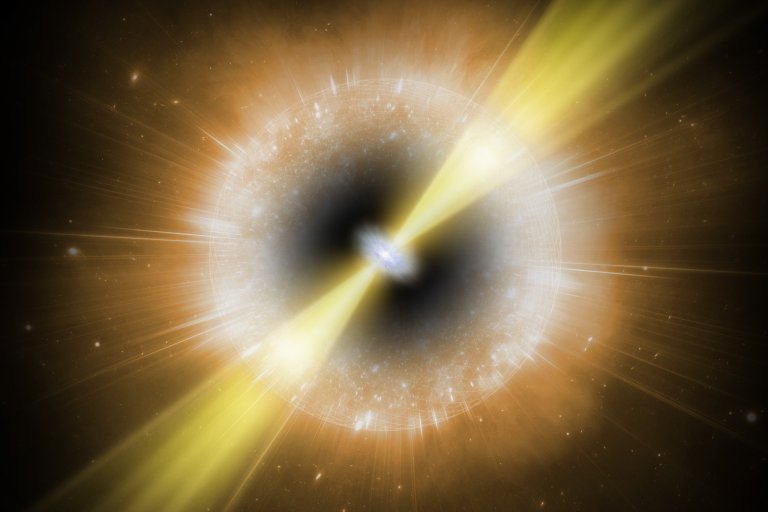
NASA's Fermi Gamma Ray Space Telescope has observed more than one thousand separate sources of gamma rays

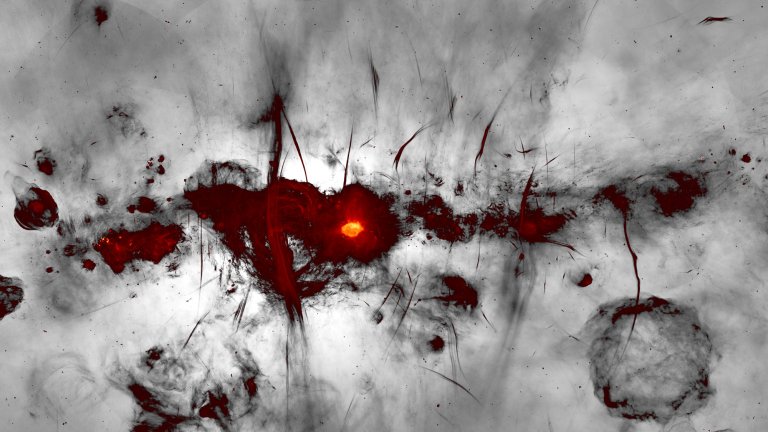
NASA's Fermi Gamma Ray Space Telescope spent a year collecting data from a thousand gamma ray sources and came up with this, the best map to date of the extreme universe. It also gave Einstein a shot in the arm by confirming the scientist's theories of space-time.

[ Read Full Story ]

What Does a Star Sound Like?


Observing a star up close (putting aside for a moment how you’d get there or withstand its heat) is probably like sitting beside an enormous silent fire. Sounds—which are simply pressure variations in a medium such as air or water—can’t propagate in the vacuum of space, so the roiling surface of a star would make an impression on the eyes, but not the ears.

[ Read Full Story ]
READ MORE ABOUT > , , , , ,

Unveiled: The First Full 3-D Model of a Star Going Supernova

Physicists simulate the death of a white dwarf

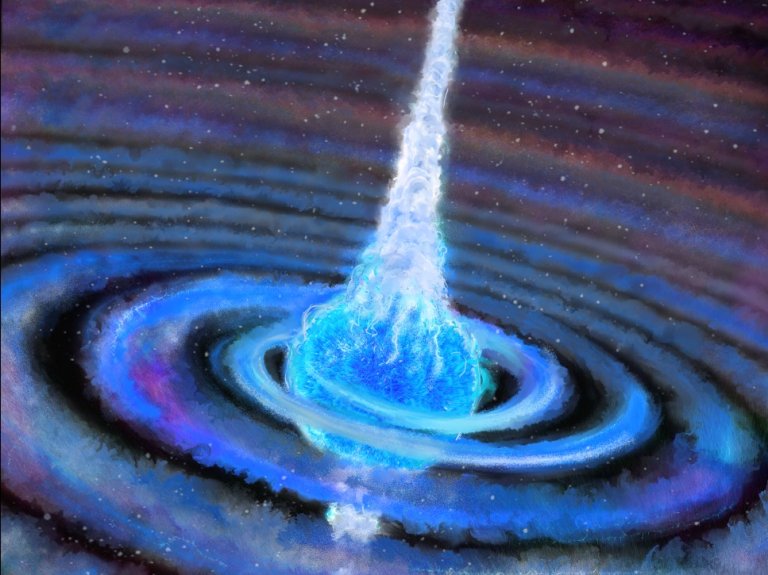
Going Nova:  via M. Zingale
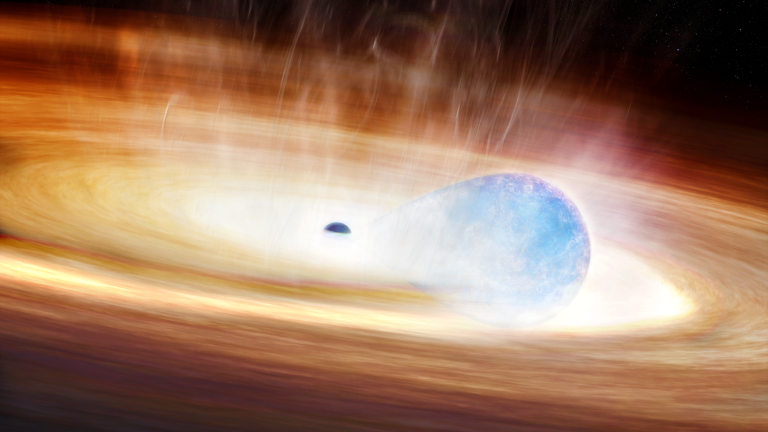
Good news for astrophysicists and fans of massive thermonuclear explosions alike: a team of mathematicians at the DOE's Lawrence Berkeley National Laboratory, working alongside two astrophysicists from Stony Brook University and U.C. Santa Cruz, have modeled the hours leading up to a Type Ia supernova, capturing the gritty details of the cataclysmic death of a white dwarf star for the first time.

[ Read Full Story ]

The Biggest Boom in the Universe

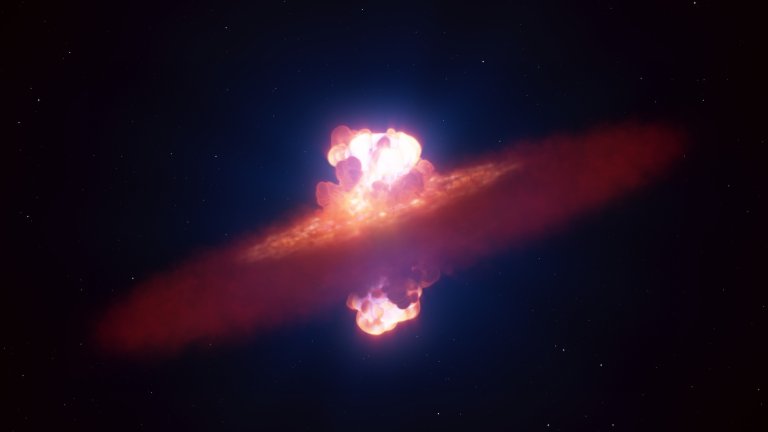
With the discovery of a bright, long-lived supernova, scientists believe they have found a spectacular new way for stars to die

Blown Away: Heavy elements in the star’s core are ejected in all directions. Not even a black hole is left after the explosion.  Medi-Mation

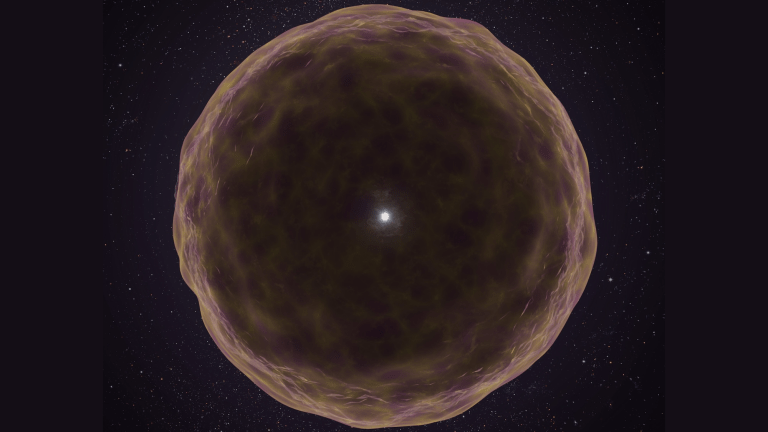
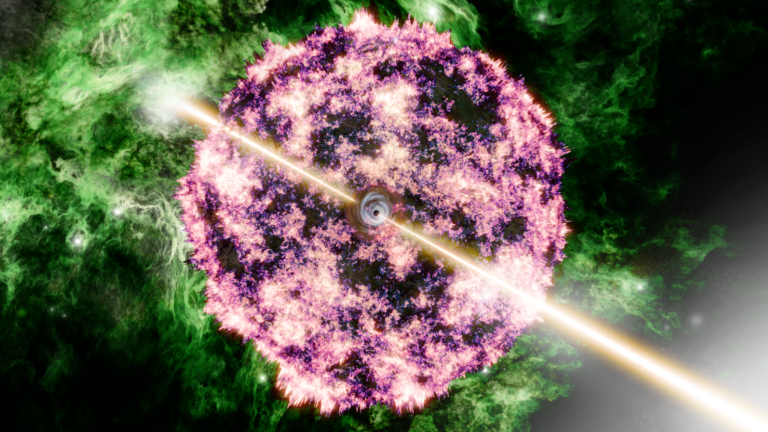
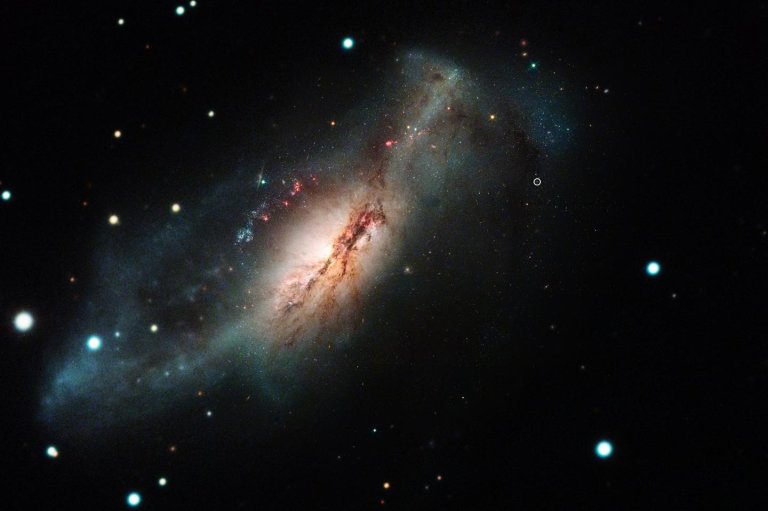
Meet pair-instability supernova SN2006GY, the most extraordinary explosion in the cosmos. Unlike its smaller, regular supernova cousins, which blast off the outer layers of a star and pack what remains into a neutron core or a black hole, the pair-instability supernova is a much more violent celestial finale. These events happen only in stars that are at least 150 times as large as our sun and result in total annihilation of the star. Astrophysicists contend that this type of eruption helped seed the cosmos with heavy metals like iron, a process that ultimately allowed planets to form.

[ Read Full Story ]

Strange New Pulsar Discovered

Scientists find an exotic cosmic object that doesn't fit the standard explanations

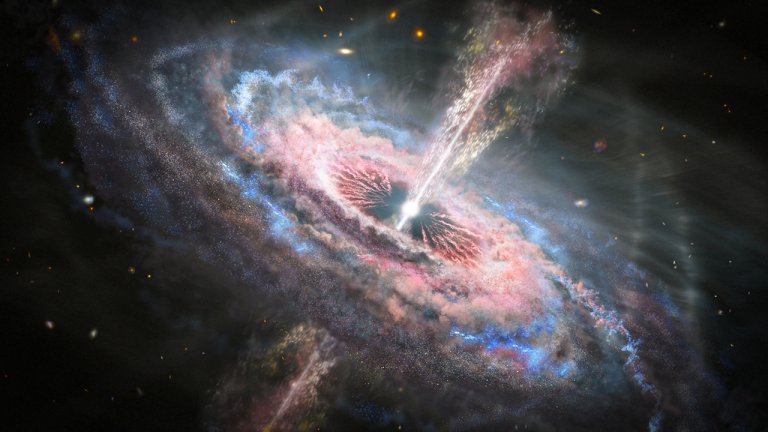
Astronomers using the Arecibo telescope have discovered a fast-rotating pulsar that doesn't fit the accepted notions of how those exotic, lighthouse-like stellar objects form. Pulsars get their name from the brief beams of light they shoot our way every few milliseconds or more.

[ Read Full Story ]


Download Our iPhone App

Stay up to date on the latest news of the future of science and technology from your iPhone with full articles, images and offline viewing


Follow Us On Twitter

Featuring every article from the magazine and website, plus links from around the Web. Also see our PopSci DIY feed


Become a Fan On Facebook

Share links with friends, comment on stories and more


December 2009: Best of What's New

In our December issue, Popular Science names the 100 best innovations of the year: bombproof wallpaper, self-parking cars, the fastest helicopter, and 97 more. Plus inventor profiles and videos.

Check out the best of what's new here.

Popular Science Photo Pool


Share your photos in the Pop Sci pool at www.flickr.com!
tags_sprite.png
POP_embeddedForm_cover_May09.jpg