Stuart Fox

Decoded Corn Genome Promises Higher Yields, Better Biofuels, New Plastics


Corn, Illinois:  Randy Wick/Flickr
With its annual output of over 330 million tons a year feeding animals, running cars, and decorating South Dakota tourist attractions, maize is clearly Americas most important crop. That's why the newly published complete corn genome could drastically change the food, automotive and plastic industries.

[ Read Full Story ]

National Archives To CSI-ify Haldeman's Paper Notes In Search Of Watergate's Lost 18 Minutes


Of the remaining mysteries surrounding the Watergate break-in, none confound conspiracy buffs more than the 18 and a half minutes of tape deleted from the June 20th, 1972 meeting in the Oval Office. Now, after 37 years and several forensic analyses of the audio tape itself, the National Archives will turn its attention to the only physical notes taken during that meeting in the hope of extracting more information about the famous recording gap.

[ Read Full Story ]

Thousands of Worms Headed to International Space Station For Muscle Tests


The perils of space flight number in the hundreds, from radiation exposure to the impact of micro-asteroids. But for astronauts who spend an extended amount of time floating weightlessly in the near-endless void of space, muscle atrophy remains the most common health problem. Thankfully, a shipment of RNA-treated worms may help scientists on the International Space Station solve that issue.

[ Read Full Story ]

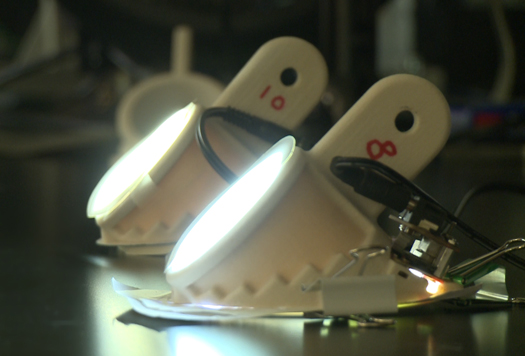
Batteryless Remote Control Pulls Power from Your Button Presses


We've all been there, angrily jabbing the remote control at the cable box in a futile attempt to change the channel. When remote control batteries die, my sanity often follows closely behind. Well, soon that will be a problem as quaint as running out of whale oil for a lantern, thanks to a new remote control that charges itself with the energy from its buttons.

[ Read Full Story ]

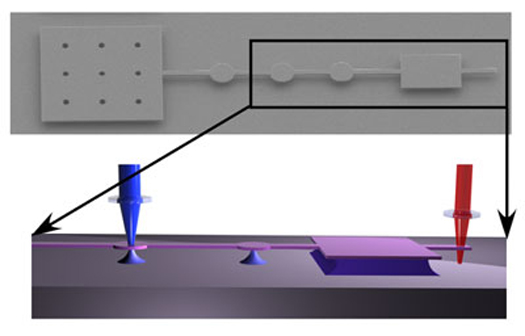
Scientists Stun Nematode Worms With UV Phaser Straight Out Of Star Trek


Star Trek introduced the world to a wide range of fictional technology, most of which, like beaming or warp drive, will likely remain fiction. However, a team of scientists from the University of Canada has taken the phaser, the show's famous stun-laser, out of the TV and into reality. Unfortunately, right now it only works on worms.

[ Read Full Story ]

Spanish Scientists Mod Optical Mouse Into Counterfeit Coin Detector


Counterfeiting is as old as money itself, with the history of currency including a millennia-long arms race between mints and the forgers that copy them. While governments have finally crafted paper money so intricate that counterfeiting isn't a major problem, detecting counterfeit coins remains a challenge. Now, Spanish scientists have modified a regular optical computer mouse to create a cheap and easy device for sniffing out phony Euro coins.

[ Read Full Story ]

Oceans on Europa Have Enough Oxygen to Support Space Fish

Is Jupiter's moon populated by watery aliens?

Thanks to a surface covered in liquid water, Jupiter's moon Europa serves as the prime suspect for bodies in our solar system harboring extraterrestrial life. For the most part though, speculation has assumed the life on Europa would be microscopic, similar to the chemical and rock-eating microbes found atop undersea volcanic vents on Earth. However, a new study estimates the level of oxygen in Europa's seas may be high enough to support fish-sized life. Hello, alien sushi.

[ Read Full Story ]

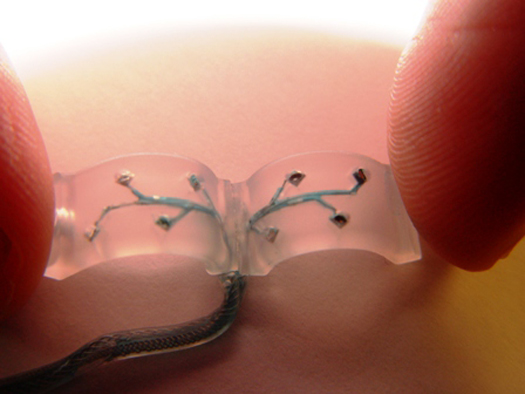
Doctors Equip Yorkshire Man With Cyborg Sphincter


Meet Ged Galvin, the Steve Austin of colorectal surgery. After a car crash in which Galvin almost died, surgeons at Royal London Hospital realized they could rebuild his crushed organs. Stronger. Faster. They had the technology to give him a cyborg colon.

"The operation changed my life and gave me back my pride and confidence," Galvin told the Daily Telegraph.

[ Read Full Story ]

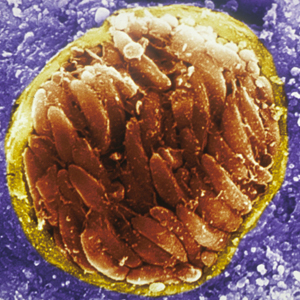
Soon, Babies May Have Three Biological Parents


Even though the combination of affluence and fertility drugs has raised the age at which many women give birth, children born to older women continue to suffer a disproportionately high rate of birth defects and genetic disease. Many of these problems result from the degradation of the area of the region of the egg around the nucleus.

To correct for those problems, a team of Japanese researchers has implanted the nucleus of an older woman's egg into the egg cell of a younger donor. This may fix the problem, but it also moves medicine closer to the ethically challenging creation of a person with three biological parents.

[ Read Full Story ]

Muscle-Linked Gene Therapy Pumps Up Monkeys

Will gigantic genetically modified legs become the next performance enhancer for athletes?

It's getting much harder to cheat at sports these days. Urine tests have been re-calibrated to look for the cream and the clear, blood tests check for the presence of excessive oxygen, and you spitballers? Yeah, they're on to you, too. But a new breakthrough in gene therapy may allow athletes to skip the steroids in favor of adding muscles from the DNA up.

[ Read Full Story ]
Page 1 of 26 12345678910next ›last »


Download Our iPhone App

Stay up to date on the latest news of the future of science and technology from your iPhone with full articles, images and offline viewing


Follow Us On Twitter

Featuring every article from the magazine and website, plus links from around the Web. Also see our PopSci DIY feed


Become a Fan On Facebook

Share links with friends, comment on stories and more


December 2009: Best of What's New

In our December issue, Popular Science names the 100 best innovations of the year: bombproof wallpaper, self-parking cars, the fastest helicopter, and 97 more. Plus inventor profiles and videos.

Check out the best of what's new here.

Popular Science Photo Pool


Share your photos in the Pop Sci pool at www.flickr.com!
tags_sprite.png
POP_embeddedForm_cover_May09.jpg