
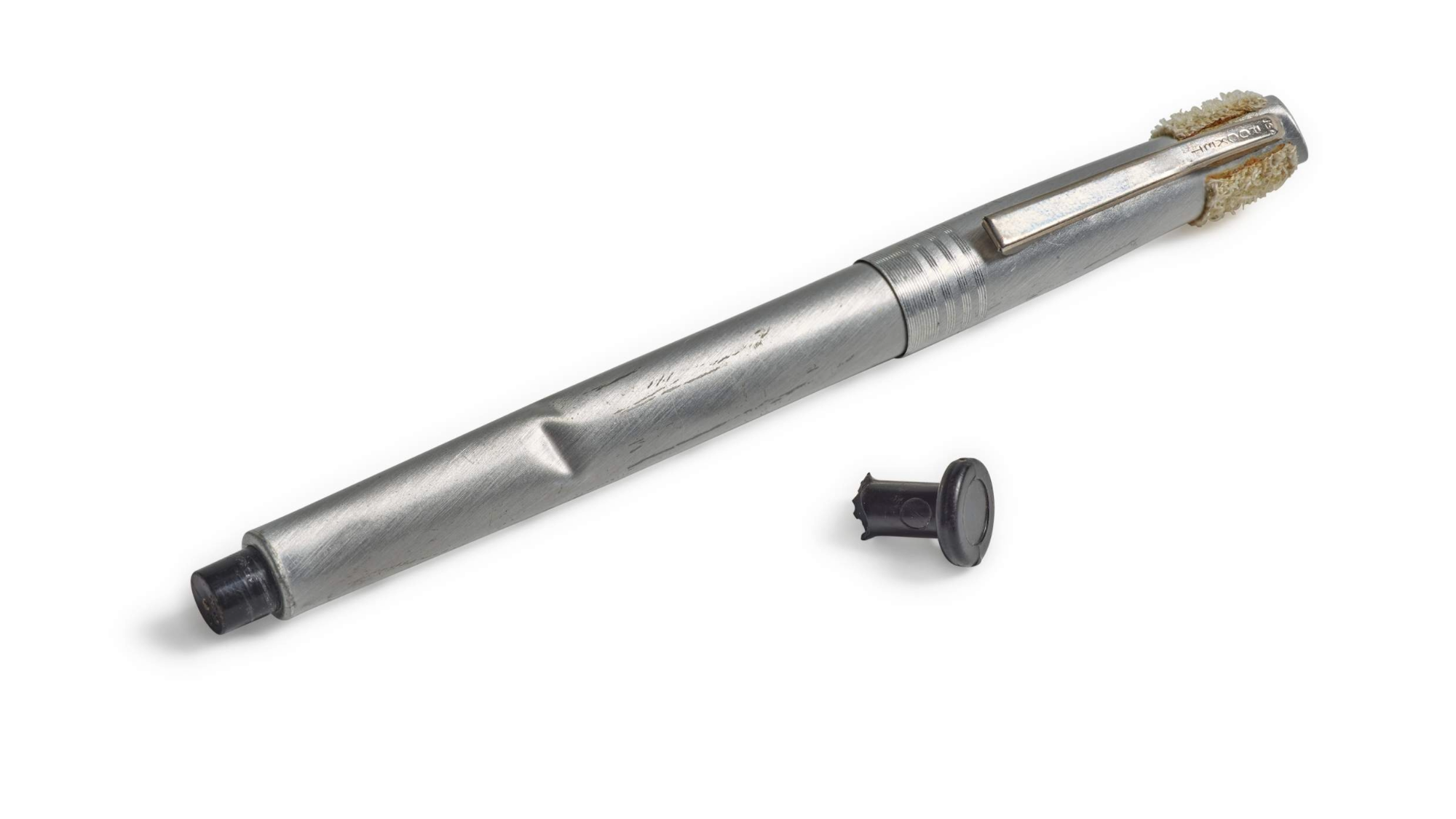
Several precious pieces of space history hit the auction block in New York this week. On July 15, Sotheby’s Space Exploration auction features several iconic artifacts, including a life-saving pen from Apollo 11 ($857,600), a Soviet flag flown in the icy vacuum of space ($102,400), and even a piece of the first cloth to wipe a window in space ($5,120). You can learn more about some of these historical objects in the gallery below.
The pen that saved Apollo II
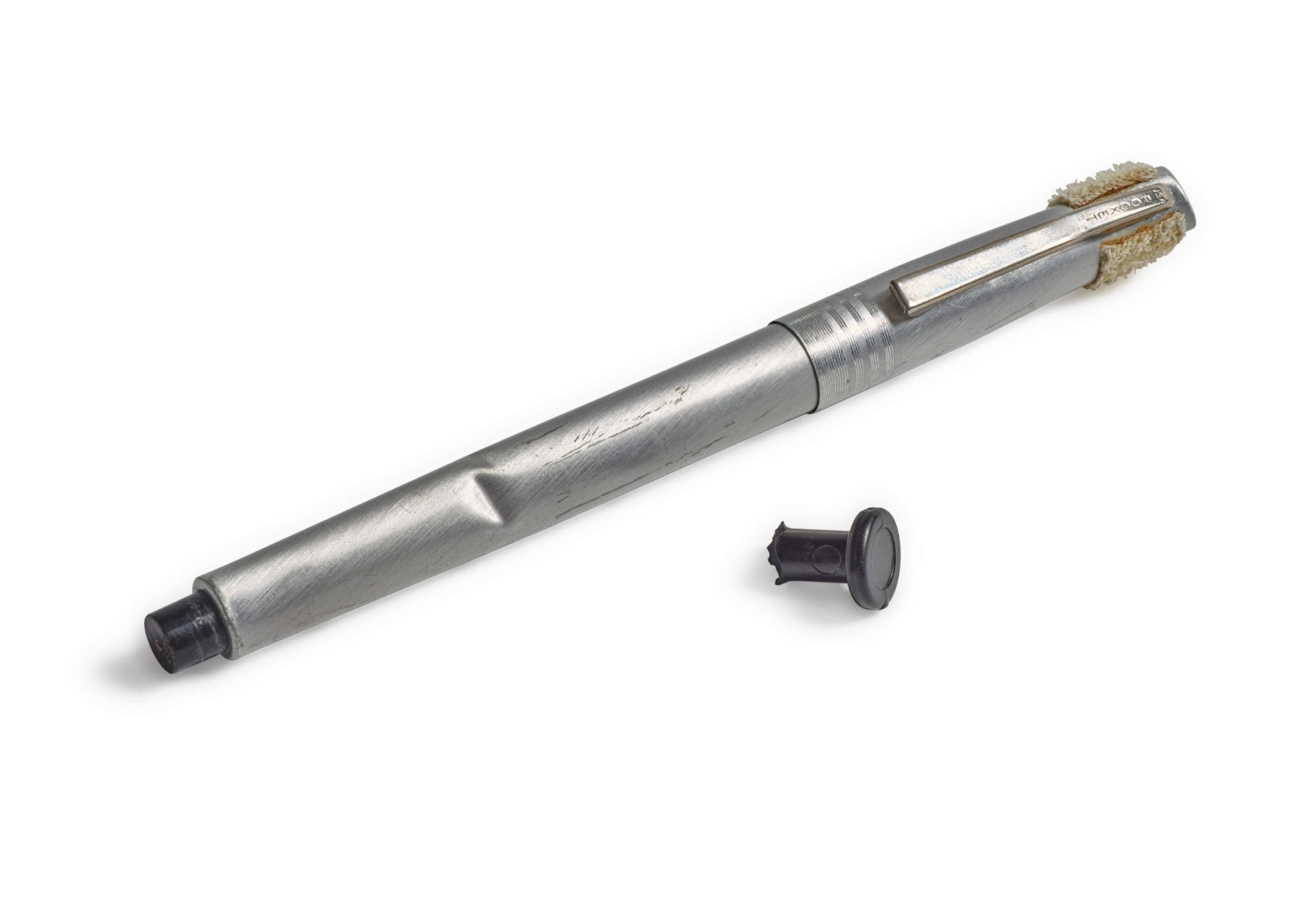
On July 20, 1969, astronauts Neil Armstrong and Buzz Aldrin collected rock and dust samples from the moon’s surface for about three hours. As the pair were climbing back into the Lunar Module to prepare to fly home to Earth, Aldrin hit the module’s circuit breaker switch with the life support backpack on his spacesuit.
The switch broke off, and it would have killed all three Apollo 11 astronauts had it not been for Aldrin’s quick thinking. He wedged a pen into the board to create a makeshift switch.
“He could’ve picked something that was not very important. But he banged into the circuit breaker that controlled the SM engine that got us back into orbit,” Armstrong later told ABC News. “It was just insurance. It’s nice to get a little insurance.”
This item sold for $857,600.
A flag from the first American spacewalk
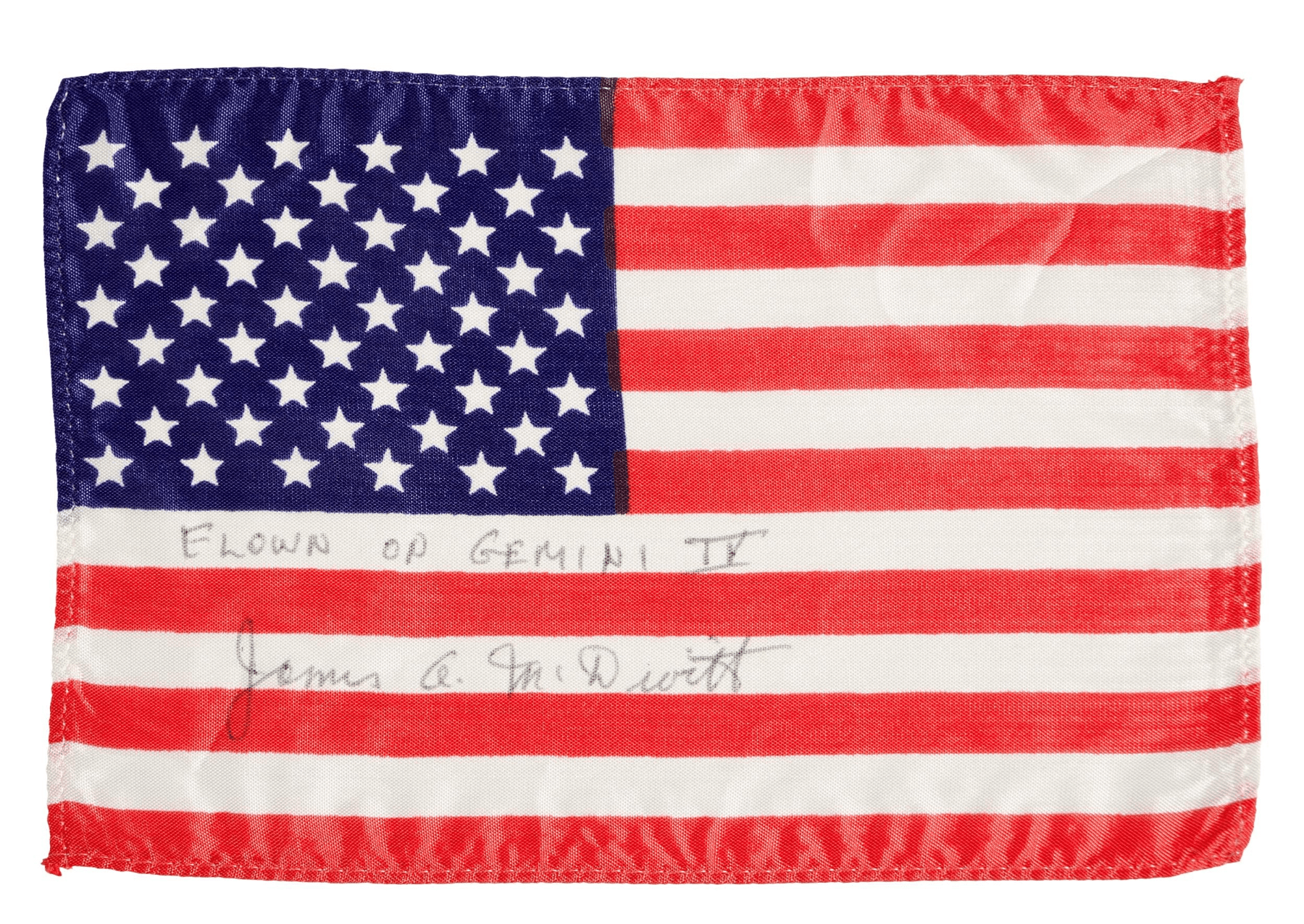
Mission Commander Jim McDivitt flew this American flag during Gemini IV. The June 1965 mission was the second crewed mission of the Gemini series and included the first American spacewalk.
Command Pilot Edward White concluded the spacewalk on June 3, 1965, and remained outside of the spacecraft for 21 minutes. McDivitt served as mission commander for Gemini IV and photographed the first American spacewalk, conducted by command pilot Edward White. The Gemini IV flag is a silk stars and stripes flag and is signed and inscribed by McDivitt on the two lower white bars. This item sold for $35,840.
In space, even windows need cleaning
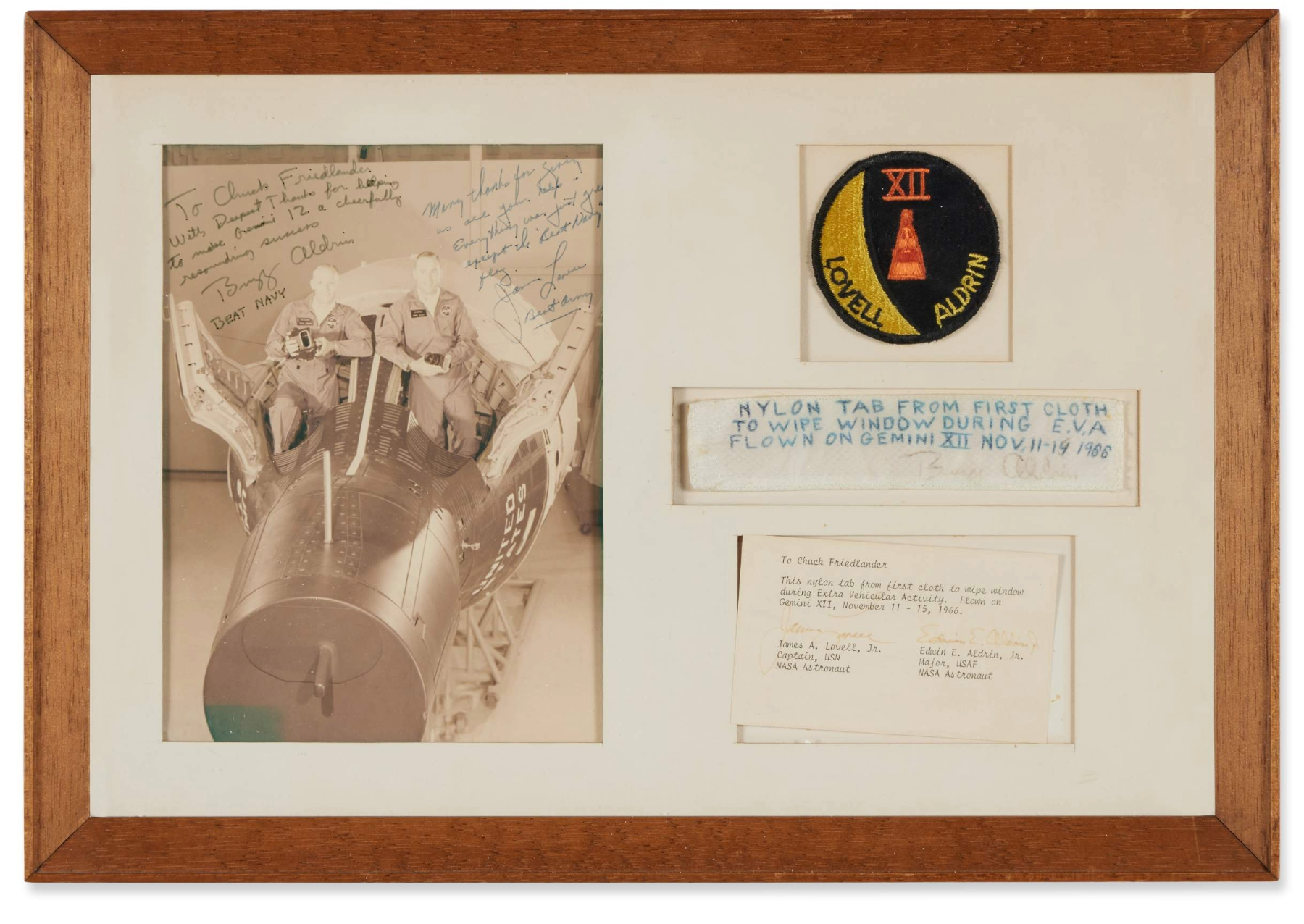
This nylon tab was exposed to the vacuum of space during Gemini XII in November 1966. The mission included a spacewalk by Buzz Aldrin. Aldrin used this cloth to wipe the spacecraft’s window to clean off a mysterious yellow substance.
NASA later cut the fabric into small pieces and tested the substance in different laboratories. It turned out to be propellant exhaust from the Titan II launch vehicle. Aldrin kept the nylon tab portion of the cloth as a keepsake. This item sold for $5,120.
Heat shield plug from the first trip to the moon
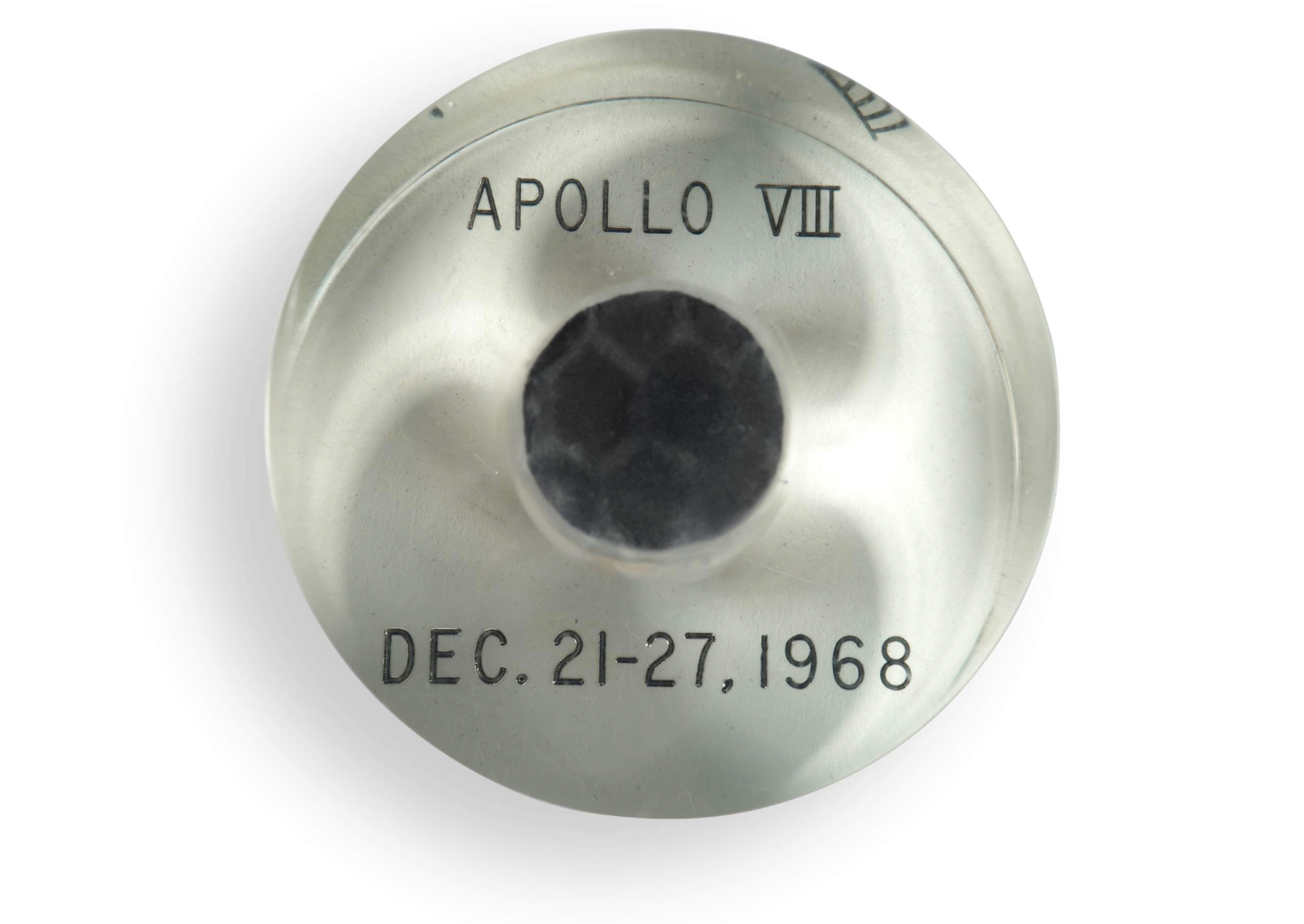
Whether it’s 1966 or 2026, heat shields are crucial for space travel. This plug protected one of the 59 screws attaching the aft heatshield to the Apollo 8 command module in December 1968. The mission was humanity’s first trip to the moon and paved the way for a successful lunar landing one year later. Astronaut Bill Anders also took the famous Earthrise photo during this mission.
When it was time to return home, the crew re-entered Earth’s atmosphere in the Command Module oriented aft-first. The bottom of the spacecraft faced the brunt of friction that is generated by its descent as it plunges out of space and towards the sea. To account for the friction, NASA created an ablative heatshield in a brazed steel honeycomb structure. The bolts attaching this structure to the bottom of the spacecraft were then covered by plugs protecting them from the friction of re-entry. This item sold for $8,960.
A symbol of diplomacy
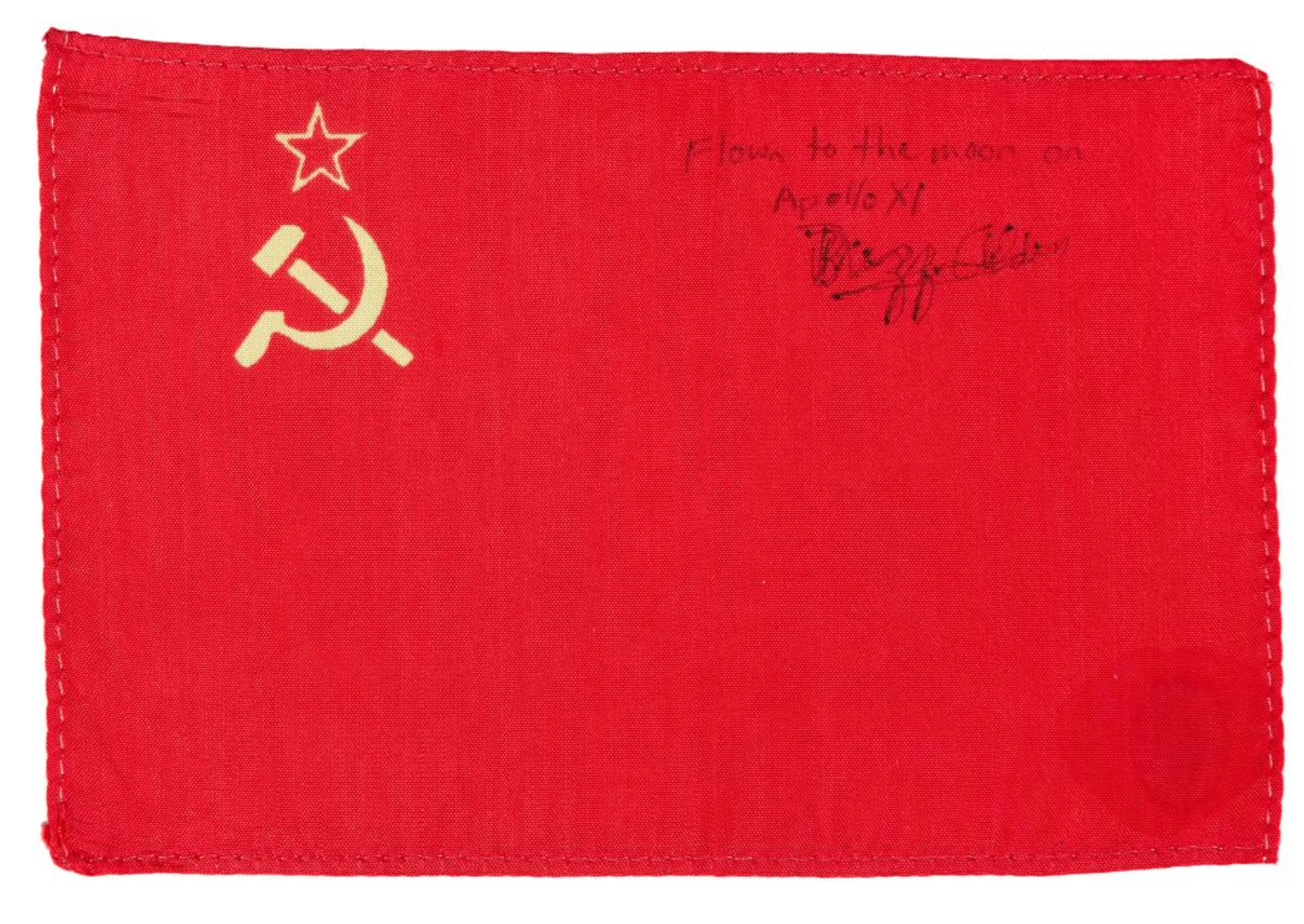
Neil Armstrong and Buzz Aldrin’s footsteps on the moon on July 20, 1969 made it clear that the United States won the space race. In the spirit of diplomacy, Aldrin flew a USSR flag as well as the American flag, the Texas state flag, and the flag from his home state of New Jersey in his personal preference kit (PPK).
Buzz Aldrin’s provenance letter about the flag reads:
“This provenance letter certifies that the accompanying Apollo 11 Soviet Flag was flown to the Moon aboard the command module Columbia. In July of 1969, I landed on the Moon as part of the Apollo 11 crew. As an act of diplomacy and to help commemorate this historic milestone, I chose to personally carry the accompanying 4 by 6 inch Soviet Flag with me in my Personal Preference Kit (PPK). Carrying this flag was a gesture of goodwill between the United States of America and the Soviet Union, as well as a demonstration that Apollo 11 was a human achievement that transcended nations.”
This item sold for $102,400.
Gordon Cooper’s glove
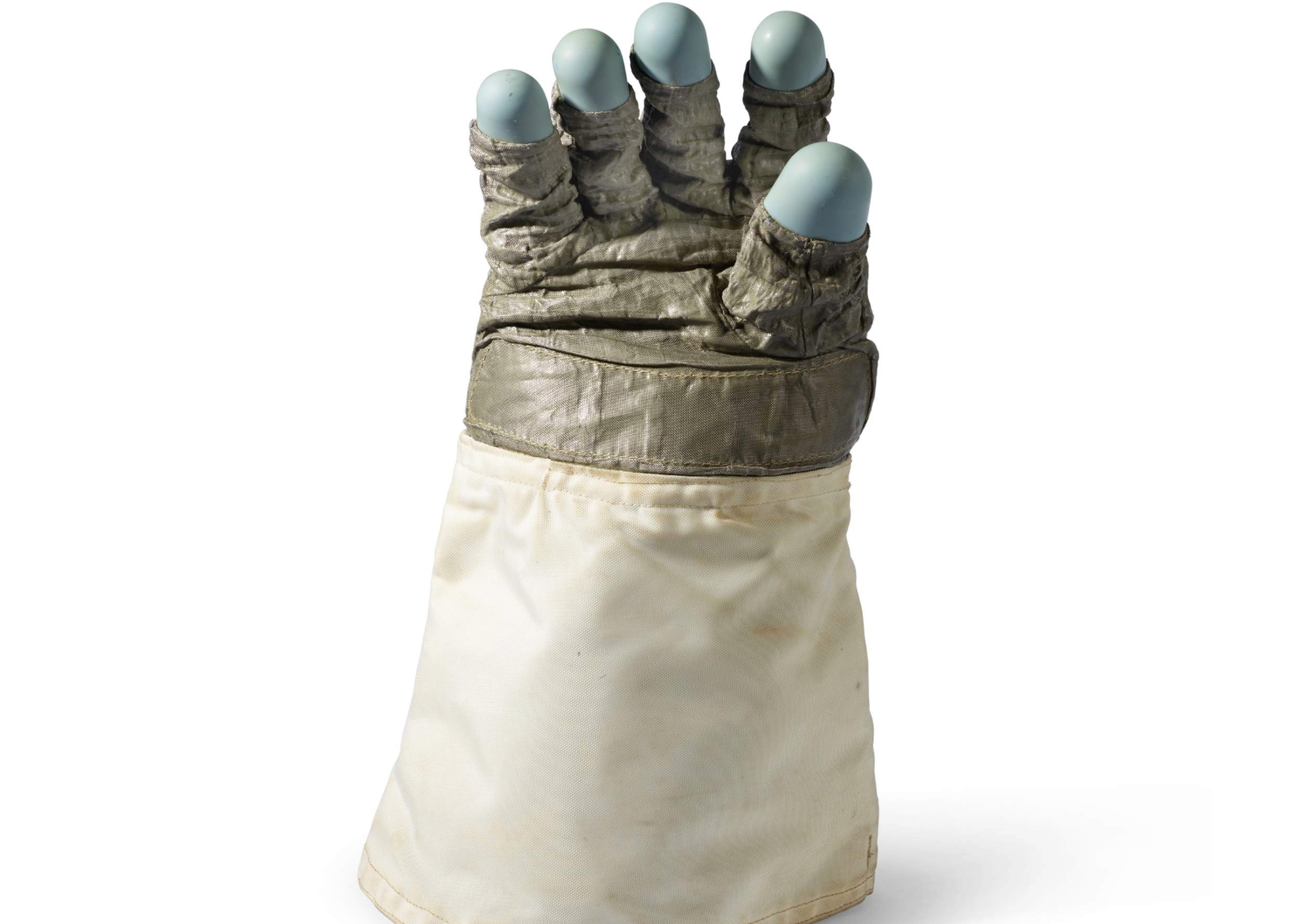
This A7-L glove was made for astronaut Gordon Cooper and was likely used in training. The International Latex Corporation’s aerospace division (later called ILC Dover) has been the designer and producer of the space suit pressure garment for NASA since the Apollo program began. Every American astronaut to go into space since has traveled wearing an ILC Dover suit. Each full suit took about 5,000 hours to complete, and cost approximately $1,000,000 to produce.
Cooper was part of the first group of astronauts chosen by NASA as part of the Mercury Seven. He piloted the final Mercury mission (Mercury-Atlas-9) and became the first American to spend an entire day in space. This glove would have been used by him after he served as backup commander of Apollo 10. This item sold for $21,760.
Space’s favorite beagle
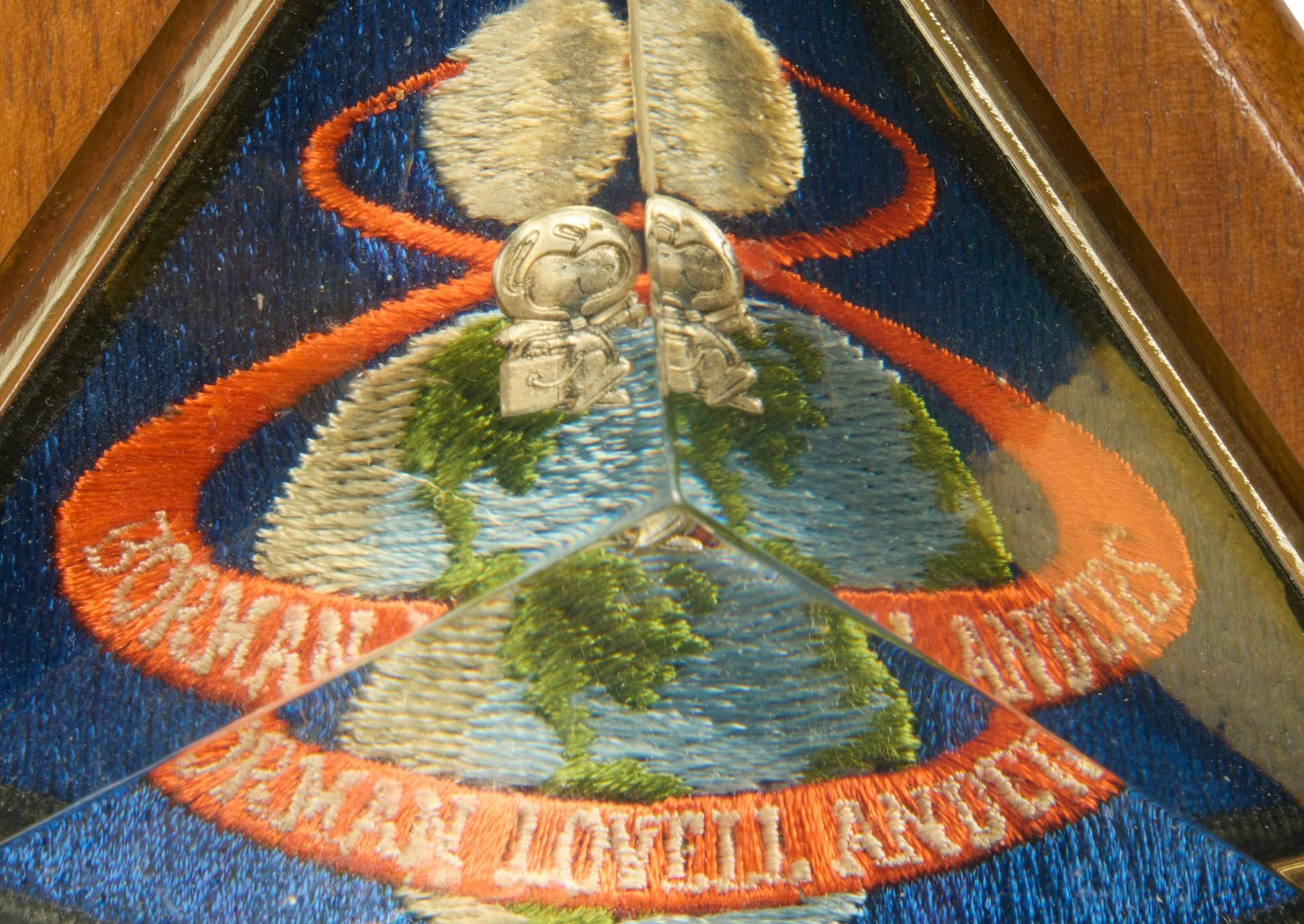
Charlie Brown’s mischievous pup has been part of the U.S. space program from the very beginning. Snoopy joined NASA in 1968 as a mascot for the Manned Flight Awareness program and even served as the gravity indicator during Artemis I in 2022.
Dr. George E. Mueller is credited with creating and leading the Office of Manned Spaceflight at NASA Headquarters. He guided the agency through the Apollo program and the early development of Skylab and space shuttle projects.
This Snoopy pin was flown in lunar orbit and was later presented to Mueller. This item sold for $12,160.
Buzz Aldrin’s very fly jacket
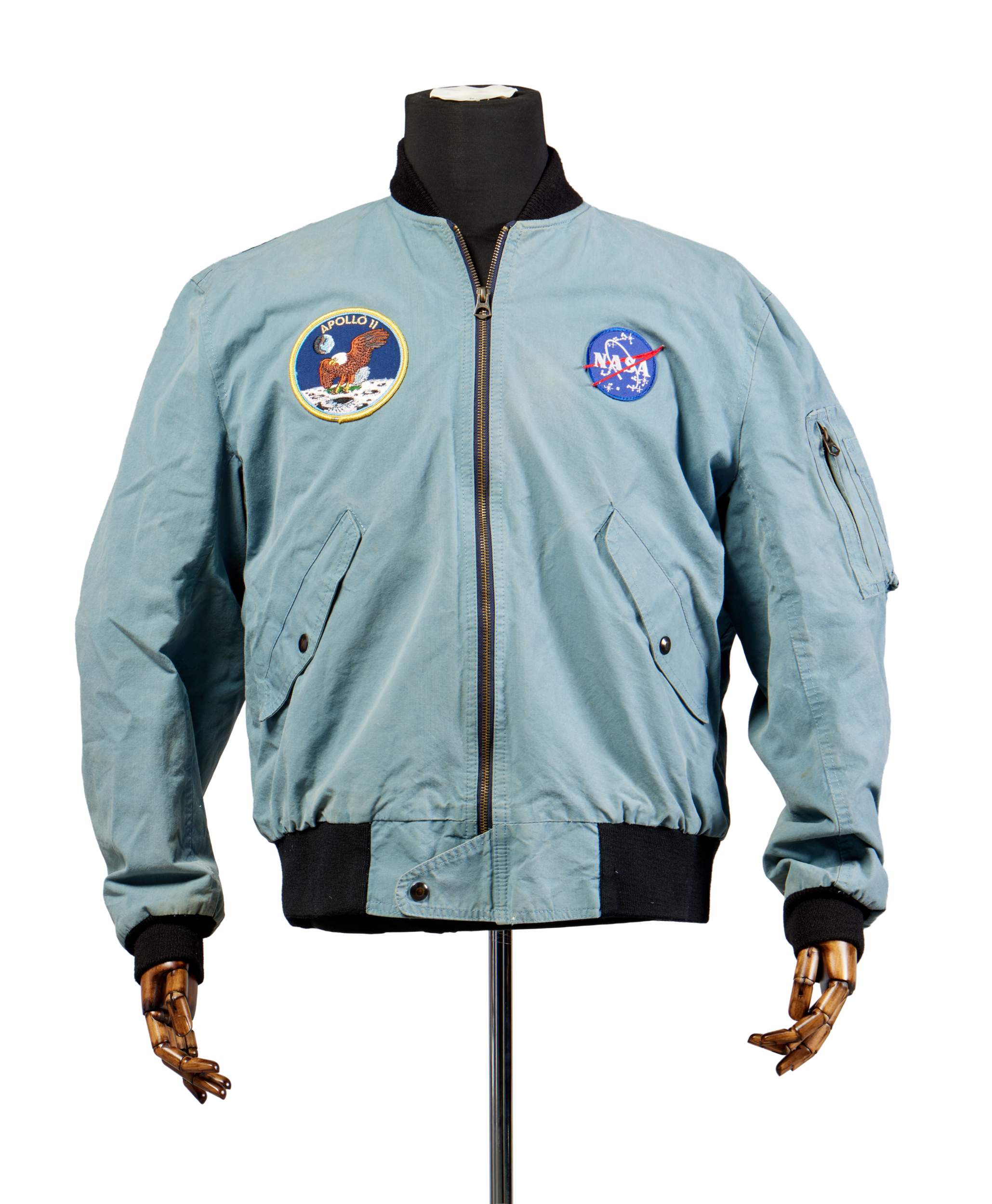
Following the Apollo 15 mission in 1971, Command Module Pilot Al Worden had worn out his flight jacket. To replicate his jacket and to keep “The Right Stuff” in the cultural consciousness, Worden co-founded a company called Still the Right Stuff in 2013. The goal was to produce museum-quality replica garments inspired by the iconic Apollo flight jackets.
This item is an Apollo 11 jacket from Still the Right Stuff from Buzz Aldrin’s personal collection. Aldrin’s flight jacket features the Apollo 11 mission patch as well as the NASA meatball.
Still the Right Stuff no longer crafts these legacy jackets, but this garment is a testament to the vintage flight jackets that inspired fashion around the world. This item sold for $20,480.
