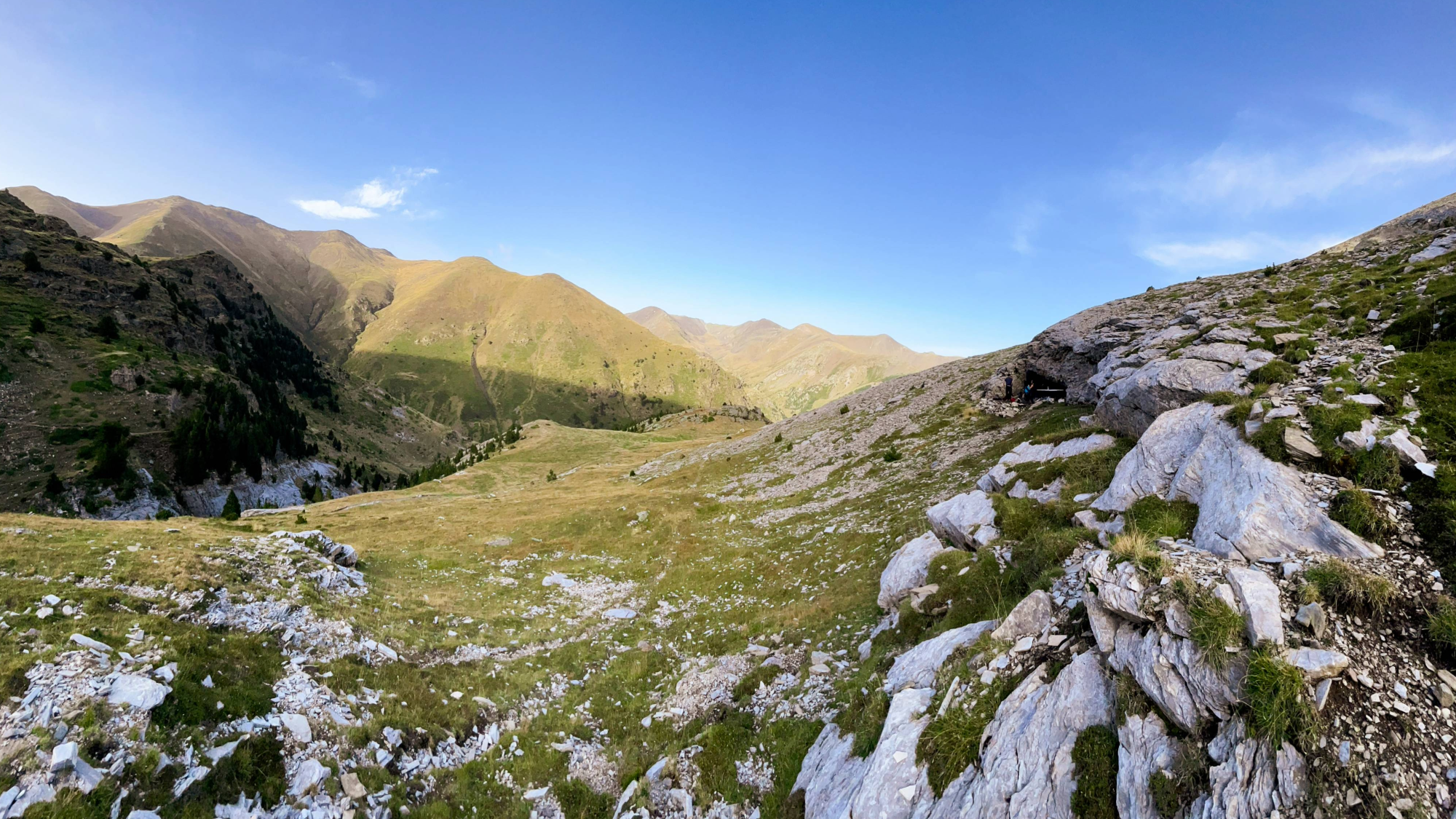
Life at high altitudes is unforgiving. The thin air and atmosphere make breathing and other bodily functions difficult—especially for humans. However, a cave over 7,000 feet above sea level in the Pyrenees Mountains between France and Spain is forcing archaeologists to rethink how often our prehistoric ancestors made use of these heights.
A team found a cave in Spain full of hearths, jewelry, and human remains, indicating that people may have been living at this incredibly high altitude as long as 5,500 years ago. A child’s finger bone and a baby tooth discovered among the rock also means this cave may have been a burial site. The cave and its findings are detailed in a study published today in the journal Frontiers in Environmental Archaeology.
For decades, archeologists believed that high-mountain environments like these were places that prehistoric communities only passed through occasionally. Cave 338 is 7,332 feet above sea level in Spain’s Núria Valley. The team dug through four distinct rock layers, with the oldest dating back 6,000 years ago. The most recent layer was thin, indicating that it was not frequently used.
But layers two and three had plenty of surprises. The team found 23 hearths, all with crushed, burned green mineral fragments. The green fragments resemble malachite, a mineral that is rich in copper. From these preliminary clues, the team suspects that Cave 338 was a high-altitude mining camp between 3,000 and 5,500 years ago.
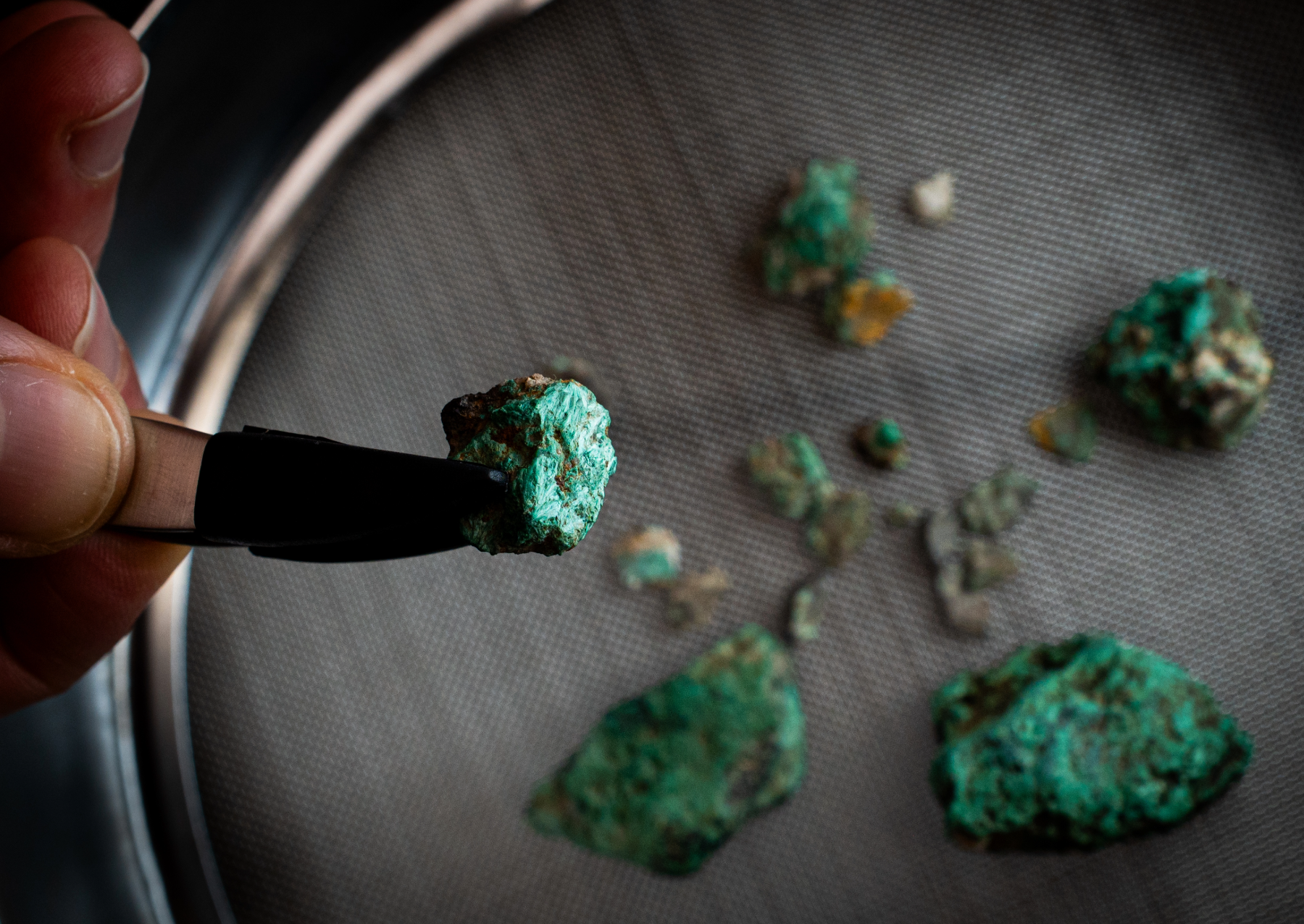
“Many of these fragments are thermally altered, while other materials in the cave are not, which clearly suggests that fire played an important role in their processing and that there was a deliberate intention behind it,” Dr. Julia Montes-Landa, a study co-author and archaeologist and archaeometallurgist at the University of Granada in Spain, said in a statement. “In other words, they weren’t burned by accident.”
The hearths also cut across each other, indicating that the visitors to the cave reused it frequently. They are also distinct, showing their visits were separated by a good chunk of time.
In the third rock layer, the team found a finger bone and a baby tooth belonging to at least one child who died around the age of 11. This could mean that more human remains are buried deeper within the cave, but there is currently not enough evidence to determine a cause of death or if the bone and tooth belong to the same child.
However, two pendants found in the second layer offered more information about the possible remains. One pendant is made from a shell and the other a brown bear tooth and dates to around the second millennium BCE.
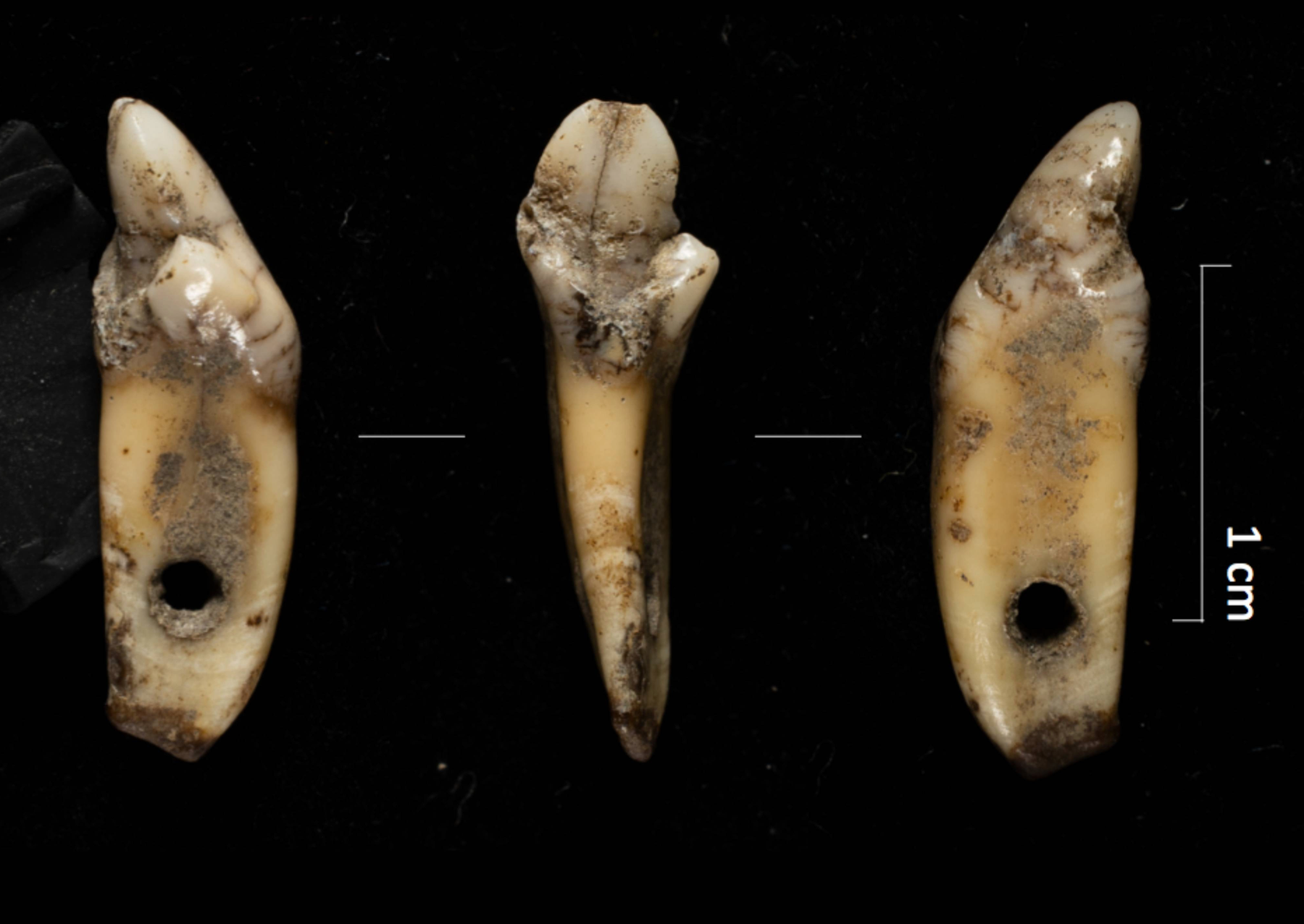
“The shell pendant is interesting because it has parallels in other sites in Catalonia, which suggests shared traditions or connections between different communities,” Dr. Carlos Tornero, a study co-author and zooarcheologist at the Catalan Institute of Human Paleoecology and Social Evolution, said in a statement. “The bear tooth pendant is much less common. That might point to something more specific or symbolic, possibly linked to the local environment.”
While Cave 338 was not a full-time home, those who came here must have found their trips up the mountain valuable enough to keep returning for thousands of years.
“We can’t say exactly how long people stayed each time, but the repeated use of the space and the density of remains suggest occupations that were short to medium in duration, but happening again and again over long periods of time,” Torneo added.
The team still has numerous questions about how and when humans used the cave and hope to get a definitive answer on the chemical composition of the mysterious green mineral during upcoming field work this summer.