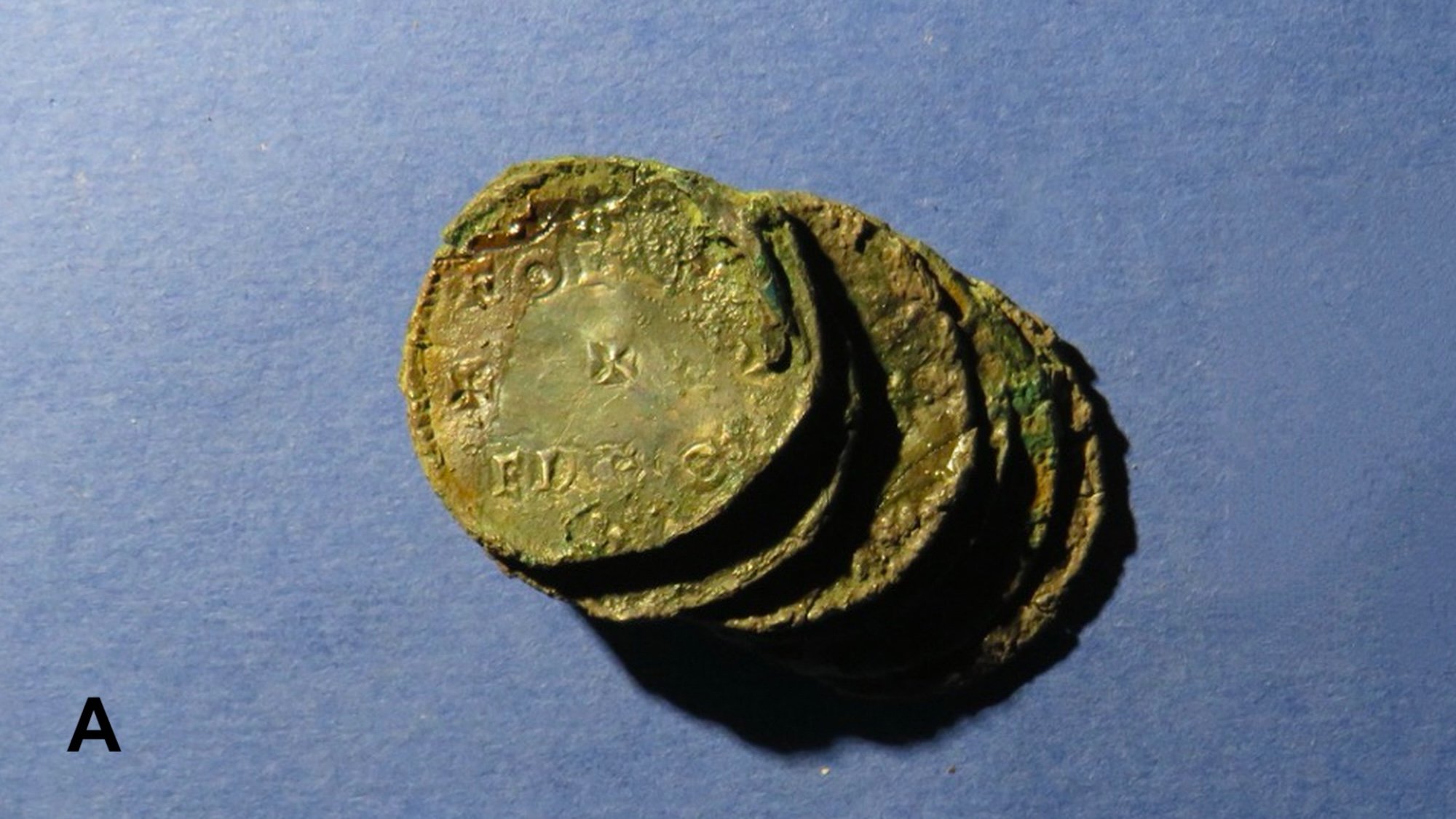
A small treasure trove discovered near the ruins of Emperor Nero’s theater highlight the medieval Rome’s diversity. Near the Vatican’s Palazzo della Rovere garden, archaeologists recently uncovered 20 Anglo-Saxon coins dating back to the 10th century—a period that saw a large enough influx of pilgrims and immigrants to establish a “Little England” within the ancient capital city.
The Roman empire first extended into Britain during the 1st century CE, and would ultimately oversee it for roughly the next 400 years. But even after withdrawing from the region in 410 CE, Rome secured a longstanding relationship with its former province thanks to Pope Gregory I’s mission to England during the late 6th century.
“The Anglo-Saxons were very devoted to Rome from that point on,” explained Rory Naismith, a historian at the University of Cambridge and co-author of a chapter in the recently published Italian book, Rome and the Others (300-1000): Foreigners in the city between conflicts and integration.
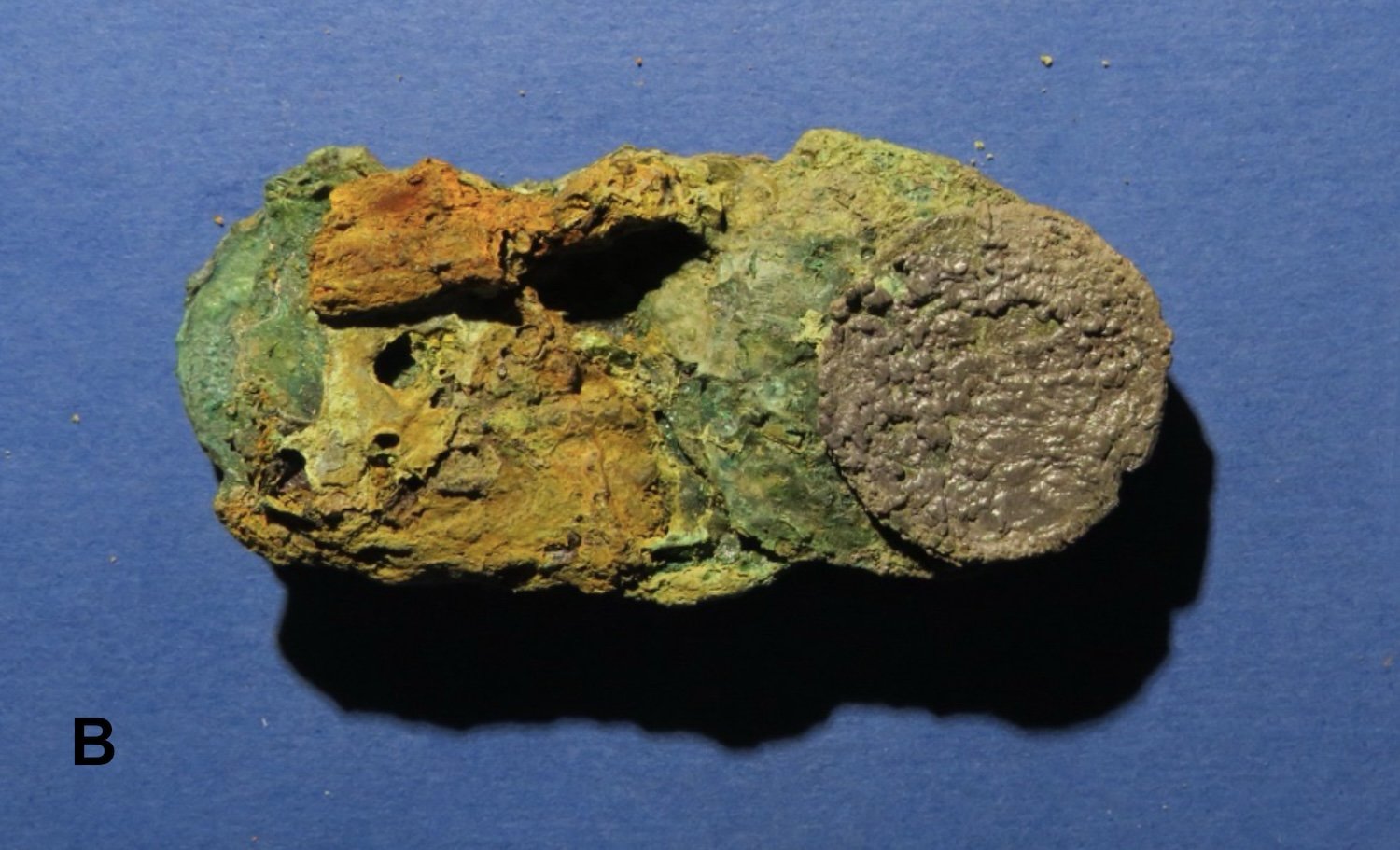
This devotion led a steady stream of English travelers, merchants, and pilgrims to Rome, which culminated in the establishment of a quarter known as the Schola Saxonum. Although archaeologists aren’t sure of its exact size, it’s widely believed that this neighborhood encompassed at least 32,000 feet—around the size of half a soccer field.
The extent of Rome’s Anglo-Saxon presence has been a matter of speculation for decades, but its cultural influence started coming into focus in 2023. While excavating near the Vatican, archaeologists located 19 silver pennies and one halfpenny minted in England during the 10th century CE. Two groups of six to eight coins slowly fused together while buried underground for over 1,000 years indicate that Rome’s English population at least sometimes traded with their native currency.
“The Anglo-Saxons are there to visit the Pope and tour churches in Rome, but they’ve still got to feed themselves. So they’ve got to make things and trade,” said Naismith. “That’s what these finds tell us.”
Conducting business with English coins in Rome is particularly striking because similar examples are rarely found among the empire’s other immigrant populations. Roman laws typically forbade the use of other currencies. Combined with other historical records, it’s increasingly clear that England enjoyed a special status among Rome’s allies during the Middle Ages.
“More Anglo-Saxon coins from this period have now been found in Rome than papal coins,” said Naismith. “This sounds bizarre, but it’s telling us that a very large amount of money was flowing in from England at this time.”