
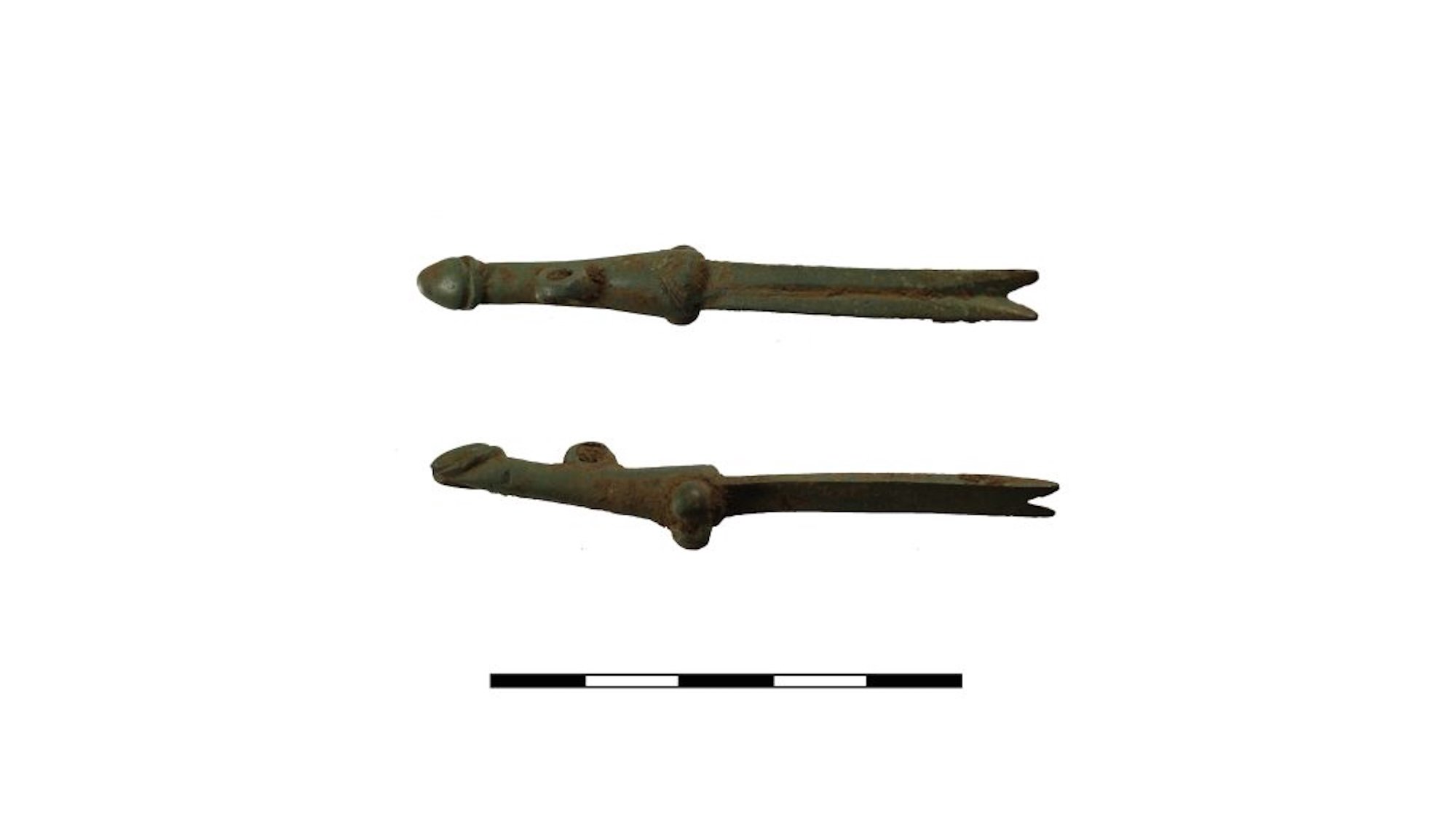
An archaeological survey ahead of some planned roadwork in Gloucestershire, England, revealed numerous artifacts spanning thousands of years of history. But one item particularly stands out from the rest. Preservationists discovered a rare, phallic-decorated nail cleaner that dates back to the late Roman era around 300 to 400 CE near the town of Cheltenham about 85 miles west of London. But while only a handful of the personal hygiene tools have been documented, Rome’s penchant for penis motifs is evident throughout the ancient empire.
Similar to today’s bathroom accessories, the two-pronged copper-alloy tool was crafted to remove dirt from underneath the fingernails. Many were made small enough to carry alongside other useful items, such as tweezers and ear cleaners, including the Cheltenham examples. A tiny hole in the middle of the object allowed its owner to thread it onto a strap or thin rope for optimal on-the-go utility.
At first glance, an untrained eye may have difficulty discerning the tool’s purpose based on its design, but it’s hard to mistake the handle’s decorative flourish. The metal is clearly shaped to resemble a penis. Phallic imagery wasn’t rare in ancient Rome, and not stigmatized as it is in many cultures today. Instead, male genitals were considered symbols of good fortune, fertility, and protection. Men, women, and even children all regularly carried amulets and jewelry displaying phallic images. Military equipment and weapons frequently featured penis adornments, while houses often showcased similar decor.
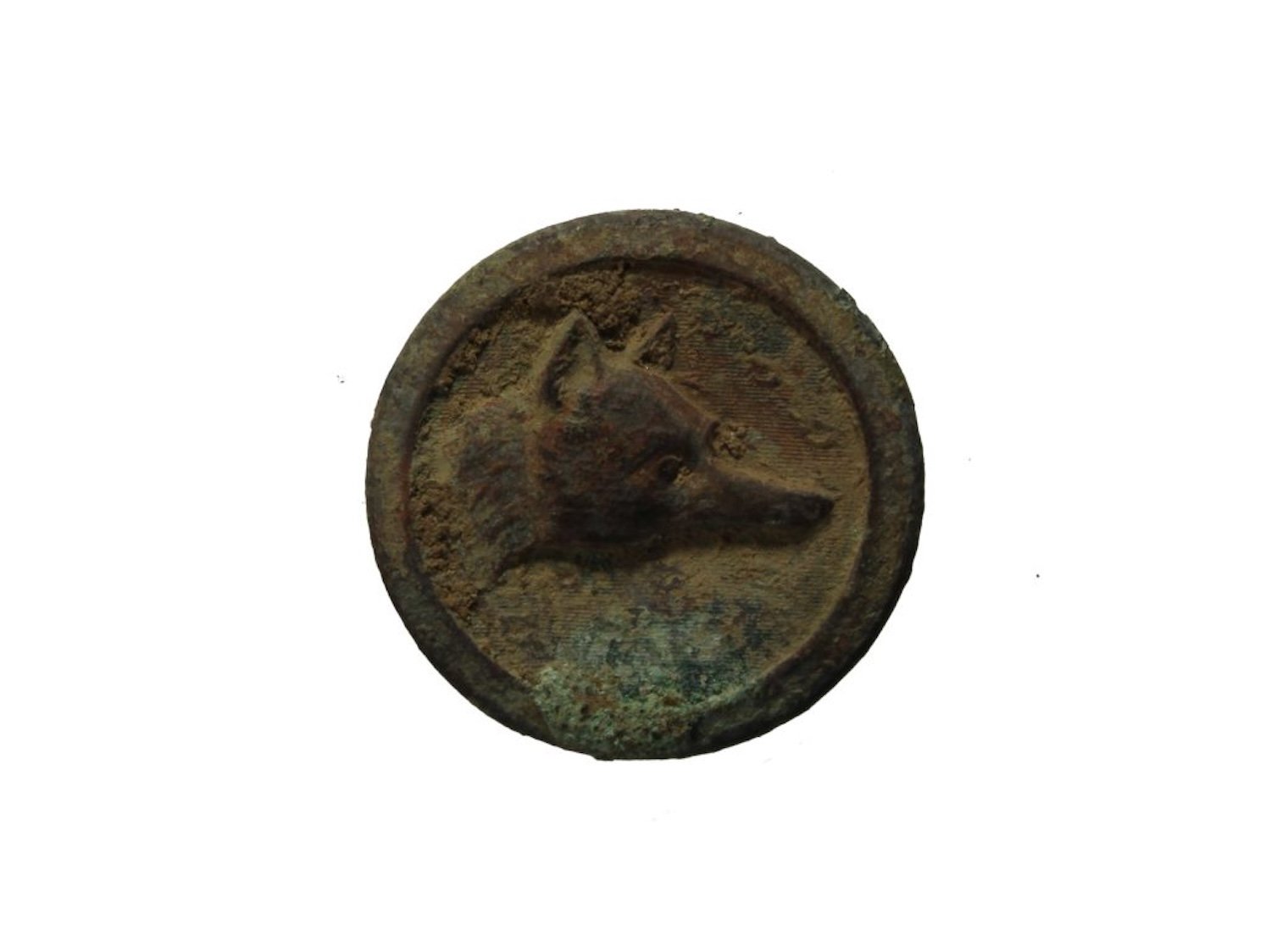
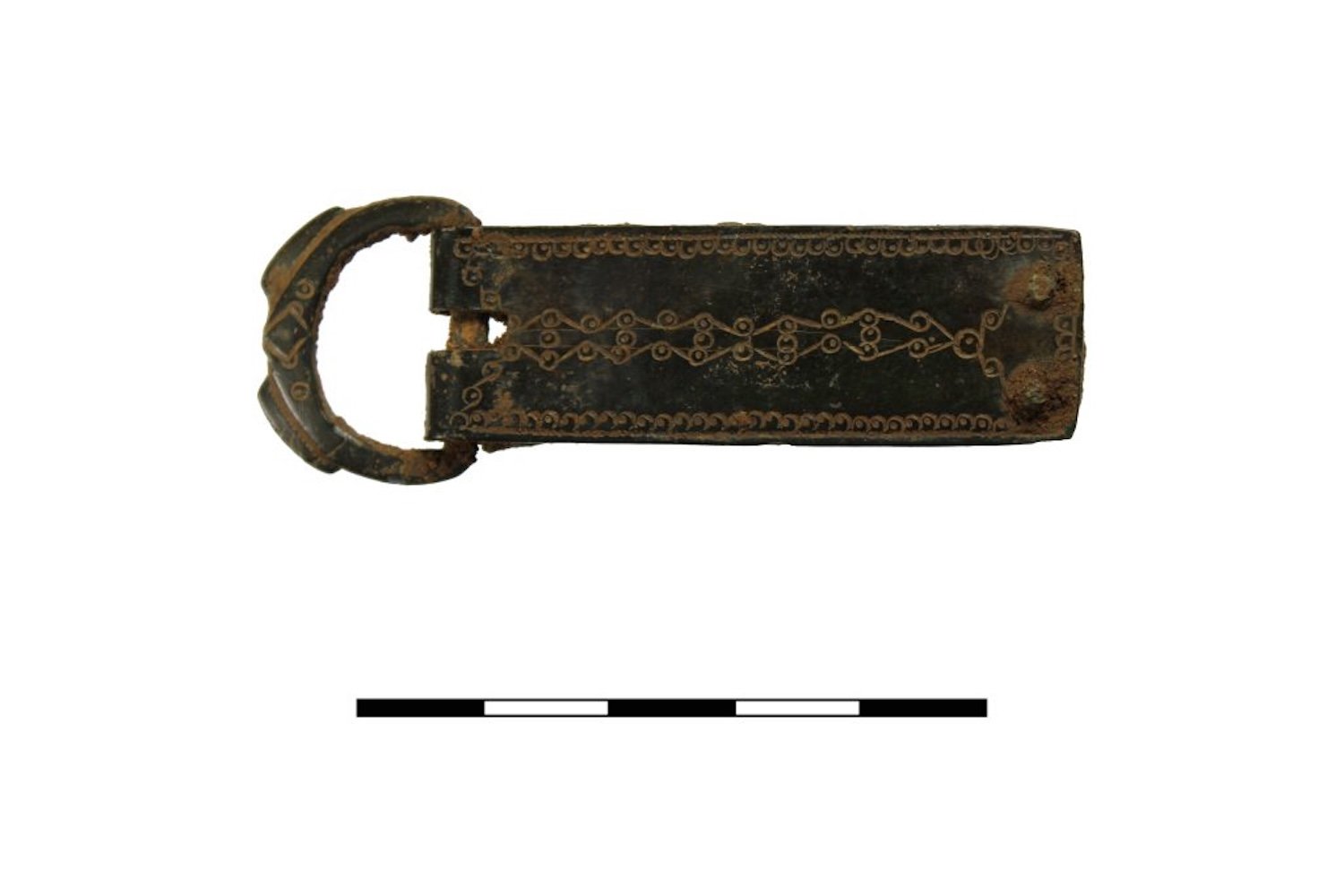
Aside from the nail cleaner, archaeologists also excavated a nearby belt buckle and plate made from a single piece of copper-alloy decorated with geometric designs. Other finds from the era included household waste, agricultural evidence, and a well. These discoveries stretched far beyond ancient Rome, as well. Researchers documented more recent items like Royal Navy “dandy” buttons from the 18th century, as well as animal-decorated 19th century livery buttons possibly connected with prominent local families.
Taken altogether, the recent archaeological objects showcase over 1,600 years of life, cultural shifts, and fashion choices—even if some of the more phallic examples may turn heads today.
