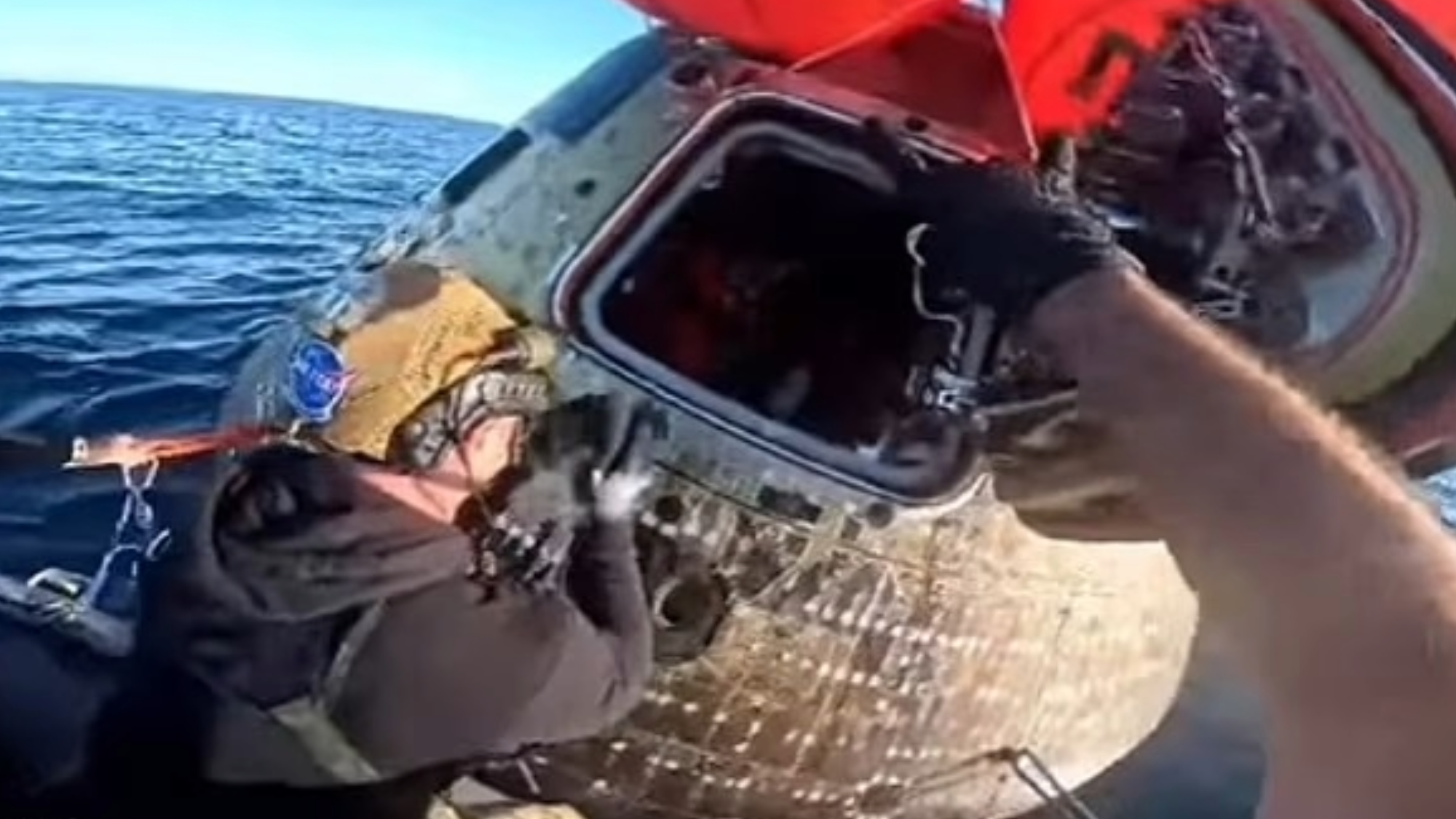
Open up that hatch! Exciting new footage documents a recovery team opening up the Integrity’s hatch after the space capsule’s splashdown in the Pacific Ocean off the coast of San Diego, California. The crew greets Artemis II astronauts Reid Wiseman, Victor Glover, Christina Koch, and Jeremy Hansen, following their historic 700,000-mile trip around the moon and back.
Their video posted to Instagram by Commander Wiseman shows the recovery team of NASA and United States military personnel giving fist bumps and smiling as the recovery team prepares to safely extract the crew. In the caption, Wiseman thanked the team writing “Jesse, Steve, Laddy, and Vlad….such an incredible feeling to welcome you aboard Integrity after a nearly 700,000 mile journey. Forever thankful for your service to our crew and the nation.”
The crew officially splashed down at 8:07 p.m. EDT on April 10, 2026 after a 10-day mission. Along the way, the Artemis II crew surpassed Apollo 13’s record for farthest crewed spaceflight and captured breathtaking photographs of the far side of the moon that inspired the world. They also ate a lot of hot sauce and troubleshot relatable toilet troubles.
Upon their return, they were reunited with their families and four-legged friends.
Wiseman, Glover, Koch, and Hansen’s scientific work also will help prepare future astronauts to live and work on the moon, as NASA builds a future Moon Base and looks towards further expeditions to Mars. One of their on-board experiments called the AVATAR investigation studies how human tissue responds to microgravity and radiation in deep space radiation, which is crucial for gathering the health data needed for long-duration space missions.
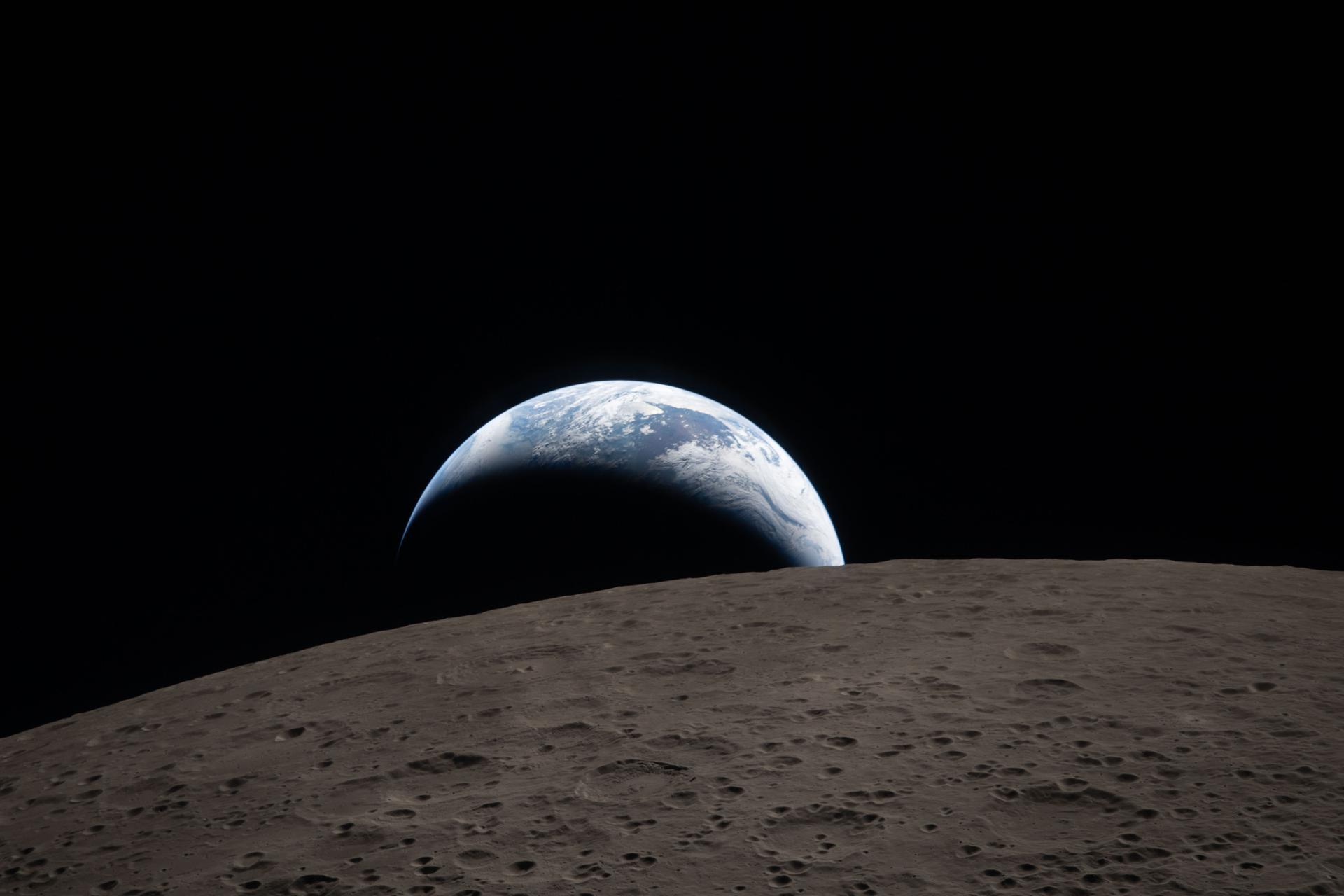
The crew also documented the topography along the boundary between lunar day and night called the terminator. Here, low-angle sunlight casts long shadows across the moon’s surface, creating illumination conditions similar to those on the moon’s South Pole region. Astronauts are scheduled to land on the moon’s South Pole during Artemis IV in 2028, so understanding the lightning and topographic conditions will be crucial for that mission.
NASA’s Artemis III mission is scheduled for launch in 2027. The mission launch crew in the Orion spacecraft on top of the SLS (Space Launch System) rocket to test rendezvous and docking capabilities between Orion and the commercial spacecraft needed to land astronauts on the moon.