
We may earn revenue from the products available on this page and participate in affiliate programs. Learn more ›
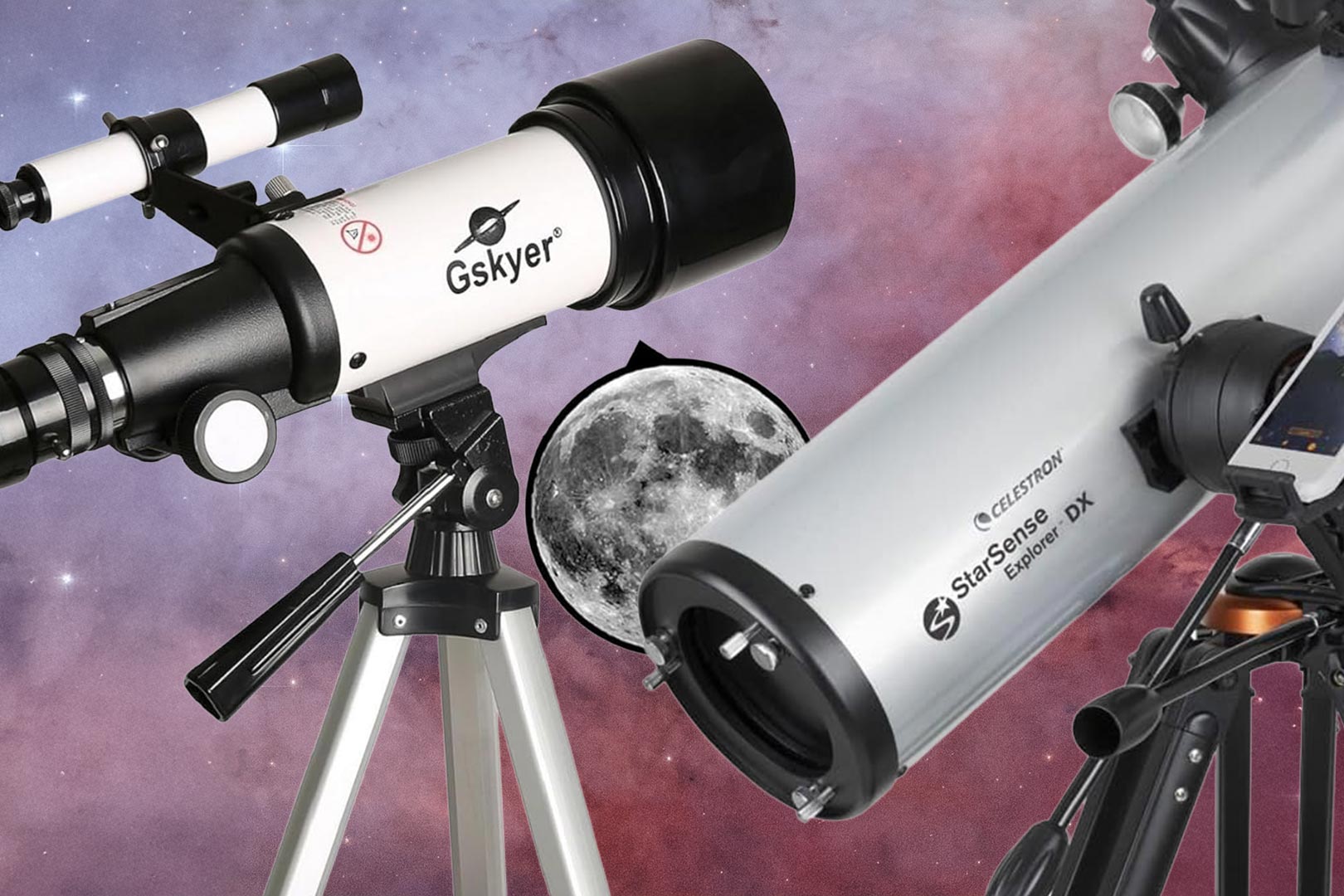
If the amazing images coming from Artemis II have you itching to look up into the sky, it’s time to grab a telescope. Amazon currently has the Gskyer 70mm refractor is down to $96.99 from $129.99. It’s a basic model, but it’s a solid starting point for beginners or an awesome affordable gift for someone with a budding curiosity about the cosmos. If you want to step up a bit, there are also a ton of Celestron scopes on sale for solid prices.
Gskyer 70mm Telescope $96.99 (was $129.99)
amazon
$129.99
$96.99
See It
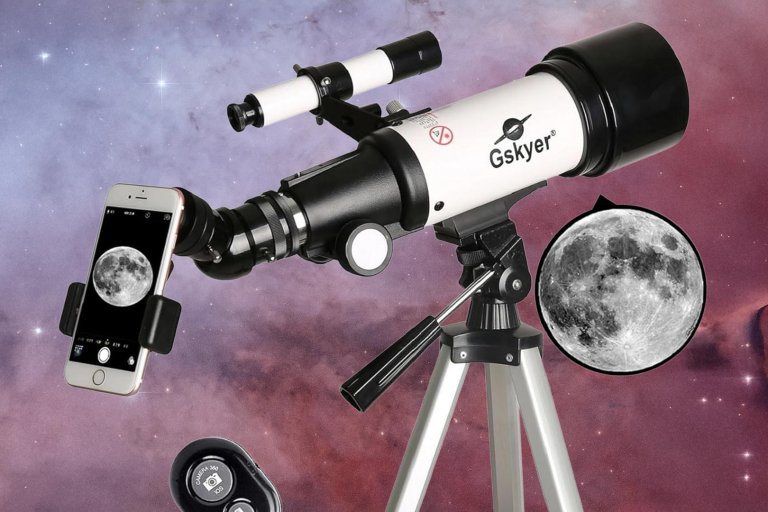
The Gskyer 70mm uses a 400mm focal length refractor design and offers the same fundamental optical design as telescopes that cost many times more. The 70mm objective lens gathers enough light to resolve the Moon in sharp detail as well as other celestial bodies. It comes with two eyepieces (25mm and 10mm), a 3x Barlow lens that effectively triples your magnification options, and a smartphone adapter so you can photograph what you see.
If you want a real upgrade, the Celestron StarSense Explorer DX 130AZ offers superior aperture, more resolution, and a smartphone-guided mount that finds targets for you. It’s $428 (down from $499.95), which is about as aggressive as Celestron ever discounts this model outside of Black Friday.
Celestron StarSense Explorer DX 130AZ $428 (was $499.95)
amazon
$499.95
$398.99
See It
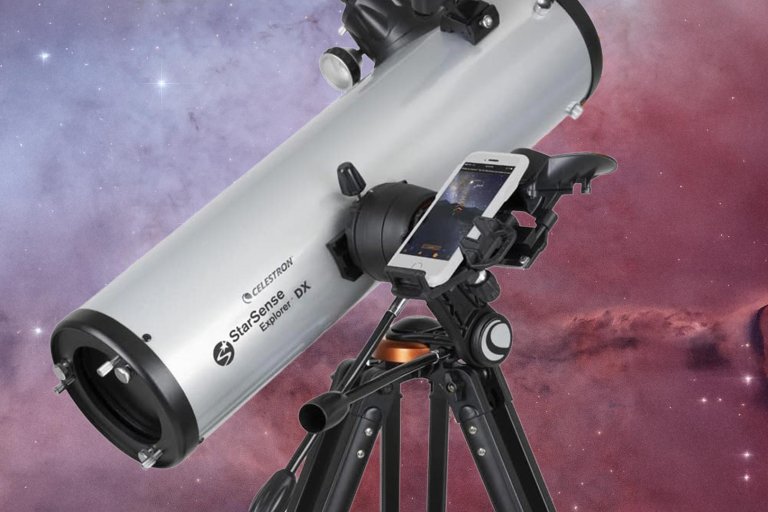
The DX 130AZ steps up to a 130mm (5-inch) Newtonian reflector, nearly doubling the light-gathering area of a 70mm refractor and pulling in significantly more detail on the lunar surface. The StarSense tech is the real draw here. Drop your phone into the cradle, open the free StarSense Explorer app, and the telescope uses your phone’s camera to plate-solve the night sky in real time. Follow the on-screen arrows, push the scope until the bullseye turns green, and you’re looking at your target. You don’t have to worry about star charts, polar alignment, or other variables. It comes with 25mm and 10mm Plössl eyepieces, a red-dot finder, and a full-height tripod stable enough for the optics it’s carrying. For anyone who’s bounced off a first telescope because they couldn’t find anything in it, this is the model that fixes the problem.
More telescope and stargazing deals
If the DX 130AZ is more telescope than you need, Celestron’s broader Amazon storefront is running spring discounts across nearly the entire beginner and intermediate lineup. The smaller StarSense Explorer LT 114AZ runs the same smartphone-guided app in a lighter, cheaper package, the AstroMaster and PowerSeeker series cover the under-$200 entry tier, and the Travel Scope models are easy. The Nature DX binoculars are worth grabbing alongside any telescope for wide-field views of star clusters and the Milky Way that a telescope’s narrow field can’t match, and the NASA Lunar Telescope for Kids is a solid sub-$50 pick for anyone trying to turn an Artemis-obsessed kid into a lifelong stargazer.
- Celestron StarSense Explorer LT 114AZ App-Enabled Telescope $188.59 (was $259.95) — 27% off
- Celestron StarSense Explorer DX 102AZ App-Enabled Telescope $429.99 (was $489.95) — 12% off
- Celestron AstroMaster 70AZ Refractor Telescope $149.00 (was $199.95) — 25% off
- Celestron AstroMaster 102AZ Short-Tube Refractor Telescope $272.59 (was $359.95) — 24% off
- Celestron AstroMaster 114EQ Newtonian Telescope $244.97 (was $329.95) — 26% off
- Celestron PowerSeeker 127EQ Telescope $183.53 (was $229.95) — 20% off
- Celestron PowerSeeker 80EQ Telescope $167.59 (was $209.95) — 20% off
- Celestron 114LCM Computerized Newtonian Telescope $419.99 (was $479.95) — 12% off
- Celestron NexStar 90SLT Maksutov-Cassegrain Computerized Telescope $479.99 (was $599.95) — 20% off
- Celestron Travel Scope 70 Portable Refractor $84.99 (was $119.95) — 29% off
- Celestron Travel Scope 70DX Portable Refractor $103.59 (was $129.95) — 20% off
- Celestron Travel Scope 80 Portable Refractor $129.99 (was $149.95) — 13% off
- Celestron Nature DX 8×42 Binoculars $135.99 (was $179.95)
- NASA Lunar Telescope for Kids — 90x Magnification $47.99
