
We may earn revenue from the products available on this page and participate in affiliate programs. Learn more ›
The iPhone 18 Pro officially hits store shelves today (September 18). You could likely pop into an Apple store or other retailer and grab one on your way home from work if you didn’t already pre-order it online. But, it wasn’t always this easy to get an iPhone. In fact, the first release back in 2007 was so competitive that it took a handful of PopSci editors battling long lines across the country just to get one we could write about.
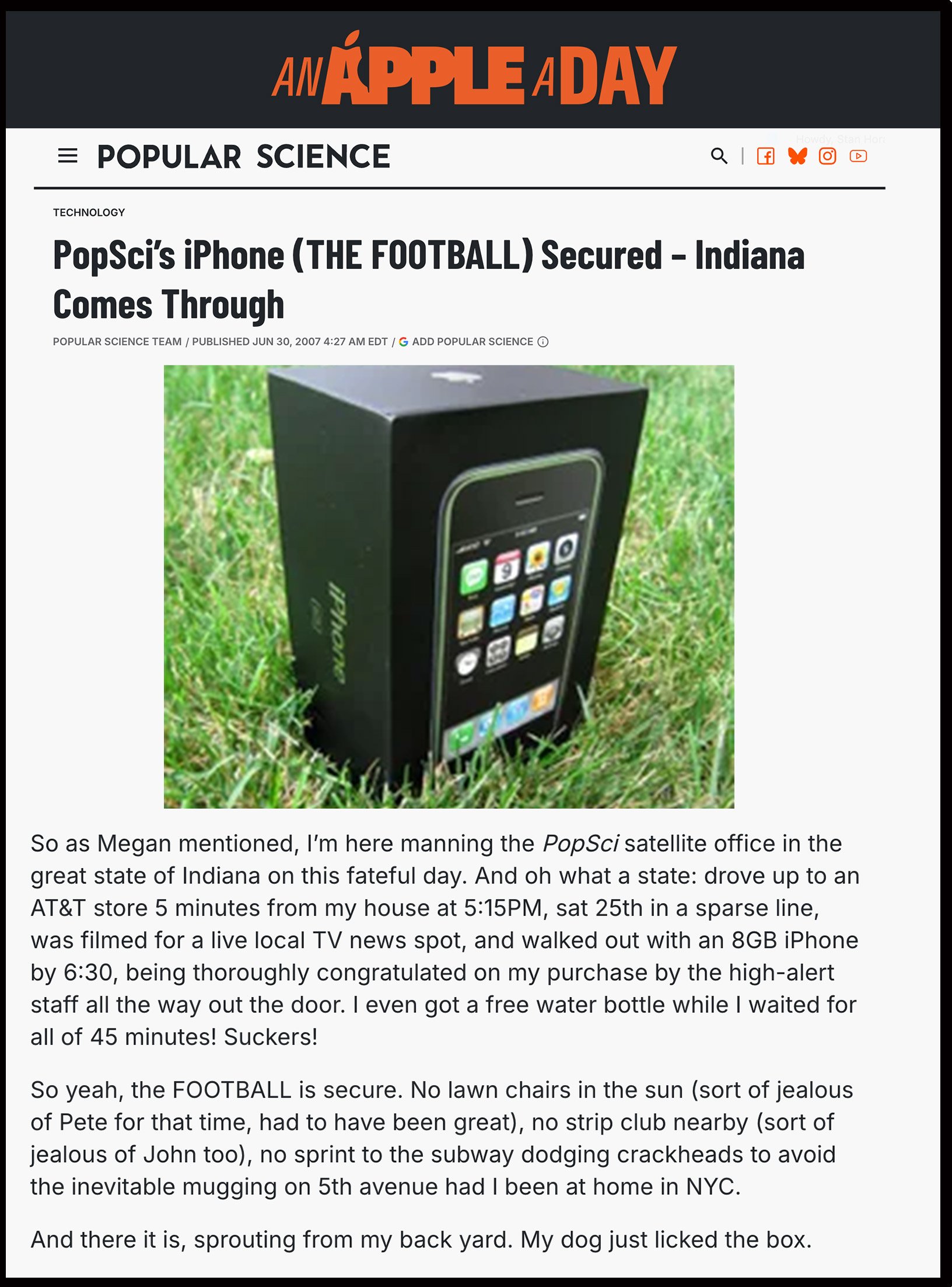
Nobody, including Apple, knew whether the country was going to riot for this phone or shrug at it, and on June 29 you could find both answers within a few hundred miles of each other.
Three days before the phones went on sale, Reuters found shoppers talking themselves out of it. A Northwestern graduate student who said she really, really wanted one called the purchase a $600 gamble and decided to wait. Todd Dagres, a partner at Spark Capital, compared it to buying the first model year of a car. Meanwhile, people who couldn’t skip work on Friday were posting on Craigslist to hire someone to stand in line for them. Both instincts were live at once.
The press wasn’t sure either. PCMag’s Sascha Segan took delivery of his review unit in a quiet handoff at the FAO Schwarz toy store, carried it straight back to the lab, and worked on it until he nearly collapsed. He filed a review that called the iPhone a revolution for the few, on the reasoning that it cost too much, worked on one carrier, and ran no outside software. CNET’s Kent German picked his up in downtown San Francisco, where the crowd had spilled off the sidewalk into traffic, and had the review live by 2 a.m. on pizza and beer.

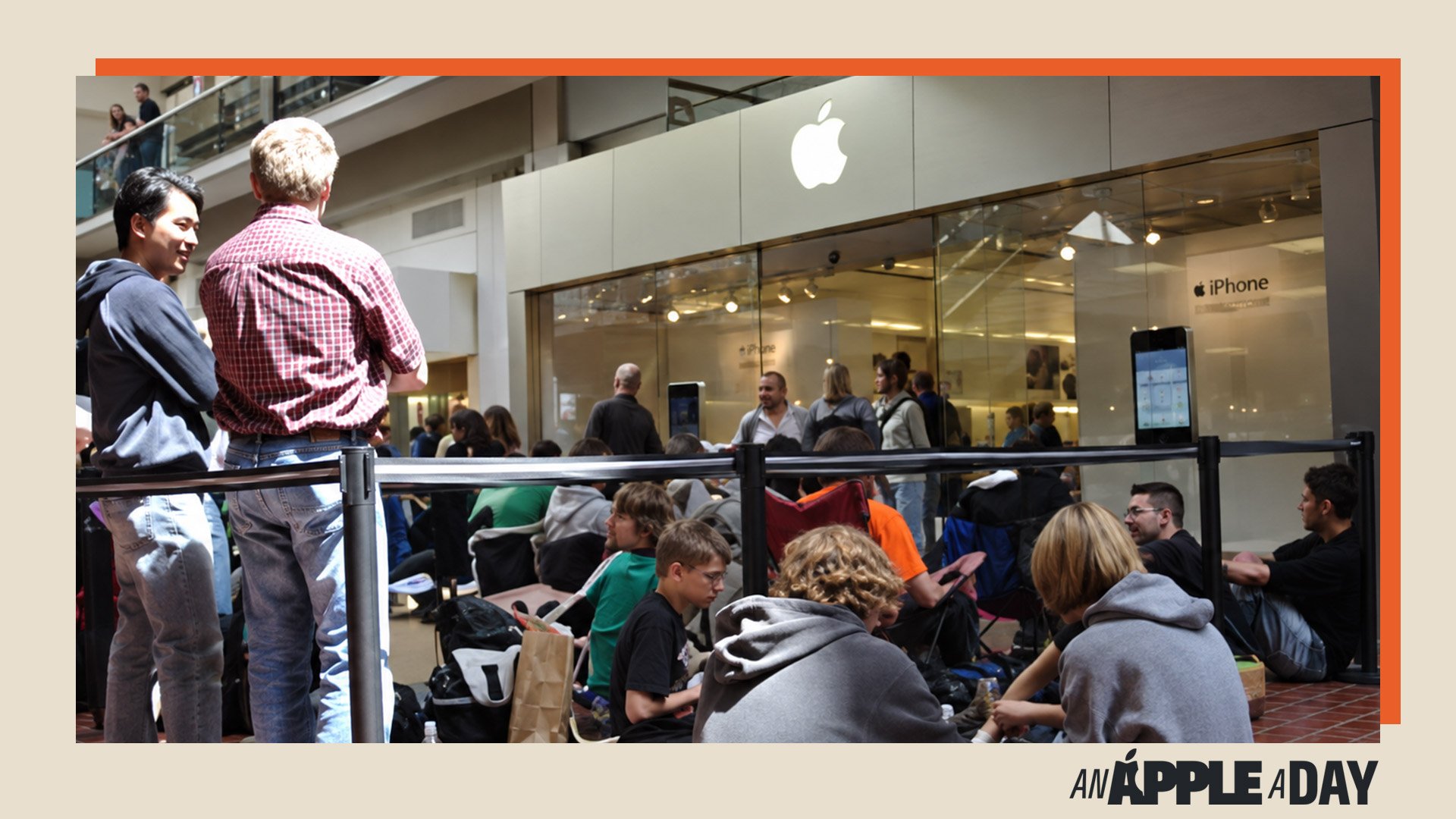
iPhone Launch Hysteria: NYC
Their skepticism was not unreasonable, because the spec sheet was thin. The 4GB iPhone cost $499 and the 8GB cost $599, both on a two-year AT&T contract. It ran on EDGE, so loading a web page took long enough to put the phone down. The camera shot 2 megapixels and could not record video at all. There was no copy and paste, no picture messaging, no GPS, and no App Store until July 2008, which meant the phone did what Apple said it did and nothing else. The battery was sealed inside. Oh, and that whole business about the lack of a physical keyboard. That was the biggest talking point.
Apple let each customer buy two; AT&T allowed one.
People slept on the sidewalk anyway. Greg Packer camped outside the Fifth Avenue store for five days to be first. In Dallas, a 19-year-old named Marc Rebillet stood in line for about 12 hours and sold his spot at the front for $800 to a woman who planned to buy the store’s stock and resell it on eBay. The one-per-customer rule wrecked her math, she left with a single phone, and Rebillet got back in line and bought one too. He is better known now as a musician, and the local news clip is still the origin story.
The hype was real, and the numbers were confusing. Tim Cook told analysts that Apple and AT&T moved 270,000 iPhones in the first 30 hours. Then AT&T reported 146,000 activations over the first two days, Wall Street read the gap as unsold inventory, and Apple stock fell. Apple sold its millionth iPhone 74 days after launch. The iPod had taken almost two years to reach the same mark.
Everyone who bought on day one realized the extent of their early adopter tax just 68 days later. On September 5, Apple cut the 8GB model to $399 and let the 4GB sell out for good. The backlash was loud enough that Steve Jobs posted an open letter the next day offering every early buyer a $100 store credit, with the observation that the technology road is bumpy.
That short production run is why the cheap model became the expensive one. A factory-sealed 4GB iPhone sold for $190,372.80 at LCG Auctions in July 2023, roughly 380 times its $499 sticker. Two earlier sealed units went for $63,356 and $39,339. The people who tore the plastic off in a parking lot in 2007 got the better end of it anyway, since they got to use the thing.
Nobody lines up like that now. Preorders and delivery windows took the sidewalk out of the equation, which is a fair trade for not sleeping outside a mall, and also the end of a specific kind of night. THE FOOTBALL is presumably in a drawer in Indiana. If the box survived the dog, it’s worth more than the car that drove out to get it.
If you’re still reading this far, you may be interested to know that I didn’t buy the first iPhone. I had a Palm Treo at the time (with a missing stylus, of course) and I was planning to get an iPhone from the AT&T store in midtown Manhattan. Once I saw the line outside the store, I decided to stick with my Palm and spend my time and money at the Outback Steakhouse on Third Ave. Considering that price hike, I’d say I made the prudent (and more delicious) decision.
