
We may earn revenue from the products available on this page and participate in affiliate programs. Learn more ›
Even the most reliable car can leave you stranded. You never know when you’re going to endure a dead battery in a parking garage, a blown tire on a far-flung highway, or an unexpected breakdown during a heat wave. According to AAA, the organization answered roughly 31 million roadside calls in 2024 alone, with dead batteries, flat tires, and lockouts topping the list. The National Highway Traffic Safety Administration recommends that every driver pack an emergency roadside kit, noting that “even a well-maintained vehicle can break down.” Here’s what should be in yours, along with the specific products we’d recommend for each category (as well as some beef jerky and Teddy Grahams because nobody likes to be stuck and hungry).
We built this list by cross-referencing recommendations from the NHTSA, AAA, the American Red Cross, and Ready.gov (FEMA). Every item below appears on at least two of those official checklists. Sure, some of this overlaps with our recommendations for a bug-out bag, but you’re not evacuating in a hurry every time you get in the car. For each category, we’ve chosen a specific product that fits well in a trunk or cargo area and stands up to the temperature extremes your car will experience.
Power & jump starting
A dead battery is the single most common reason people call for roadside assistance. NHTSA lists jumper cables on its essential kit list, but a portable jump starter means you won’t have to flag down a stranger for help.
Portable jump starter
Wolfbox MegaVolt 24Air 4-in-1 Jump Starter with Air Compressor
See It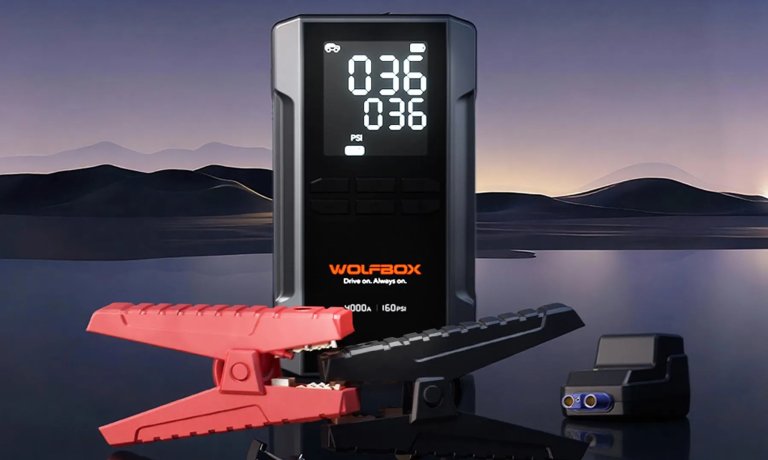
Most portable jump starters do one thing. The Wolfbox MegaVolt 24Air does four—and for anyone building a car emergency kit from scratch, those four functions cover a significant chunk of what you’d otherwise need to pack separately. At its core, it’s a 4,000-amp lithium jump starter with a 24,000mAh (88.8Wh) battery, capable of starting gas engines up to 10 liters and diesel engines up to 10L as well—meaning it works for everything from a lawn mower to a full-size pickup truck. The built-in 160psi air compressor delivers 45 liters per minute with automatic pressure shutoff, so you can top off a soft tire without hunting for a separate inflator or waiting for a gas station pump. The 65W USB-C power delivery port charges a modern laptop at full speed or tops off a smartphone multiple times over. Rounding it out is a 400-lumen LED flashlight for working under a hood in the dark.
Jumper cables
Energizer 1-Gauge 800A Heavy Duty Jumper Battery Cables, 25 Ft
See It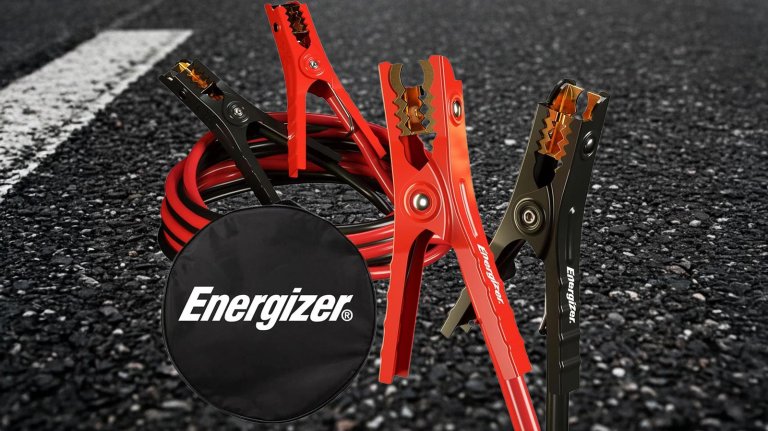
Even with a jump starter on hand, a set of proper jumper cables is cheap insurance. The 25-foot length of these Energizer cables gives you plenty of reach if the good Samaritan who stops to help can’t park bumper-to-bumper. The 1-gauge copper-clad aluminum wire handles up to 800 amps.
Tire repair & tools
Flat tires are right behind dead batteries on AAA’s list of the most common roadside calls. The NHTSA specifically recommends carrying a tire pressure gauge, a jack, a ground mat, and basic repair tools. If your car doesn’t come with a full-size spare (many newer vehicles don’t), a plug kit or inflator can get you to the nearest shop.
Tire pressure gauge
AstroAI Digital Tire Pressure Gauge 150psi
See It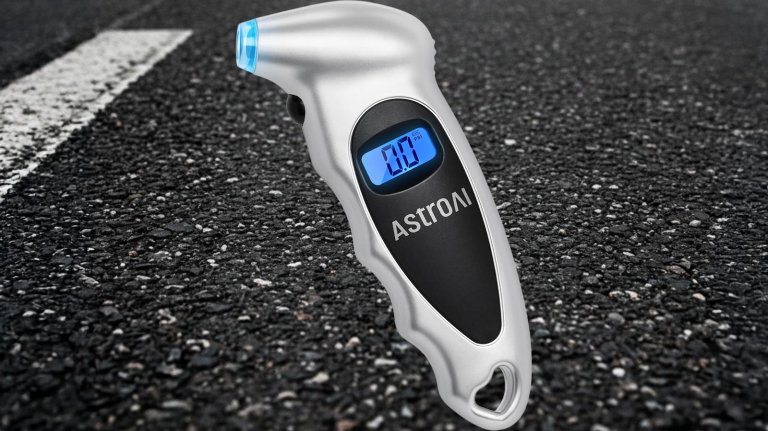
NHTSA recommends checking your tire pressure at least once a month and when your tires are cold. The correct pressure is listed on the driver’s door pillar or in your owner’s manual, not on the tire sidewall. This AstroAI gauge has a backlit digital display that’s easy to read at night and a nozzle that seals well even on cold valve stems. Toss it in the glove box.
Portable tire inflator
Many newer vehicles ship without a spare tire, replacing it with a can of sealant and a prayer. A 12V portable inflator that plugs into your car’s power outlet can top off a slow leak and get you to a tire shop safely. The EPAuto inflator has an auto-shutoff at your set pressure and a built-in LED light for working after dark. Even if your car does have a spare, this is worth having for routine top-offs at home. Note: If you go with the Wolfbox MegaVolt 24Air above as your jump starter, its built-in 160psi air compressor covers this function, so you can skip the the extra purchase.
Basic repair tools
LEATHERMAN Wave+ 18-in-1 Full-Size Multitool, Stainless Steel
See It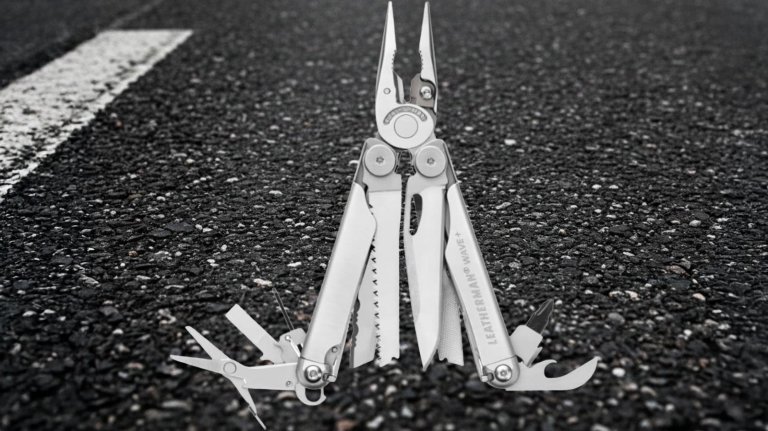
Both NHTSA and AAA recommend keeping basic repair tools in your vehicle. A quality multitool covers pliers, wire cutters, screwdrivers, and a knife blade without taking up much room. The Leatherman Wave+ packs 18 tools into a belt-friendly package, and its 25-year warranty means it should outlast the car itself. AAA also suggests keeping duct tape, cable ties, and spare fuses alongside your multitool for quick stopgap fixes.
Safety & visibility
If you break down on the shoulder of a busy highway, making yourself visible to other drivers is critical. The NHTSA recommends flares and a white flag, while AAA suggests DOT-approved warning triangles and a high-visibility vest.
Warning triangles
CARTMAN Warning Triangle DOT Approved, 3-Pack
See It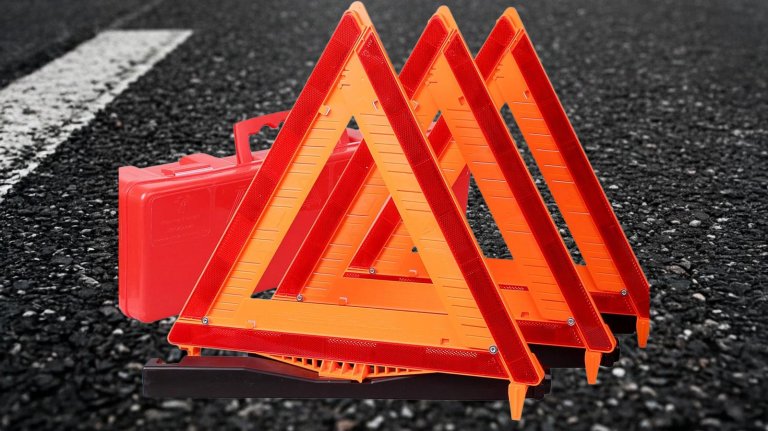
Place these behind your vehicle at staggered intervals to warn approaching drivers, especially at night or in poor weather. Unlike road flares, triangles don’t burn out, don’t pose a fire risk near fuel, and can be reused. This DOT-approved three-pack folds flat and comes with a carrying case that fits easily in a trunk.
LED road flares
Marcala LED Road Flares 3-Pack Emergency Disc
See It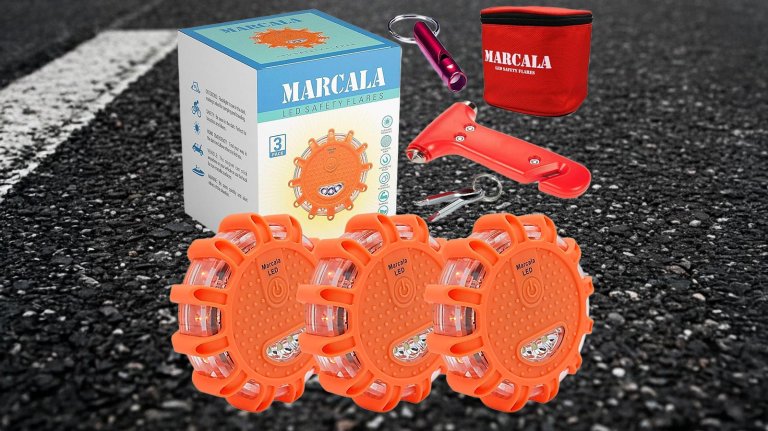
NHTSA recommends traditional flares, but LED versions are safer to store in a hot trunk—no pyrotechnic compounds to worry about. These magnetic discs stick to your car’s body and can be seen from over a mile away. They run on AAA batteries and offer nine flash patterns. Keep a set in addition to your triangles for maximum visibility.
Flashlight
Streamlight 66608 MicroStream USB Rechargeable Pocket Flashlight
See It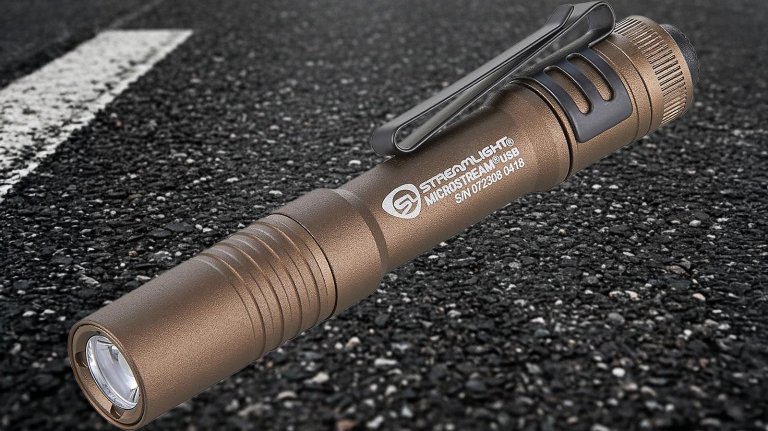
A flashlight is on every single agency’s recommended list—NHTSA, AAA, the Red Cross, and FEMA all agree on this one. Don’t rely on your phone’s flashlight; you’ll drain the battery you need for calling for help. The Streamlight MicroStream is USB-rechargeable, puts out 250 lumens, and clips onto a pocket or visor. It’s small enough to keep in the glove box, where you can actually reach it.
Headlamp
BioLite Range 500 Waterproof Rechargeable Headlamp, 500 Lumens
See It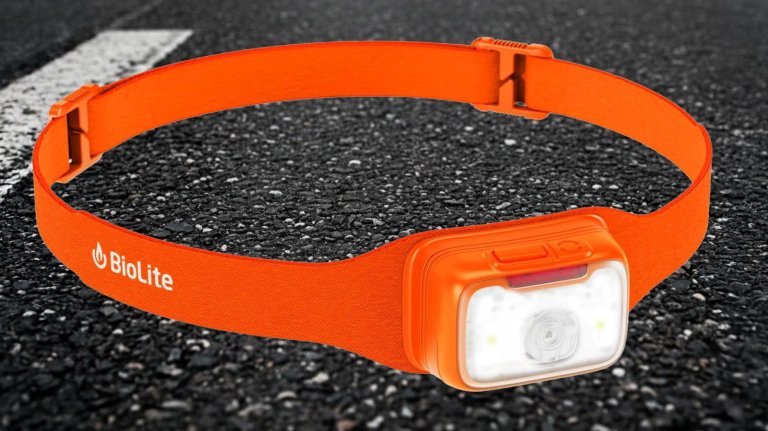
A pocket flashlight is fine for signaling, but when you’re kneeling on the shoulder of the road changing a tire, or digging through a trunk in the dark, you want both hands free. The BioLite Range 500 puts out 500 lumens from a USB-C rechargeable headlamp rated IP67 waterproof, with a 100-meter beam and up to 200 hours of runtime. The red strobe function is a nice bonus for increasing your visibility to passing drivers.
Emergency escape tool
resqme Original Emergency Keychain Car Escape Tool
See It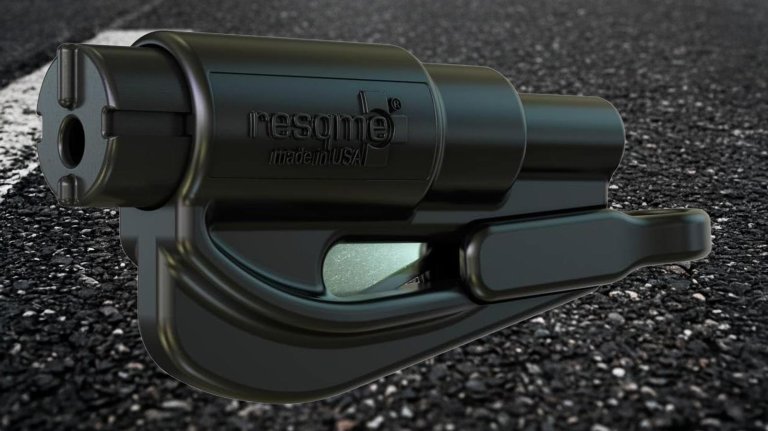
AAA specifically recommends carrying an emergency escape tool with a seatbelt cutter and window breaker. The resqme is the size of a car key fob, clips to your keychain or sun visor, and is used by first responders and law enforcement across the country. In a submersion or rollover, seconds matter, and fumbling with a seatbelt buckle under stress is a real problem. Keep this within arm’s reach of the driver’s seat, not buried in the trunk.
First aid & medications
Every single agency we consulted—NHTSA, AAA, the Red Cross, and FEMA—lists a first-aid kit as essential. The Red Cross notes that having a first aid kit is only part of being prepared; they recommend taking a first aid training course so you actually know how to use what’s inside.
First-aid kit
First Aid Only 299-Piece All-Purpose First Aid Emergency Kit
See It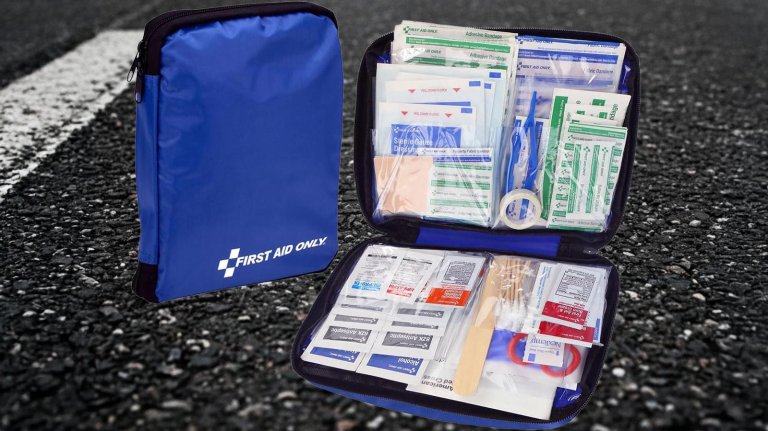
This 299-piece kit covers the basics you need for roadside incidents: adhesive bandages in multiple sizes, gauze pads, antiseptic wipes, aspirin, an instant cold compress, trauma pads, and nitrile gloves. It comes in a soft-sided case that fits in a door pocket or under a seat. Check the contents once a year and replace anything that’s expired or been used.
Welly First Aid Kit – 130 Count with Fabric Bandages, Ointments, and Ibuprofen
See It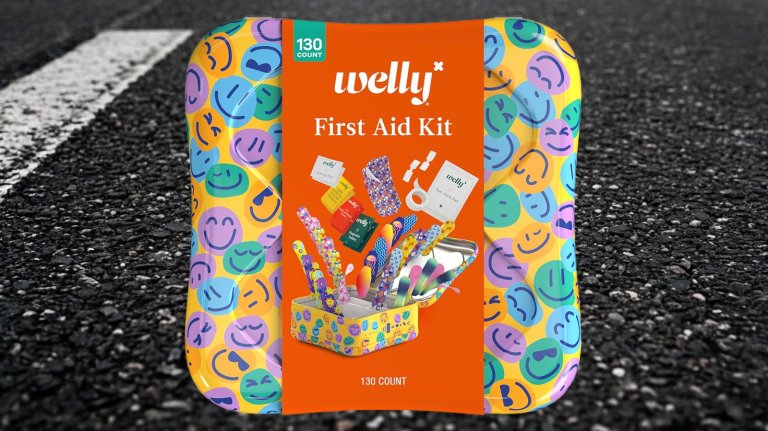
If you want a kit that’s a little more considered in its packaging—and more likely to actually get used for minor cuts rather than sitting untouched in the trunk—the Welly kit is worth a look. Its 130 pieces include flexible fabric and waterproof bandages, butterfly closure strips, triple antibiotic and hydrocortisone ointments, and ibuprofen, all in a flat tin that slips easily under a seat. The bandage designs are more fun than standard beige, which actually matters if you’re patching up a kid on the side of the road.
Hygiene
Dude Wipes Flushable Wipes, 6 Pack 288 Count, Extra-Large
See It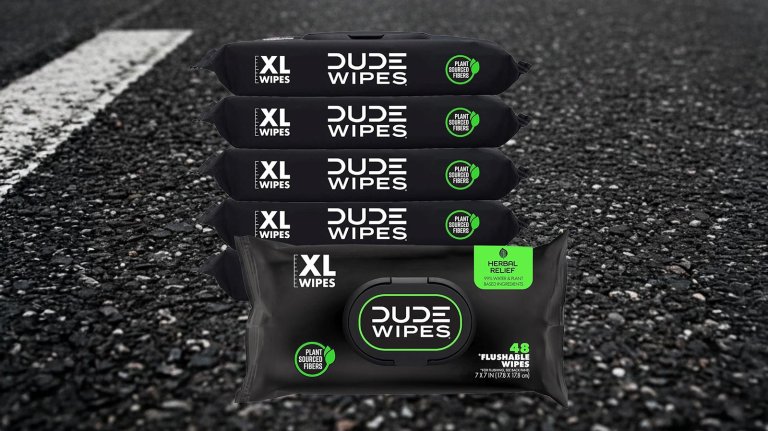
If you’re stuck on the side of the road for any length of time—or have to use a gas station restroom after crawling around under your car—wet wipes are one of those things you’re extremely glad to have. These oversized Dude Wipes are flushable, septic-safe, and contain witch hazel and geranium essential oils that make them useful well beyond their intended purpose: cleaning greasy hands after a tire change, wiping down a sweaty face after an hour in the summer heat, or cleaning a wound before bandaging.
Medications
Both the NHTSA and AAA recommend keeping essential medications in your vehicle. If you or anyone who regularly rides with you depends on prescriptions—inhalers, EpiPens, insulin—stash an emergency supply in a temperature-stable container. AAA advises calling your doctor or pharmacy and requesting an extra refill specifically for your car kit. Don’t forget over-the-counter basics like ibuprofen and antihistamines.
Communication & power
NHTSA puts a cell phone and charger at the very top of its emergency kit list. Your phone is your lifeline for calling 911, contacting roadside assistance, and navigating detours. But phones die, and cell towers go down. A layered approach to communication keeps you connected when it matters.
Portable charger
Anker 337 Power Bank (PowerCore 26K) Portable Charger
See It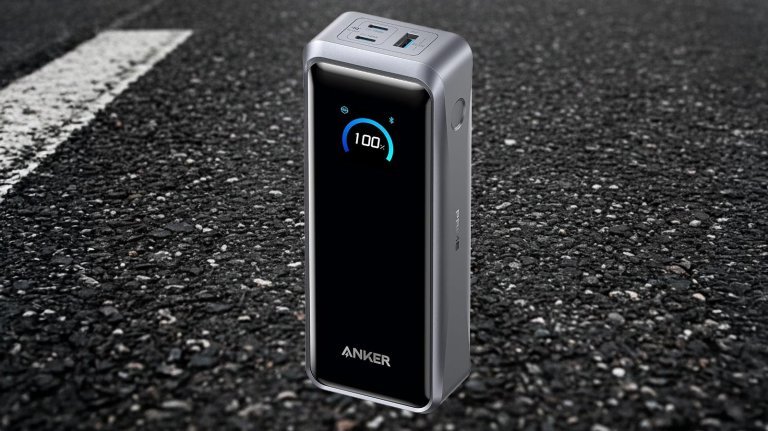
If your car won’t start, you can’t charge your phone from the cigarette lighter. A standalone power bank solves that. The Anker PowerCore 26K holds enough juice to fully charge most smartphones about six times over. Keep it topped off—Anker says it retains its charge for months in standby. Toss in a cable for every phone type in your household so nobody is stranded without a way to connect.
Emergency weather radio
Eton Odyssey Hand Crank Emergency Weather Radio
See It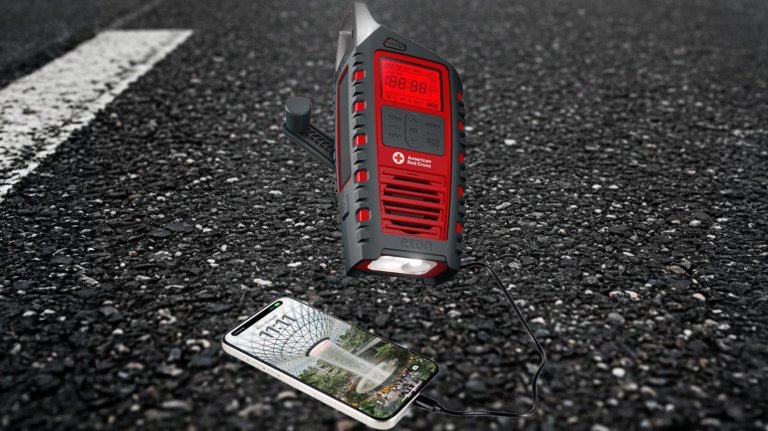
AAA and the Red Cross both recommend a hand-crank radio as part of your car kit—it’s especially valuable during natural disasters when cell towers may be down. The Eton Odyssey receives AM, FM, and NOAA weather bands, can be powered by its hand crank or built-in solar panel, and has a USB port for charging your phone in a pinch. It also doubles as an LED flashlight. When there’s no cell signal, NOAA weather radio may be your only source of real-time storm warnings and road closure information.
Food, water & comfort
NHTSA recommends nonperishable food and drinking water. Ready.gov recommends a gallon of water per person per day for at least three days in any disaster kit. You may not need three days’ worth in your car, but having enough to get through several hours of waiting on the shoulder in summer heat is essential.
Water
Datrex Emergency Survival Water Pouch (64 Pack)
See It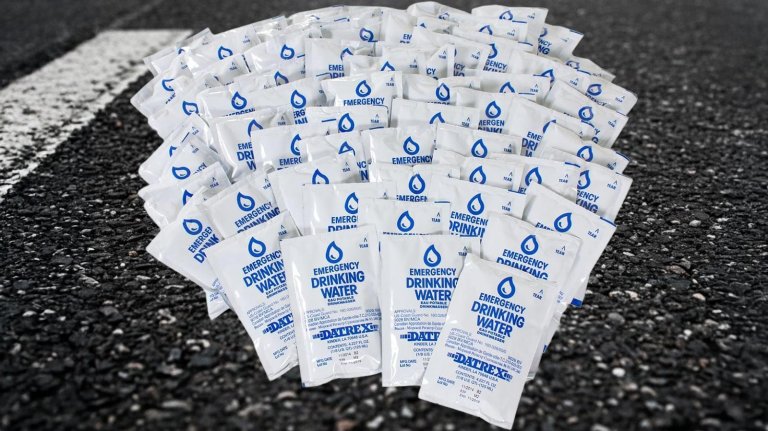
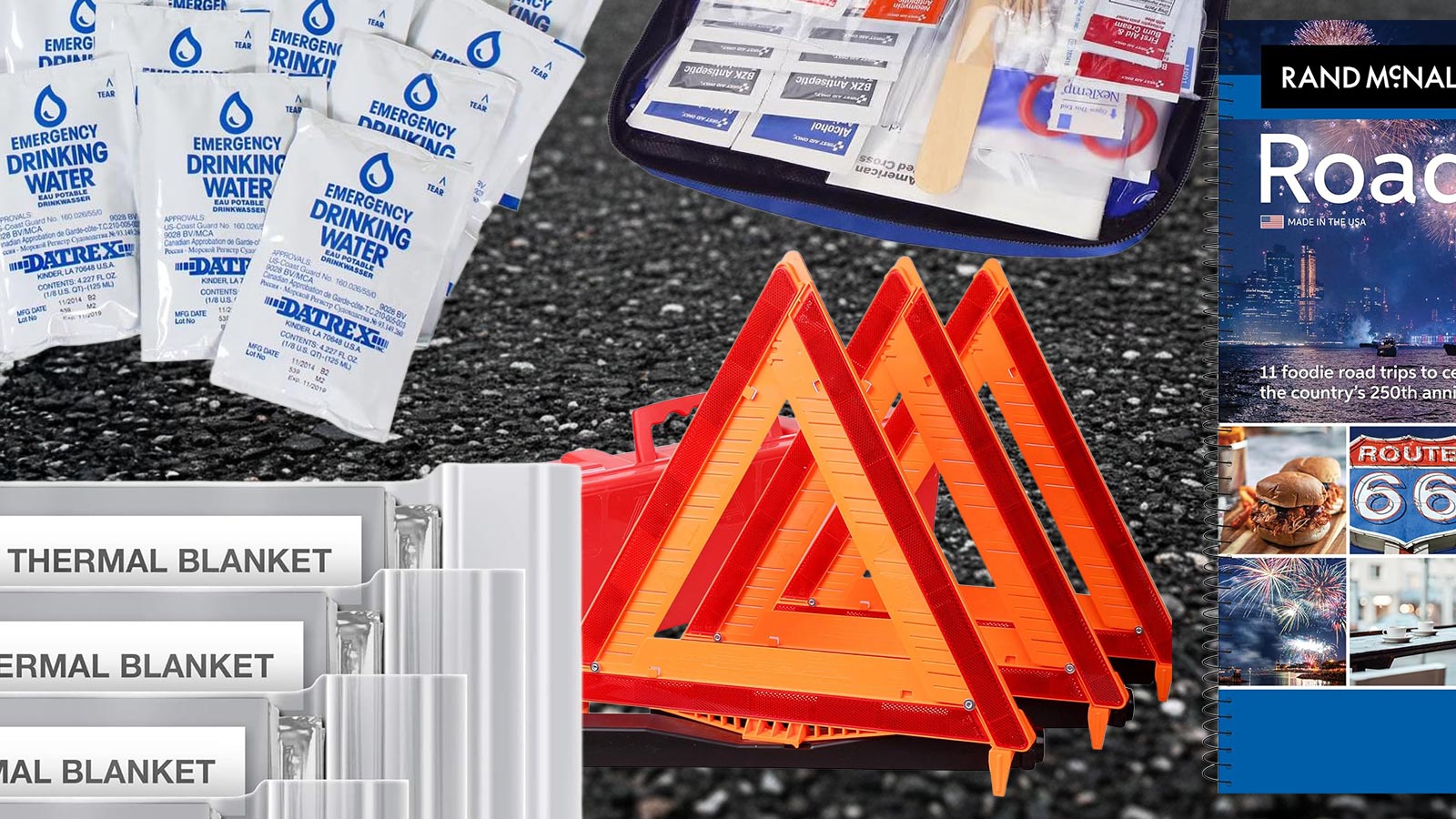
Regular plastic water bottles can leach chemicals in a hot trunk and eventually burst. These Coast Guard-approved Datrex emergency water pouches have a five-year shelf life and are designed to withstand temperature extremes. Each pouch is 4.227 ounces—toss a couple dozen in your kit. AAA specifically advises against storing water in standard plastic bottles for long-term car storage for this reason.
Nonperishable food
Datrex 3600 Calorie Emergency Food Bar
See It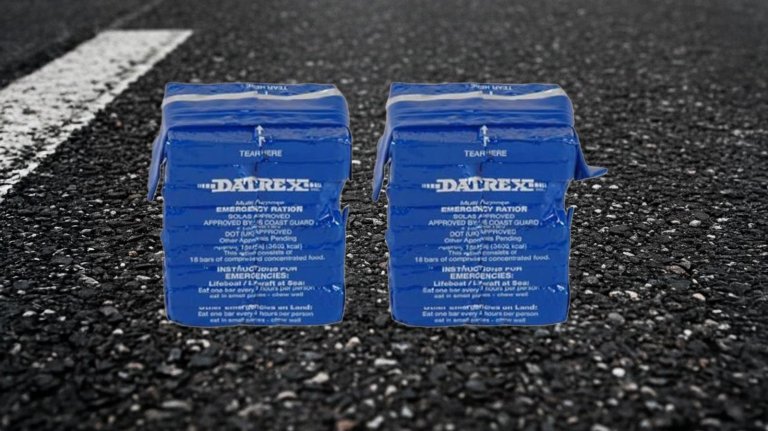
Granola bars melt. Chocolate bars become a puddle. What you want for a car kit is something designed to survive trunk temperatures. Datrex emergency ration bars are Coast Guard-approved, have a five-year shelf life, won’t provoke thirst the way salty snacks do, and provide 3,600 calories per package broken into individually wrapped bars. They aren’t gourmet eating, but they’ll keep your blood sugar stable until help arrives.
Kodiak Cakes Crunchy Granola Bar Variety Pack, 24 Pouches, High Protein
See It
Emergency ration bars get the job done, but nobody enjoys eating them. If you’re refreshing your kit food supply every year anyway, Kodiak Cakes’ high-protein granola bars are a more palatable option for shorter-term roadside emergencies. Each bar has 10 grams of protein from 100% whole grains, comes in peanut butter and chocolate chip flavors, and holds up to heat reasonably well in individual foil pouches. The 24-count variety pack gives you two full boxes to rotate through. Supplement with Datrex bars for longer-duration emergency scenarios.
Emergency blanket
Swiss Safe Emergency Mylar Thermal Blankets, 4-Pack
See It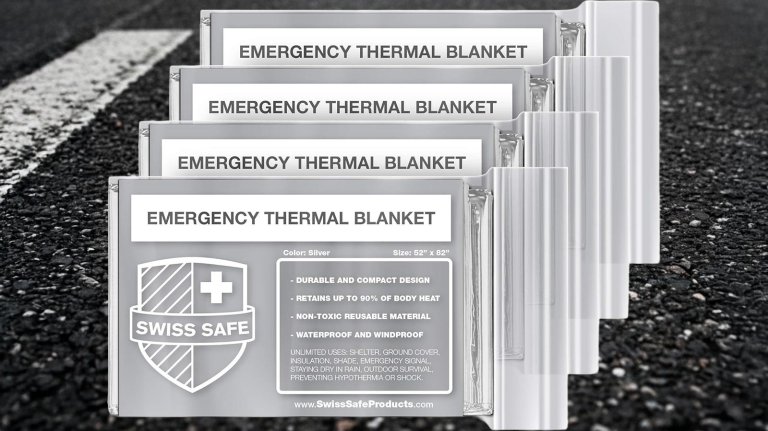
NHTSA specifically includes emergency blankets on its kit list. Mylar blankets reflect up to 90 percent of your body heat, fold down to the size of a deck of cards, and weigh almost nothing. This four-pack gives you enough for a full car of passengers. They’re also useful as a ground cover when changing a tire, a sun shade draped over a window, or a visibility aid—that reflective surface catches light from a long distance.
Rumpl Original Puffy Blanket, Water-Resistant, 52"x75"
See It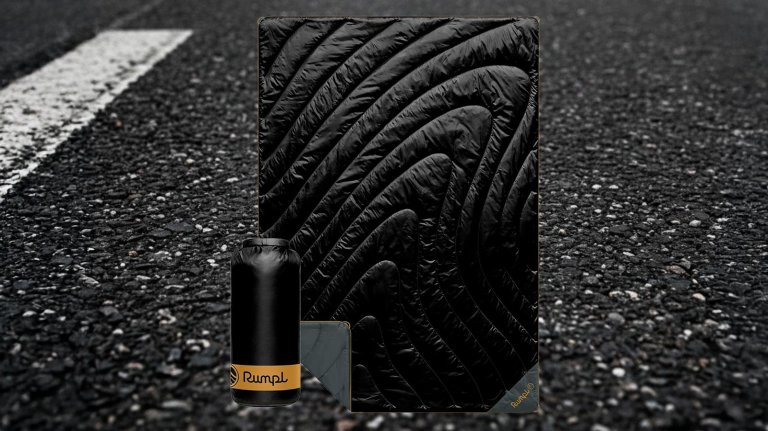
If you drive regularly in cold climates or want something more substantial than a foil blanket for extended roadside waits, the Rumpl Original Puffy is a worthwhile upgrade. At 52 by 75 inches, it’s big enough to cover two people, packs into a cylindrical stuff sack the size of a water bottle, and is made from 100% recycled synthetic insulation that stays warm even in damp conditions. The DWR-coated nylon shell sheds light precipitation—useful when you’re crouched over a flat tire in drizzle. It lives permanently in the trunk without taking up much space.
Therm-a-Rest Honcho Poncho Down Wearable Camping Blanket
See It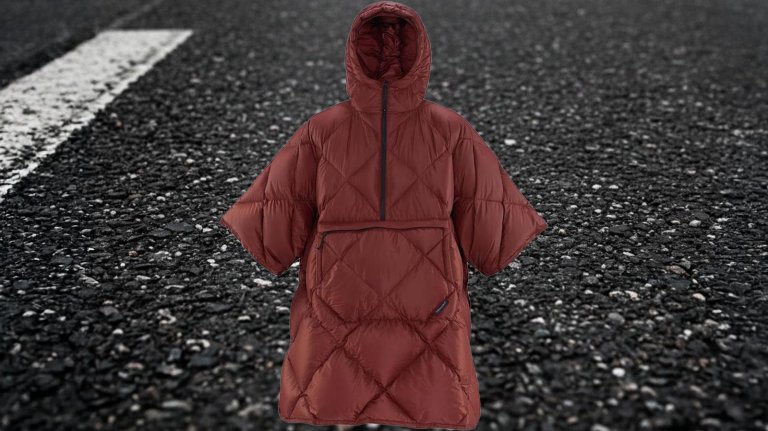
The Therm-a-Rest Honcho Poncho solves a specific problem mylar blankets and flat blankets don’t: keeping you warm while your hands are free to work. This down-insulated poncho wears like a blanket with a hood and an anorak zipper—meaning you can stay genuinely warm while using both hands to handle jumper cables, set up warning triangles, or talk to a roadside assistance dispatcher. It’s filled with 650-fill Nikwax Hydrophobic Down that resists moisture, and the DWR-coated recycled nylon shell is tough enough for roadside use. It’s a premium item, but it does something that nothing else on this list does.
Navigation & information
GPS is great until it isn’t. The NHTSA recommends keeping maps in your car, and AAA suggests paper maps of any unfamiliar area you’re traveling through. NHTSA also advises you to familiarize yourself with directions and maps before you go, even if you use a GPS.
Paper maps
Rand McNally 2025 Large Scale Road Atlas
See It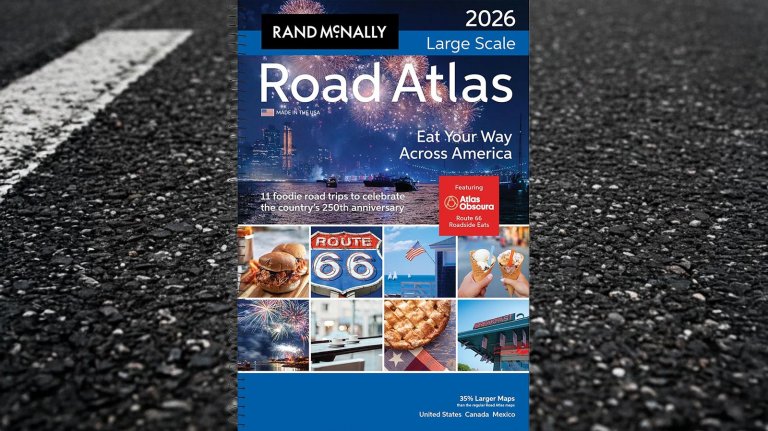
When your phone is dead, out of range, or routing you straight into a road closure, a paper atlas is your backup plan. The Rand McNally Large Scale edition uses bigger type and wider margins than standard atlases, making it easier to read by flashlight on a dark shoulder. Keep it in the seat-back pocket where you can reach it, not buried under groceries in the trunk.
Important information
NHTSA recommends checking for safety recalls before any trip by visiting NHTSA.gov/Recalls. Keep a waterproof folder in your car with copies of your vehicle registration, insurance cards, and emergency contact numbers written on paper. If your phone dies, you’ll want to know your spouse’s actual phone number, your insurance company’s claims line, and your roadside assistance membership number. AAA suggests including copies of important documents, like birth certificates and insurance policies, in a waterproof bag.
Seasonal additions
Your baseline kit should live in your car year-round, but what’s stacked on top of it should change with the seasons. NHTSA notes that hot temperatures can accelerate the degradation of rubber belts and hoses under the hood, and AAA adjusts its recommendations by season.
Summer additions
Frogg Toggs Chilly Pad Pro Microfiber Cooling Towel
See It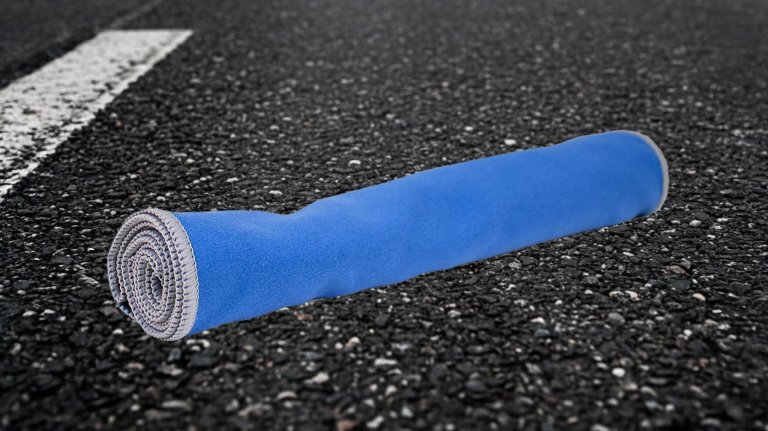
NHTSA warns that heatstroke in vehicles is especially deadly during summer months. AAA recommends swapping winter gear for cooling towels, a baseball cap, and sunscreen during warm months. Add extra water, insect repellent, and a collapsible sunshade for your windshield. The Frogg Toggs cooling towel activates with water and can drop its surface temperature by up to 30 degrees—a real lifesaver if you’re changing a tire in July.
Winter additions
SubZero 60016 Heavy-Duty Ice Scraper and Snow Brush
See It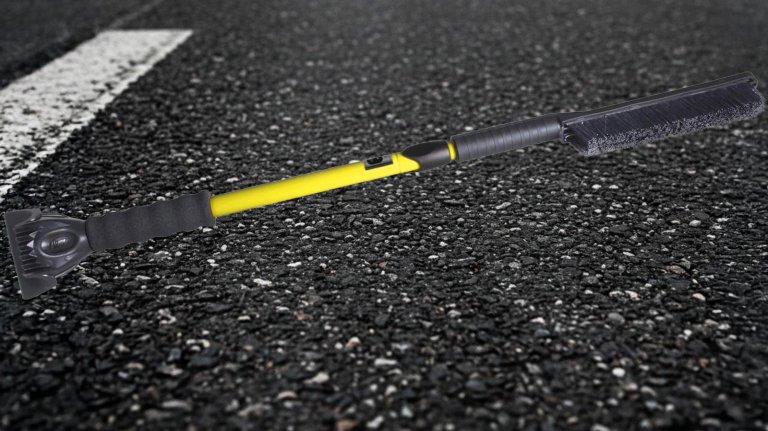
When cold weather arrives, AAA recommends adding a sturdy ice scraper and brush, a collapsible snow shovel, a bag of abrasive material like sand or kitty litter for traction, and extra warm layers, including thick socks, gloves, boots, and a warm hat. Ready.gov also advises keeping your gas tank full in winter—it prevents the fuel line from freezing and ensures you can run the heater if you’re stranded. The SubZero scraper above has a tough blade and foam grip that won’t freeze to your hand.
How to store and maintain your car emergency kit
Having the right gear only matters if you can find it when you need it. Ready.gov recommends storing your kit items in airtight plastic bags inside an easy-to-carry container, like a duffel bag or plastic bin. Keep the bin in your trunk or cargo area where it won’t slide around—bungee cords or a cargo net can help with that.
Storage bag
Everything listed above fits in a single trunk-friendly container. The Plano Sportsman’s Trunk is rugged, latches securely so your gear stays put over bumps, and is compact enough to leave room for groceries. Use smaller bags or packing cubes inside to keep first-aid supplies separate from tools and food away from flares, etc.
FEMA recommends checking your kit every six months and replacing expired items. Set a reminder when you change your clocks for daylight saving time—it’s an easy way to remember to swap out food, water, and medications that may have expired. If you use something from the kit during a roadside incident, replace it as soon as you get home.
Before you hit the road
A kit in the trunk is your safety net, but the best roadside emergency is the one that never happens. NHTSA recommends regular vehicle maintenance—tune-ups, oil changes, battery checks, and tire rotations—and checking for open safety recalls before any long trip. Take five minutes to inspect your tires using the penny test: place a penny in the tread with Lincoln’s head upside down, and if you can see the top of Lincoln’s head, your tires need to be replaced.
Check your belts and hoses for bulges, blisters, or cracks. Test your air conditioning before a summer road trip—NHTSA notes that a lack of A/C on a hot day is especially dangerous for children and older adults. Buckle everyone up, share the road with motorcyclists, cyclists, and pedestrians, and never leave children or pets alone in a parked car. Not even for a minute.
We’ve said it before, but it bears repeating: Prepping isn’t just for preppers. Build the emergency roadside kit, maintain it, and hope you never need it. But if you do, you’ll be glad it’s there.
