
We may earn revenue from the products available on this page and participate in affiliate programs. Learn more ›
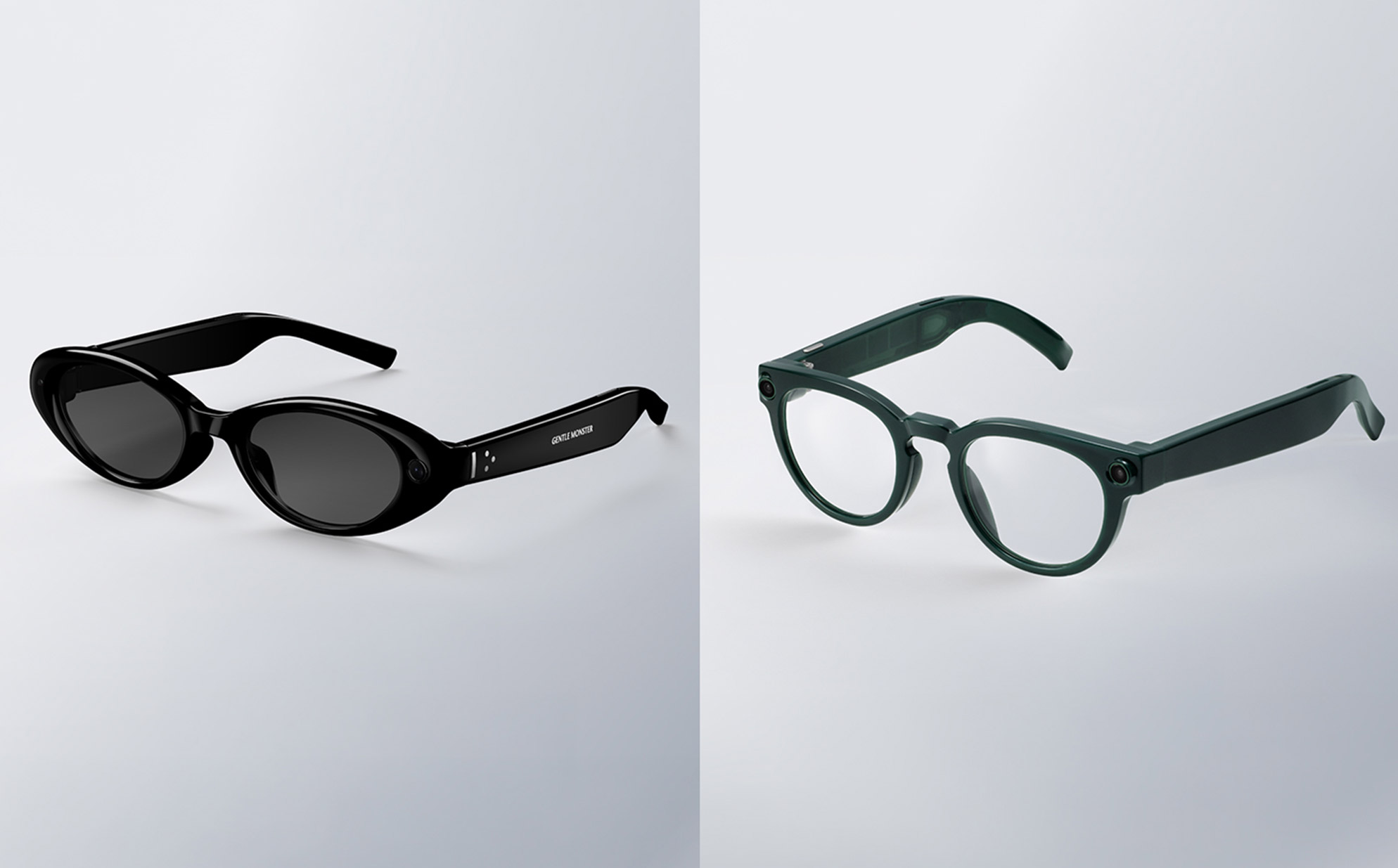
Google put AI on people’s faces more than a decade ago with its Google Glass wearable. It was designed to put a computer directly on your face, but the world (and to some extent, the hardware) wasn’t quite ready for that yet. At Google I/O 2026 on Tuesday, Google announced new intelligent eyewear built with Samsung and Qualcomm, in frames from Warby Parker and Gentle Monster, shipping this fall. It’s a far cry from the original Google Glass project, and in many ways, it simplifies and streamlines the overall interaction.
The pitch is that the glasses skip the standalone hardware category entirely. They put a Gemini agent in eyewear people would already wear, and let it do multi-step work on the phone in your pocket. The keynote demo was a single voice command walking past a cafe. The agent queued a Doordash coffee order on the phone, the user kept walking, and the only step left was a confirmation tap.
The hardware enters through a mine field of agentic AI projects that, so far, haven’t achieved their lofty ambitions to replace our phones. Humane’s ill-fated AI Pin sold to HP in February 2025, and its agent servers went dark within weeks of the deal closing. The Rabbit R1 shipped to reviewers who called it half-finished. The lone survivor at any scale is Meta’s Ray-Ban smart glasses, which work in part because they don’t try to be an agent. They are an audio assistant with a camera.
Where Gemini Intelligence comes in
Meta’s Ray-Bans can take a photo, summarize a notification, identify the building you’re walking past, and route a call to your phone. They cannot order you a coffee (at least not yet). The new Google and Samsung glasses can, and that agentic functionality is what the company hopes will make this hardware an integral part of people’s lives. Google calls this layer Gemini Intelligence, and it handles multi-step tasks in the background while the glasses act as the voice and camera frontend. The Doordash demo is the most concrete example Google offered, and the company says the same pattern extends to any other phone app you can drive by voice. Ride-hailing through Uber and language tutoring through Mondly also got namechecked.
You wake Gemini either by saying “Hey Google” or tapping the side of the frame. The same trigger can be used to ask about anything in your line of sight. Look at a parking sign you can’t decode, a restaurant whose menu you can’t read, a cloud formation you can’t name. Google is keeping precise behavior private outside controlled scenarios, but reporters who tried them on at I/O have started filing first impressions. The features Google showed at the keynote suggest a different kind of interaction than the voice assistants with cameras already on the market.
Real-time translation that matches the speaker’s voice
The translation feature is the other piece of the announcement that does not have an obvious off-the-shelf equivalent. Google says the translated audio piped to your ear matches the original speaker’s tone and pitch, rather than the flat synthesized voice most translation apps default to. The glasses also do visual translation. Look at a menu, a sign, or a piece of writing, and Gemini reads the translation back through the onboard speakers. Without a built-in display, you won’t get a visual representation of the translation, but it’s a fully audio interaction.
Tone-matched translation has been an ambition for services like this before, but it hasn’t been perfect. The Pixel Buds had a version of it at launch, but it leaned heavily on processing done back on the phone and a stable connection between the two. Whether Google’s new pass is meaningfully better in a crowded restaurant or on a noisy street is the test that matters, and it is the kind of thing that only holds up under real-world hands-on time.
The audio-only first generation
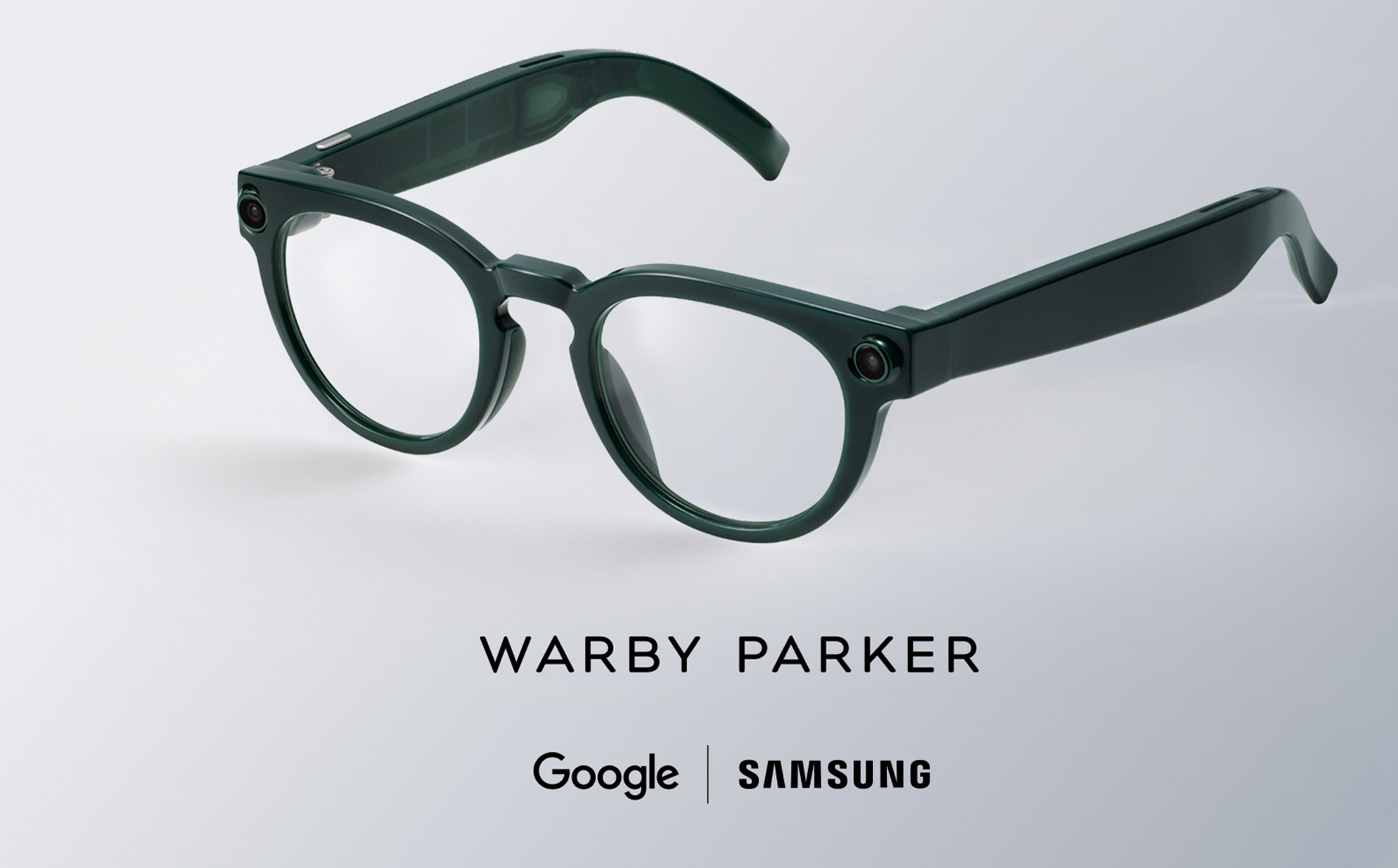
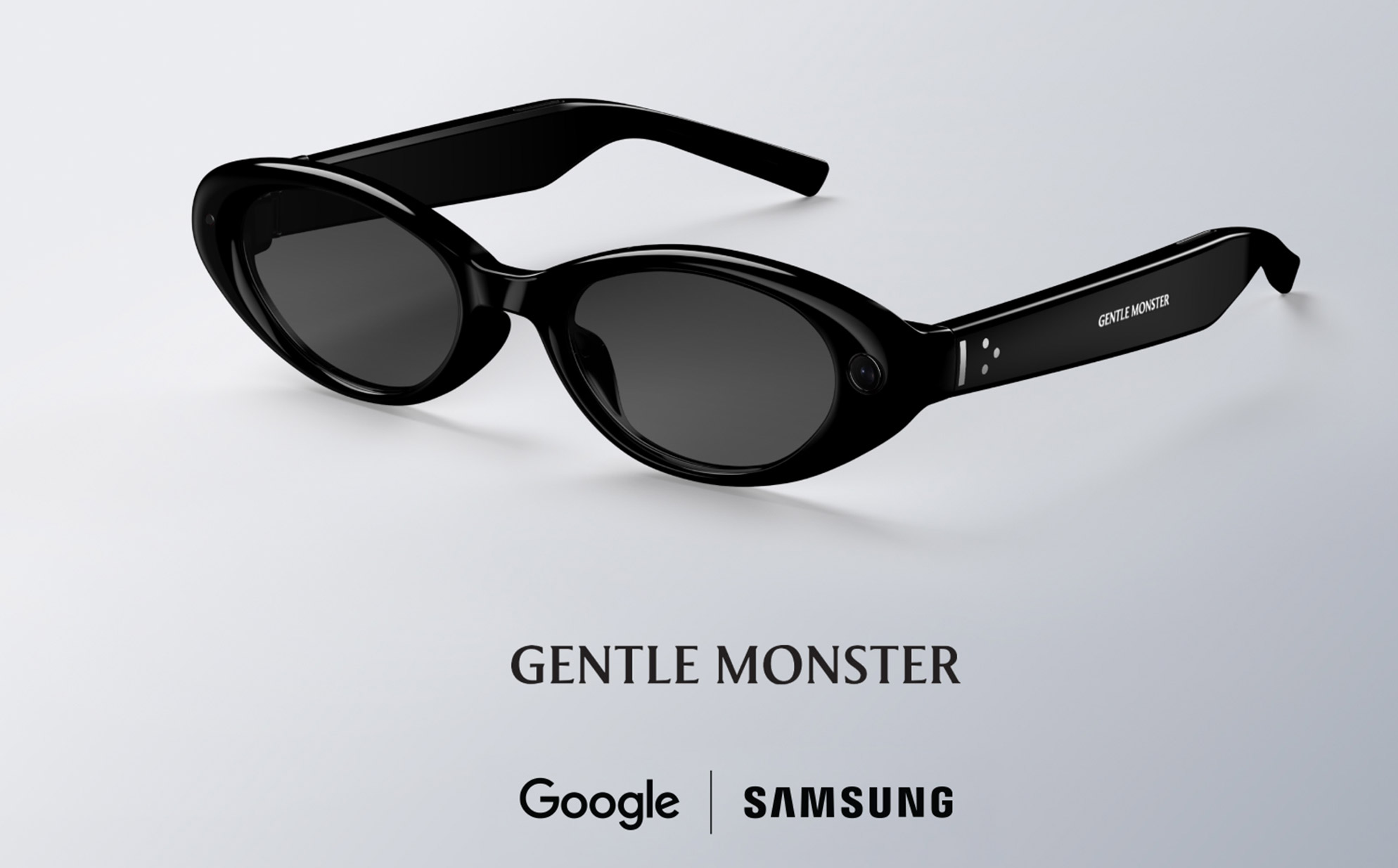
Two brands are launching frames at the same time. The first Gentle Monster design is a black frame leaning toward the chunkier, more fashion-forward end of the brand’s catalog. Warby Parker’s is a darker green frame closer to its everyday lineup. Both brands have said the smart-glasses styles will be part of full collections, not one-off co-branded SKUs, so the eventual lineup will be larger than the two designs shown on stage at I/O.
The first generation is audio-only. There is no built-in display in the lens, so all output runs through onboard speakers, and the camera handles visual input for the agent. Going audio-only is what makes the frames look like regular glasses rather than the visibly chunky early Google Glass form factor, and it is probably the only way the pitch with two fashion brands holds together at all. Google said display-equipped versions are coming as a separate track. The glasses pair with both Android and iOS, which matters because no new wearable can succeed locked to a single phone platform.
What Google and Samsung haven’t shared yet: prices, exact ship dates, or which specific styles in each brand’s collection get the Gemini features beyond the two preview designs. Meta’s Ray-Ban Display, the closest comparison on the market right now, starts at $799. Google said more details are coming “in the coming months.”
Android XR is the platform underneath
The glasses run on Android XR. So does Samsung’s Galaxy XR headset that launched last year, and so will the wired XREAL Project Aura that Google teased separately at I/O for a launch by the end of 2026. Android XR is the OS layer Google built with Samsung and Qualcomm to span the full range of extended-reality hardware, from cheap audio frames all the way up to mixed-reality headsets. This strategy involves one platform, multiple hardware partners, a ladder of price points, with Gemini baked in at every tier and it has already shown that it works.
That makes the Gentle Monster and Warby Parker frames more than a single product launch. They are the consumer entry point into a lineup that already has Samsung’s Galaxy XR headset at the high end and XREAL’s wired Project Aura filling in the middle. Apps and Gemini features that ship for the headset should travel down the stack. For instance, a tutorial that runs as a 3D overlay on Galaxy XR can drop into spoken steps on the audio glasses. For developers, it is one SDK and one app surface to target instead of three. I/O is, after all, an event for developers.
The rest of Google I/O 2026, briefly
The glasses were not the only thing Google launched on Tuesday. The list of everything else announced at I/O 2026 runs much longer, but here are the hits.
Gemini 3.5 Flash. The first variant of Google’s new model series, tuned for agentic workflows and chained tool use. It is the model under the hood of most of the announcements at the show, available in the Gemini app and through Google’s API today.
Gemini Omni Flash. A unified model that takes any input (text, image, video, or audio) and produces any output. The launch version starts with video generation and editing. Omni Flash powers the new Google Flow and Google Flow Music creative tools, and Google says more output types are following.
A new AI Search. Google is calling this the biggest update to Search in over 25 years. The Search box now expands dynamically to fit a longer question and accepts text, photos, files, video, or a dropped-in Chrome tab as input. A new agent layer can also take on planning tasks. Ask Search to find a private karaoke room for six on a Friday night with late-night food and it will cross-reference live availability across the web, surface booking links, and offer to call the venue by AI voice to lock in the details.
A redesigned Gemini app, with Daily Brief. Google overhauled the Gemini app’s interface (the new design language is called Neural Expressive, with fluid animations, new fonts, and haptic feedback) and added Daily Brief, a feature that surfaces the day’s most urgent items across your connected services. Unread emails, upcoming meetings, and overdue tasks come prioritized by your personal goals. Gemini Spark, the agent layer that handles recurring chores like flagging subscription price increases or watching for flight-price drops that trigger travel credits, is rolling out next.
Gmail Live and Docs Live. Voice-driven versions of two Workspace staples. Open Gmail Live and ask “what’s my flight’s gate number?” or “what’s happening at school this week?” and Gemini reads through your threads to answer. Docs Live works as a conversational drafting partner. You can talk through an outline by voice, ask it to rewrite a paragraph’s tone, or have it pull supporting details from your Drive into a first draft.
AI Ultra at $100 per month. Google’s new top consumer subscription tier sits above the existing AI Plus and AI Pro plans. It bundles expanded Gemini Spark access, the latest Omni capabilities, and higher usage limits. It continues the frustrating trend of high-end AI plans that jump straight to $100 without offering a reasonable mid-tier.
Universal Cart. Google’s shopping play for the agent era. An intelligent cart that consolidates items across retailers, paired with technology for AI agents that can purchase on your behalf. Read it alongside the Doordash demo above and the company’s direction comes into focus.
