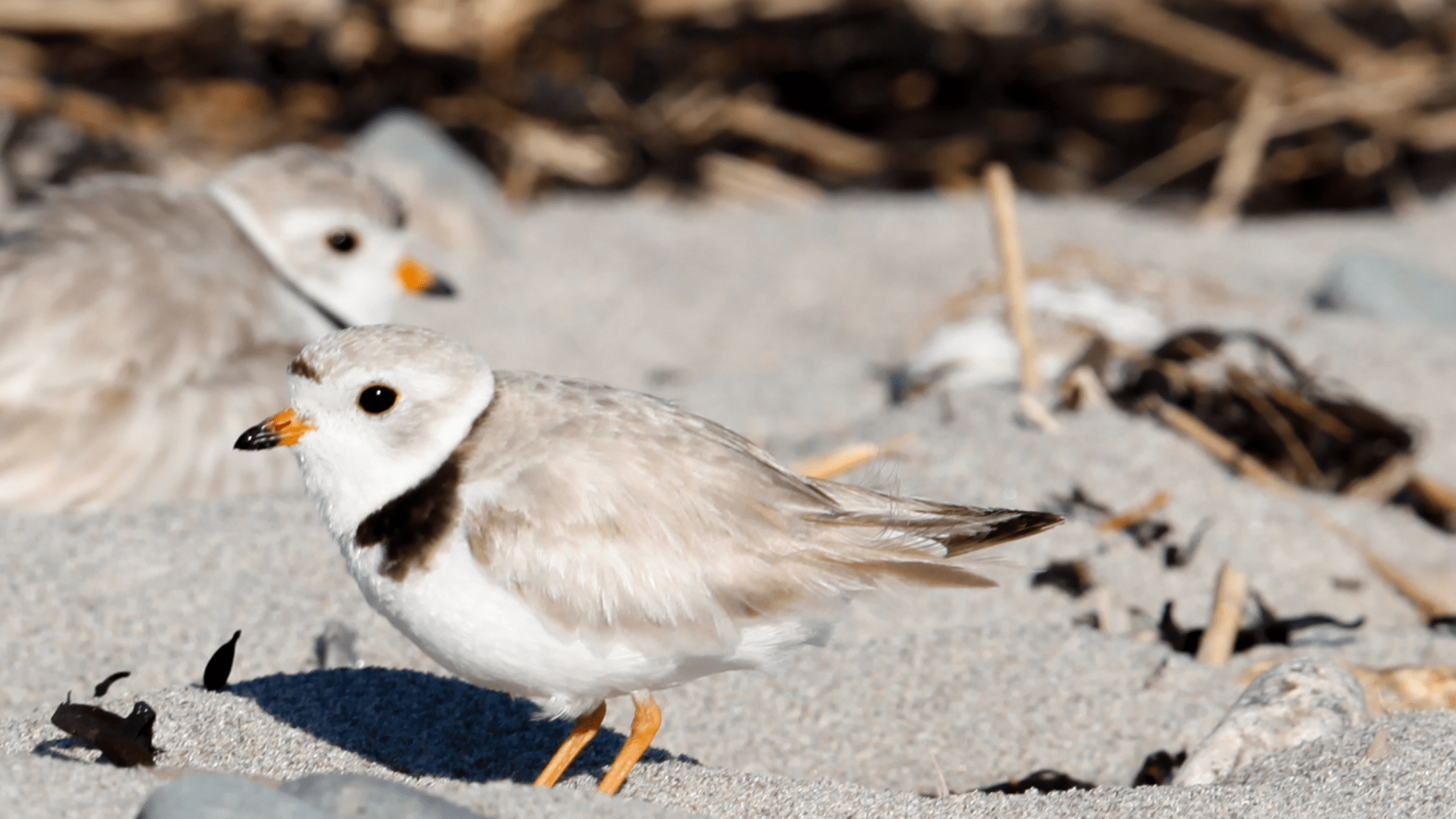
Following a record-breaking nesting season in 2025, the Great Lakes’ first piping plovers (Charadrius melodus) of the season have hatched. The nonprofit Great Lakes Piping Plover Recovery Effort reported that 12 chicks hatched in Wisconsin and Michigan in late May, with more expected to hatch.
Piping plovers are small migratory shorebirds. The United States is home to three piping plover populations. One lives along the rivers and lakes of the northern Great Plains, another along the East Coast, and one in the Great Lakes. They weigh about 1.5 to 2.25 ounces and are only 5.5- to 7-inches long, and can be nearly invisible until they sprint short distance, stop, and then tilt forward to pull an insect or worm up from the sand.
The chicks are also considered precocial birds like turkeys. Within hours of hatching, piping plowers chicks can run around and forage for themselves.
Despite this independence at a young age, the species has struggled. The International Union for the Conservation of Nature (IUCN) lists them as Near Threatened, and the Great Lakes population is listed as endangered under the Endangered Species Act. Nearly 800 nesting pairs once lived along the shores of the Great Lakes, but that number plummeted to 13 in 1990. According to the Great Lakes Piping Plover Recovery Effort, the population decline is partially due to nest disturbance and predation as well as habitat deterioration.
The population has grown to over 80 nesting pairs thanks to their federal protection and conservation efforts. Last year was the fourth consecutive year of growth, with 88 unique nesting pairs recorded in the Great Lakes.
“It is a joy to observe them racing around in all directions, foraging as soon as they are hatched,” Mary Lundeberg, a photographer, volunteer and co-author of Raised to Be Wild: The Tale of a Great Lakes Piping Plover, told MLive. “Being in the wild with these tiny creatures ignites a piece of the wild in me and brings a smile to my face.”
When observing piping plovers, it’s important to stay a safe distance away for the sake of the birds. Michigan’s Friends of Sleeping Bear Dunes recommends using the Rule of Thumb—if you can’t cover-up a bird with your thumb when held at arm’s length, you are too close.
The Great Lakes Piping Plover Recovery Effort also likes to remind birdwatchers to watch their step. Chicks don’t observe closed areas, so they could be anywhere on the beach.
Since the mere presence of a dog can cause them to abandon their nests, keeping dogs on a leash and out of nesting sights is important for the bird’s wellbeing. The plovers often perceive pets as predators, so that heightened danger awareness can make the adults abandon eggs and chicks.
Many Great Lakes beaches will have areas marked off with orange rope or fencing to protect plover nests, with eggs hidden in rocks and sand. Visitors can still walk the shoreline, but are advised to steer clear of the roped off areas.