
Ah, siblings. These special relationships can be filled with everything from fun and joy to cruel pranks and teasing. Witnessing each other’s childhoods and sharing parents along with family secrets and advice makes it a relationship that is truly unlike any other.
This bond is also not unique to our species, according to a new study published today in the journal PLOS Biology. Among some birds, siblings can be powerful role models that can even overshadow parental influence.
“Much of our knowledge about social learning in juveniles stems from species with extended periods of parental care, including humans,” study co-author and behavioral ecologist Sonja Wild, said in a statement. “A lot of learning occurs from parents because offspring and parents spend so much time together. But what happens with knowledge transfer when parental care is limited?”
I’d like to solve the puzzle
The team used the songbird Parus major, commonly known as the great tit, as their model species. They observed that siblings and other adults can be crucial sources for learning when mom and dad don’t fill the role. This alternative learning pathway can explain some behavioral similarities in bird families that have parental input.
“When they leave the nest, they know nothing,” Wild said of the species. “They can’t feed themselves or find shelter. All they have is about 10 days of parental care to figure everything out. The offspring would like to extend that time. They follow their parents around and keep begging, but the parents are exhausted and start pulling back. So the selection pressures are really strong for offspring to quickly figure out how to find food themselves.”
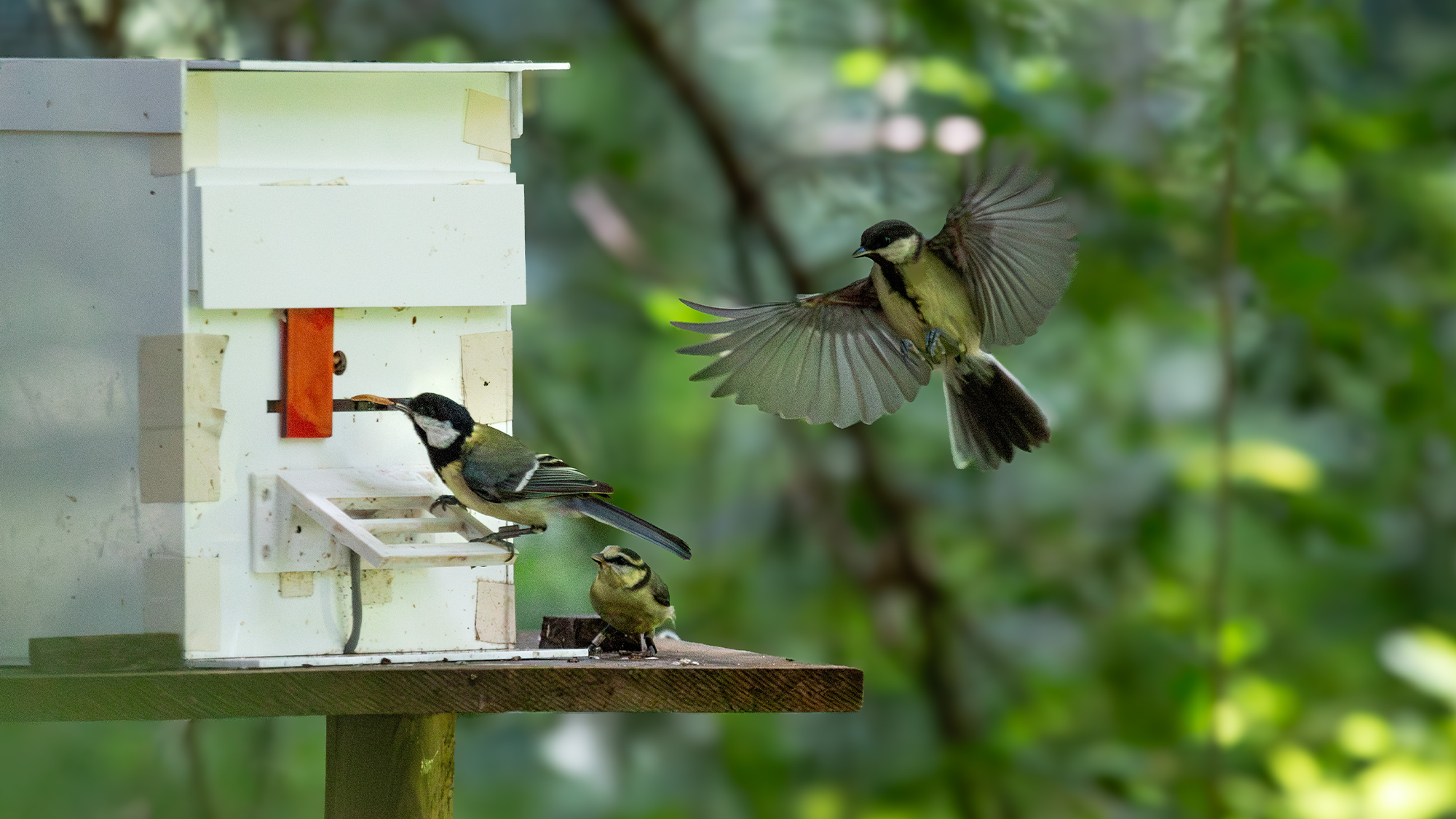
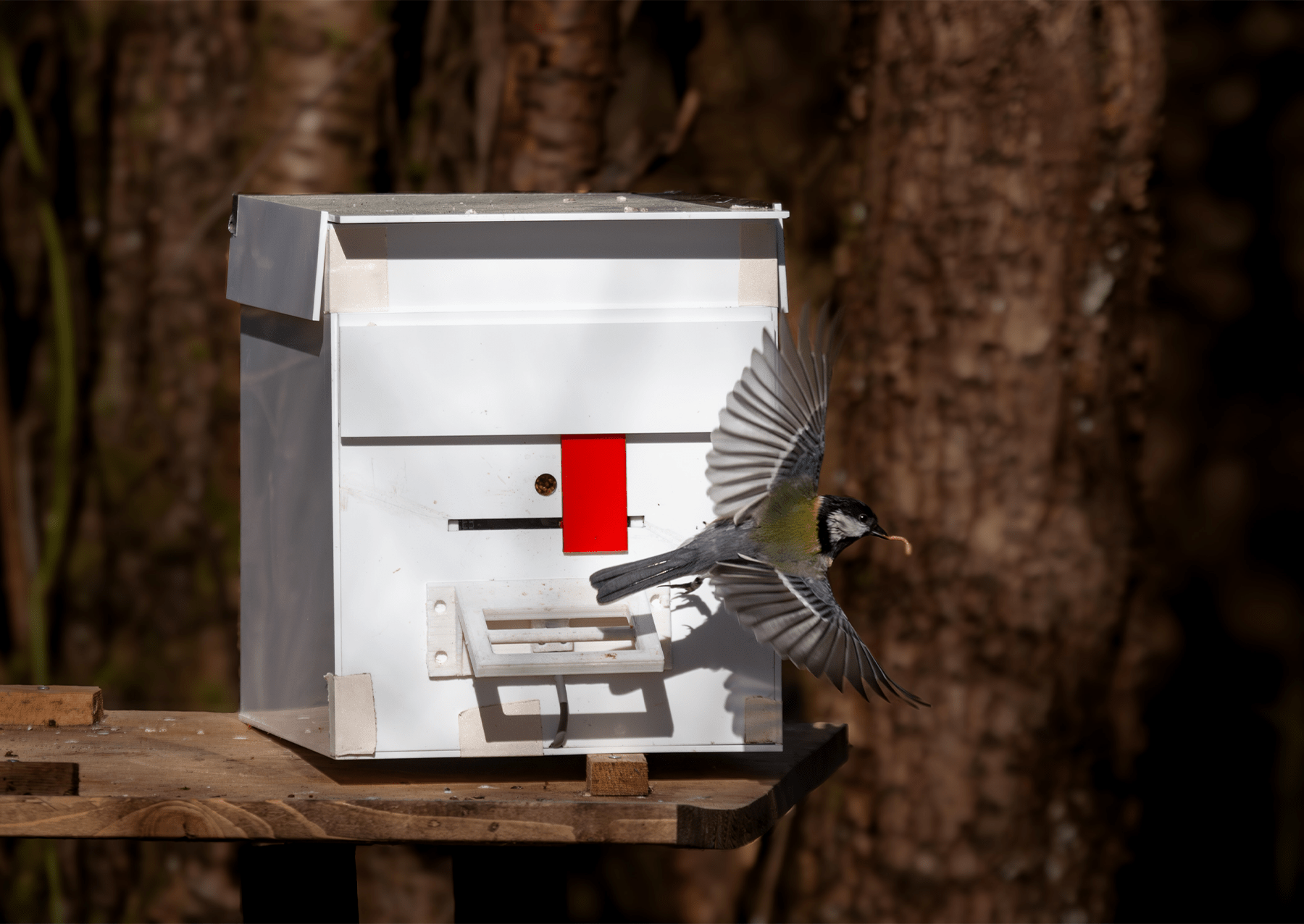
To learn more about these social learning strategies, the team presented 51 breeding pairs and their 229 newly fledged offspring with feeding puzzles over a period of 10 weeks. In the puzzles, sliding the door to the left or right would reveal a delicious tray of mealworms. According to Wild, using these fully automated puzzle boxes allowed the team to collect “tens of thousands of solves” that helped them make connections and patterns in the juvenile birds’ learning and decision-making strategies as they became more independent.
Chomping through 72 pounds of mealworms
After 10 weeks of following the birds’ solving behavior, they found that the birds were more likely to learn to solve the puzzle if they had parents who were also skilled problem solvers. However, the juvenile birds’ solution strategies were actually more strongly influenced by how their siblings and the non-parent adults around them solved the puzzle.
Of the first-time learners in each sibling group, roughly 75 percent learned from adults who were not their biological parent and about 25 percent learned from their parents. Of the other learners in each group, about 94 percent learned to solve the puzzle with the help of their siblings.
Going into the study, the team was not quite sure whether the juveniles could even learn to solve the puzzle, but quickly saw how eager they were to participate in the experiments. They went through about 72 pounds of mealworms in only a few weeks.
[ Related: Baby orangutans spy on mom to build cozy treehouse nests. ]
Looking animal cultures
According to the team, understanding even smaller animal behaviors like this can be valuable for understanding biodiversity and wildlife conservation.
“The more diverse animal cultures are, the more resilient populations are to extinction and able to deal with environmental fluctuations,” Wild said. “Such species are less vulnerable because they have many different role models from which to get cultural and socially learned information.”
