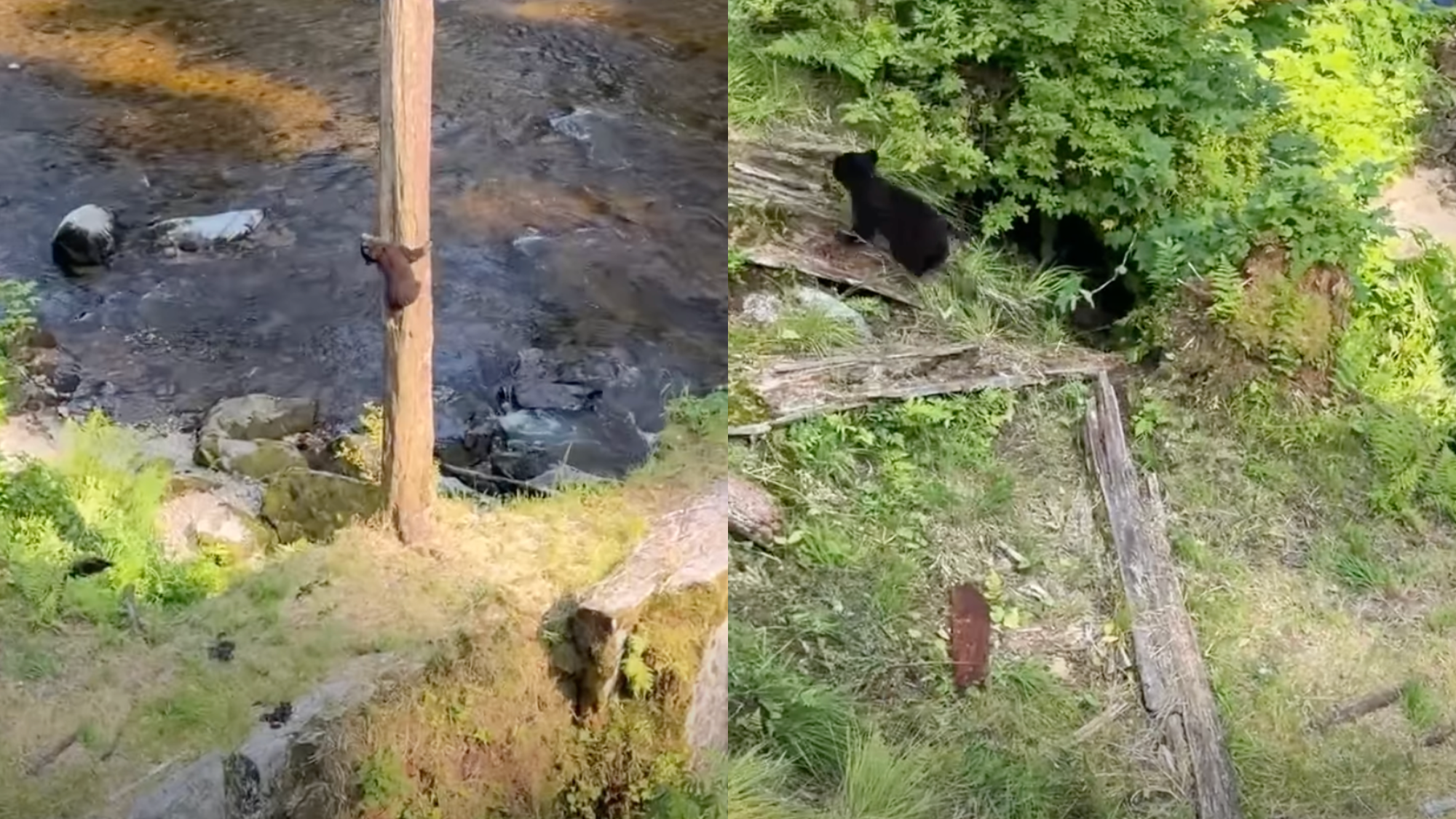
They may be small, but bear cubs have a pretty steep learning curve. In Alaska, brown bear (Ursus americanus) cubs have a roughly 50 percent survival rate within their first year, while the black bear (Ursus americanus) cub survival rate can range from 51 to 88 percent, depending on where they live. Cubs must learn how to fish, forage, find shelter, and climb trees to escape predators. Fortunately, biology helps out a bit with climbing. Bears have claws that curve and help them go up the tree and then back down safely.
One baby black bear who spent time at Anan Creek in southeastern Alaska’s Tongass National Forest showed off those climbing chops in style. The park’s rangers have officially awarded this bear with the 2026 Cutest Climber Award.
“This little cub slipped on his way down but caught himself and hustled right after mom,” the rangers write. “An adorable reminder that even when you lose your footing, you can recover and keep going. A tiny, furry lesson in resilience provided by the bears of Anan.”
Meet the bears of Anan Creek
Tongass National Forest’s rangers are currently awarding the Anan Bear Awards to the 39 bears spotted at the Anan Wildlife Observatory in Alaska over the summer.
Tongass is the largest national forest in the United States, and covers most of southeastern Alaska, including the state’s capital city of Juneau. The area includes Mendanhall Glacier (a popular destination for tourists on Alaskan cruises), numerous hiking trails, eagles soaring above, and plenty of bears on the hunt for food. One of the hotspots is Anan Creek, home to one of the largest runs of pink salmon in Southeast Alaska. As such, the creek is a very popular dinner spot among black and brown bears.
According to Friends of Anan, 39 bears are known to feast on the salmon at Anan Creek. The population includes 31 black bears and eight brown bears. Similar to their chunky counterparts farther to the north in Katmai National Park, the bears return each summer to feast on salmon and teach their cubs how to fish in order to survive. And also like the fat bears of Katmai, every bear here has their own habits and quirks.
The U.S. Forest Service tracks and documents every bear spotted at Anan, while explore.org’s cameras broadcast live streams of their antics.

Anan Bear Cam: Fishing Hole 3 | 2026 Highlights