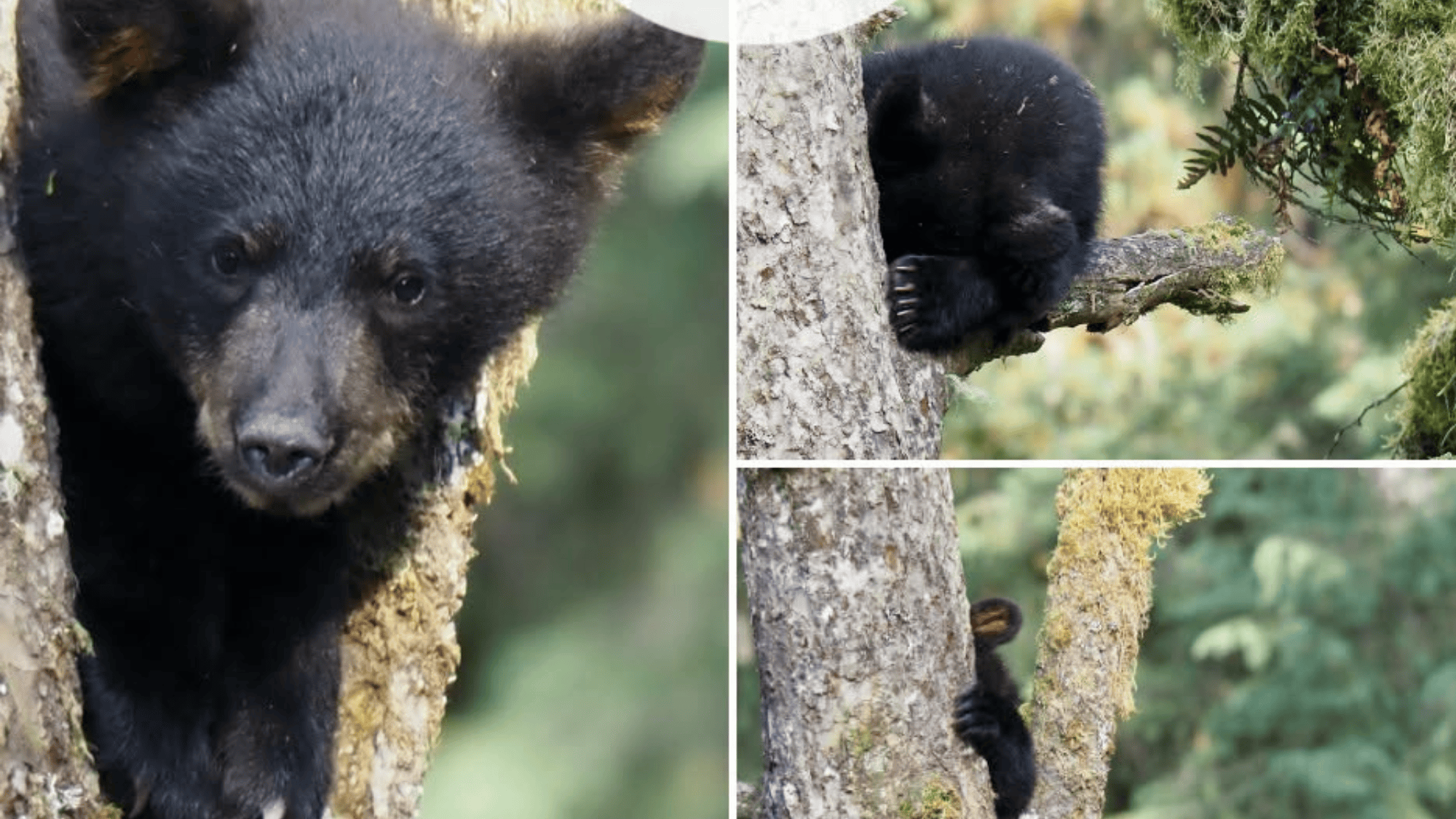
Baby bears need to learn a lot during their first few summers—how to catch salmon, how to swim, how to climb trees, the importance of avoiding porcupine quills, etc. For one cub in Alaska’s Tongass National Forest, learning how to play hide & seek was added to that growing list of skills.
The United States Forest Service team at Tongass National Forest have awarded the official 2026 Worst at Hide-and-Seek Award to a baby bear who needs a bit more practice at this game. The baby bear belongs to Osso, who won the 2026 Mama Bear Award for her prowess.
“It [the cub] stole our Rangers’ hearts,” the team writes. “It looked like it wanted to play hide and seek but couldn’t fully grasp the concept. Our Rangers were glad the cub was bad at the game, because it meant they saw it more.”
Osso had three cubs this season. However, Rangers only spotted her with two cubs in August and believe that one died. Black bear cub survival rate can range from 51 to 88 percent depending on the location.
Meet Bears of Anan Creek
Tongass is the nation’s largest national forest and covers most of Southeast Alaska, including the capital city of Juneau. The area includes Mendanhall Glacier (a popular destination for Alaskan cruises), numerous hiking trails, eagles, and plenty of bears. One of the hotspots is Anan Creek, which is home to one of the largest runs of pink salmon in Southeast Alaska.
According to Friends of Anan, 39 known bears feast on the salmon at Anan Creek. The population includes 31 black bears (Ursus americanus) and eight brown bears (Ursus arctos). Like their counterparts further to the north in Katmai National Park, the bears return here every summer to eat salmon and teach their young how to fish and survive. And also like the bears of Katmai, every bear here has their own habits.
The U.S. Forest Service tracks and documents every bear and explore.org’s cameras broadcast live streams of their antics.

LIVE Anan Bear Cam: Lower Falls & Caves – Alaska | explore.org