While Fat Bear Week has come and gone, there is another group of Alaskan bears currently getting their due. The United States Forest Service team at Tongass National Forest are doling out the Anan Bear Awards to the 39 bears spotted at the Anan Wildlife Observatory in southeastern Alaska.
Meet the Anan Bears
Tongass is the nation’s largest national forest and covers most of Southeast Alaska, including the capital city of Juneau. It is home to Mendanhall Glacier (a popular destination for Alaskan cruises), numerous hiking trails, eagles, and plenty of bears. One of the hotspots is Anan Creek, which is home to one of the largest runs of pink salmon in Southeast Alaska.
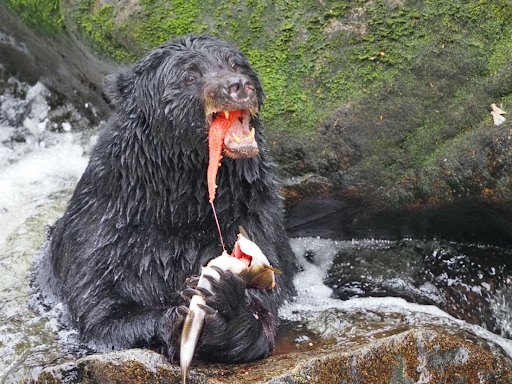
According to Friends of Anan, there are 39 known bears that feast on the salmon at Anan Creek. Thirty-one are black bears (Ursus americanus) and eight are brown bears (Ursus arctos). Like their counterparts further to the north in Katmai National Park, the bears return here every summer to eat salmon and teach their young how to fish and survive. And also like the bears of Katmai, every bear here has their own habits.
The U.S. Forest Service tracks and documents every bear and explore.org’s cameras broadcast live streams of their antics.

LIVE Anan Bear Cam: Lower Falls & Caves – Alaska | explore.org
And the 2026 Mama Bear Award goes to…
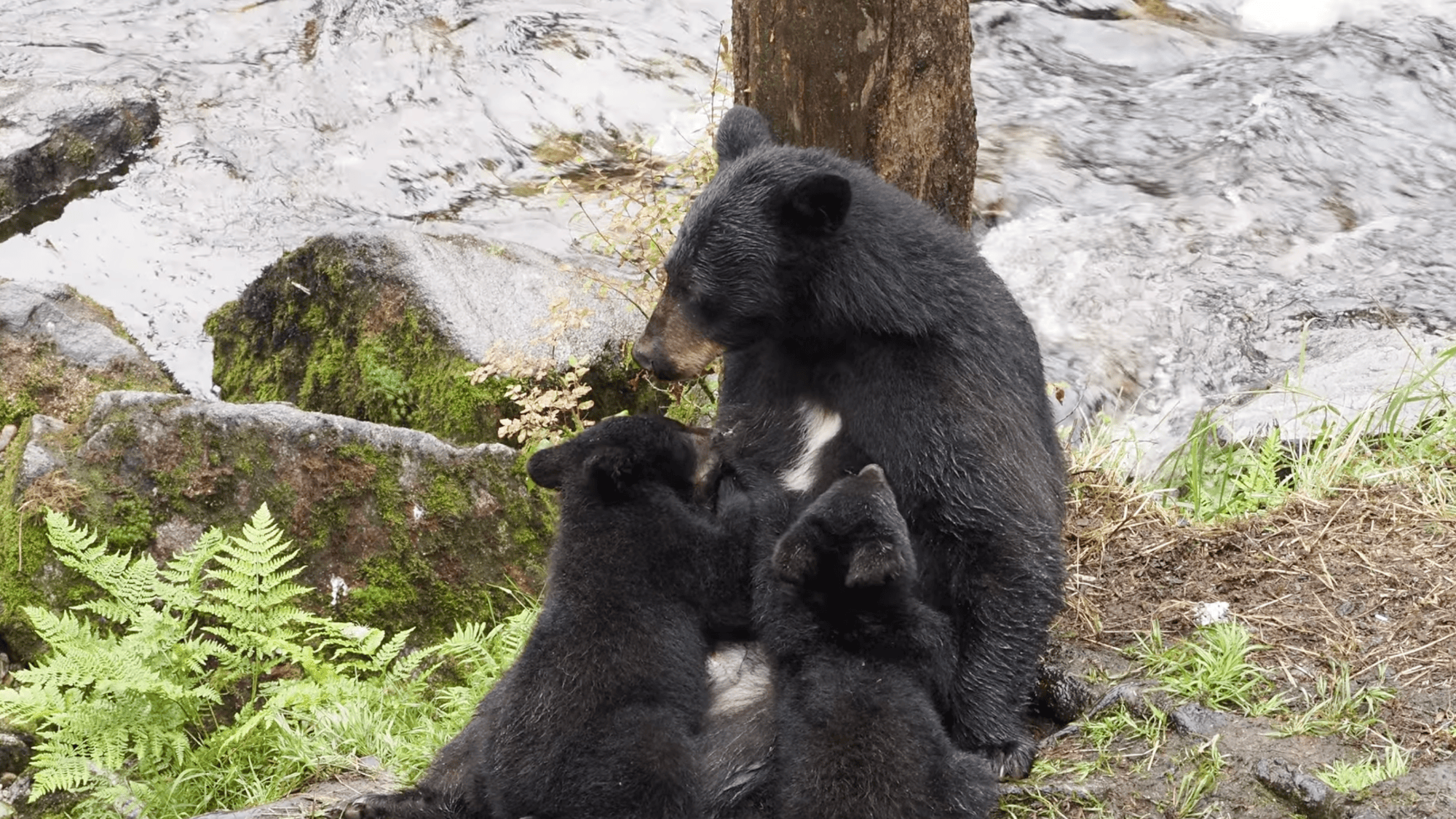
Osso! The adult female black bear was first spotted in 2022 and has a white chest patch shaped like the letter I. She usually has a mullet of hair on the top of her head at the end of the summer season. Her name is spelled either Osso (Italian for bone), because her chest patch also resembles a bone or Oso (Spanish for bear). She had one cub in 2019, two in 2024, and three this year.
Mother bears show fearless aggression when sensing any danger to their young, and the Forest Service says Osso is a prime example of this tenacity.
“Feeding and watching out for three cubs was more than a full-time job, especially with so many other bears about,” the team writes. “Scuba Sue, a female brown bear, got too close for comfort on this occasion and Osso didn’t hesitate before sending her cubs up a tree and taking a swipe at Sue. Not all heroes wear capes, some pop their jaws and raise their claws.”
Unfortunately, Osso was only seen with two cubs in August. While it is not clear what happened to her third cub, the Forest Service assumes she did her best to protect the cubs.